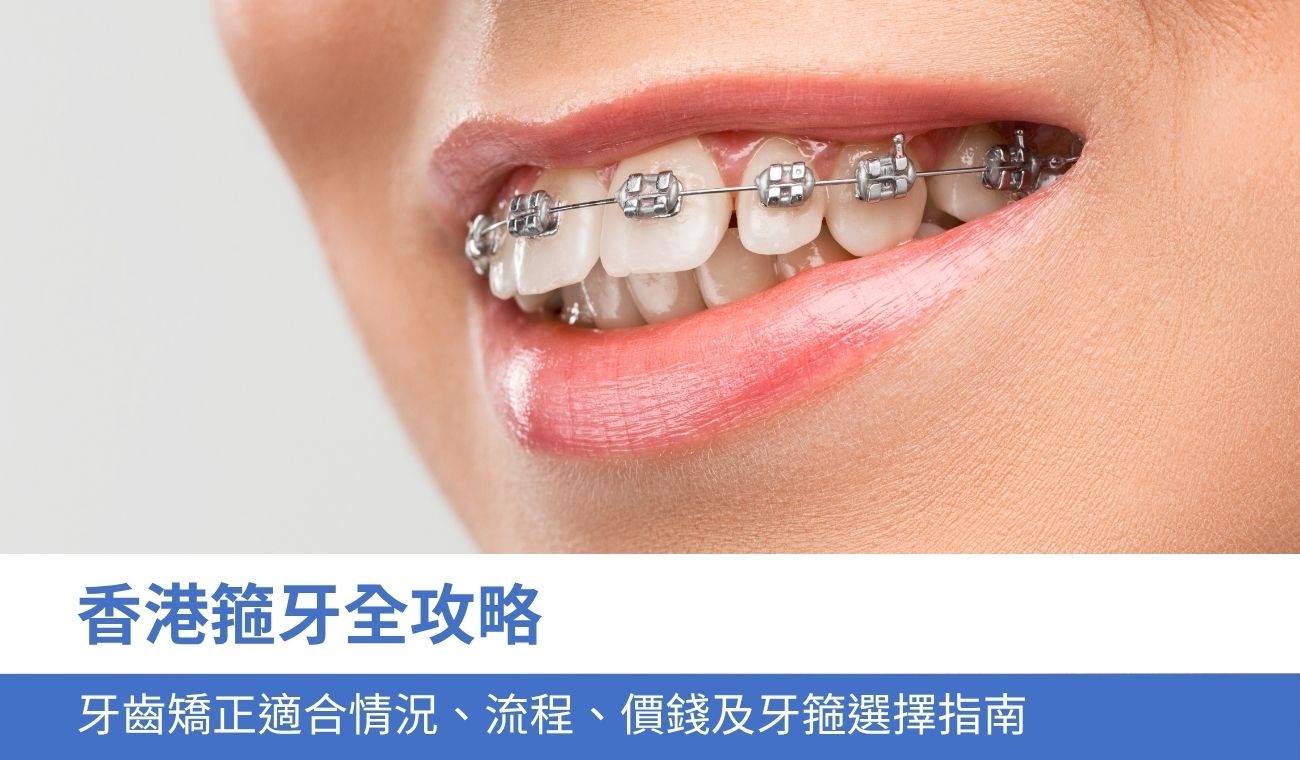
Braces are an orthodontic method that moves teeth with continuous force. Common methods include four types: metal, ceramic, clear and lingual, and the choice depends on the condition of the teeth and lifestyle.
Key Points
- Braces move the teeth through continuous force, improving alignment and bite
- Crowded teeth, protruding upper teeth, underbite and similar conditions may all suit orthodontic treatment
- Common orthodontic methods in Hong Kong are divided into four types: metal, ceramic, clear and lingual
- The choice of orthodontic method needs a combined assessment of budget, appearance needs and complexity of the teeth
- After orthodontic treatment is completed, retainers still need to be worn to prevent the teeth from rebounding and shifting
What are braces? Why have braces?
Braces are orthodontic treatment that gradually moves the teeth to the ideal positions through continuous force, and can also improve alignment, bite and hard-to-clean spots.

Braces can make the teeth more neatly aligned and reduce hard-to-clean spots. Besides improving appearance, they also help lower the risk of tooth decay and periodontal disease.
When the upper and lower teeth cannot bite together correctly, over the long term this can easily cause discomfort in the temporomandibular joint, asymmetrical development of the facial muscles or early wear of the teeth. Restoring the ideal bite through orthodontic treatment helps speech and chewing feel more natural, but the actual result still depends on the individual's teeth and skeletal condition.
How braces work
When braces apply small, continuous forces to the teeth, the alveolar bone around the teeth undergoes "bone remodelling": bone is resorbed on one side and new bone forms on the other, so the teeth gradually move to new positions.
This process takes time to build up, and is not achieved by a single application of force.
Who needs braces?
Anyone with the following conditions in the dental arch or bite may be a candidate for assessment for braces:
- Crowded teeth or uneven alignment
- Protruding mouth
- Protruding upper front teeth (overjet)
- Protruding lower jaw (underbite)
- receding chin
- overly large gaps between teeth
- Misaligned bite (crossbite / deep bite / open bite)
Whether adolescent or adult, as long as the teeth and periodontal condition are good, most people have a chance of being assessed for orthodontic treatment, but whether it is actually suitable still has to be judged by the dentist after an examination.

What are the common ways of having braces in Hong Kong? How should you choose?
Common methods of braces (orthodontic treatment) include four types: metal, ceramic, clear and lingual orthodontic treatment.
The orthodontic methods differ in how noticeable they are, how easy they are to clean and the cost. There is no standard answer in choosing, and it needs a combined consideration of budget, appearance needs, lifestyle and the complexity of treatment, decided after the dentist assesses the teeth and skeletal condition. Adults and adolescents also differ slightly in what to consider because their bones develop at different speeds, and it is advisable to work out a personalised plan at the first visit through X-rays, an oral scan and model analysis.
For a detailed comparison of types, pros and cons and points to consider when choosing, see:Pros, cons, fees and points to consider for the 4 types of braces at a glance
During orthodontic treatment, the dentist may also use auxiliaries such as mini-screws or elastics to help the teeth move more precisely:
- Mini-screws can provide extra support. See:What are mini-screws? 6 myths about mini-screws in braces explained in one article
- Elastics help the upper and lower teeth to bite into place. See:3 benefits of orthodontic elastics

What stages does orthodontic treatment generally go through?
Orthodontic treatment generally proceeds in four stages: initial assessment → fitting and adjustment of the appliance → auxiliary measures partway through → completing treatment and wearing retainers. The whole course generally takes about several months to several years, and the actual steps and time needed still have to be determined after assessment by the dentist.
For full details of the process and points to note at each stage, see:Orthodontic process, technical principles and comparison of traditional braces
Roughly how much do braces cost in Hong Kong?
The cost of braces varies with the orthodontic method, complexity and clinic, and market prices roughly fall between HK$20,000 and HK$100,000. The actual amount has to be assessed according to the individual's teeth.
For the fee range of each plan, the factors that affect it and hidden costs, see:How much do braces cost in Hong Kong?
What should you pay attention to after braces?
During orthodontic treatment it is advisable to avoid foods that are too hard or too sticky and to strengthen cleaning between the teeth and around the braces; after orthodontic treatment is completed you still need to wear retainers as instructed, and if gum swelling and pain or loose teeth occur, return early for a follow-up.
For detailed dietary advice, how to wear retainers and how to prevent failed orthodontic treatment, see respectively:

3 common myths about braces
- Think the teeth will not shift again once orthodontic treatment is completed?
→ In fact, teeth change slightly throughout life; if retainers are not worn as instructed after orthodontic treatment, especially in the first year or two, the teeth may still gradually drift away from their original alignment.
- Do tighter, more painful braces mean faster treatment?
→ In fact, orthodontic force needs to be applied gradually, and too much force may instead increase the risk of root resorption and will not speed up treatment.
- Think only children are suited to orthodontic treatment and that it has no effect in adults?
→ In fact, as long as the periodontal health is good, there is a chance of orthodontic treatment at any age. The difference is that bone metabolism is slower in adults, so treatment may take relatively longer.
Want to know more about braces?
The following articles are grouped by the stage at which patients commonly have questions, and you can choose what to read as needed:
Before having braces
- How to Choose Braces? Comparing the 4 Main Types
- Are traditional braces good? Process and technical principles at a glance
- Price of braces in Hong Kong and the factors that affect it
- Is there an age limit for braces?
- At what age are children suited to braces? The golden period for orthodontic treatment
During and after braces
- Why do you need to wear retainers after braces?
- How do you ease pain from braces? 6 ways to reduce discomfort
- What Can't You Eat with Braces? Food Restrictions at a Glance
- What are mini-screws? Are they always needed?
- Do you have to wear elastics? 3 benefits
- Can braces fail? After-effects and ways to prevent them
Types of common bite problems
- What types of misaligned bite are there?
- Do protruding upper teeth always need orthodontic treatment?
- Causes and treatment of underbite
- Causes and orthodontic treatment of deep bite
- Does an open bite need orthodontic treatment?
- Can a protruding mouth be improved with orthodontic treatment?
- What can be done about a receding chin?
- What can be done about gaps between teeth getting bigger?
Information on braces and changes in face shape
- Can braces make one side of the face look bigger than the other?
- What is "braces face"?
- What can be done about teeth that have shifted?
Summary
Braces are a treatment that gradually adjusts tooth alignment and bite through continuous force. The common types are metal, ceramic, clear and lingual, each with different considerations of appearance, cleaning and cost. Choosing a suitable orthodontic method, and care after treatment and wearing retainers, all need to be assessed according to the individual's teeth.
Article last updated: 2026-07
Disclaimer
This article is for information only and does not contain any invitation or solicitation. Patients should seek a professional dentist for diagnosis and treatment according to their own circumstances. To find out more or book a service, we recommend contacting the relevant clinic directly. Please choose suitable dental services and clinics carefully yourself.