Having periodontal disease (gum disease), diabetes, a smoking habit or insufficient bone volume usually does not mean you cannot have implants; the difference is how far these need to be addressed before implant treatment and how much longer you need to wait.
Key points of this article
- Implants are arranged only once gum inflammation is under control and periodontal pockets are stable
- An HbA1c below 7.0% is generally used as a reference
- Smokers should stop smoking from 2 weeks before surgery until 2 to 3 months after
- When bone loss is severe, bone grafting is done first, with a wait of about 4 to 6 months
- Tell your dentist first if you have had radiotherapy to the head and neck or take osteoporosis medication
Can You Have Dental Implants with Gum Disease, Diabetes, a Smoking Habit or Insufficient Bone? Conditions to Meet in 4 Situations
The 4 situations need to be addressed in order rather than separately: bone grafting also relies on the wound healing well, so gum inflammation, blood sugar and smoking must be under control before bone grafting. How long the whole preparation period takes mainly depends on whether bone grafting needs to be done in stages.
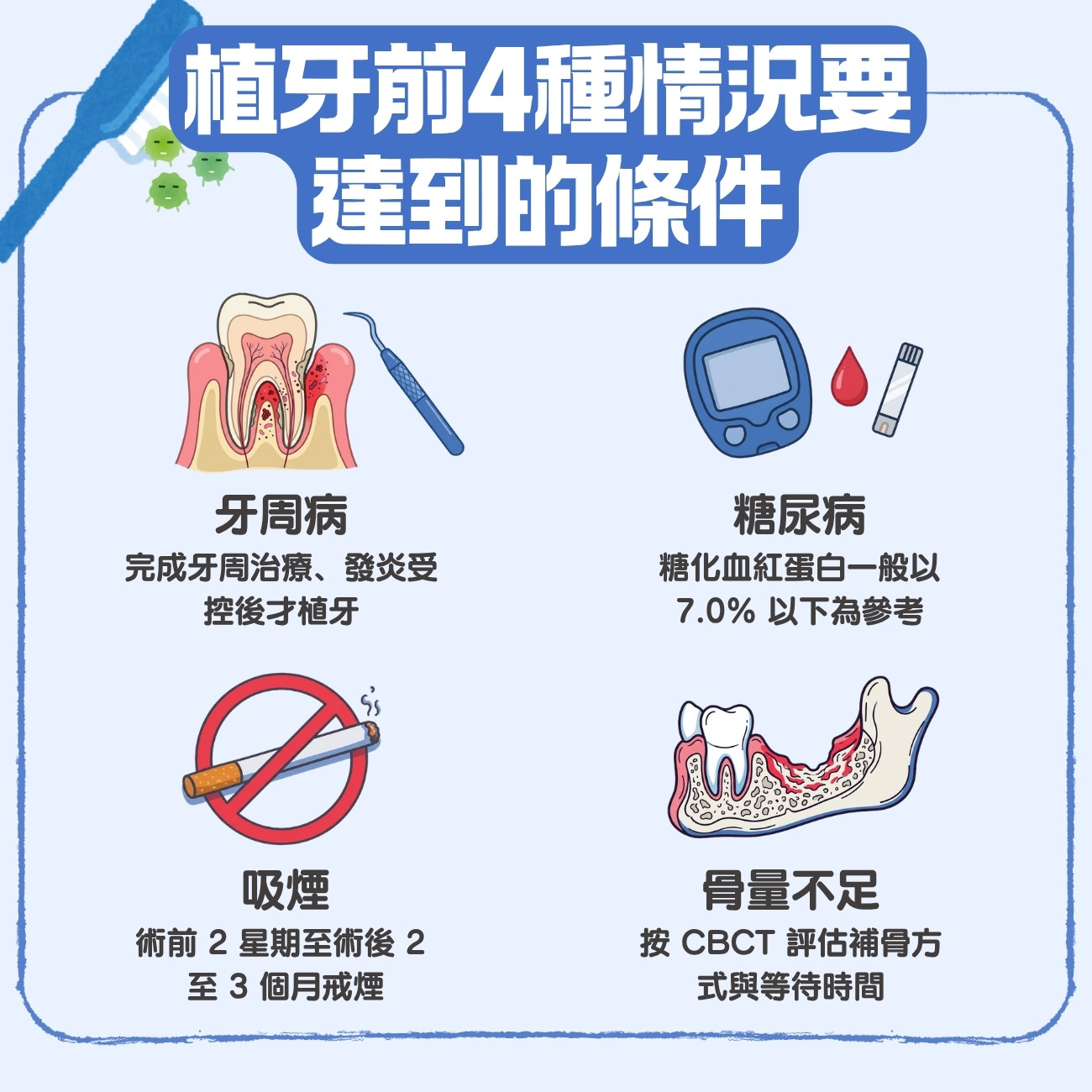
Gum disease: implants only after periodontal treatment is completed and inflammation is under control
People with gum disease need to complete periodontal treatment for the whole mouth, such as deep cleaning, before implants. Implants are arranged only once bleeding on probing has clearly reduced, pocket depths are stable, and habits of brushing and cleaning between teeth have been established.
If an implant is placed before gum inflammation has settled, bacteria in the mouth will directly affect the implant. If gum disease comes back after an implant, the gum and bone around the implant will also be affected. For how deep cleaning cleans the root surfaces below the gum and the normal reactions after treatment, see Deep Cleaning.
People who had teeth extracted due to gum disease also need to control gum inflammation around their remaining teeth before implants. Whether a loose tooth can be saved mainly depends on the remaining jawbone and how loose it is. For how this is assessed, see severe periodontal disease.
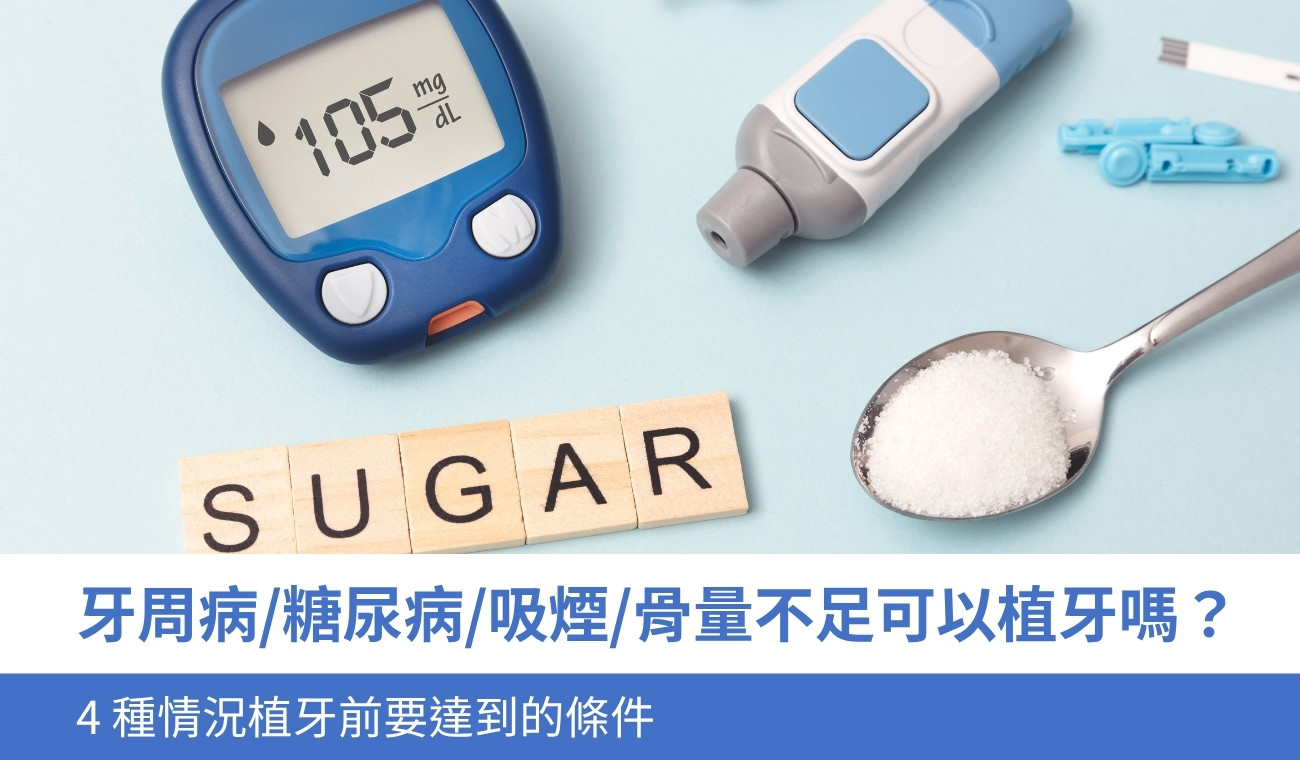
Diabetes: an HbA1c below 7.0% is generally used as a reference
Whether people with diabetes can have implants mainly depends on their glycated haemoglobin (HbA1c). Below 7.0% is generally used as a reference for arranging implants; above 8.0%, medication generally needs to be adjusted by a physician first, and surgery is arranged once blood sugar is stable. Cases in between, and whether surgery can actually go ahead, are judged by the dentist and physician according to the individual situation.
If an implant is placed while blood sugar is unstable, it may fail during osseointegration and need to be removed. In such cases, blood sugar is generally adjusted with the physician first, gum inflammation treated and bone grafted as needed, and re-implantation is assessed once conditions are stable. For why gum disease and blood sugar affect each other, see Gum Disease and General Health.
Smoking: stop or strictly limit smoking from 2 weeks before surgery until 2 to 3 months after
Nicotine constricts small blood vessels, reducing blood flow to the surgical site, and also affects how the implant bonds with the bone.
Smokers generally need to stop or strictly limit smoking (fewer than 5 cigarettes a day) from at least 2 weeks before surgery until 2 to 3 months after. If this is not possible, the risks of implant treatment need to be carefully assessed with the dentist. Continuing to smoke after an implant also affects the health of the gum and bone around it.
Insufficient bone volume: bone grafting method and waiting time assessed by CBCT
Whether bone volume is sufficient can only be confirmed after assessing bone height and width with a 3D cone beam CT (CBCT) scan.
When bone volume is insufficient but the bone structure is still reasonable, guided bone regeneration (GBR) can be used, and it can generally be done at the same time as implant placement. When bone loss is severe, it is done in stages: the bone graft first, then the implant after waiting about 4 to 6 months for the new bone to mature. When bone height at the upper back teeth is insufficient, a sinus lift may also be needed.
Bone grafting uses bone graft material (commonly called bone powder) and membranes, charged separately according to the extent and complexity of the graft. For the fee range of each item in Hong Kong, see dental implant price. If the tooth has not yet been extracted and the outer bone wall already has a defect, the jawbone can be preserved at the time of extraction. For how the three implant timings are decided, see extract and implant at the same visit.
When Is It Advisable to Postpone Implants? Head and Neck Radiotherapy, Osteoporosis Medication and Night-time Grinding
Postponing implants does not mean you can never have them: night-time grinding can be reassessed once it has been dealt with, while head and neck radiotherapy and osteoporosis medication involve the jaw's ability to heal, and need to be assessed together with your doctor to decide whether and when surgery can go ahead according to your treatment progress and medication.
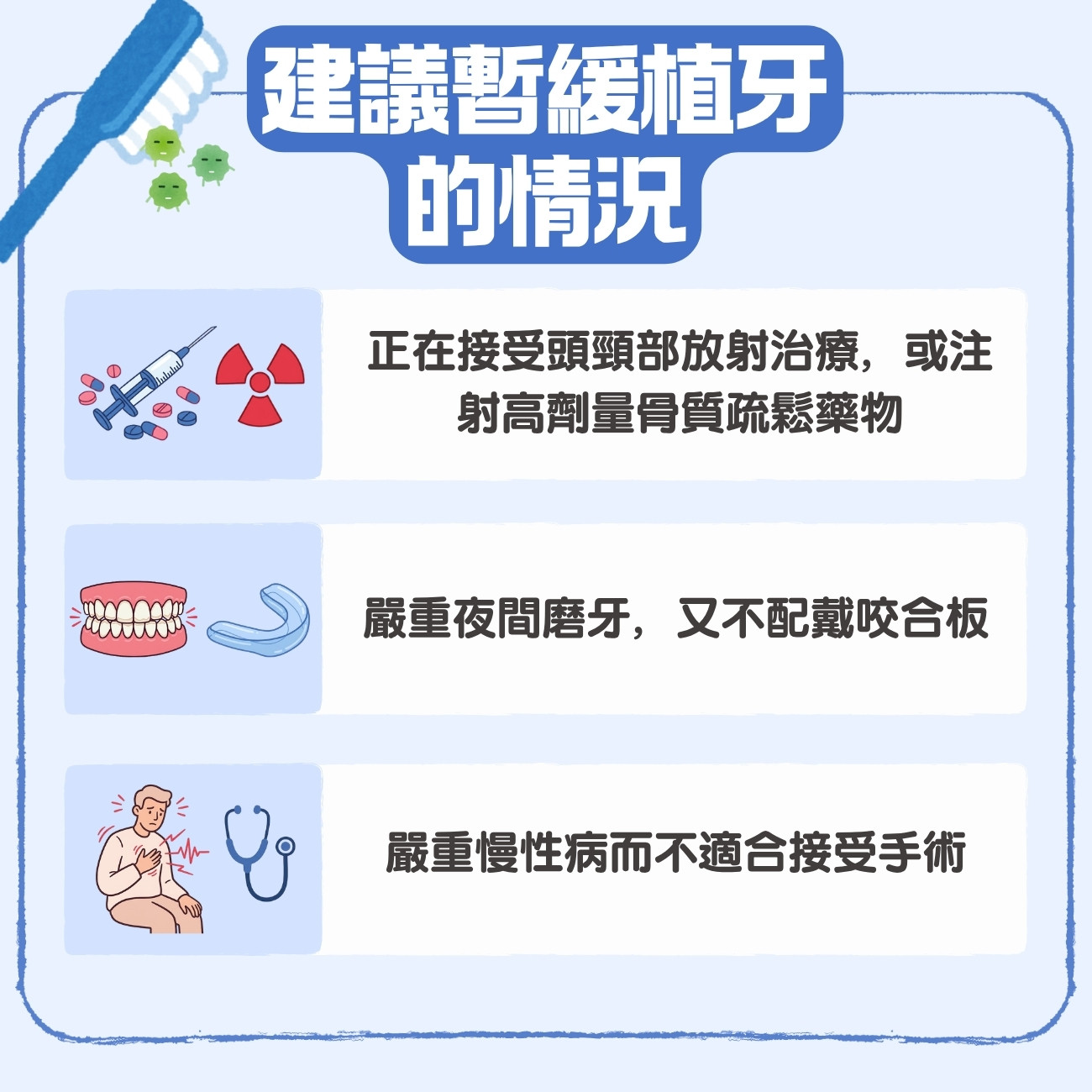
Apart from uncontrolled gum disease, implants are generally postponed in the following situations:
- Currently having radiotherapy to the head and neck, or injections of high-dose osteoporosis medication (such as bisphosphonates): oral surgery during this period carries a risk of jaw osteonecrosis, so missing teeth are generally dealt with by methods that do not require surgery first. If you have used this type of medication, at any dose, tell your dentist before implant treatment.
- Severe night-time grinding without wearing a night guard: generally, the bite problem must be dealt with first and you must be willing to wear a night guard for protection before implants are arranged. For the component and crown problems night-time grinding can cause with implants, and how to tell them apart from implant failure, see after-effects of dental implants.
- Severe chronic illness making surgery unsuitable: a bridge or removable denture, which do not require surgery, can be considered. For how to choose between implants, bridges and removable dentures based on the neighbouring teeth, the missing tooth site and bone volume, see Dental Implants Explained.
FAQ
Can teenagers have dental implants? At what age are implants suitable?
Implants are generally not recommended for teenagers whose jaws are still developing, because the implant does not grow with the jaw and will end up out of position. The gap can be kept open with a temporary denture or space maintainer until the jaw has finished developing, and then the implant can be placed. When the jaw finishes developing varies from person to person and is generally assessed by the dentist from X-rays, rather than by a single age cut-off.
Can I have dental implants if I have high blood pressure or heart disease, or take blood thinners?
People with high blood pressure or heart disease can generally still be assessed for implants when their condition is under control. Before an implant, tell your dentist about your condition and any medication you are taking, such as blood thinners. Do not stop medication on your own; the dentist will discuss surgical arrangements with your doctor as needed.
Summary
Before considering implants, gather information on your periodontal treatment, your recent HbA1c results, your smoking habits and the medication you are taking, and tell your dentist during the assessment so they can judge which conditions need to be addressed first.
Disclaimer
This article is for information only and does not contain any invitation or solicitation. Patients should seek a professional dentist for diagnosis and treatment according to their own circumstances. To find out more or book a service, we recommend contacting the relevant clinic directly. Please choose suitable dental services and clinics carefully yourself.