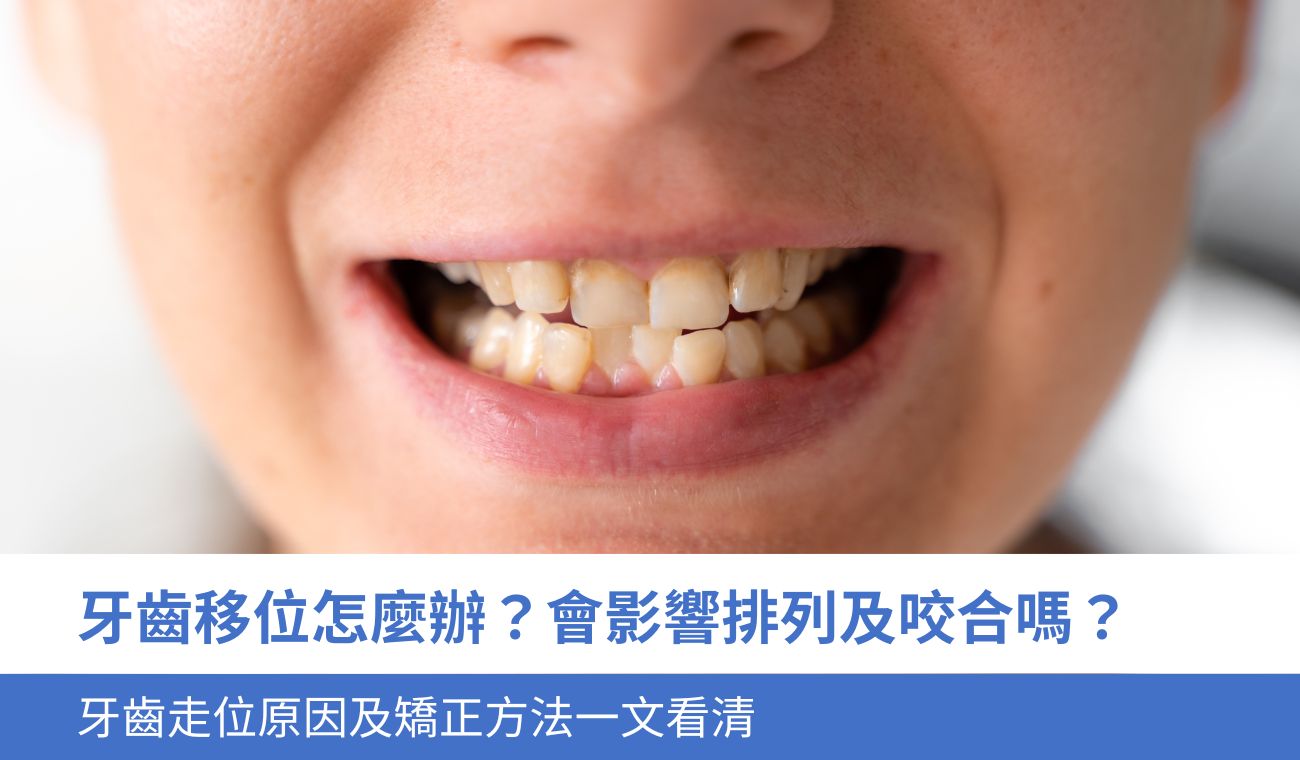
Who doesn't want their teeth lined up neatly? But sometimes there are things we cannot control. Do you know what causes teeth to shift? What is the effect of leaving missing teeth unreplaced for a long time? This article explains the causes of tooth shifting, its effects and how to correct it, to help you get your confident smile back!
What counts as tooth shifting?
tooth shiftingdefinition
Tooth shifting means the position of the teeth in the mouth has changed, which may affect the bite, chewing function and facial appearance.
How do you tell if teeth have shifted?
Here are some common situations and signs showing that teeth may have shifted.
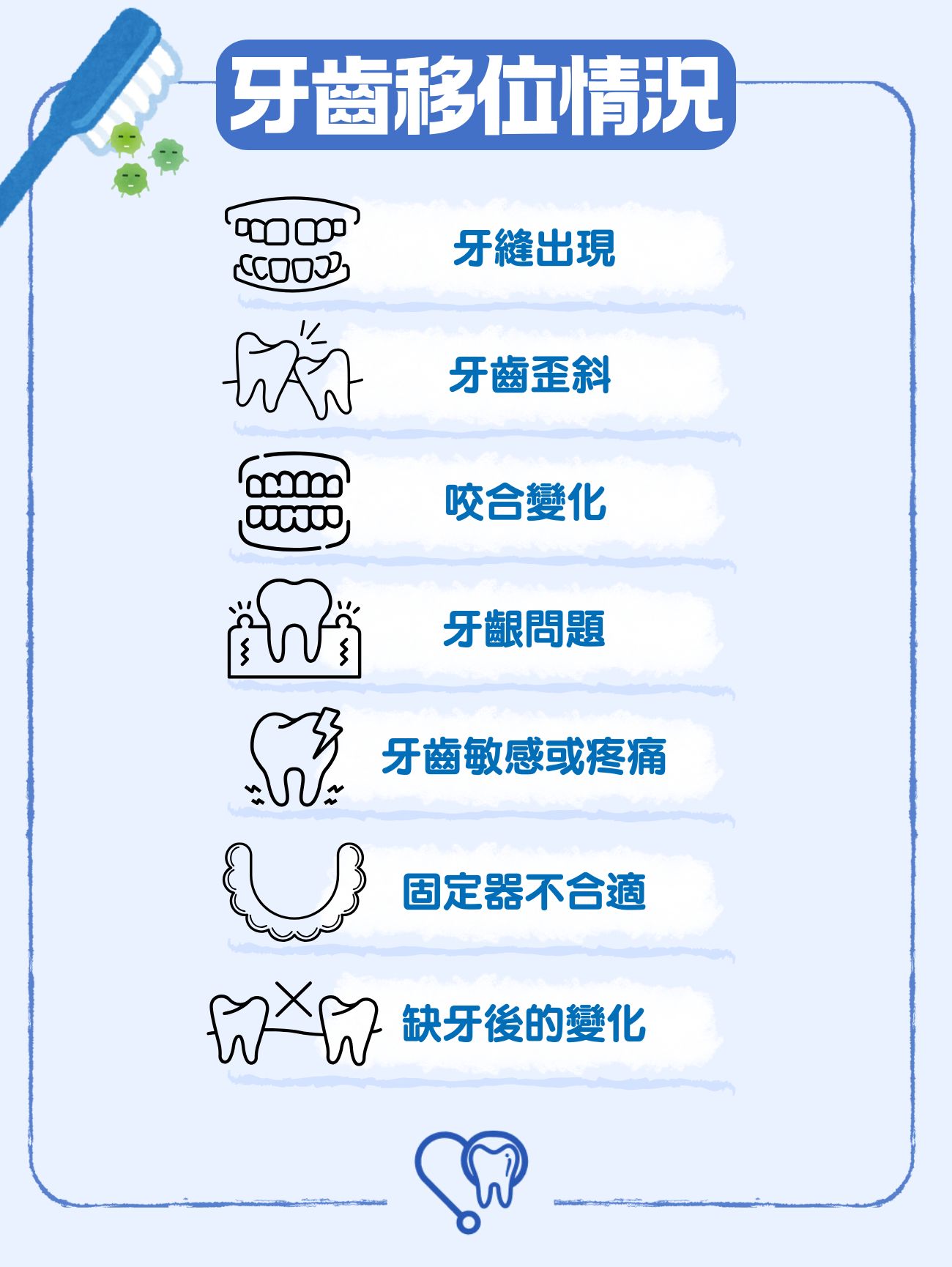
- Gaps appearing: when obvious gaps start to appear between teeth that were originally tightly spaced, this is usually a clear signal that the teeth are shifting.
- Loose teeth: when the movement of a tooth goes beyond the normal range (about 2 mm), it may be one sign of tooth shifting.
- Crooked teeth: if the teeth are no longer lined up neatly, especially if the front teeth start tilting inwards or outwards, this may be related to poor development of the lower jaw bone or other physical factors.
- Changes in the bite: if you feel uncomfortable when you bite, or find the upper and lower teeth do not meet well, this may mean the position of the teeth has changed.
- Gum problems: bleeding, red and swollen or inflamed gums may be a forerunner of periodontal disease, and periodontal disease affects the stability of the teeth and so leads to shifting.
- Tooth sensitivity or pain: if certain teeth suddenly become more sensitive or painful than usual, this may be a sign that they are shifting.
- Retainer no longer fits: for patients having braces, if the retainer no longer fits, it usually means the teeth have shifted.
- Changes after tooth loss: when a tooth falls out and is not replaced in time, the surrounding teeth may tilt towards the missing space, causing the overall tooth alignment to become disordered.
tooth shiftingWhat are the causes?
There are many causes of tooth shifting, which may be heredity, lifestyle habits or injury, and eventhe growth of wisdom teethis possible. Here are some of the main causes:
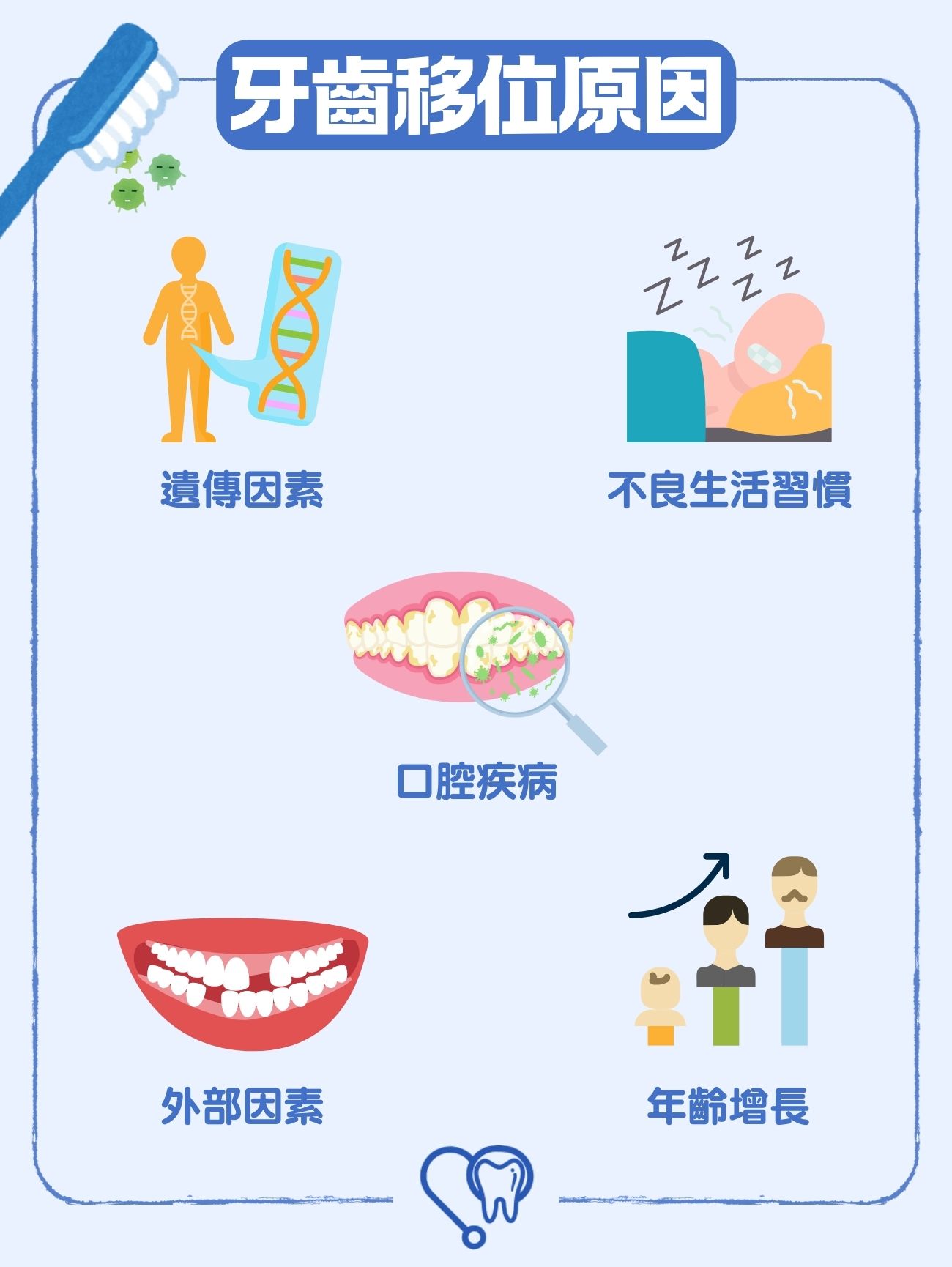
genetic factors
Some people are born with auneven teethtendency, which may be because they have inherited their parents' tooth features or jaw bone shape.
Although we cannot change genetic factors, early detection and treatment can effectively reduce the effect.
poor lifestyle habits
Long-term thumb sucking or dummy use may cause the front teeth to flare outwards; habits such as often biting hard objects, eatingchewing gumor pushing the front teeth with the tongue put the teeth under long-term pressure; at night,teeth grindingcan also affect the stability of the teeth, and over the long term any of these may change tooth position.
Oral diseases
Oral diseases, especiallyperiodontal disease, are an important factor causing tooth shifting. Periodontal disease is caused by plaque biofilm attached to the tooth surface.
If cleaning is not thorough,plaquebuilds up over the long term along the gum margin and between the teeth, irritating the tissues around the teeth, causing gum recession and alveolar bone loss, so the teeth lose support and shift.
external factors
When a tooth falls out or is extracted because of injury or missing teeth, it may also cause tooth shifting. Leaving a missing tooth unreplaced for a long time not only creates visual and chewing obstacles and defects, but the surrounding teeth may also tilt towards the gap, making the tooth alignment disordered.
ageing
Just as a machine falls into disrepair as it ages, the bone supporting the teeth also slowly gets lost with age, which may lead to crowded and misaligned teeth.
Although the natural ageing process cannot be avoided completely, proper oral care and regular check-ups can still slow its effect on the teeth.
Oral effects of tooth shifting
Tooth shifting is a common oral problem that may change the shape of our face and may also affect the mouth and even overall health.
uneven alignment
A poor bite caused by irregular tooth alignment makes the teeth wobble more, and over the long term the teeth become crooked.
If the teeth become more and more uneven, daily cleaning becomes more difficult, and it directly affects personal appearance and confidence, as well as social interaction.
Long-term tooth shifting may cause temporomandibular joint disorder, a condition affecting the connection between the lower jaw and the skull. It may lead to symptoms such as chronic headache, facial pain and difficulty chewing.
Bite and chewing
Incorrect tooth alignment may affect the bite, causing difficulty chewing, so that the nutrients in food cannot be fully absorbed, and may also cause digestive problems and chronic gastroenteritis.
It may also cause speech problems, such as air leaking while speaking or unclear speech, affecting daily communication and work performance.
What should you do about shifting teeth? 5 ways to prevent and treat it
The key to preventing tooth shifting is to build good oral hygiene habits and have regular dental check-ups. Here are some effective preventive measures:
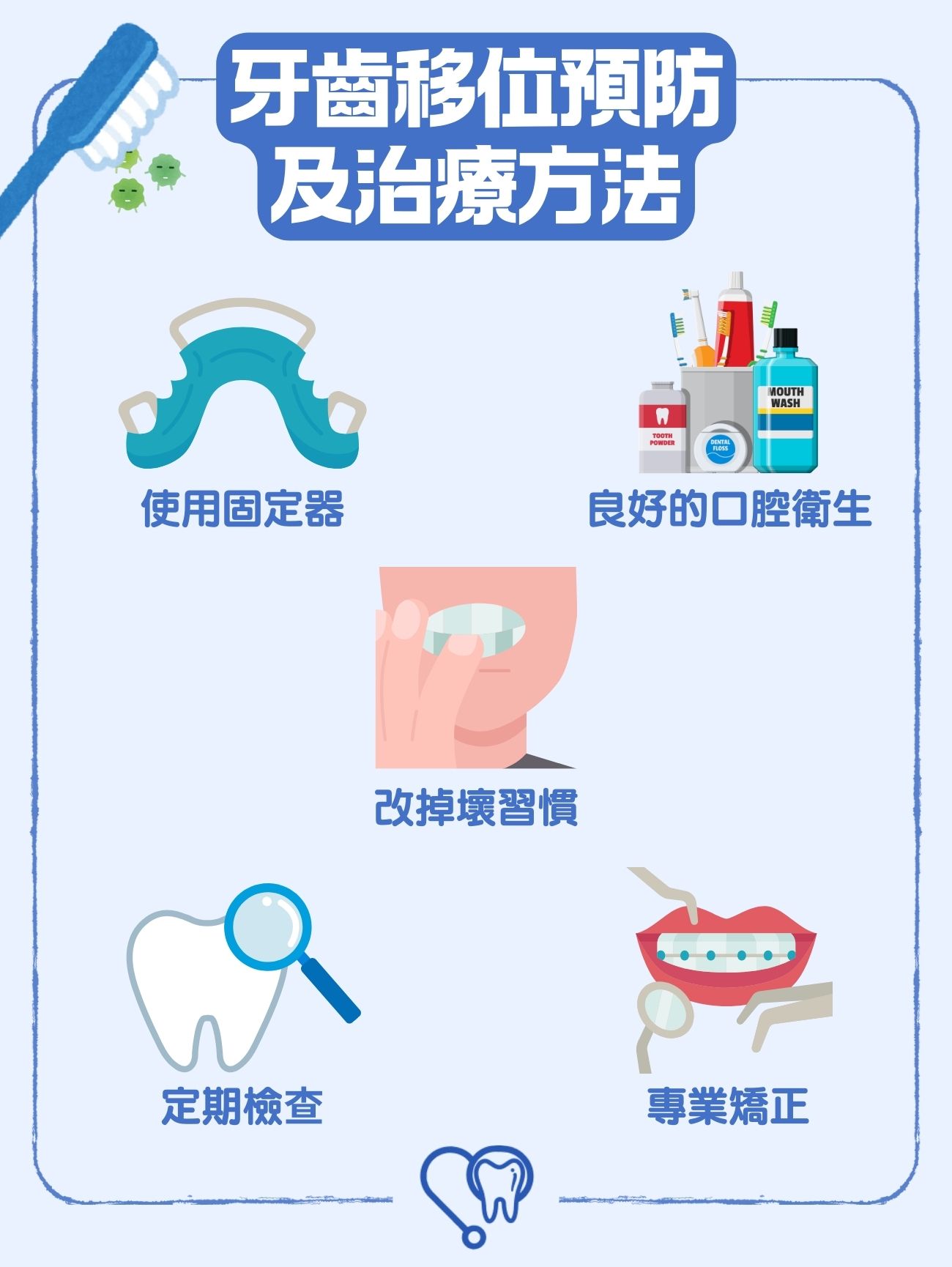
Use a retainer
If you grind your teeth at night, consider using a mouthguard. If you have braces treatment, after the braces are removed you also need to properly wearretainerproperly after the braces are removed, so the teeth do not move out of position again.
good oral hygiene
Build the habit of brushing when you get up and before bed and rinsing the mouth after meals. Where teeth are uneven in particular, if needed, you can use dental floss,interdental brushas aids, and you can also brush with a single-tuft or small-headed toothbrush.
Keep the mouth clean and watch closely for early signs of periodontal disease. Never ignore a problem because you think it is minor.
Break bad habits
Avoid habits that may cause teeth to move, such as thumb sucking, biting hard objects and nail biting.
Regular Check-ups
Have a full oral check-up every six months and regular tooth cleaning, to detect and deal with potential problems early.
Professional correction
If the teeth have already shifted, seeking medical attention promptly is the key. The dentist may recommend different treatment plans according to the specific situation, such as orthodontic treatment, crown restoration or other dental surgery. Through professional treatment, the position of the teeth can be corrected effectively and the mouth restored to a healthy state.
Remedies for loose teeth
Loose teeth are in fact also a manifestation of tooth shifting, because it involves changes in the stability and position of the tooth within the periodontal tissues.
Healthy teeth have a slight amount of movement within a certain range (usually no more than 2 mm), which is a normal physiological phenomenon and needs no treatment. When the movement of a tooth goes beyond the normal range, especially when the tooth feels clearly loose, treatment is needed.
Depending on how loose the tooth is, different measures are needed. Here are remedies for different situations:
- Mild: haveDeep Cleaning(scaling and root planing) to removetartarand plaque, to improve the periodontal environment. It is also recommended to use specific periodontal treatment medication to help stabilise the teeth.
- Moderate: have periodontal flap surgery to thoroughly remove deep tartar and infected tissue. If the alveolar bone has clearly been lost, bone grafting may be needed to strengthen the support of the tooth.
- Severe: if it is assessed that the tooth cannot be saved, extraction may be needed. After extraction, a replacement option can be chosen according to personal circumstances and budget.
- Injury: use a retainer to hold the tooth in place temporarily, then stabilise the tooth again once the alveolar bone beneath has healed.
- Tooth decay or root tip infection: haveRoot Canal Treatmentto remove the source of infection in the pulp chamber.
FAQ
What to eat with loose teeth?
Besides the medical remedies above, suitable diet adjustments can also speed up recovery of the teeth.
Calcium and vitamin C are especially good for the health of teeth and gums. Calcium strengthens teeth and bones, while vitamin C helps repair gum tissue and the production of collagen.
We suggest eating more calcium-rich foods such as dairy products, leafy green vegetables, nuts and fish. Fruits such as citrus fruits, guava and kiwi fruit are good sources of vitamin C.
Eat soft foods as far as possible, such as steamed vegetables, fish and tofu, and avoid foods that are too hard or sticky, to reduce extra pressure on loose teeth.
What if teeth shift again after braces?
Some people may find their teeth start shifting again after finishing orthodontic treatment, usually because they did not wear the retainer diligently or used it improperly. If you find this, consult an orthodontist for professional advice immediately, to see whether the retainer needs readjusting or replacing, or whether you even need braces again.
How long before teeth become crooked after a tooth is lost? Is a dental implant always necessary?
After a tooth is lost, the surrounding teeth gradually tilt or move towards the gap, and obvious changes can appear in as little as one to two months, though the speed varies from person to person.
To prevent this, we suggest considering a replacement option as soon as possible after a tooth is lost (Dental Implants,Dental Bridgeorremovable dentures). Although a dental implant is not the only choice, it best imitates the function and appearance of natural teeth and prevents neighbouring teeth from shifting and bone volume from being lost.
Summary
Tooth shifting is an oral health problem that needs to be taken seriously. By understanding its causes, potential effects and preventive measures, we can better protect our teeth. Of course, prevention is better than cure, and building good oral care habits and having regular check-ups are the best way.
Disclaimer
This article is for information only and does not contain any invitation or solicitation. Patients should seek a professional dentist for diagnosis and treatment according to their own circumstances. To find out more or book a service, we recommend contacting the relevant clinic directly. Please choose suitable dental services and clinics carefully yourself.