Orthodontic elastics strengthen bite correction and tooth movement. Whether you need them depends on how complex your tooth alignment is, and how you wear and clean them directly affects the progress of your orthodontic treatment.
Key Points
- Whether to wear elastics depends on how complex the dental arch is
- The smaller the elastic size, the greater the force
- Wearing needs to be continuous, and intermittent wearing slows progress
- Most hard-to-clean areas are where the braces meet the gums
bracesDuring treatment, orthodontic elastics are a common auxiliary tool used to improve the bite, adjust the dental midline or close gaps between teeth. Having to remove the elastics before and after eating is admittedly a hassle, but understanding how elastics work and how to wear them correctly helps you keep your treatment on track and reduces the inconvenience of wearing them.
What Are Orthodontic Elastics? Why Do You Need Elastics with Braces?
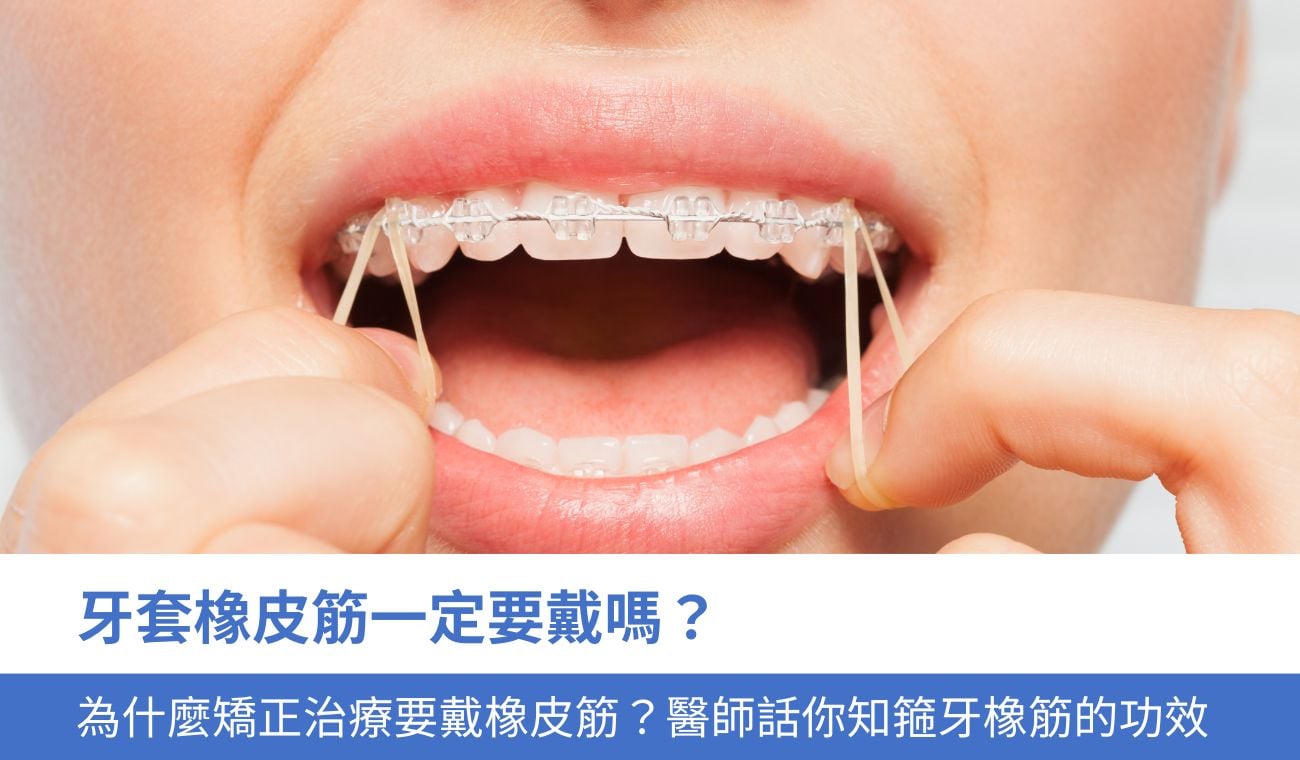
Orthodontic elastics (also called inter-arch elastics) are an auxiliary tool in orthodontic treatment. By applying a continuous, gentle force, they guide teeth slowly into the ideal position while improving how the upper and lower teeth bite together.
Elastics andmini-screwsare both common auxiliary devices in orthodontic treatment: the former provides pulling force, while the latter provides a fixed anchor point.
The wire and brackets of braces already provide a certain amount of moving force, but when teeth need to move at an unusual angle or between the upper and lower jaws, the basic force and direction of braces alone may not achieve the ideal result. In these cases, the dentist usually assesses whether to add elastics to provide pulling force at specific angles.
Even if elastics are not needed at the start of treatment, if teeth are found to be moving less than expected during treatment, the dentist may also recommend adding elastics partway through to adjust how the treatment progresses.
Do You Have to Wear Orthodontic Elastics? It Depends on How Complex Your Alignment Is
Whether you need to wear orthodontic elastics depends on your tooth alignment and treatment plan.
For simpler local adjustments, the force and angle of the braces alone may achieve the ideal result, and elastics are not necessarily needed. However, if teeth need to move at more complex angles or are growing in different directions, the basic force of braces alone often cannot provide enough pulling force at those angles, and elastics are usually needed.
Whether they are actually worn, and for how long, has to be decided by the dentist according to each individual's dental arch, and it is not advisable to judge by yourself whether they can be left out.
How Do Orthodontic Elastic Sizes Relate to Force?
The size of the elastics and how often they are changed should be decided by your dentist based on your tooth alignment. If the force does not match your alignment, tooth movement may be affected, and excessive force may also increase the risk of root resorption.
Common sizes and relative force
Elastic sizes are mainly distinguished by brand and specification. Common sizes include 1/8″, 3/16″, 1/4″ and 5/16″, and the relative force of each size is shown in the table below:
| Size | Relative force | Common use |
| 1/8″ | Stronger | Strong local traction |
| 3/16″ | Medium-strong | General orthodontic adjustment |
| 1/4″ | Medium | Commonly used clinical specification |
| 5/16″ | Weaker | Gentle adjustment, assisting maintenance |
The table above is a conceptual illustration of the relative force relationship, and actual force values differ by brand, material and the angle at which they are worn.
Elastics of different brands and different batches may still differ in actual force even when labelled with the same size, which is the main reason it is not advisable to buy substitutes yourself by size. The dentist will usually adjust the size and replacement frequency of the elastics at each follow-up according to the progress of tooth movement, and it is not set once and then fixed.
What functions do orthodontic elastics have?
In orthodontic treatment, elastics are an additional device, and their main functions include improving the bite relationship, adjusting the midline of the teeth and closing gaps between teeth.
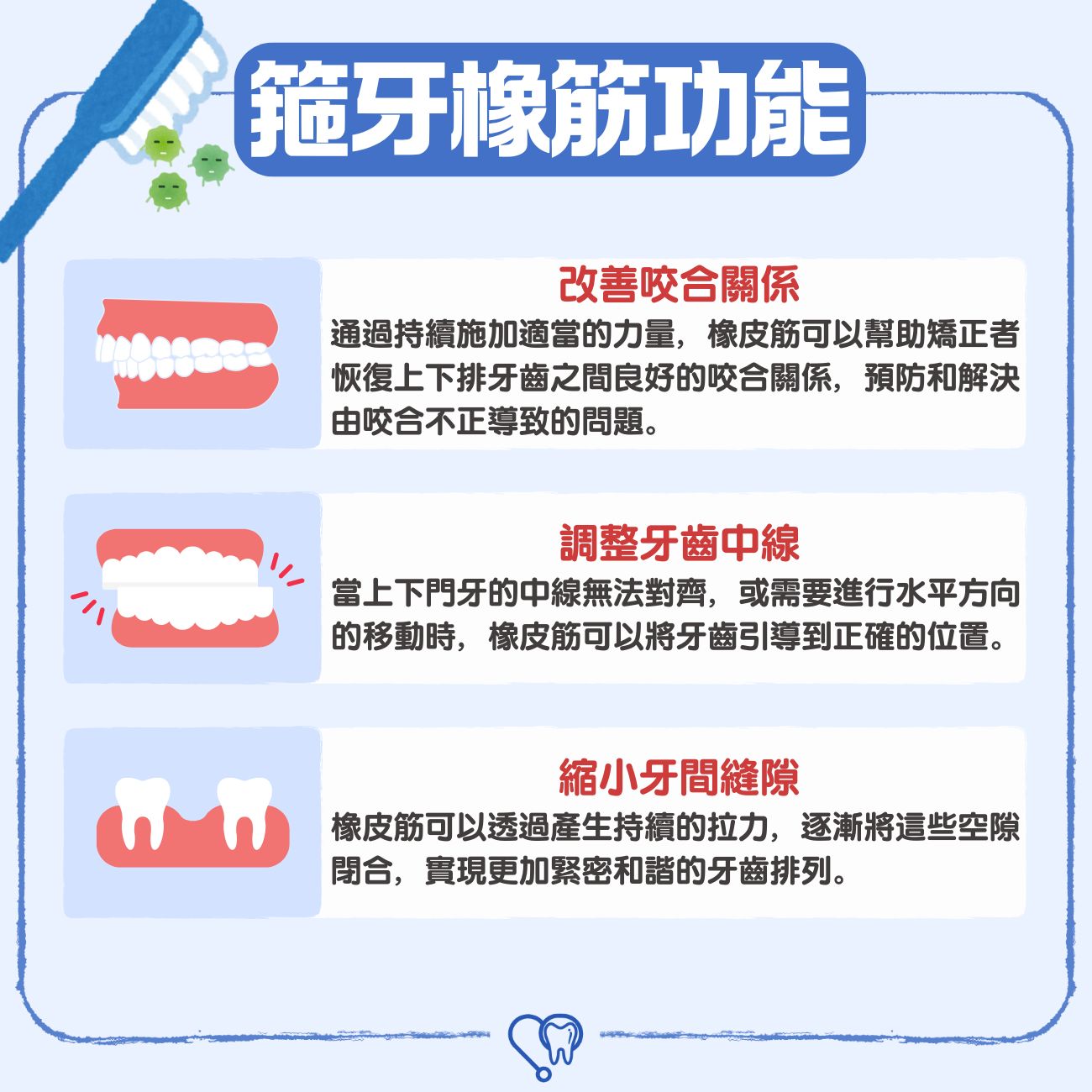
Improving the bite relationship
Elastics can continuously apply suitable force to help restore the bite relationship between the upper and lower teeth, and prevent or improve bite problems caused by malocclusion, such as protruding upper front teeth, an underbite or a deep bite.
Adjusting the midline of the teeth
When the midlines of the upper and lower front teeth are not aligned, or teeth need to move in a horizontal direction, elastics can guide the teeth in the right direction and improve a shifted midline.
Closing gaps between teeth
When there are larger gaps between teeth, elastics can gradually close the spaces through continuous pulling force, so the teeth line up more tightly.
How Do You Wear Orthodontic Elastics? Steps for Traditional Braces and Clear Aligners
If you feel significant discomfort after putting on orthodontic elastics, or are unsure whether they are hooked in the right place, contact your dentist to check rather than guessing and adjusting them yourself.
How to wear them with traditional braces
With traditional braces (metal or ceramic), elastics are mainly held in place by hooks on the braces. Your dentist will specify where to hook the elastics according to your treatment needs, usually connecting hooks on the upper and lower braces to create pulling force at a specific angle.
- Hook one end of the elastic onto the hook of the braces on the specified upper (or lower) tooth.
- Stretch the elastic towards the opposite dental arch and hook it onto the other specified hook of the braces, usually on a molar at the back on the opposite side.
- Check that the elastic has not slipped off after being hooked on, and that the direction of stretch matches the dentist's instructions.
How to wear them with clear aligners
Clear AlignersClear aligners have no hooks of their own, so special button-like attachments first need to be bonded to the tooth surface before the elastic can be hooked on. There are mainly two ways of wearing them: connecting the hooks on two clear aligners, or connecting the hook on the clear aligner to a hook bonded on the tooth.
- Carefully hook the elastic onto the specified hook on the braces, then stretch it forward onto the hook in front, making sure the elastic sits snugly against the braces.
- Check that the elastic is hooked in the correct position, to make sure the force is applied in the right direction.
- Check how well the elastic sits against the braces to make sure it will not slip off easily.
Common misunderstandings about wearing elastics, and cleaning points
Wearing elastics on and off is one of the most common reasons orthodontic progress stalls; orthodontic force needs to be applied continuously to keep tooth movement stable.
Wearing them on and off is the most common misunderstanding
The most common misunderstanding clinically is that patients think wearing elastics only "when they feel like it" has little effect on overall progress, and that skipping a day or half a day makes no difference. But orthodontic force has to be applied continuously to work, and once wearing becomes intermittent, tooth movement easily stalls and the originally estimated treatment time may also be extended. The importance of continuous wearing is often higher than patients imagine.
The places most easily overlooked when cleaning
Many patients think it is enough to clean the surface of the braces or elastics, but overlook where the braces meet the gums and the edges of each bracket, which are where food debris most easily gets trapped. Without proper cleaning, the risk of gum inflammation and tooth decay increases. A regular toothbrush alone is usually not enough; interdental brushes and a water flosser are recommended to clean these hard-to-reach areas.
Elastics are disposable accessories and need to be replaced regularly as instructed by the dentist. After a meal, take the elastics off first, clean the teeth and braces thoroughly, and then put on new elastics, to avoid bacteria growth or odour problems.
The right way to handle soreness
Slight soreness and tightness in the first two or three days after braces are adjusted is a common reaction, and you do not need to stop eating entirely or take the braces off yourself because of it (this is more common among clear aligner patients).
During this time, simply eat softer food and chew more slowly; if you interrupt wearing by yourself because of pain, tooth movement instead becomes unstable and overall orthodontic progress is slowed.
FAQ
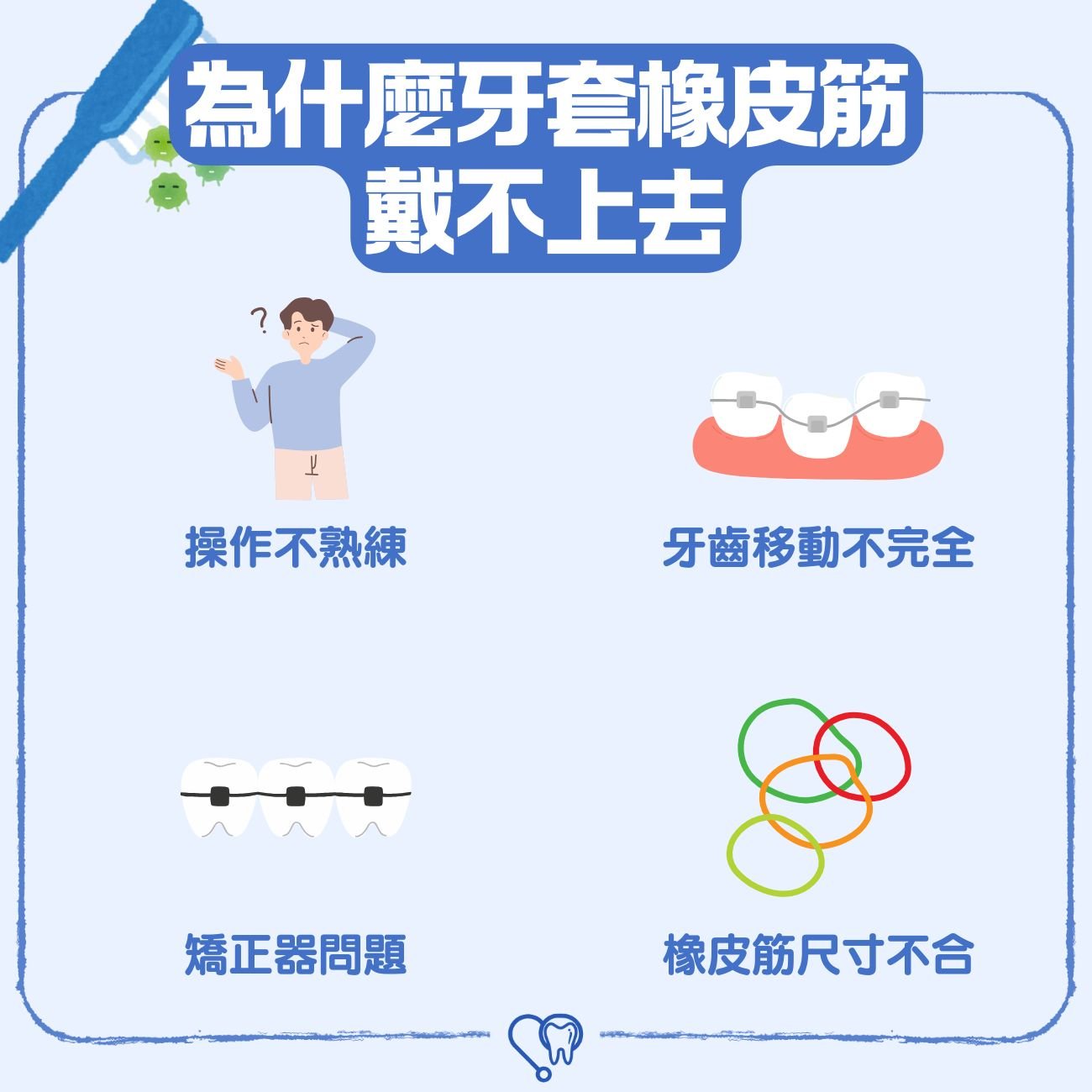
Why can't I get my orthodontic elastics on?
Possible reasons include being unpractised at putting them on, teeth not yet having moved to the expected position, a hook on the braces being damaged or wrongly placed, or the elastic size not fitting. If you still cannot put them on after several attempts, you should contact your dentist to check orthodontic progress or adjust the elastic type, and it is not advisable to try other sizes by yourself.
What should I do if wearing elastics hurts?
Soreness, tightness or slight pain when you first start wearing elastics or when changing to new ones is a common phenomenon, usually related to the pulling force acting on the teeth and surrounding tissue. You can rinse with warm water, or take over-the-counter painkillers recommended by your doctor as needed to relieve it, and it eases after 2 to 3 days in most cases. If the pain keeps getting worse, consult your dentist and do not try to judge by yourself whether the force is too great or the elastics are worn incorrectly.
How often should orthodontic elastics be changed?
It is generally recommended to change them 1 to 2 times a day to maintain the elasticity and force of the elastics; if the same elastic is reused, its elasticity gradually tires and may lead to insufficient force, affecting orthodontic progress. If an elastic breaks or is lost, replace it with a new one immediately.
Can I buy elastics to replace them myself?
It is not advisable to buy replacements yourself. The same size from different brands may still have different actual force, and it is easy to buy the wrong specification, so you should use the special elastics provided by your dentist.
Summary
Orthodontic elastics are a common auxiliary tool in orthodontic treatment. Whether you need them and which size to use should be assessed and decided by your dentist based on your tooth alignment. While wearing them, consistent wear and proper cleaning are key to maintaining results; if wear is inconsistent, treatment progress may be affected and take longer. If you have difficulty wearing them, significant discomfort or questions about cleaning, talk to your dentist so adjustments can be made after a professional assessment, rather than deciding for yourself.
Article last updated: 2026-08
Disclaimer
This article is for information only and does not contain any invitation or solicitation. Patients should seek a professional dentist for diagnosis and treatment according to their own circumstances. To find out more or book a service, we recommend contacting the relevant clinic directly. Please choose suitable dental services and clinics carefully yourself.