
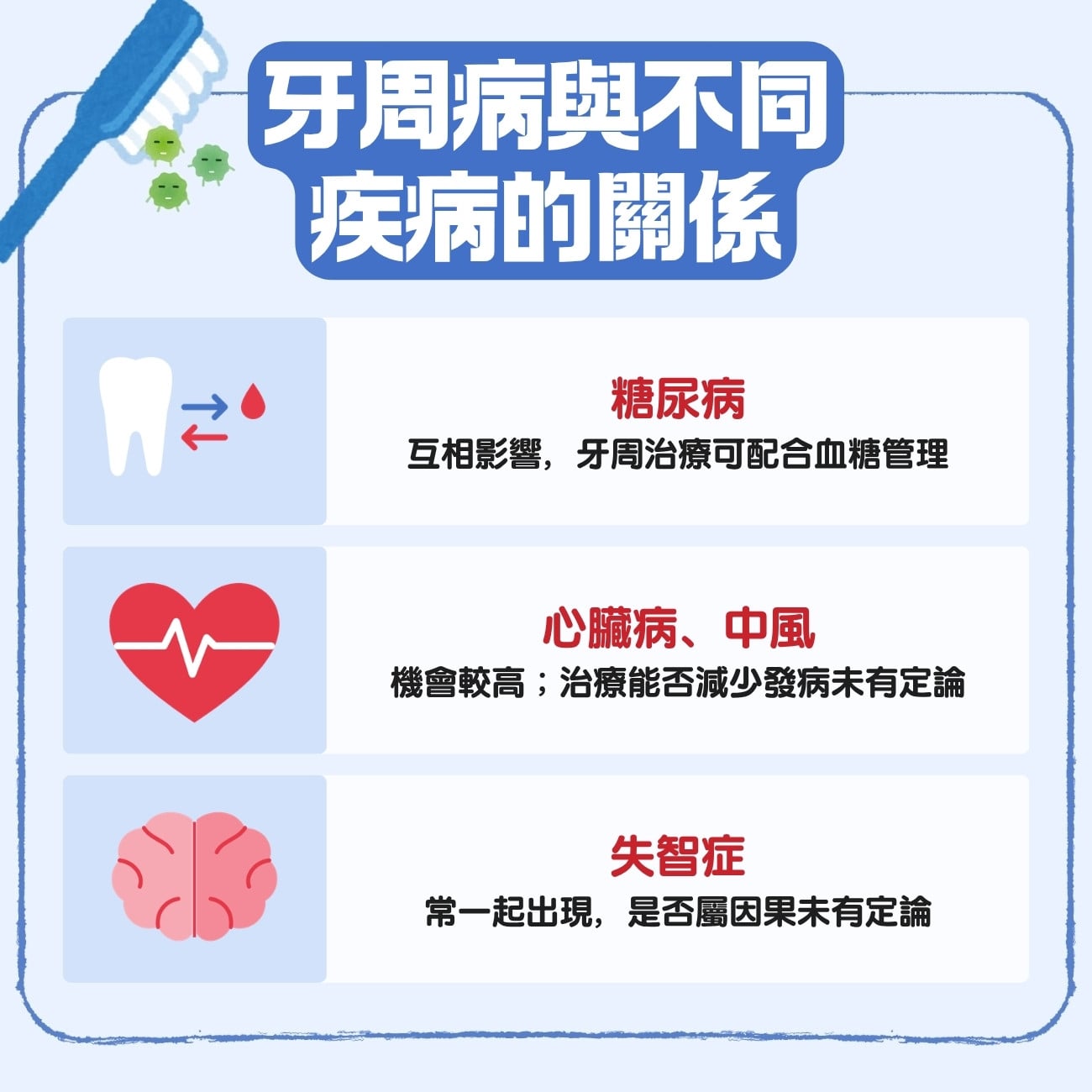
Periodontal disease (gum disease) and diabetes affect each other, and managing gum health can help with blood sugar control to some extent. Heart disease and dementia often occur alongside gum disease, but whether treating gum disease reduces these conditions is not yet conclusive.
Key points of this article
- Bacteria and inflammatory substances can enter the bloodstream through periodontal pockets
- An association does not mean it has been proven to be caused by gum disease
- Periodontal treatment can support blood sugar management but cannot replace medical treatment
- Smoking and diabetes are common risk factors for both gum disease and cardiovascular disease
- When older people's cognitive abilities decline, they need help with oral hygiene
Why Does Gum Disease Affect General Health? How Oral Inflammation Relates to the Body
When you see claims that gum disease is linked to a certain disease, look at two separate questions: whether the two often occur together, and whether that disease improves once gum disease has been treated. The first is easier to observe; the second can only be seen by comparing people who have and have not had periodontal treatment.
Periodontitis is chronic inflammation that persists in the periodontal pockets. Once the tissue lining the pockets is inflamed, it becomes fragile, and bacteria and inflammatory substances can enter the bloodstream through it, raising the level of chronic inflammation in the body. This is one of the main reasons gum disease is thought to be linked to general health.
However, when two diseases often occur together, it does not necessarily mean one causes the other; both may be affected by the same lifestyle habits. In this article, gum disease mainly refers to periodontitis, the stage at which inflammation has deepened the pockets and caused jawbone loss. For how it is distinguished from gingivitis and the causes at each stage, see Complete guide to periodontal disease.
Hormonal changes during pregnancy make the gums more prone to inflammation. For gum treatment that can be done during pregnancy and current research on gum disease and premature birth, see Gum disease during pregnancy.
Gum Disease and Diabetes: Two-way Effects and Blood Sugar Control
Diabetes and gum disease affect each other in both directions: when blood sugar is high for a long time, the periodontal tissues react more strongly to plaque and recover less easily; ongoing gum inflammation, in turn, makes blood sugar harder to control. Poor control of either can slow improvement in the other.
How poor blood sugar control affects the gums
High blood sugar affects the body's resistance to bacteria and tissue repair, so the gums are prone to recurring inflammation and even pus. Poor blood sugar control is one of the situations in which relapse after periodontal treatment is more likely. For the signs of relapse and how to maintain gum health, see Can gum disease be cured?.
How periodontal treatment affects blood sugar
The 2022 version of a Cochrane systematic review pooled 30 studies of about 2,400 people with both diabetes and periodontitis. It found that 3 to 4 months after non-surgical periodontal treatment (deep cleaning), glycated haemoglobin (HbA1c) was on average about 0.4 percentage points lower than in people who did not receive treatment.
This is an average result across multiple studies, and changes in individuals can vary widely. Periodontal treatment cannot replace medical treatment such as blood sugar-lowering medication and dietary control; it is only one part of diabetes management that can work alongside it. Deep cleaning cleans the root surfaces below the gum and generally requires local anaesthesia. For the procedure and post-treatment reactions, see Deep Cleaning.
Key points of gum care for people with diabetes
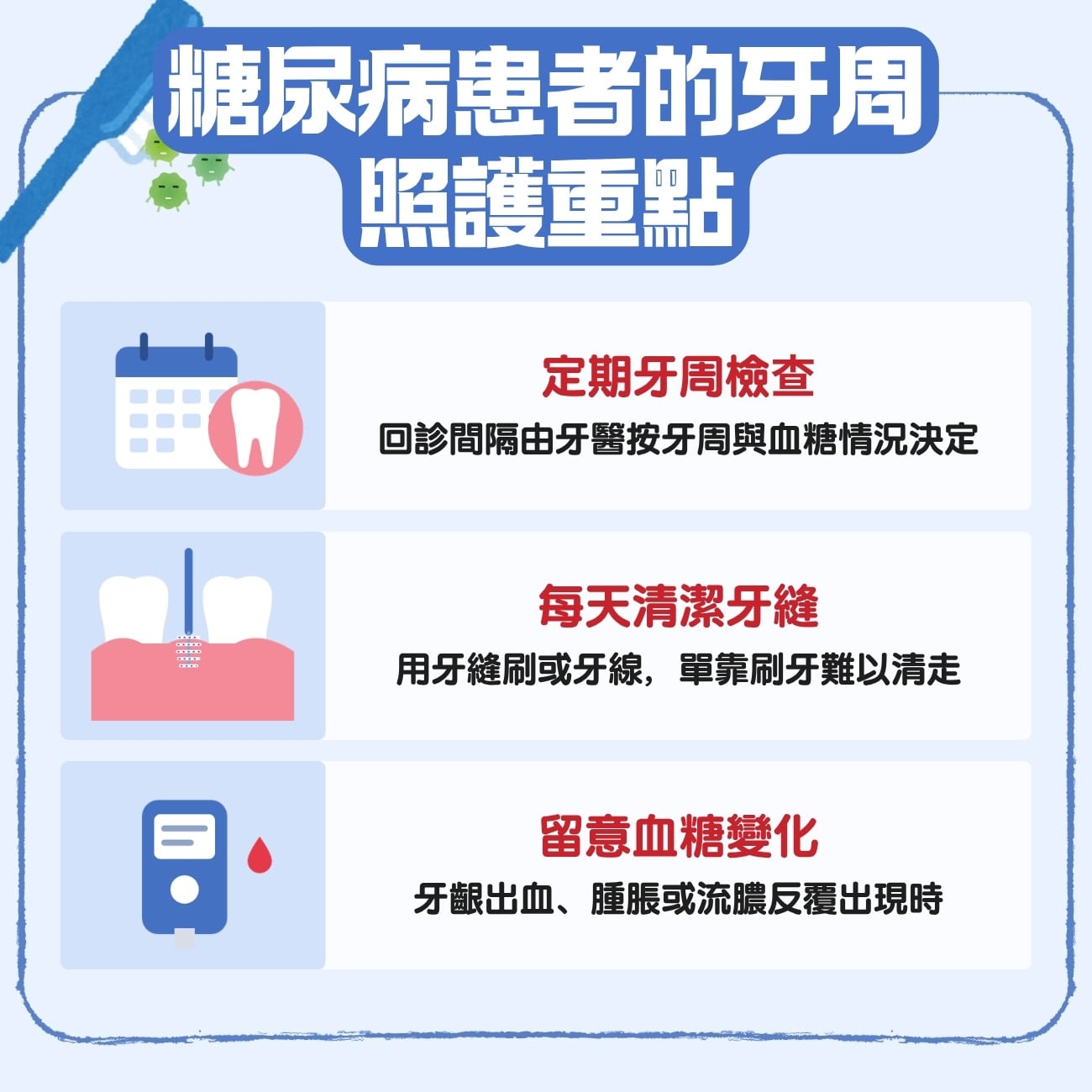
For people with diabetes, the key to gum care is managing gum health and blood sugar together:
- Have regular periodontal examinations, with the follow-up interval decided by the dentist according to your gum health and blood sugar control
- Clean between your teeth every day with interdental brushes or floss, as plaque near periodontal pockets is hard to remove by brushing alone
- When gum bleeding, swelling or pus keeps coming back, also keep an eye on recent changes in your blood sugar
Is Gum Disease Linked to Heart Disease and Stroke? The Current Picture and What You Can Do
A 2020 consensus report by the European Federation of Periodontology and the World Heart Federation stated that people with periodontitis are more likely to develop heart disease or stroke later; even after taking smoking and other factors into account, the association between severe periodontitis and cardiovascular disease remains. However, there is not yet enough research to show whether treating gum disease reduces heart attacks or strokes.
Gum disease and cardiovascular disease share risk factors such as smoking, diabetes, obesity and lack of exercise. The consensus report recommends that people with periodontitis actively manage risk factors such as smoking, lack of exercise, being overweight, blood pressure, and a diet high in saturated fat and refined sugar. Of these, stopping smoking and controlling blood sugar also help keep the gums stable.
For people who already have cardiovascular disease, gum care is also part of overall health management: controlling the existing condition, attending regular follow-up visits and keeping the gaps between teeth clean all need to go together.
Is Gum Disease Linked to Dementia? Oral Care for Older People
Observational studies have found that older people with more severe gum disease or more missing teeth have a higher rate of cognitive decline. However, whether this is a cause-and-effect relationship, and whether treating gum disease reduces the risk of dementia, is not yet conclusive.
The effect also works in the other direction. As cognitive abilities decline, older people become less able and less aware of the need to brush and clean between their teeth, and follow-up visits are harder to arrange, so gum disease is more likely to get worse. Carers can pay attention to the following:
- Help or remind older people to brush their teeth every day, and to clean between their teeth and their dentures
- Look out for changes such as bleeding gums, worsening breath, or avoiding chewing on one side
- Arrange regular oral examinations, and deal with gum problems while the person can still cooperate
FAQ
Can I have scaling and cleaning or gum treatment if I have diabetes or heart disease?
People with diabetes or heart disease can generally have scaling and cleaning and gum treatment. Before treatment, tell your dentist about your condition, your recent blood sugar control and any medication you are taking, such as blood thinners, and the dentist will arrange the timing and method of treatment accordingly. If your condition is not stable, it may be necessary to discuss with your doctor first.
Do people with gum disease need to have their blood sugar checked?
If you have fairly severe periodontitis, or inflammation that keeps coming back after treatment, and have never had your blood sugar checked, you can ask your doctor whether a check is needed. Raised blood sugar may not cause obvious symptoms at first, and many people only find out during other check-ups.
Summary
People with diabetes are advised to include regular periodontal examinations in their blood sugar management; for people with cardiovascular disease, the focus is on controlling shared risk factors such as smoking; and those caring for older people can help with daily oral hygiene. If gum bleeding, swelling or pus persists, you can arrange a periodontal examination with your dentist.
Disclaimer
This article is for information only and does not contain any invitation or solicitation. Patients should seek a professional dentist for diagnosis and treatment according to their own circumstances. To find out more or book a service, we recommend contacting the relevant clinic directly. Please choose suitable dental services and clinics carefully yourself.