
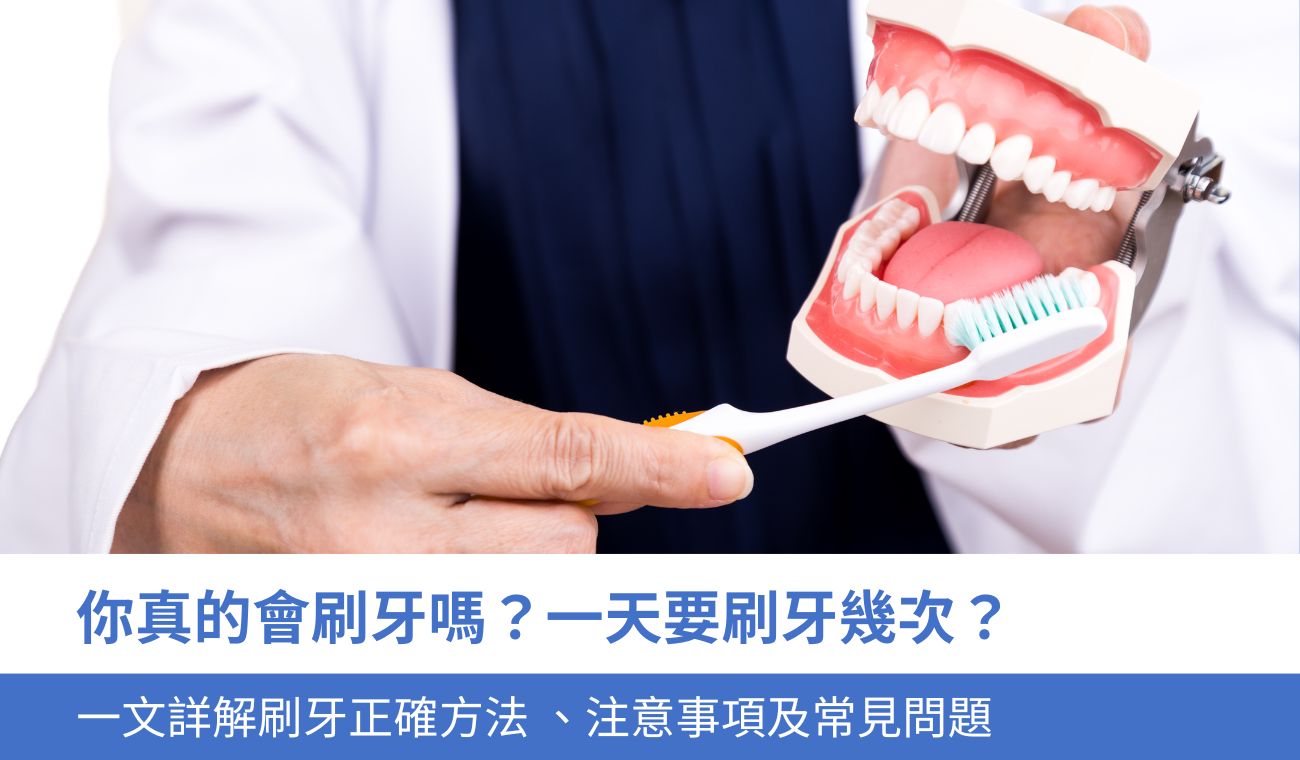

You brush your teeth every day, yet they still do not come clean, or you even developswollen, painful gums, tooth decayand other problems. Your brushing method may be incorrect!
Do you know the correct way to brush your teeth? This article explains in detail the correct brushing method, steps, duration and points to note, helping you prevent tooth decay andperiodontal disease, and have healthy teeth!
How should teeth be cleaned?
Good oral hygiene has a great effect on dental health, and brushing every morning and evening is the first step in preventing periodontal disease.
plaquebuilds up quickly on the tooth surfaces and at the gum margin, and if it is not removed in time, after a long build-up it forms oral problems such as tartar. The correct way of brushing and the use ofdental floss, interdental brushare therefore both key to keeping the mouth clean.
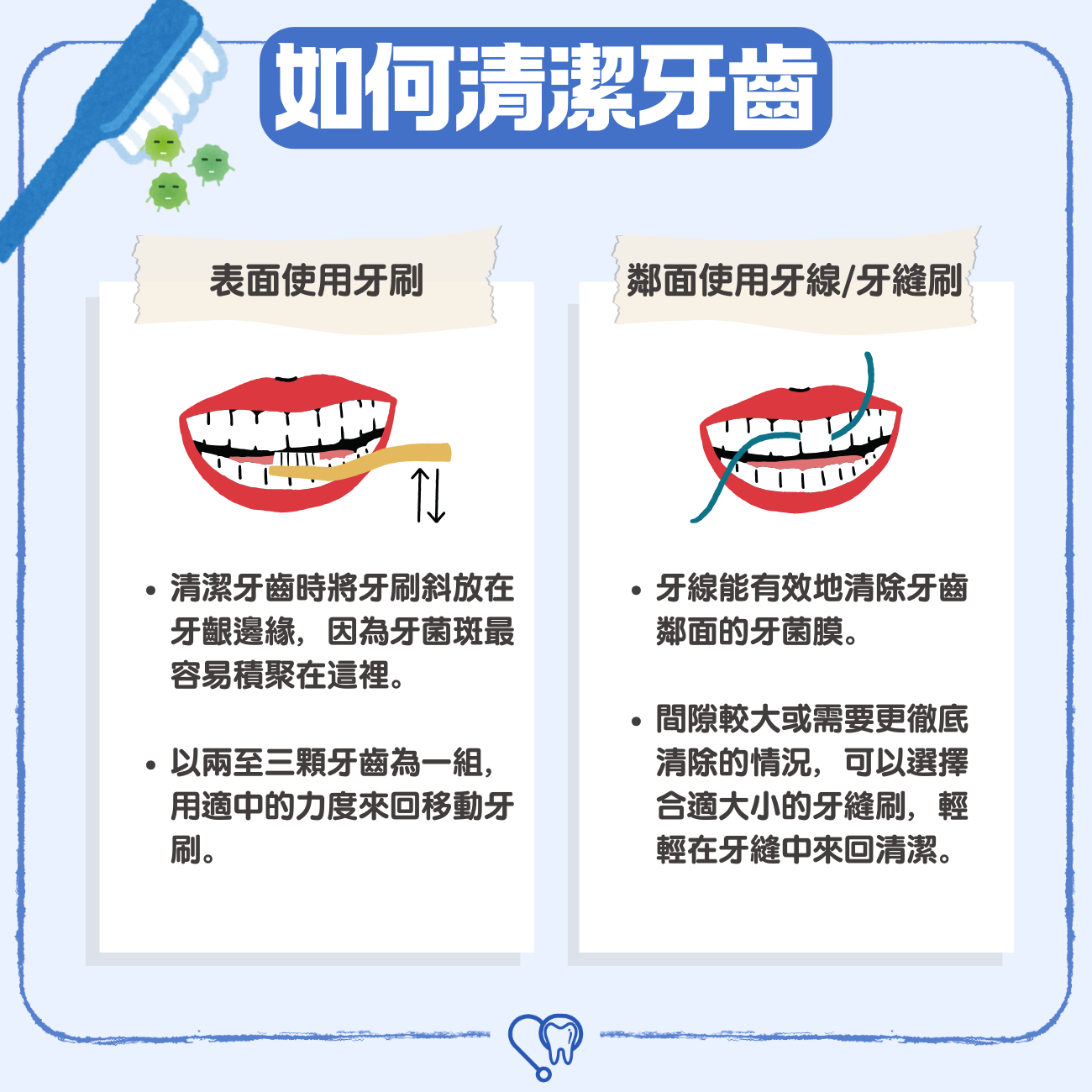
Using a toothbrush on the tooth surfaces
When cleaning the teeth, angle the toothbrush at the gum margin, because plaque accumulates most easily here. Treat two to three teeth as a group and move the brush back and forth with moderate pressure.
When brushing the inner surfaces of the front teeth, you can hold the toothbrush upright and use the bristles at the tip of the brush to clean the teeth, brushing from the gum towards the crown. Then place the brush on the chewing surfaces and move it back and forth to clean them.
As long as the method is correct and the cleaning is thorough enough, whether you brush first, floss first or use an interdental brush first, the mouth can be cleaned effectively.
Using dental floss and interdental brushes between the teeth
Dental floss can effectively remove plaque biofilm from between the teeth. Parents or carers can also use floss picks to help children or people who need assistance with cleaning.
- When using dental floss, take out about 20-25cm of floss and tie it into a loop.
- Control about 2cm of floss with the thumbs and index fingers of both hands, pull the floss from side to side and slide it slowly into the gap between the teeth, then wrap it closely against the side of the tooth to form a "C" shape, pull it to the deepest point of the gum groove, and pull it up and down to clean.
- Press the floss closely against the side of the neighbouring tooth and repeat the up-and-down motion.
- Carry out the above steps on the sides of every tooth to make sure the cleaning is thorough.
Where there are larger gaps or more thorough cleaning is needed, you can choose an interdental brush of a suitable size and gently clean back and forth in the gap.
Basic brushing steps
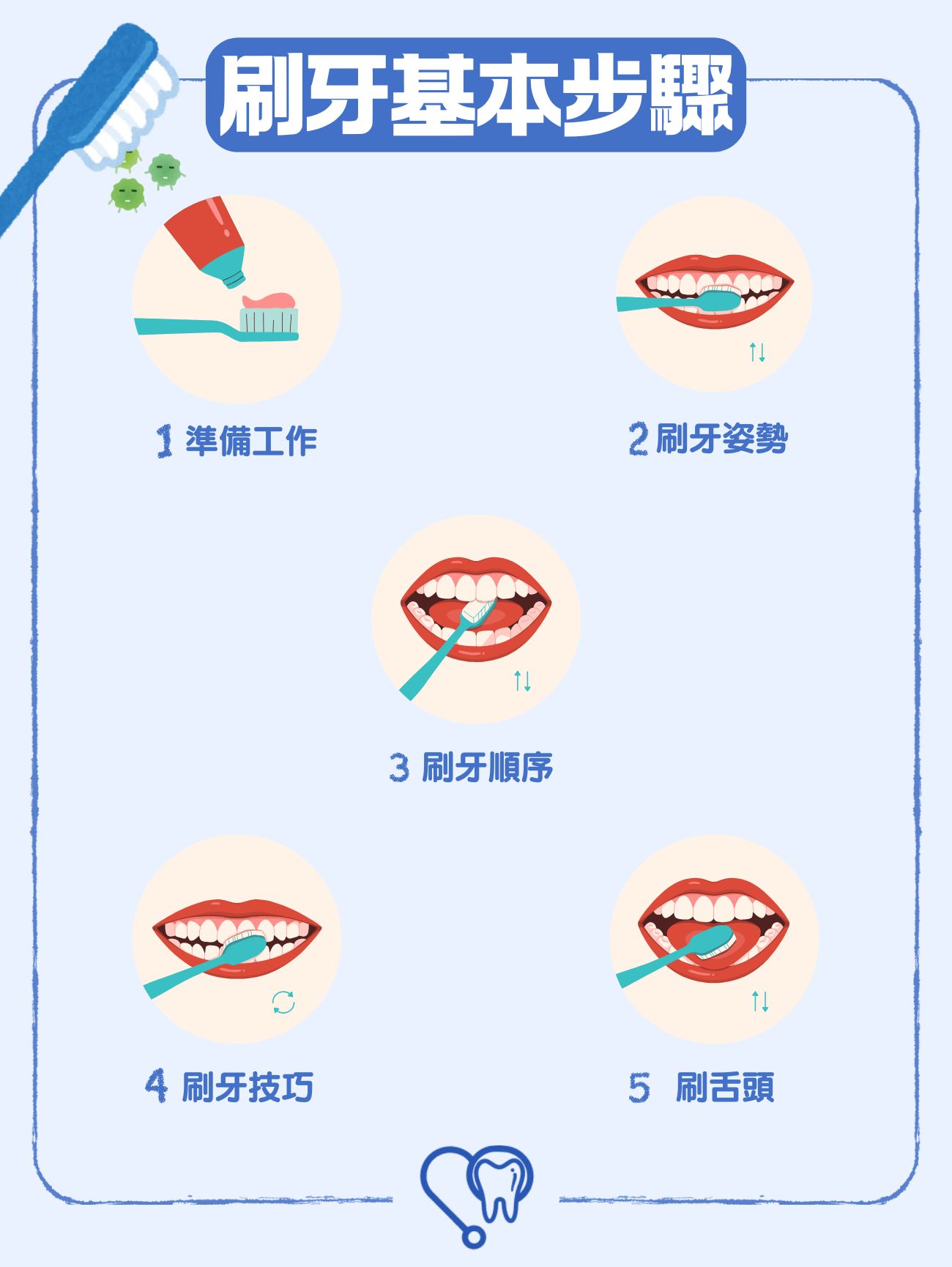
Preparation
Avoid brushing with water that is too cold or too hot. It is recommended to wet the toothbrush with water close to body temperature, to reduce irritation to the teeth, and then squeeze out a pea-sized amount of toothpaste.
Brushing posture
The correct brushing posture is to hold the handle of the toothbrush lightly between the thumb and index finger, keeping it steady, and place the brush at the junction of the teeth and gums at an angle of about 45 degrees, which helps clean along the gum line. Avoid brushing horizontally from side to side, to avoid wearing away the enamel.
Brushing order
You can begin brushing from the lower right back teeth, then brush in turn to the left back teeth, and then move on to the upper teeth, from left to right. Brush two teeth at a time with short side-to-side movements, about 10 strokes in each position.
Brushing technique
Use gentle circular or horizontal movements without too much force. Take special care to brush all tooth surfaces, including the front and back, the outer and inner sides, and the biting surfaces.
Brushing the tongue
After brushing the teeth, brush the tongue lightly to remove tongue coating and keep the breath fresh.
Learning the correct way to brush: the Bass technique
The Bass technique is a widely recommended brushing technique, because it canclean the teeth thoroughlyand reduce the occurrence of tooth decay and periodontal disease.
- First hold the toothbrush firmly between the thumb and index finger in a "thumbs-up" grip, and angle the bristles at 45 degrees to the tooth surface so that they slightly cover the gums.
- Brush two teeth together, moving the brush back and forth with appropriate pressure, gently about ten times, to make sure the tooth surfaces are clean.
- Follow the order of "start on the right and finish on the right, brush the upper jaw then the lower jaw, brush the outer surfaces first and then the inner surfaces", starting from the back teeth and working slowly forwards, beginning on the cheek side, then the biting surfaces, and finally the tongue side, to make sure every area is brushed.
How long should you brush for?
Each brushing session should last at least two minutes, to ensure that the outer, inner and chewing surfaces of every tooth are cleaned thoroughly. An effective method is to divide the mouth into four quadrants (upper, lower, left and right) and brush each area for about 30 seconds.
How to use an electric toothbrush
For people who find it hard to control brushing force or who have poorer hand coordination, such as older people and children, an electric toothbrush is worth trying!
In fact,how to use an electric toothbrushis much the same as an ordinary toothbrush. The difference is that the vibration of an electric toothbrush is already enough to clean, so no force is needed during use. If you worry that you are not brushing for long enough, you can also use the timer function of the electric toothbrush. Remember, though, to replace the brush head regularly to ensure oral health.
How many times a day should you brush?
According to the recommendation of the Department of Health of Hong Kong, brush at least twice a day, in the morning and in the evening.
Brushing in the morning helps remove bacteria that have built up overnight and keeps the breath fresh; brushing in the evening removes the food debris and bacteria accumulated during the day, protecting the teeth from an acidic environment while you sleep.
The ideal number of times to brush, however, is three times a day, that is, once after each of the three meals.
Points to note when brushing
Try to brush after all three meals, especially after eating acidic foods or drinks. How long after a meal should you brush? It is recommended to wait 30 minutes before brushing, to avoid damaging the tooth enamel.
Avoid brushing too hard, to prevent damage to the gums, which can lead to bleeding or gum recession. If there is bleeding when brushing, gently brush away the plaque biofilm at the bleeding spot to promote gum health.
Avoid rinsing repeatedly straight after brushing, so as not to wash away the fluoride in the toothpaste and reduce its effect in preventing tooth decay. It is recommended to rinse with about 100ml of water for 20 seconds and then spit it out, and to avoid eating within 30 minutes after brushing.
FAQ
How to choose a toothbrush and toothpaste?
toothbrush
Toothbrushes come in many types. When choosing, consider the softness of the bristles and the size of the brush head, to make sure the brush can turn flexibly in the mouth and reach every tooth surface.
Brushing with a soft-bristled toothbrush better protects the gums during brushing and avoids hurting them. The size of the brush head should depend on the size of the mouth. Adults can generally choose a head about the diameter of a HK$1 coin, although a small head is more flexible to use and can reach deep into every corner of the mouth.
toothpaste
The main function of toothpaste is to help clean the teeth, and it has different effects depending on the ingredients it contains. Whichever type you buy, it is advisable to choose a toothpaste containing fluoride, because fluoride effectively helps prevent tooth decay and inhibits the growth of plaque biofilm.
Desensitising toothpaste can reduce tooth sensitivity, but when used without sensitive teeth it has no obvious effect. Somewhitening toothpastesuse coarser particles to scrub away stains on the tooth surface, giving a whitening effect, but over the long term they make the tooth surface rough and let stains build up on it more easily.
You may therefore wish to ask your dentist for professional advice first before using any of the toothpastes above.
Should you use mouthwash before or after brushing?
mouthwashis a good supplement after brushing, helping to strengthen the cleaning of dirt between the teeth and to reducebad breathbut it cannot replace the function of a toothbrush or dental floss.
However, there are different views on when to use mouthwash. Some suggest using it after brushing and flossing; others suggest avoiding using it straight after brushingmouthwashso as not to wash away the fluoride in the toothpaste, and using it at another time of the day instead; and for others it can be used before or after brushing according to personal preference.
You can refer to the ingredients of the mouthwash manufacturer's product for how to use it, to make sure the product works to its full effect.
How often should you replace your toothbrush?
It is recommended to replace your toothbrushreplacing the brush head every three months, even if it still looks clean. If the bristles are splayed outwards or the base has changed colour, it means the toothbrush's cleaning ability has weakened and it needs to be replaced with a new one.
In addition, viruses or bacteria in the mouth may contaminate the toothbrush, so it is also advisable to change to a new toothbrush after a cold or illness, to prevent the bacteria on the toothbrush from causing infection again.
Summary
By mastering these correct brushing methods, we can effectively keep the mouth healthy and stay clear of the problems caused by dental disease. Remember to keep up correct oral care habits every morning and evening and to have regular scaling and polishing, so that dental health becomes part of your life.
Disclaimer
This article is for information only and does not contain any invitation or solicitation. Patients should seek a professional dentist for diagnosis and treatment according to their own circumstances. To find out more or book a service, we recommend contacting the relevant clinic directly. Please choose suitable dental services and clinics carefully yourself.


