
It is said that fluoride can preventtooth decay? But what is fluoride? And what must be done for it to help prevent tooth decay? This article explains the importance of fluoride in preventing tooth decay, looks at the effects of fluoride toothpaste and mouthwash and points to note when using them, and shows how to use fluoride correctly to protect oral health!
fluoridewhat are they?
Fluorides are a class of compounds containing negatively charged fluorine, which may be organic or inorganic. Fluorine, one of the halogens among the chemical elements, can form binary compounds with almost all other elements, except that it cannot combine with helium, neon and argon.
Low concentrations of fluoride are present in natural drinking water and food.Its unique chemical properties mean it is used not only in daily life; fluoride also provides strong support for scientific progress, for example
- Industrial uses: hydrofluoric acid is an important application of fluoride, used in the etching of glass, the smelting of aluminium and the preparation of other fluorine-containing compounds. In addition, fluoride also plays a very important role in the manufacture of steel, ceramics and lubricants.
- Biomedicine: certain fluorides are used as enzyme inhibitors, which can effectively inhibit the activity of specific enzymes and have potential value in scientific research and the treatment of disease.
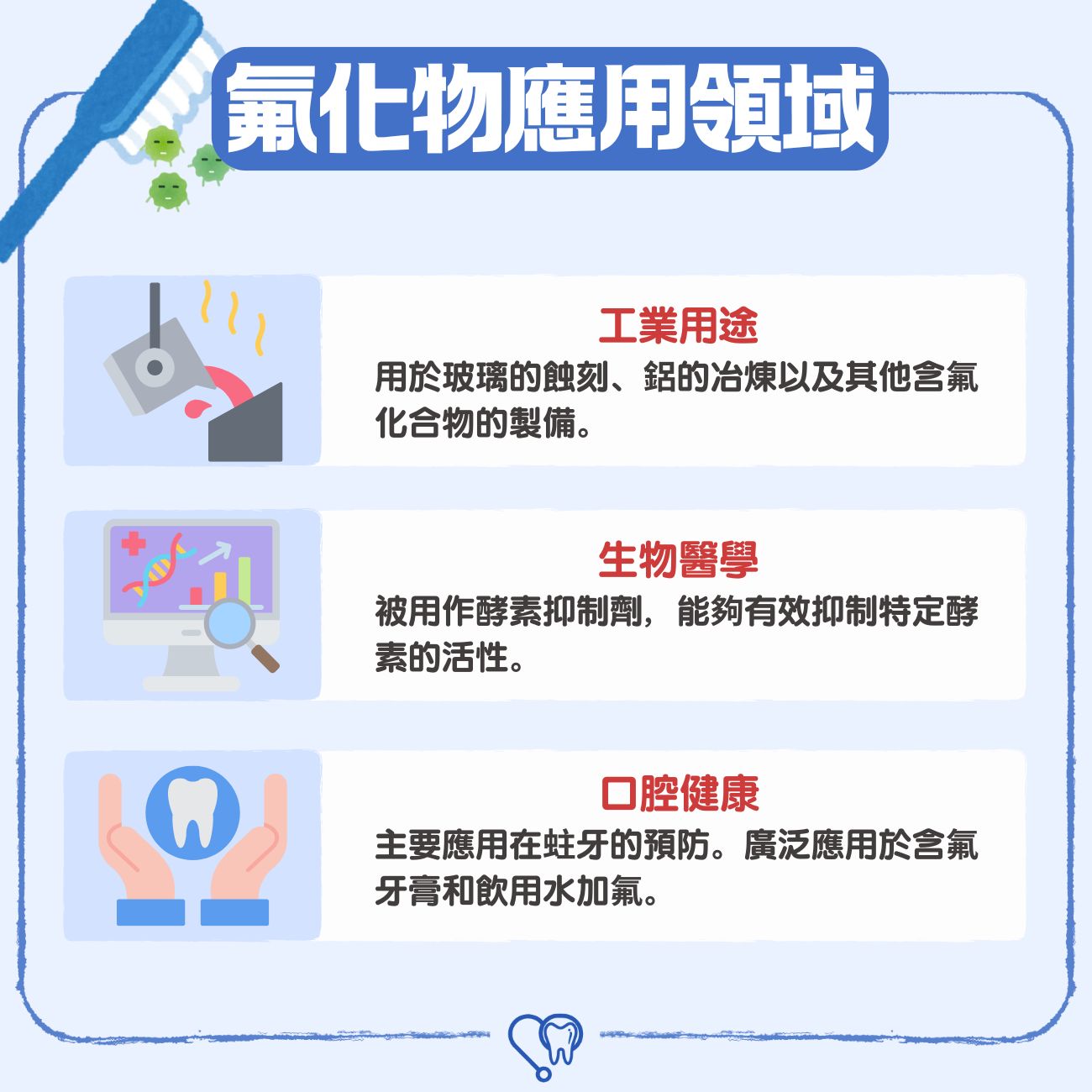
What we want to look at this time, however, is mainly its use in the field of dentistry:
Use in oral health
Fluoride is now also widely used in oral health, mainly for preventing tooth decay.
Fluoride can replace the hydroxyl groups in teeth to form stable fluorapatite, strengthening the acid resistance of enamel.
This property has been widely applied in fluoride toothpaste and the fluoridation of drinking water, which is recognised as one of the most important public health achievements of the 20th century.
fluorideWhat are the uses in oral hygiene?
Fluoride is commonly used in oral hygiene, which has not only improved the health of the teeth but also raised people's awareness of dental care, especially in preventing tooth decay and maintaining dental health.
Through products with added fluoride, such as toothpaste, mouthwash and dental floss, as well as professional dental treatment, the acid resistance of the teeth can be effectively improved, promoting oral health.
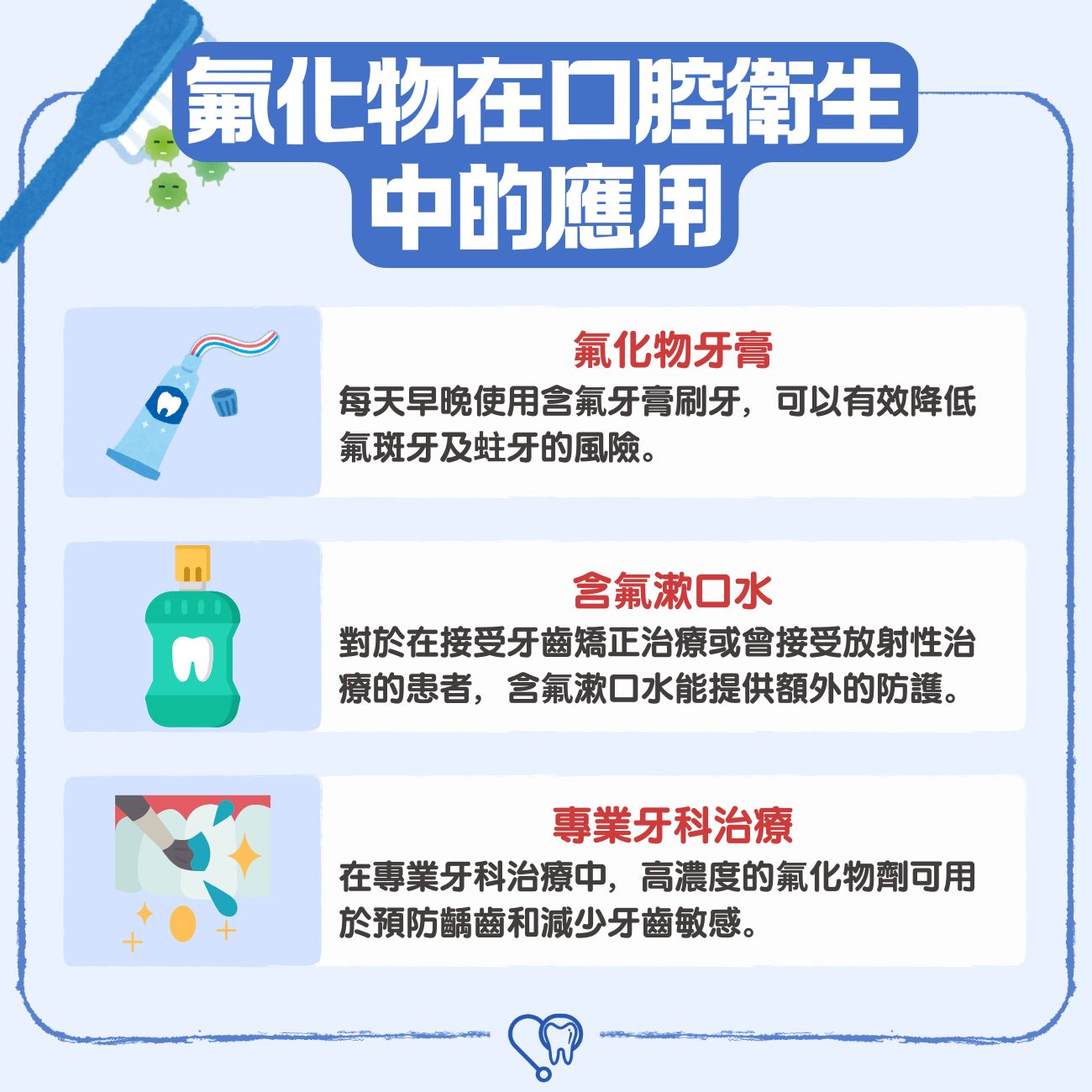
Fluoride toothpaste
In daily life, fluoride toothpaste is one of the most common oral care products.
Children should use toothpaste with a lower fluoride content, usually 500 – 1,000ppm, while the fluoride content for adults is 1,000 – 1,450ppm. Brushing with fluoride toothpaste every morning and evening can effectively reduce the risk of dental fluorosis and tooth decay.
Fluoride mouthwash
Although people in general do not need to use fluoride mouthwash, for patients who are undergoingOrthodonticstreatment or have previously received radiotherapy, fluoride mouthwash can provide extra protection. It should, however, be used under the guidance of a dentist to ensure safety and effectiveness.
Note in particular that children under 6 years old should avoid using mouthwash, to prevent them from swallowing it accidentally.
Professional dental treatment
In professional dental treatment, high-concentration fluoride agents can be used to prevent dental caries and reduce tooth sensitivity. The dental care staff will choose a suitable fluoride agent according to the patient's oral condition. There are mainly the following two forms:
- Fluoride gel: fluoride content 12,300ppm, usually placed in a specially made tray that the patient holds in the mouth for about 4 to 6 minutes, so that the fluoride penetrates into the teeth.
- Fluoride varnish: fluoride content 23,000ppm, suitable for treating early tooth decay, applied directly to the tooth surface.
Whichever type of fluoride agent is used, eating or brushing should be avoided for 4 hours after application, to ensure that the fluoride works to its fullest effect.
fluorideHow can tooth decay be prevented?
Water fluoridation is considered one of the most effective, convenient and economical ways to prevent tooth decay. Hong Kong has added fluoride to tap water since 1961, with the water containing 0.5ppm of fluoride, and the rate of tooth decay among residents has fallen greatly since then.
Fluoride protects the teeth in the following ways:
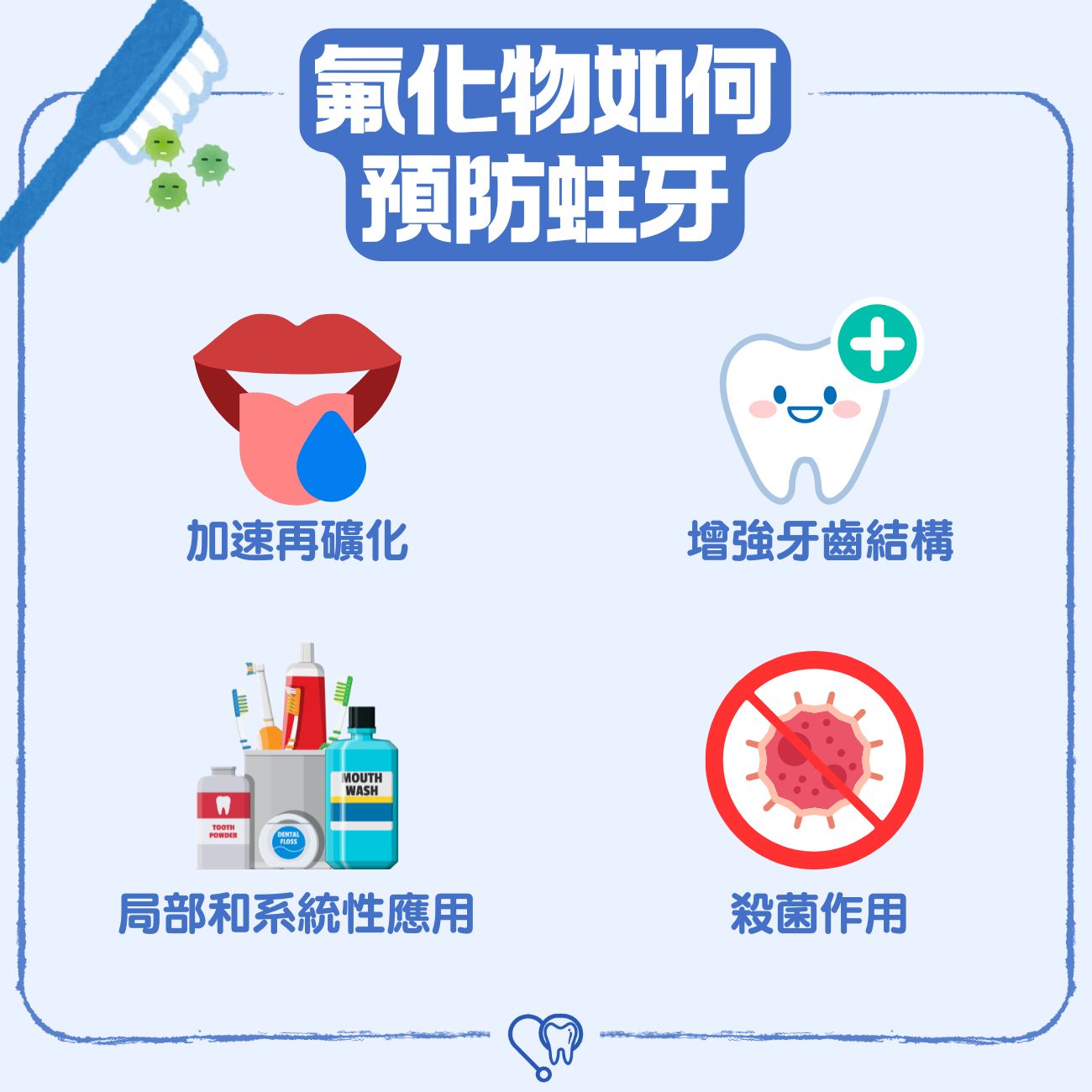
- Speeds up remineralisation: fluoride speeds up the replenishment of lost minerals by saliva and repairs early demineralisation, so that the teeth can better resist attack from tooth decay. It reduces the loss of calcium from the teeth and helps calcium to be restored.
- Strengthens tooth structure: fluoride combines with tooth enamel to form fluorapatite, which is more acid-resistant, increasing the acid resistance of the teeth. These chemical reactions make the teeth stronger.
- Topical and systemic application: topical use includes toothpaste, mouthwash and fluoride applications containing fluoride, which strengthen the protection of the teeth; systemic methods include fluoridated drinking water and fluoride tablets, which enter the body through food and water and act during tooth development.
- Antibacterial action: fluoride can effectively inhibit the activity of bacteria in plaque and reduce the risk of tooth decay.
How do I know whether I am getting enough fluoride?
To find out whether your fluoride intake is sufficient, you can check the fluoride content of the drinking water in your area. If the fluoride content of the water is below 0.3ppm, additional fluoride supplements may be needed. Fluoride intake from the daily diet is also a factor to consider.
Regular dental check-ups can also help assess the condition of your teeth, and fluoride supplement recommendations can be given as needed.
Using fluoride toothpaste in daily life is the basic way to maintain good oral health. It is recommended to use it at least twice a day.
Fluoride mouthwash is also an effective supplement, but if it is already being used at school, there is no need to use extra at home.
Points to note when using fluoride products
fluoride toothpaste
Choose a fluoride concentration that suits the age.
For children under 3 years old, use an amount the size of a grain of rice; for children over 3, the size of a green pea. Parents can help young children with brushing to prevent them from swallowing it and feeling unwell.
Fluoride mouthwash
When choosing, pay attention to the instructions and the sodium fluoride (NaF) concentration, and do not rinse with water after use, to ensure that the fluoride can act on the tooth surface. It is recommended for patients at high risk of tooth decay and for patients wearing braces.
Fluoride tablets
The dose should be taken according to a dentist's assessment, and the tablet should be held in the mouth and left to dissolve slowly.
Fluoride Application
Avoid eating or drinking for 30 minutes after the treatment, to promote absorption of fluoride by the teeth. For pre-school children it is recommended once every six months; for those at high risk, and for adolescents aged 12 to 18 with white spots before decay appears, once every three months is recommended.
However, fluoride application is not commonly provided in children's oral health care in Hong Kong.
Other methods
If the drinking water in your area has a low fluoride content, you may consider additional fluoride supplements. If young children use too much fluoride, it may cause dental fluorosis.
If you have any questions about the use of fluoride above, it is advisable to seek advice from a professional dentist.
FAQ
Do I have to use fluoride toothpaste?
In oral health care, fluoride toothpaste is generally considered an effective tool for preventing dental caries, helping to strengthen teeth and reduce bacterial activity.
However, not everyone has to use fluoride toothpaste. For consumers who are allergic to fluoride or who prefer natural products, fluoride-free toothpaste is also a feasible choice. Fluoride-free toothpaste can protect the teeth through other ingredients or enhanced cleaning, but its anti-caries effect may not be as marked as that of fluoride toothpaste.
Does applying fluoride to teeth have side effects?
Fluoride is a trace nutrient needed by the human body. Used in appropriate amounts, it promotes dental health, similar to other vitamins or medicines.
However, excessive use of fluoride may cause some adverse reactions. The most common side effect is dental fluorosis, which usually occurs when too much fluoride is taken in during tooth development, causing white or brown spots on the surface of the baby teeth and even possibly pits, affecting the appearance of the teeth. Some people may also have an allergic reaction to fluoride, showing as a skin rash or other discomfort.
Summary
When choosing fluoride products, the amount should be carefully controlled and used under the guidance of a professional dentist, to avoid the negative effects of overuse. Understanding your own tolerance of and need for fluoride, and choosing suitable products and care methods, is the way to better maintain oral health.
Disclaimer
This article is for information only and does not contain any invitation or solicitation. Patients should seek a professional dentist for diagnosis and treatment according to their own circumstances. To find out more or book a service, we recommend contacting the relevant clinic directly. Please choose suitable dental services and clinics carefully yourself.



