
With so many whitening toothpastes on the market, can they really make teeth whiter? Are there any recommended whitening toothpastes that remove stubborn stains? This article sets out information about whitening toothpaste to help you say goodbye to the trouble of stains and keep your teeth bright white and your mouth healthy!
whitening toothpasteHow does it work?
The main function of whitening toothpaste is to remove stains and restore the teeth to their original colour, but it cannot truly change the natural colour of the teeth as a dentist's whitening treatment can. So how exactly does it work?
whitening toothpasteMain formulation
The formulation of whitening toothpaste usually includes the following ingredients, and the effects differ according to their different actions:
- Abrasives(such as silica): remove surface stains by physical abrasion, but note the content and the size of the abrasive particles.
- Chemical whitening ingredients(such as peroxides): penetrate the tooth structure and break down stains.
- Enzymes or active ingredients(such as papain and glucanase): soften stains so that cleaning is more effective.
- fluoride: can promote remineralisation of the tooth enamel, improving the defences of the teeth and preventing tooth decay.
Removes stains and achieves a teeth whitening effect
The ingredients above can effectively remove dirt and light pigment from the tooth surface, so with long-term use the teeth look brighter and whiter.
Put simply, whitening toothpaste mainly targets extrinsic stains (such as staining caused by coffee, tea and smoking), but its effect is more limited on teeth that are naturally yellow or that have yellowed from within with age.
whitening toothpasteTypes and who they suit
Different whitening toothpastes suit different needs, and choosing the one that suits you avoids harming the teeth!
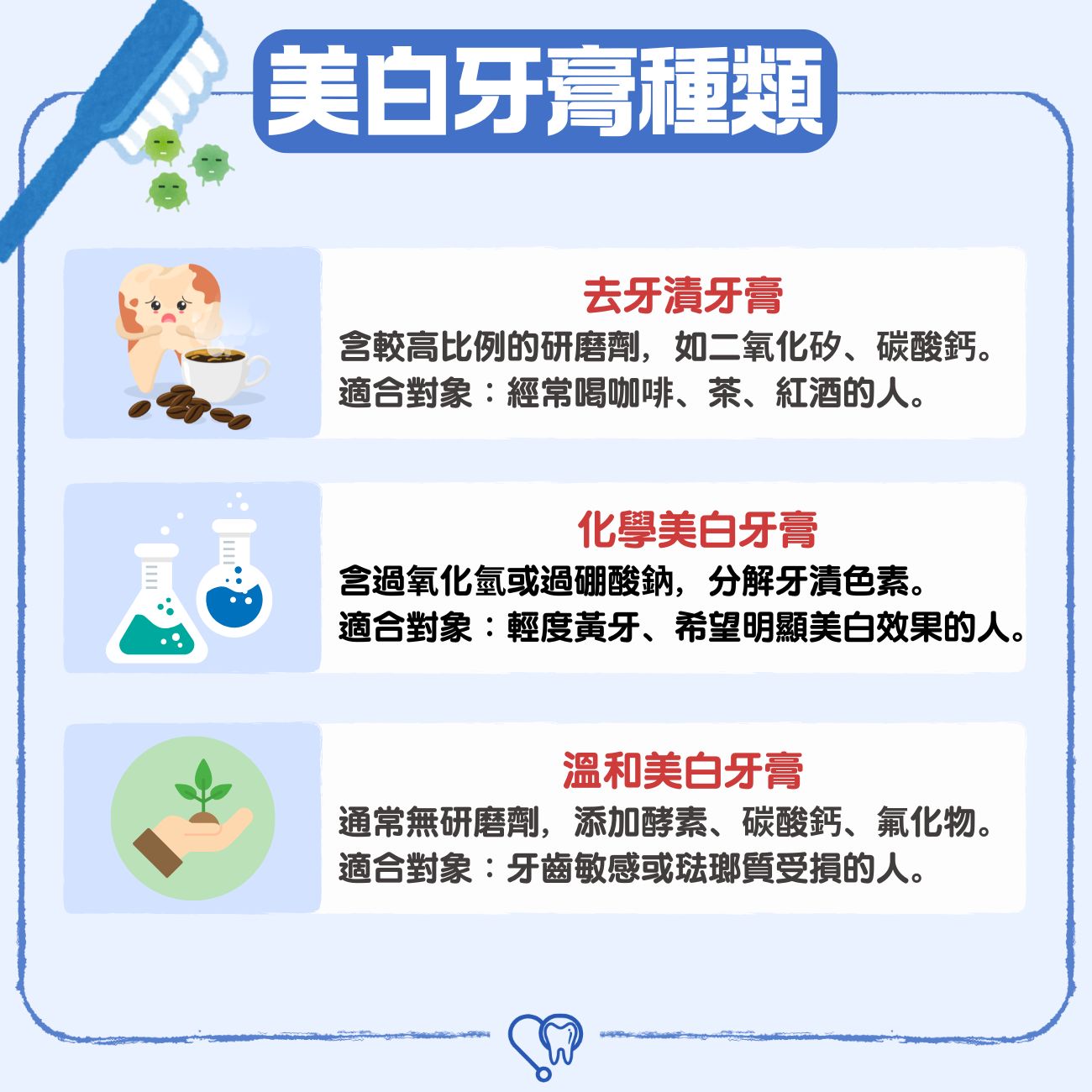
Stain-removing toothpaste(contains abrasives, suitable for heavy coffee and tea stains)
- ingredients: contains a higher proportion of abrasives, such as silica and calcium carbonate.
- Suitable For: people who often drink coffee, black tea, green tea or red wine.
- Effect: removes surface stains by physical abrasion, but long-term use may wear down the enamel, making the teeth more sensitive instead.
Chemical whitening toothpaste (contains peroxides, suitable for mild yellowing)
- ingredients: contains hydrogen peroxide or sodium perborate, which break down stain pigments.
- Suitable For: people with mildly yellow teeth who want an obvious whitening effect.
- Effect: can penetrate the inside of the tooth to break down pigment, but needs long-term use before it takes effect.
Gentle whitening toothpaste (abrasive-free, suitable for sensitive teeth)
- ingredients: usually has no abrasives, with added enzymes, calcium carbonate and fluoride.
- Suitable For: people with sensitive teeth or damaged enamel.
- Effect: the cleaning effect is gentler and does not over-irritate the teeth.
Tips for using whitening toothpaste
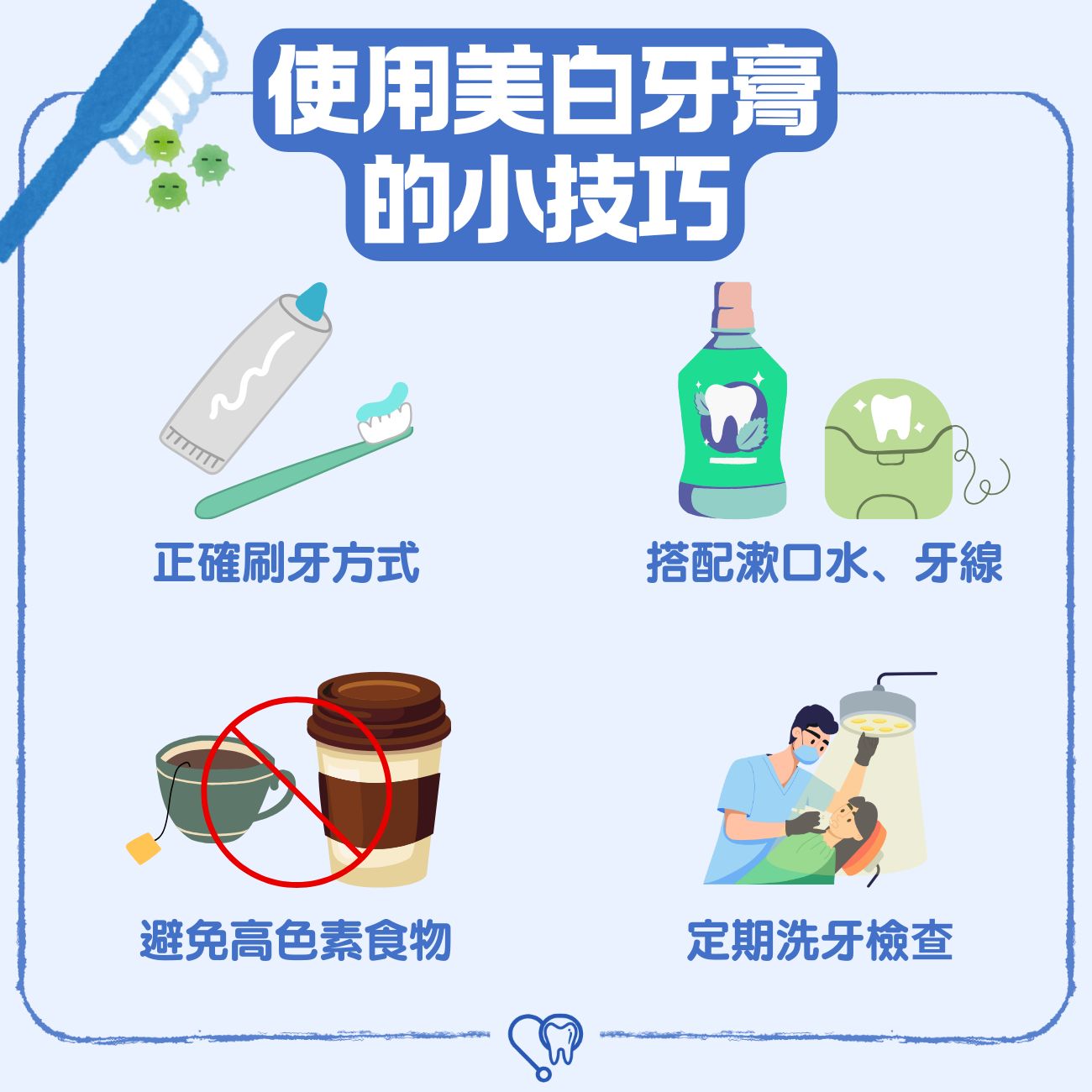
correct toothbrushing technique
Use a soft-bristled toothbrush (avoiding excessive force) orelectric toothbrush, and brush for at least two minutes so that the whitening ingredients can work. Brushing gently with the brush at a 45-degree angle cleans the gum line and the gaps between teeth more effectively.
Use together with mouthwash and dental floss
Although whitening toothpaste can clean the teeth, theplaquebetween the teeth also affects tooth colour. Cleaning between the teeth with dental floss, together with a fluoride mouthwash, helps reduce plaque build-up and keep the teeth white.
Avoid highly pigmented foods
Avoid foods that stain easily, such as coffee, black tea, cola and red wine. If this cannot be avoided, remember to rinse your mouth straight after the meal, to reduce residual pigment and lower the chance of tooth discolouration.
regular scaling and polishing check-ups
Go to a dental clinic regularly every six monthsScaling and Polishingto have your teeth cleaned and examined, which can remove stubborn deposits and pigment build-up. If you want a more obvious whitening effect, you can also consider the whitening treatment offered by dentists, for a longer-lasting whitening effect.
FAQ
whitening toothpasteIs more better?
In fact it is not. Overusing whitening toothpaste, especially types containing abrasives, may damage the enamel, which not only leads to sensitive teeth and gums but also lets the yellow dentine show through.
It is therefore recommended to follow the normal brushing frequency and use it 2 times a day.
whitening toothpasteDoes it help prevent tooth decay?
Some fluoride-containing whitening toothpastes can indeed strengthen the enamel and help prevent tooth decay. But if it contains only whitening ingredients, it does not necessarily have an anti-decay effect. Therefore, choosing a whitening toothpaste that containsfluorideingredients can look after dental health at the same time.
whitening toothpasteCan it be used every day?
Most whitening toothpastes can be used every day, but if your teeth are more sensitive, you should choose a gentle whitening toothpaste or alternate it with ordinary toothpaste, to reduce irritation to the teeth.
Summary
Although whitening toothpaste can improve the appearance of the teeth, it is not a magic that makes them white overnight. Choosing a type that suits you and that you like, together with good brushing habits, is the key to keeping a bright white smile!
Disclaimer
This article is for information only and does not contain any invitation or solicitation. Patients should seek a professional dentist for diagnosis and treatment according to their own circumstances. To find out more or book a service, we recommend contacting the relevant clinic directly. Please choose suitable dental services and clinics carefully yourself.



