
How long has it been since you replaced the toothbrush you use every day? This article explains how often a toothbrush needs replacing, and which situations call for replacing it earlier, to help maintain daily oral cleanliness and dental health.
Why do toothbrushes need replacing? Does it affect oral health?
You may think brushing every day should keep your mouth perfectly clean? But have you thought that the toothbrush itself can also harbour bacteria? Especially when the bristles are splayed, deformed or even mouldy, the cleaning effect is greatly reduced, and it may even scratch the gums and teeth.
Although a toothbrush is just a simple small cleaning tool, it plays a very key role. If you ignore the condition of your toothbrush, it is as if you are leaving your mouth as a breeding ground for bacteria, which over time may easily causegum inflammation, bad breath, and evenperiodontal disease.
Are there still bacteria even if I brush every day?
Do not assume you are fine just because you brush morning and night. In fact, the toothbrush itself accumulates food debris, saliva and even bacteria from the mouth with every use. Especially in a damp environment, if it is washed or dried improperly, the amount of bacteria on the toothbrush may be far greater than you imagine.
A brush head that has been used too long affects cleaning performance
If a toothbrush is not rinsed and shaken dry properly after brushing, water and dirt may remain between the bristles and affect how clean the toothbrush is. Therefore, after brushing it is recommended to rinse the toothbrush clean and leave it to dry naturally in a ventilated place.
After a toothbrush has been used for a while, the bristles may wear down and become deformed, which lowers cleaning efficiency and may also increase the chance of gum discomfort. If the bristles are clearly splayed or deformed, or dirt remains on the brush head, it is recommended to replace it promptly.
Mouldy toothbrushwhat to do? How often should a toothbrush be changed to be safe?
Recommended replacement every 3~4 months
How often should a toothbrush be changed to be safe?
As a basic guideline, replace your toothbrush every 3 to 4 months to keep it in the best condition. Even if it looks clean, the bristles wear down naturally during this time and the cleaning effect gradually drops, so replacing it every 3 months is still recommended.
If you find discolouration, an odour or even spots at the base of the bristles, these are signs of mould or too many bacteria. Do not keep using it; replace it with a new toothbrush straight away!
Pay extra attention to electric toothbrush heads
If you usually brush with a lot of force, or use an electric toothbrush, it is recommended to replace it even more often, such as changing the brush head every two months.
Electric toothbrush heads rotate at high speed. Although they clean well, they also wear out faster, and if not replaced regularly, they may put your oral health at risk instead.
In which situations should you replace your toothbrush immediately?
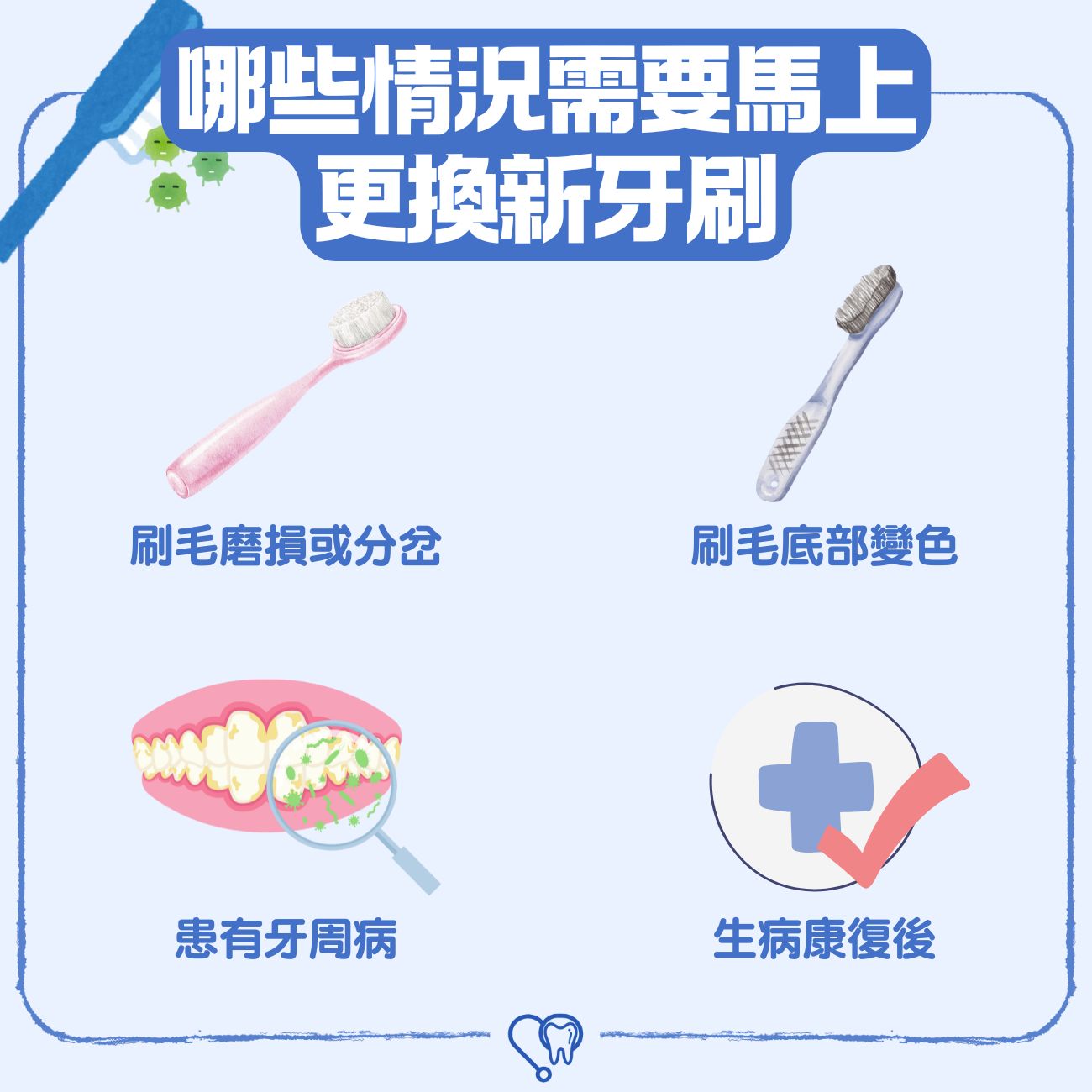
Worn or splayed bristles
Normal bristles stand upright, which lets us adjust the toothbrush by hand when brushing and keeps the bristles at the correct angle against the tooth surface.
If you see the bristles starting to bend or even splay, it means the toothbrush is nearly at the end of its life. It naturally affects how well the teeth are cleaned and may also injure the gums. Even if it has not been used for three months, you should replace it decisively.
Discolouration at the base of the bristles
If you find yellow or black stains at the base of the bristles, the toothbrush may have started to go mouldy or has accumulated too many bacteria. In this case, regardless of how long it has been used, it should be replaced immediately, so that illness does not enter through the mouth.
Having periodontal disease
For people whose gums are inflamed, swollen, sore or bleeding, the number of bacteria in the mouth increases markedly. If you keep using a dirty, old toothbrush at this time, bacteria can more easily invade the periodontal tissues further, causing the condition to worsen.
It is recommended to replace the toothbrush more often during this period, and to switch to a new one as soon as the condition improves, to avoid recurrence.
After recovering from illness
After a cold,cold soreor other viral infection has cleared up, the toothbrush may in fact still carry viruses, and it is not recommended to keep using the original toothbrush for cleaning.
To prevent relapse or passing it on to others, it is recommended to change to a new toothbrush as soon as you recover, to protect the cleanliness and health of yourself and your family.
Common myths about cleaning and storing toothbrushes
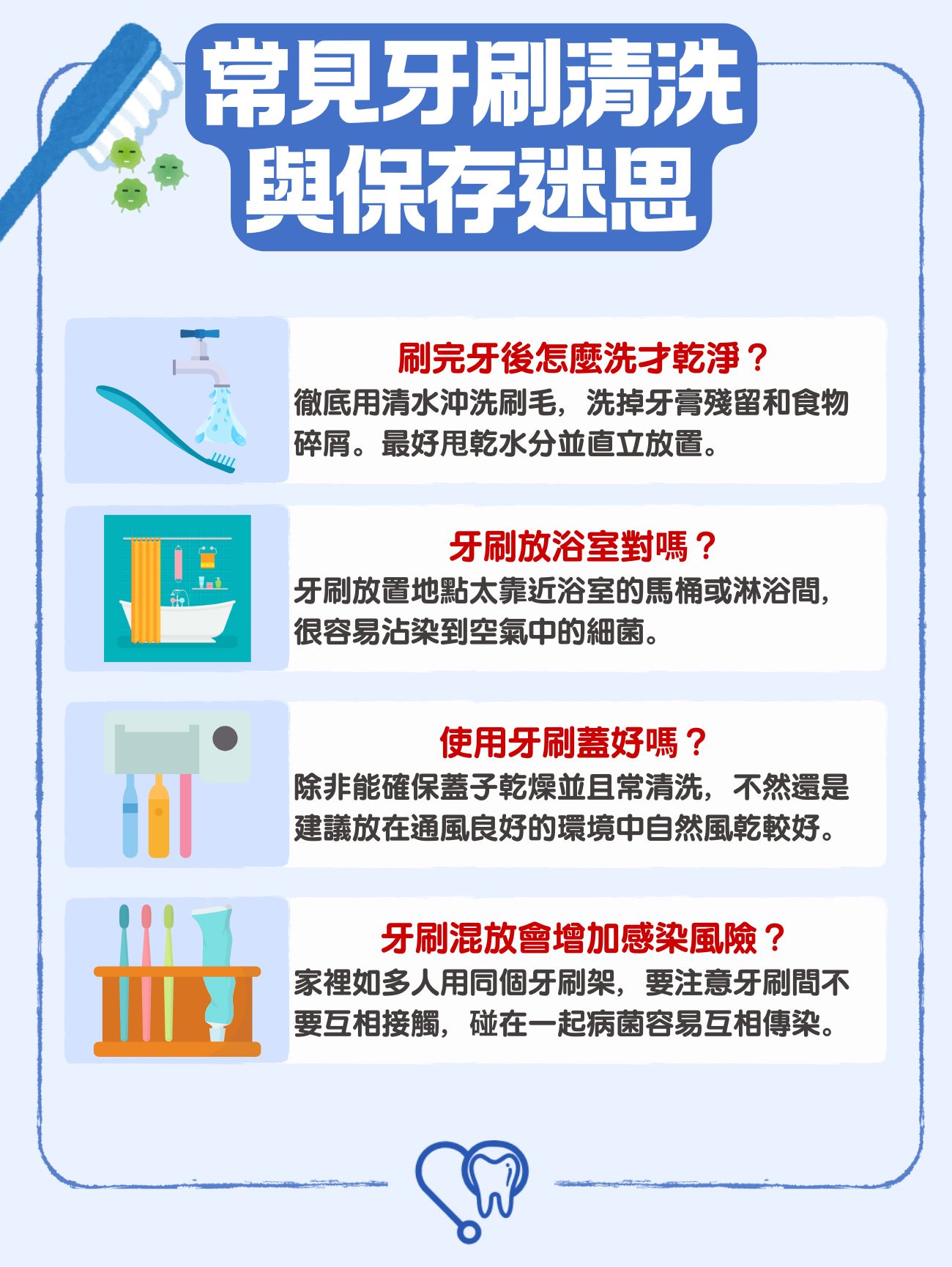
How should you wash your toothbrush after brushing to get it clean?
After each brushing, remember to rinse the bristles thoroughly with clean water to wash off toothpaste residue and food particles. After washing, it is best to shake off the water and store it upright, and avoid putting it in an enclosed space where moisture is trapped and bacteria grow.
Is it right to keep toothbrushes in the bathroom?
Although the bathroom is where we usually keep toothbrushes, it is also one of the dampest places in the home with the most bacteria. If the toothbrush is placed too close to the toilet or the shower, it easily picks up airborne bacteria or mould.
Is it good to use a toothbrush cover?
A toothbrush cover seems to keep out dust, but if it is not washed often, it actually traps moisture inside and speeds up mould growth on the toothbrush. Unless you can make sure the cover is dry and washed often, it is still recommended to leave the toothbrush in a well-ventilated place to air-dry naturally.
Does keeping toothbrushes together increase the risk of infection?
If several people at home share one toothbrush holder, take care that the toothbrushes do not touch each other. If toothbrushes touch, germs may pass from one to another, so take special care to keep them apart when someone at home has a cold or another viral infection.
Replace your toothbrush regularly to avoid leftover bacteria
A toothbrush is not only an oral cleaning tool; its own hygiene directly affects the mouth too. If you use a worn or dirty toothbrush over a long period, bacteria quietly invade with every brushing, leading totooth decay, periodontal disease and other problems that affect health.
Good oral care habits include brushing twice a day, together withcorrect toothbrushing method. And replacing your toothbrush regularly to prevent bacterial growth is in fact the simplest and cheapest way to look after your oral health, and also gives you a chance to try out whether toothbrushes with different designs suit you better!
Summary
How often should you change your toothbrush? Do not assume you can use it until it "breaks"! Whether you use an ordinary or an electric toothbrush, you should check and replace it regularly, especially when the bristles are deformed or discoloured, or when you are ill. Developing the habit of replacing your toothbrush regularly not only protects your teeth but also safeguards your overall health.
Disclaimer
This article is for information only and does not contain any invitation or solicitation. Patients should seek a professional dentist for diagnosis and treatment according to their own circumstances. To find out more or book a service, we recommend contacting the relevant clinic directly. Please choose suitable dental services and clinics carefully yourself.



