


What are the benefits of using mouthwash?
Mouthwash (mouth rinse)
Mouthwash is what we often call a mouth rinse, and is the best aid for helping us maintain oral health.
The taste of mouthwash varies with its ingredients, and a cooling sensation or a slight sweetness is common. Mouthwashes are classified by their different effects, and choosing one that suits you and using it regularly over the long term can effectively inhibit plaque and gingivitis and keep the breath fresh.
Benefits of using mouthwash
Although brushing is the foundation of keeping the mouth healthy, there are some corners of the mouth that a toothbrush alone cannot clean thoroughly, and using mouthwash together with brushing gives more complete care for the teeth.
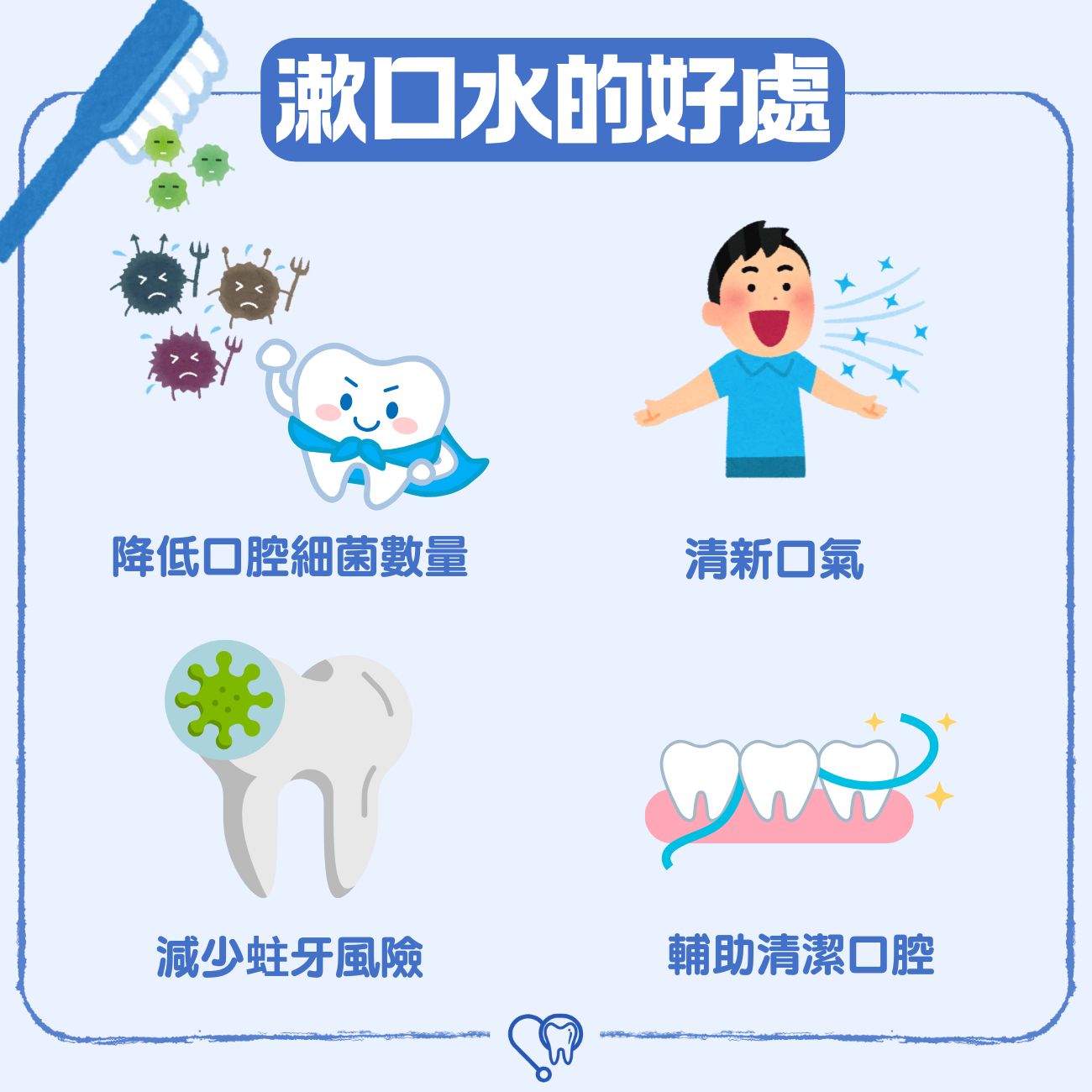
- Reduces the number of bacteria in the mouth: the antibacterial ingredients in mouthwash help remove bacteria from the mouth and reduce the formation of plaque and calculus, lowering the risk ofGingivitisandtooth decayrisks.
- Freshens breath: for people who easily havebad breathproblems, although mouthwash cannot cure bad breath at its root, it can effectively reduce odour-causing bacteria and quickly clear odour from the mouth.
- Reduces the risk of tooth decay: mouthwash containing fluoride can strengthen the enamel and help prevent tooth decay, and is especially suitable for people who easily get tooth decay.
- Assists oral cleaning: used together with brushing, it provides all-round oral care. Mouthwash can penetrate areas that a toothbrush and dental floss cannot easily reach, such as between the teeth, at the gum margin, on the back of the tongue and deep in the mouth, helping rinse away residual food particles and bacteria. When you cannot brush straight away, mouthwash can help the teeth get rid of food debris in time and prevent bacteria from growing.
Who needs to use mouthwash long-term?
For people with the following dental conditions, mouthwash has an excellent effect in maintaining oral hygiene:
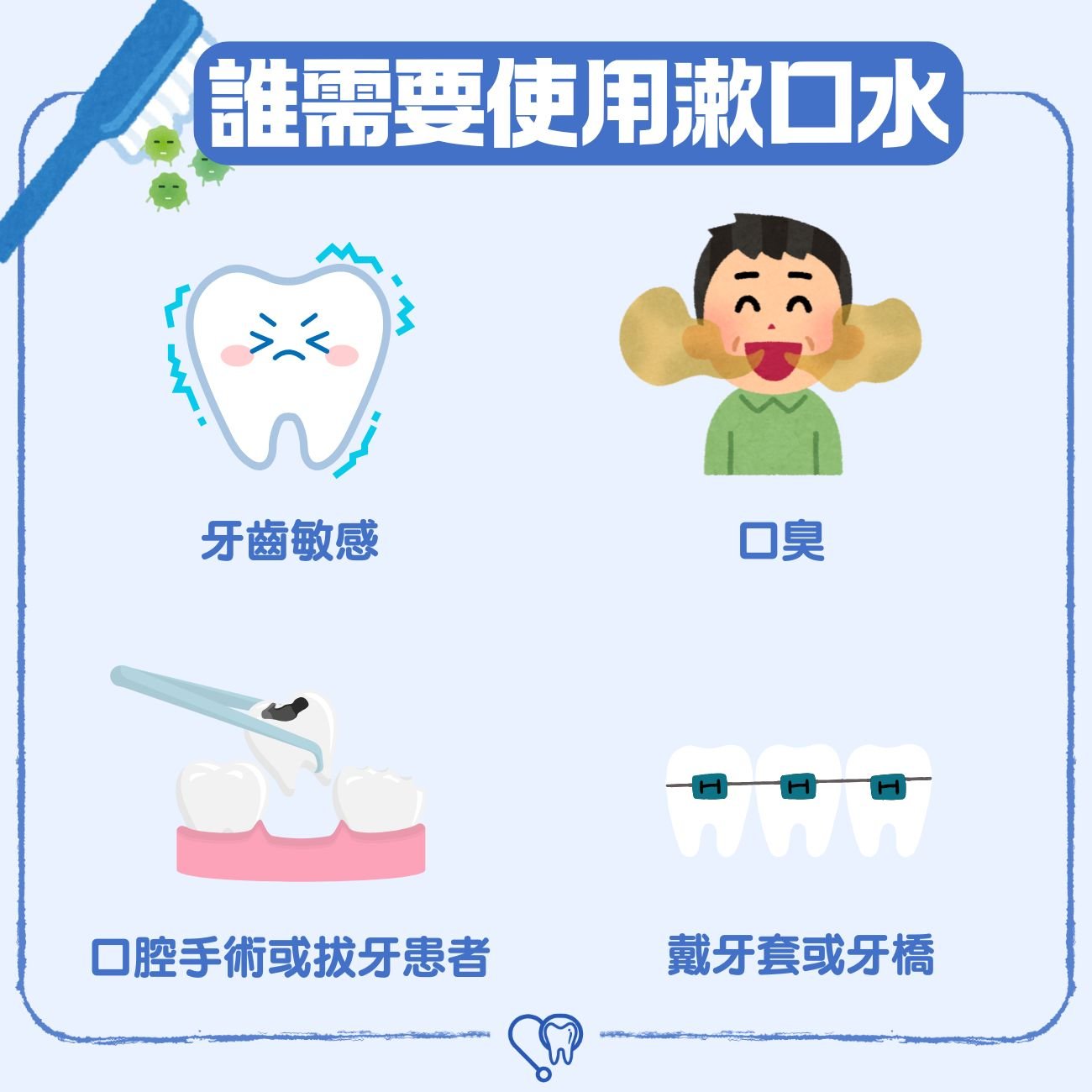
Tooth Sensitivity
People with tooth sensitivity problems (such as periodontal disease and gingivitis) are advised to use mouthwash as a supplementary cleaning aid, reducing the build-up of plaque and tartar. Some mouthwashes add plaque-inhibiting ingredients to reduce the risk ofgum inflammation, or contain pain-relieving and desensitising ingredients, easing tooth sensitivity and relieving oral discomfort.
bad breath
Bad breath is an odour caused bytartaror by bacteria in the mouth breaking down food debris. The ingredients in mouthwash can break down odour molecules and mask the smell, so that the breath is fresh again in the short term.
Particularly suitable for people in jobs with frequent contact with others (such as sales and customer service staff), keeping the breath fresh and enhancing professional image. There are also many small, portable packs on the market, which is even more convenient.
Patients who have just had oral surgery or a tooth extraction
Patients who have just hadExtractionor are undergoing oral surgery should, while the wound has not yet fully healed, avoid excessive friction or brushing too hard, which could injure the wound a second time. At this point you can choose a gentle alcohol-free mouthwash to help clean the mouth, avoiding irritation to the wound.
Wearing crowns or dental bridges
The areas around braces,Dental BridgeorDental Implantseasily accumulate plaque, and brushing and flossing do not always clean the blind spots thoroughly, whereas mouthwash can penetrate these blind spots to strengthen cleaning, helping reduce bacterial growth and lowering the risk of tooth decay and periodontal inflammation.
Common types of mouthwash
Daily cleaning mouthwash
Daily cleaning mouthwash is mainly an aid to cleaning the teeth. The fluoride in it can protect the enamel and strengthen the teeth's resistance to acid erosion, and the antibacterial ingredients reduce the growth of bacteria in the mouth and prevent tooth decay. Daily cleaning mouthwash is also the gentlest and most common type.
Daily cleaning mouthwashes mostly contain antibacterial ingredients, for example:
- fluoride(Fluoride)
- Menthol
- Hydrated silica
- Antibacterial agents (such as triclosan or CPC)
Suitable for:
- For ordinary people to maintain oral cleanliness every day.
- People who cannot brush at any time (such as office workers and students).
Mouthwash for gum inflammation
When there is gum inflammation, you can choose a mouthwash specially designed to care for the gums, to reduce red, swollen and inflamed gums and inhibit the bacteria that cause periodontal disease.
Mouthwashes for gum inflammation have antibacterial, desensitising or herbal extract ingredients added, for example:
- Chlorhexidine (CHX)
- CPC (cetylpyridinium chloride)
- Witch hazel
- Tea tree oil
Suitable for:
- Suitable for patients with periodontitis or gingivitis.
- Red, swollen or bleeding gums.
- mouth ulcer, biting the tongue or lips.
- Just after periodontal treatment or surgery (such as after scaling and polishing or tooth extraction).
Whitening mouthwash
Whitening mouthwash can fade stains and discolouration on the tooth surface, achieving aTeeth Whiteningeffect, which not only improves the appearance of the teeth but also makes the breath fresher. This type of mouthwash is also the preferred choice of most people.
Whitening mouthwashes mostly contain ingredients that can break down stains, for example:
- Hydrogen peroxide (H₂O₂): at too high a concentration it may cause tooth sensitivity, so daily use is not recommended.
- Polyphosphates (sodium hexametaphosphate)
- Xylitol
- Menthol
Suitable for:
- People who regularly drink coffee, tea, red wine and the like.
- People who want to reduce stains on the teeth and restore bright white teeth.
Other common mouthwashes
Bad breath has many causes and cannot be cured completely by mouthwash alone, but a suitable mouthwash can effectively reduce the sources of odour and keep the breath fresh.
To remove bad breath briefly, mouthwashes use ingredients with a bactericidal effect or essential oils such as herbal oils, for example:
- Hydrogen peroxide (H₂O₂)
- Active oxygen ingredients (Oxyfresh, zinc chloride)
- Chlorhexidine (CHX)
- CPC (cetylpyridinium chloride)
- Tea extracts and herbal essential oils (such as thyme, eucalyptus, mint and green tea)
Suitable for:
- Breath still not fresh after brushing.
- People with a thick tongue coating, or a white or yellow build-up on the surface of the tongue.
- People with poor oral hygiene who often have bad breath.
3 mainways to use mouthwashyou should know
Many people think mouthwash is only for freshening the breath, but the correct way of using it lets mouthwash really work, helping remove bacteria from the mouth, prevent periodontal disease and reduce tooth decay. Only after choosing a suitable mouthwash and combining it with the correct frequency and method of use can it really protect oral health!
How much mouthwash to use
The standard amount for most mouthwashes is about 10-15ml (for the exact amount, please follow the product instructions).
Using too much mouthwash does not improve the cleaning effect and may instead cause irritation and sensitivity in the mouth, so the standard amount is just enough to cover the whole mouth. In addition, different mouthwashes have different dilution requirements. Daily-use mouthwashes usually do not need diluting and can be used directly, while medical-grade mouthwashes must be diluted following the instructions on the packaging before use.
When to use mouthwash
Mouthwash should be used after brushing and flossing. Each rinse should last 30 seconds to 1 minute, to ensure that the antibacterial ingredients in the mouthwash can effectively reach every area of the mouth and achieve an antibacterial, cleaning effect.
How often to use mouthwash
Frequent use of mouthwash may upset the balance of the bacterial flora in the mouth, so the best frequency is 1-2 times a day, and it is recommended to use it after brushing in the morning and evening.
For anti-inflammatory mouthwashes (such as those containing chlorhexidine), be sure to use them according to the doctor's instructions.
Mouthwashside effectsand points to note
Mouthwash has many benefits. It helps freshen the breath and reduce plaque to prevent tooth decay, but when using it you should still first understand some restrictions and points to note for particular groups, so that mouthwash works better.
Does mouthwash haveside effects?
Mouthwash is a very important aid to oral cleaning, but if it is used improperly, or because of certain ingredients in it, discomfort may result:
- Allergic reactions caused by individual constitution: stop using it immediately and ask a dentist for advice.
- Some mouthwashes contain pigments or dyes, which may cause slight staining of the teeth.
- Long-term frequent use of strong antibacterial mouthwash may stop the good bacteria in the mouth from surviving.
- Using mouthwash containing alcohol may cause a dry feeling in the mouth.
Points to note when using mouthwash
More and more people today are forming the good habit of using mouthwash after meals, but there are some points to note about mouthwash that you must know:
- Mouthwash is only an aid to cleaning the teeth. Mouthwash cannot replace brushing and flossing.
- Patients with special oral problems (such as periodontal disease and mouth ulcers) should follow the dentist's advice when choosing a mouthwash.
- Children under 6 cannot yet fully control their swallowing, so mouthwash is not recommended for children under 6.
FAQ
Can mouthwash replace brushing and flossing?
Mouthwash is only a supplementary oral cleaning aid and cannot replace brushing and flossing, because the most effective way to remove plaque and food debris from the mouth still relies on brushing and flossing. The use of mouthwash is to reach hard-to-clean places deeply and reduce bacterial growth with its antibacterial action. If only mouthwash is used for the main cleaning, the risk of periodontal disease and tooth decay may instead increase.
Mouthwash therefore cannot replace brushing and flossing. To clean the mouth thoroughly, all three should be used together to ensure healthy teeth.
Can mouthwash be used every day?
Different types of mouthwash have different recommended frequencies of use. If you want todaily use, it is advisable to choose a daily cleaning type of mouthwash, whose ingredients are gentle and non-irritating and help clean the mouth and remove plaque. Medical-grade mouthwashes are mostly used in the treatment of patients and are mostly recommended for short-term use, and this type of mouthwash needs to be used according to the dentist's instructions.
As long as you choose a suitable type of mouthwash, you can use it every morning and evening to clean the mouth, keep the breath fresh and maintain oral hygiene, building a barrier for the teeth.
Recommended mouthwash for gum inflammation:which one?
When there is gum inflammation orulcer, you can choose a mouthwash containing antibacterial or anti-inflammatory ingredients (such as chlorhexidine or herbal extracts), which helps reduce the risk of bacterial infection in the mouth while reducing inflammation and soothing pain.
Mouthwash can only serve as an aid to cleaning. When gum inflammation is severe, please still see a dentist for an examination first.
Can pregnant women and children use mouthwash?
Pregnant women can use mouthwash. During pregnancy, hormonal changes easily cause oral problems, so using mouthwash can help reduce symptoms such as plaque build-up or gum inflammation. When choosing a type, pregnant women should also read the product ingredients carefully. It is advisable for pregnant women to choose a gentle formula with no added fluoride or alcohol, or to ask a doctor for advice in choosing a suitable and safe mouthwash product.
Children under 6 have not yet fully developed their swallowing ability, and if they accidentally swallow fluoride mouthwash it may cause fluoride poisoning or gastrointestinal discomfort, so for children under 6 it is still recommended to clean the teeth by brushing and flossing. Mouthwash containing alcohol may also irritate children's oral lining, so children aged 6 to 12 can choose fluoride-free, alcohol-free mouthwash designed especially for children, which avoids potential risks and is safer.
Can mouthwash solve bad breath completely?
Bad breath can form for many reasons, so mouthwash cannot cure bad breath at its root. But the flavouring ingredients in mouthwash can briefly clear odour from the mouth, mask bad breath and reduce the number of bacteria, improving the freshness of the breath for a short time.
To solve a bad breath problem, you still need to see a dentist to find the root cause and improve your oral cleaning habits.
Summary
Mouthwash is a very good aid to oral care. When using it, choose the effect that suits you and pay attention to how and how often to use it, avoiding over-reliance or wrong use. As long as you master the correct method, mouthwash can work to its best effect and keep your breath fresh and pleasant!
Disclaimer
This article is for information only and does not contain any invitation or solicitation. Patients should seek a professional dentist for diagnosis and treatment according to their own circumstances. To find out more or book a service, we recommend contacting the relevant clinic directly. Please choose suitable dental services and clinics carefully yourself.


