
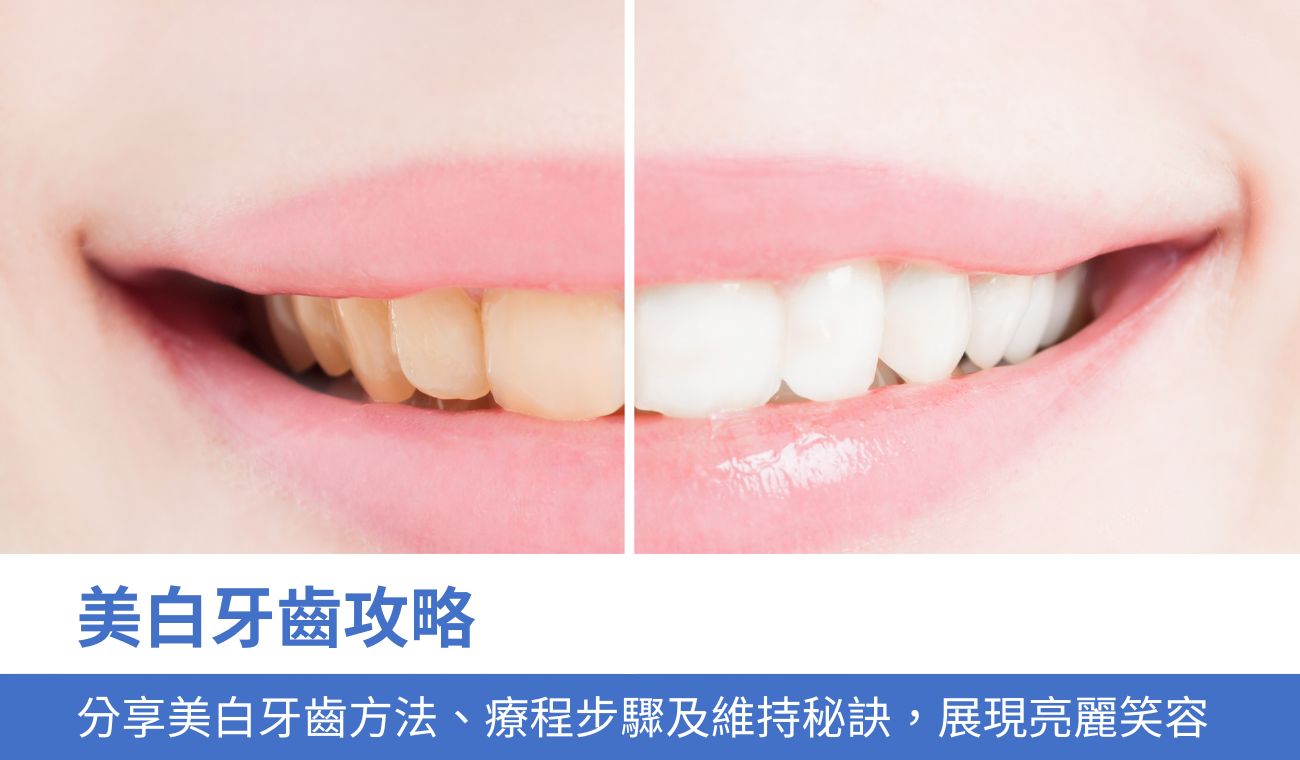
Whitening teeth starts with understanding why teeth turn yellow. Depending on your needs, choose blue light whitening, veneers or home whitening, and maintain a bright smile with daily care.
Want to whiten your teeth? First understand why teeth change colour
You brush every day and have regular scaling, so why do your teeth still turn yellow? Different causes of discolouration call for different whitening methods.
Cause 1: extrinsic staining

This is the most common reason for yellow teeth. People who drink coffee, tea or red wine over a long period, or who smoke, easily get pigment on the tooth surface.
Incorrect brushing technique can also let plaque build up, which easily makes the colour of the teeth look dull.
Further reading:Stains from smoking and coffee look unsightly? What can I do about discoloured teeth? 7 ways to remove stains and whiten teeth
Cause 2: internal discolouration

Internal discolouration usually occurs within the tooth structure, for example damaged dentine, a tooth that has darkened after root canal treatment, or long-term use of certain medications (such as tetracycline).
This type of discolouration is hard to improve with external products alone, and often needs veneers or all-ceramic crowns to reshape the colour of the teeth from the outside.
Whitening method 1: professional dental treatment
For clear and safe results, the most reliable way is to leave it to a dental clinic. Professional-grade treatment can achieve a whitening effect in a short time, and the dentist assesses whether it is suitable for you.

blue light whitening
Currently the most common professional whitening method.
The dentist evenly applies a high-concentration hydrogen peroxide (usually 15%-35%) to the tooth surface, and then uses blue light or laser to speed up the reaction. The whole process takes about 30 to 60 minutes and can immediately brighten the teeth by 2 to 8 shades.
It works quickly, is highly safe and is monitored by the dentist throughout. Note that some people experience temporary sensitivity, but it generally fades within a few days.
Further reading:Does blue light teeth whitening work? A dentist tells you 4 things to know about blue light whitening
Veneers (ceramic veneers / resin veneers)
If the colour of the teeth is darker or the shape is poor, you can consider veneers. The result looks natural and is long-lasting, and generally lasts more than 10 years.
The dentist bonds a thin layer of porcelain onto the tooth surface, which not only improves the colour but also corrects problems with shape and gaps. However, the price is also relatively high, and a small amount of enamel needs to be removed.
Further reading:What are veneers? Are there after-effects? Porcelain veneer lifespan, advantages and disadvantages, treatment and FAQs at a glance
Full Ceramic Crown
If the tooth has had root canal treatment or its structure is damaged and a veneer cannot cover it, the dentist will recommend an all-ceramic crown, which covers the tooth completely and restores appearance and bite function, while also giving a bright colour.
All-ceramic crowns are suitable for severe discolouration and damaged teeth. However, the cost is higher and more tooth preparation is needed.
Whitening method 2: DIY home treatment
If you want to look after your teeth at home yourself, you can also choose a home treatment arranged together with your dentist. These methods give stable results but need time and patience.
Whitening trays
The dentist makes custom trays according to the shape of your teeth and provides whitening gel of a suitable concentration.
Whitening trays are safe, convenient and reusable. Wear them for about 30 minutes to a few hours a day, and results can be seen after 1 to 2 weeks of continuous use.
Low-concentration whitening agents
There are also low-concentration peroxide whitening agents or gels on the market that dentists recommend, which can be used at home alongside treatment.
Although the concentration is low and they are less irritating to the teeth, you still need to follow your dentist's instructions, and you should never buy high-concentration products yourself, to avoid gum burns or tooth sensitivity.
How do I choose the whitening method that suits me?
Everyone's teeth are different. To achieve the best result, it is advisable to assess your situation with the following steps:
Step 1: dental examination and assessment
The dentist will first check for tooth decay, periodontal disease or sensitivity problems. If the teeth are not in good health, they should be treated before whitening, to avoid irritation or discomfort.
Step 2: choose according to your needs and budget
| methods | Advantages | Disadvantages | Suitable For |
| blue light whitening | Immediate results, safe | May cause temporary sensitivity | For those who want quick results |
| veneers | Natural-looking and long-lasting | Higher price | For severe discolouration |
| Full Ceramic Crown | Suitable for severe staining; durable | Requires tooth preparation | For damaged tooth structure |
| Home whitening trays | Safe and controllable | Slower results | For those who want gradual improvement |
| Whitening products | Affordable | Limited effect | For everyday maintenance |
Step 3: key points before, during and after treatment
Before treatment: avoid dark drinks such as coffee, tea and red wine, and keep your mouth clean.
During treatment: use the whitening products as instructed by your dentist, and avoid overuse or adding extra on your own.
After treatment: the teeth will be temporarily more sensitive, so use a desensitising toothpaste and avoid hot and cold foods.
How much does teeth whitening cost in Hong Kong? Price reference list
The price differences between whitening treatments come mainly from the treatment method, the materials used and the condition of the teeth. The following are approximate price ranges:
- Blue light whitening: about HK$3,000–HK$6,000 per full mouth
- Ceramic veneers: about HK$6,000–HK$10,000 per tooth
- All-ceramic crowns: about HK$8,000–HK$12,000 per tooth
- Home whitening trays: about HK$2,000–HK$4,000 per set
- Over-the-counter whitening products: about HK$100–HK$500 per set
Actual costs will vary with the clinic's equipment, the dentist's experience and the individual's oral condition. It is advisable to have a dentist examine and assess you first, to confirm the most suitable whitening method and price.
How do I maintain the results after whitening?
Adjusting eating habits and lifestyle
Try to avoid staining foods and drinks (curry, coffee, tea, red wine), and if they cannot be avoided, it is advisable to use a straw or rinse your mouth right after the meal. Quitting smoking is also key, as tobacco stains are one of the main causes of yellow teeth.
daily oral health care
Brush at least twice a day and clean between the teeth with floss. You can choose a gentle whitening toothpaste to help maintain the whitening effect. If your teeth are prone to sensitivity, you can alternate with a desensitising toothpaste.
Regular follow-up maintenance
It is recommended to have scaling once every six months, so that the dentist can check the condition of your teeth and clean them. If necessary, a light touch-up whitening can be done each year to keep the teeth white.
FAQ
How can I whiten my teeth quickly?
The fastest way is blue light whitening, which can brighten teeth noticeably in just one hour. For longer-lasting results, you can maintain them with a home tray treatment.
How often can teeth whitening be done?
For professional whitening, it is recommended to leave an interval of at least six months before repeating it. Home whitening treatment can be done 1–2 times a year, with a safe concentration assessed by the dentist.
Can oil pulling whiten teeth too?
Oil pulling(such as rinsing with coconut oil) can improve the oral environment, but it cannot truly whiten teeth. It is advisable not to rely on it as a substitute for professional whitening.
How long does blue light teeth whitening last?
The effect lasts 6 months to 2 years on average, depending on the individual's diet and oral cleaning habits.
Can I whiten my teeth if I have sensitive teeth or fillings?
Yes, but it needs to be assessed by a dentist. People with sensitive teeth need to use a lower concentration of whitening agent. Fillings do not change colour, and any colour difference can be adjusted afterwards if necessary.
Summary
Teeth whitening is mainly used to improve yellowing, uneven tooth colour or lack of brightness. The suitability, results and duration of different whitening methods may differ, and it is advisable to have a dentist assess the condition of your teeth, the cause of the colour and your oral health first, before choosing a suitable whitening treatment.
Disclaimer
This article is for information only and does not contain any invitation or solicitation. Patients should seek a professional dentist for diagnosis and treatment according to their own circumstances. To find out more or book a service, we recommend contacting the relevant clinic directly. Please choose suitable dental services and clinics carefully yourself.



