

Why is there always a hard white lump on the teeth that cannot be removed even by brushing? What exactly is tartar? How can tartar be removed? This article explains the causes of tartar, its effects, removal methods and tips for prevention, to help you smile with confidence.
tartarWhat is it?
Tartar, also known as dental calculus, forms when food debris in the mouth combines with minerals in saliva to formplaque, which attaches to areas near the gums; if it is not cleaned withdental flossor a toothbrush, over a long time it builds up on the tooth surface and finally calcifies into a hard deposit, which is tartar.
White deposits at the gum margin– is it tartar?
If you find that the gum margin looks white and there is a pale yellow or white, sticky, film-like layer, it may beplaque, which can generally be removed by brushing and flossing. But if there is a hard white lump at the gum margin or between the teeth, it is most probably tartar. Tartar needs to be removed by a dentist through scaling and polishing.
tartarCommon locations
Tartar is commonly found near the openings of the salivary glands, in places on the teeth that are hard to clean (such as the upper molars and the lower front teeth), or around braces and dentures, because these places are hard to clean, and brushing alone is difficult to get clean in daily life.
It is advisable to use dental floss as well to clean the gaps between the teeth and the corners of the mouth properly, to prevent tartar from forming.
5 causes of tartar formation
Everyone may have tartar, and each person's constitution and daily care methods differ, which also affects how fast tartar builds up. The following are the 5 causes of tartar:
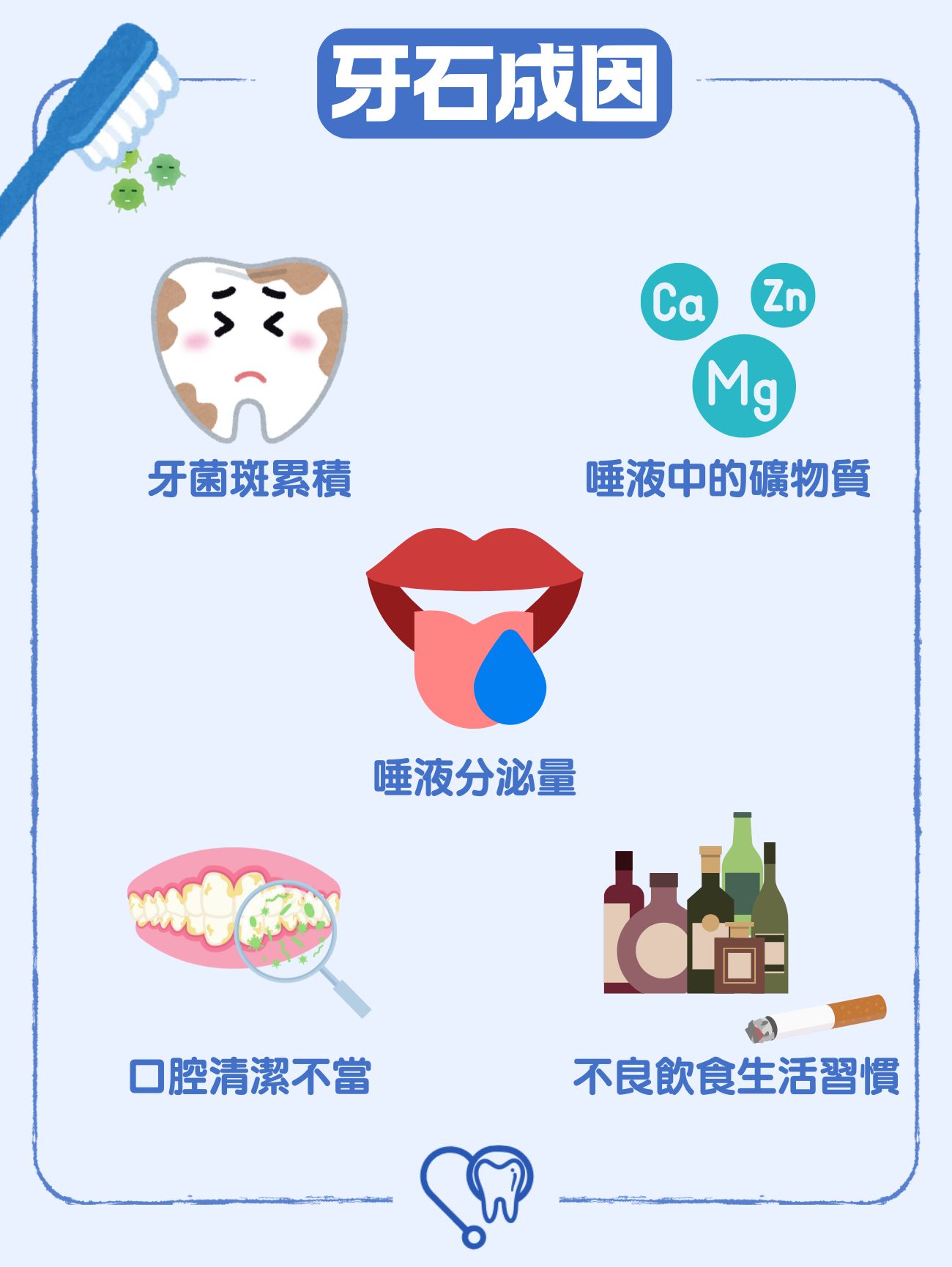
Plaque build-up
After eating, food debris combines with the bacteria in the mouth to form "plaque". Plaque attaches to the tooth surface, and if it is not cleaned for a long time it may calcify and finally form tartar.
Mineral deposits in saliva
Human saliva contains minerals such as calcium and phosphorus. These minerals deposit on plaque and cause calcification, so that plaque gradually hardens into tartar.
Amount of saliva secreted
When the amount of saliva secreted is low (for example:dry mouth (xerostomia)) or one does not drink water for a long time, leaving less moisture and saliva in the mouth, bacteria and plaque are harder to wash away and attach more easily in the mouth.
Improper oral cleaning
Correct cleaning can greatly reduce the formation of tartar. If you do not brush every daycorrect toothbrushingand floss, plaque builds up over a long time and forms tartar, and failing to have scaling and polishing for a long time will also cause tartar to build up and extend below the gums, increasing the risk ofperiodontal diseaserisks.
Diet and bad lifestyle habits
Bad everyday eating or lifestyle habits can also cause tartar to form and build up.
- Eating a high-sugar diet: bacteria break down sugars and produce acidic substances, speeding up the build-up of plaque.
- Eating less hard food(such as vegetables, fruit and wholegrains): without chewing exercise, the mouth's ability to clean itself is reduced.
- Smoking or chewing betel nut: substances in tobacco affect saliva secretion and promote calcification of plaque, speeding up the formation of tartar.
tartarWhat are the effects of not removing it?
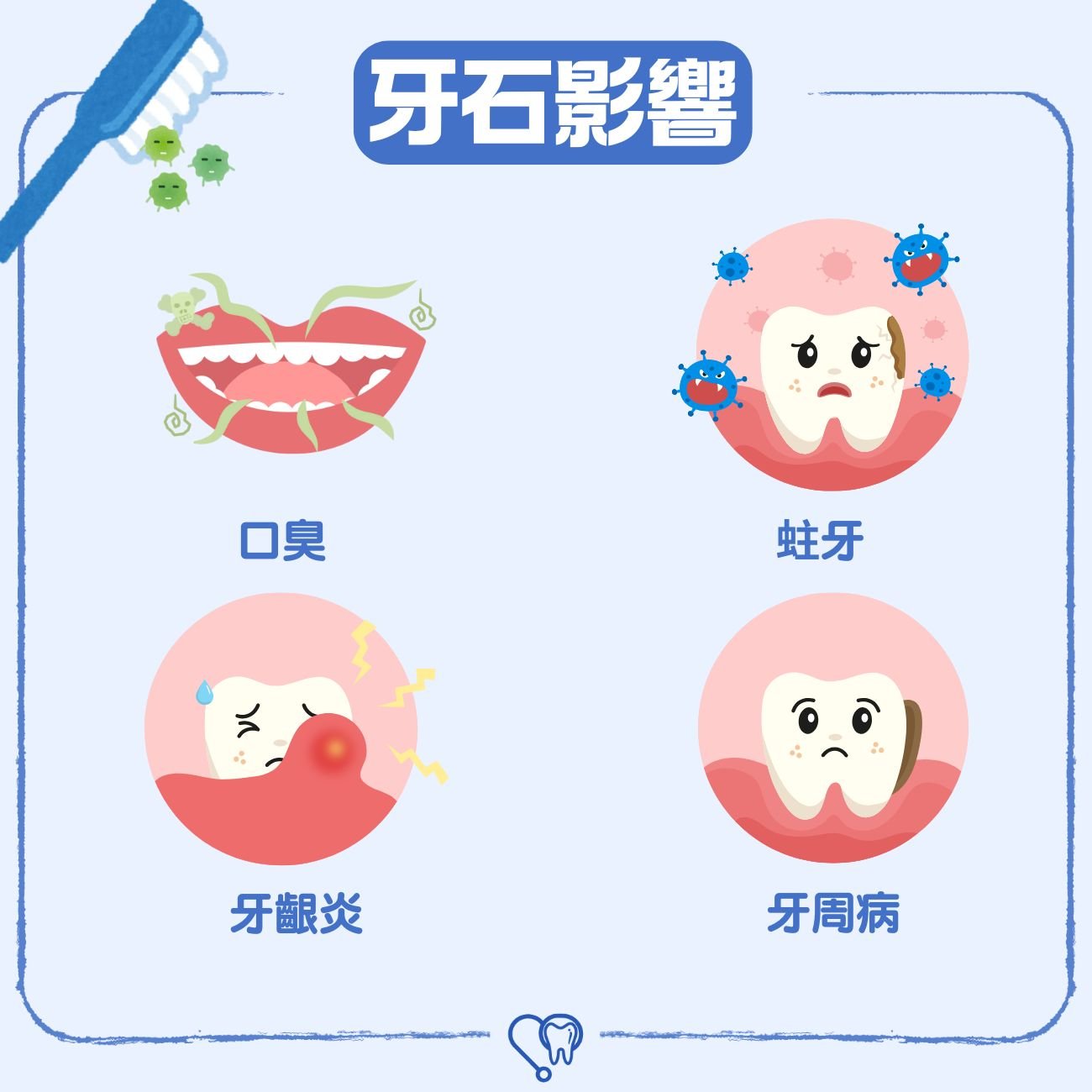
bad breath
Tartar contains large numbers of oral bacteria. These bacteria react with food debris and finally form odorous gases, which is commonly called bad breath. Bad breath sometimes cannot be eliminated by brushing, using mouthwash and the like, because tartar cannot be cleaned off by yourself, so the most fundamental solution is still to have it removed by a professional dentist through scaling and polishing.
tooth decay
The bacteria on tartar produce acidic substances that erode the enamel on the teeth, increasing the risk oftooth decay. If the decayed area goes deep intothe pulp nerve, it may cause severe pain, and in serious cases may even requireRoot Canal TreatmentorExtraction.
Gingivitis
The formation of tartar makes the tooth surface rough and more likely to retain oral bacteria, and these bacteria irritate the gums, causing the gums to become inflamed, red, swollen or bleeding. If not treated in time, it may develop further into periodontal disease.
periodontal disease
When tartar is not cleaned regularly and goes deep into the gums, causing continuous gum inflammation and pain, it worsens further into "periodontal disease", also called "periodontitis". Periodontal disease may lead to gum recession or loss of alveolar bone and, in serious cases, loosening and loss of teeth, causing more dental problems.
5 ways to prevent tartar
The key to preventing tartar formation is good daily dental care and regular dental check-ups. Here are some effective prevention methods:
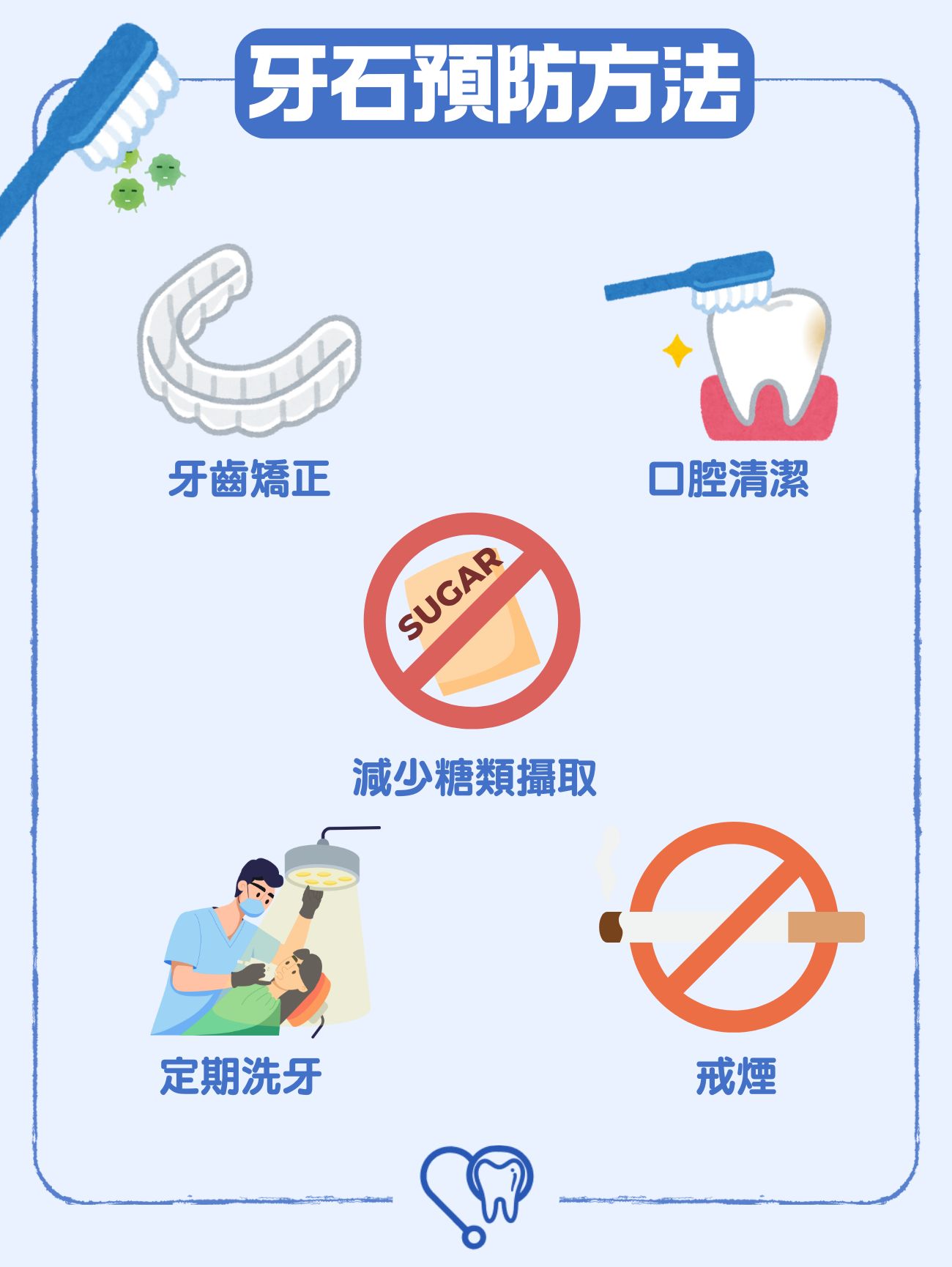
When having orthodontic treatment
uneven teeth, there are many hard-to-clean spots at the junction between the gaps between the teeth and the gums, where food and bacteria easily remain, and brushing also becomes difficult, so that the plaque in some areas cannot be cleaned off and finally calcifies into tartar.
Although orthodontic treatment itself cannot directly remove tartar, improving the alignment of the teeth reduces the places that are hard to clean, which indirectly prevents tartar from forming and lowers the risk of tooth decay and periodontal disease.
Regular oral cleaning
Ideally you would brush after every meal, but as many factors may make this impossible, you can develop the habit of brushing regularly in the morning, at noon and in the evening and cleaning between the teeth with dental floss, so that the plaque biofilm in the mouth is removed regularly. When brushing, choose a soft-bristled toothbrush or one with a small head, which more easily cleans the hard-to-reach areas and reduces damage to the gums.
Use the Bass technique: hold the toothbrush at a 45-degree angle to the teeth and brush gently at the junction of the gums and teeth, for at least 2 minutes, to make sure every tooth is cleaned.
Reduce sugar intake
Eat less food containing sugar, coffee or alcohol. Sugar is like nutrition for the bacteria in the mouth and speeds up the build-up of plaque, while coffee and alcohol dry out the mouth. Keeping the mouth moist or drinking more water can reduce the growth of bacteria.
In daily life it is best to eat more high-fibre foods (such as vegetables and fruit), because the chewing action helps promote saliva secretion, helping to clean the mouth and lower the formation of plaque.
regular scaling and polishing
As tartar, once formed, cannot be removed by brushing morning and evening or by flossing alone, the most effective way to prevent it is to haveScaling and Polishing. In general, it is recommended to schedule scaling and polishing once every six months to one year, and the dentist can also check the health of the mouth during the scaling and polishing.
quitting smoking
Studies have found that tartar builds up faster in smokers than in non-smokers, because the nicotine in cigarettes increases the deposit of tartar and lowers the gums' ability to resist inflammation, making periodontal disease more likely to form.
How can tartar be removed? What are the ways to get tartar off?
Scaling and Polishing
If tartar has already formed, scaling and polishing is the most effective way to remove it. The dentist uses an ultrasonic scaler to break up the hard tartar with high-frequency vibration and then rinses it clean with a jet of water. This is also the most common and quickest way to remove tartar, and is usually suitable for early or moderate tartar build-up.
scaling and root planing
When tartar build-up is severe and has even gone below the gum line (Periodontal Pocket), causinggum inflammationor periodontal disease, ordinary ultrasonic scaling can hardly remove the hard tartar completely, and the dentist may then choose to usescaling and root planingto remove it, using periodontal scalers to reach below the gum line and remove tartar hidden in the periodontal pockets. Root planing treatment is usually recommended at regular intervals of 6 months to 1 year, and the actual number of sessions depends on the dentist's assessment.
Beware of the following wrong ways of removing tartar
Tartar scrapers
A tartar scraper can only scrape away a small part of the tartar, and may also scratch the gums if used improperly, causing infection and damage, making plaque biofilm accumulate more easily on the tooth surface and raising the risk of tooth decay and periodontal disease. If you want to remove tartar, please go to a dental clinic regularly and have a professional dentist remove it, and never try to remove tartar yourself at home.
Brushing with vinegar
Claims are always circulating online that cleaning the teeth with vinegar can remove tartar or whiten the teeth. In fact, this practice is a mistake that is very damaging to the teeth, because long-term use of vinegar or tartar-dissolving products will cause theenamelto become thinner, and enamel that has flaked off or been damaged cannot regrow. Teeth that have lost their enamel are like teeth that have lost their protective layer and easily develop more oral problems, so never try this casually.
Brushing and rinsing with salt
Although salt has a mild antibacterial effect, a high concentration of salt may disrupt the balance of bacteria in the mouth and affect saliva production, and the coarse grains can wear down the teeth, thinning the tooth surface through excessive abrasion and weakening the protection of the enamel. Over time this can lead to gum recession and exposed roots, increasing the risk of tooth decay and gum disease.
Most importantly, salt has no effect in dissolving plaque or removing tartar, so brushing and rinsing with salt cannot remove tartar. On the contrary, it may even lead to improper oral cleaning, causing tooth decay, periodontal disease and bad breath.
tartarcommon myths
Removing tartar by yourself– is it possible?
Tartar can only be removed with professional scaling instruments.
Tartar accumulates on the tooth surface, around the gums and even below the gums, and its structure is very firm, so it cannot be removed even by brushing or flossing. In particular, the "periodontal pocket" below the gums is a place that ordinary people cannot clean themselves. The dentist has to use an ultrasonic scaler to break up the firm tartar and then rinse it clean with a jet of water, so that the tartar can be removed safely without harming the teeth and gums.
Tartar falling off by itself– is it possible?
The chance of tartar falling off by itself is relatively low, but in some situations tartar may still become loose or fall off. These situations include:
- Gum recession or inflammation: tartar causes gingivitis or periodontal disease and leads to gum recession, and once tartar loses its support it may become loose or fall off.
- Impact from hard objects: when chewing hard objects, tartar may be knocked off by excessive force, but usually this only makes part of the tartar fall off and does not remove it completely.
Tartar that falls off by itself usually does not come off completely, and the remaining tartar still poses a risk to oral hygiene, so even if tartar falls off by itself it is still advisable to see a dentist for a complete oral examination.
Must scaling and polishing be done to remove tartar?
As mentioned above, tartar cannot be removed by yourself, so scaling and polishing is the more effective removal method.
tartarIs it hereditary?
Tartar itself is not directly inherited, but some hereditary or constitutional factors may affect the formation of tartar. These factors include:
- Higher mineral content in saliva: some people may naturally have a higher calcium and phosphorus content in their saliva, so calcification is faster.
- Alignment and shape of the teeth: some people naturally have more crowded teeth, which may make cleaning the mouth difficult.
- Health condition: being born with certain systemic diseases (such as diabetes) may lead to a weaker immune system and make oral disease more likely.
Summary
Although tartar is unsightly and affects dental health, its appearance is unavoidable. To prevent tartar, it is advisable to have regular scaling and polishing and to develop good routines and cleaning habits in daily life to maintain oral health. If there are sore or red, swollen teeth or similar conditions, be sure to seek medical attention in time for diagnosis and treatment.
Disclaimer
This article is for information only and does not contain any invitation or solicitation. Patients should seek professional dental treatment and diagnosis according to their own circumstances. For further information or to book a service, it is advisable to contact the relevant clinic directly. Please choose suitable dental services and clinics with care.



