

People who smoke always run into the problem of smoker's teeth. How can stubborn stains be removed? Does brushingScaling and Polishinghelp? This article sets out tooth discolouration problems such as smoker's teeth and coffee stains, as well as effectivewhiteningmethods, to help you restore white teeth!
What are "smoker's teeth"?
Smoker's teeth means yellow-brown tobacco stains that build up on the tooth surface through long-term smoking, making the teeth turn yellow or even black.
Heavy metals in cigarette smoke change the pH value of the mouth, leading to theenamelouter layer being coated with metal deposits, producing a "microhardness" reaction. Many smokers have this problem, but in fact smoker's teeth affect not only appearance but also the health of the teeth and mouth.
Why do smoker's teeth form?
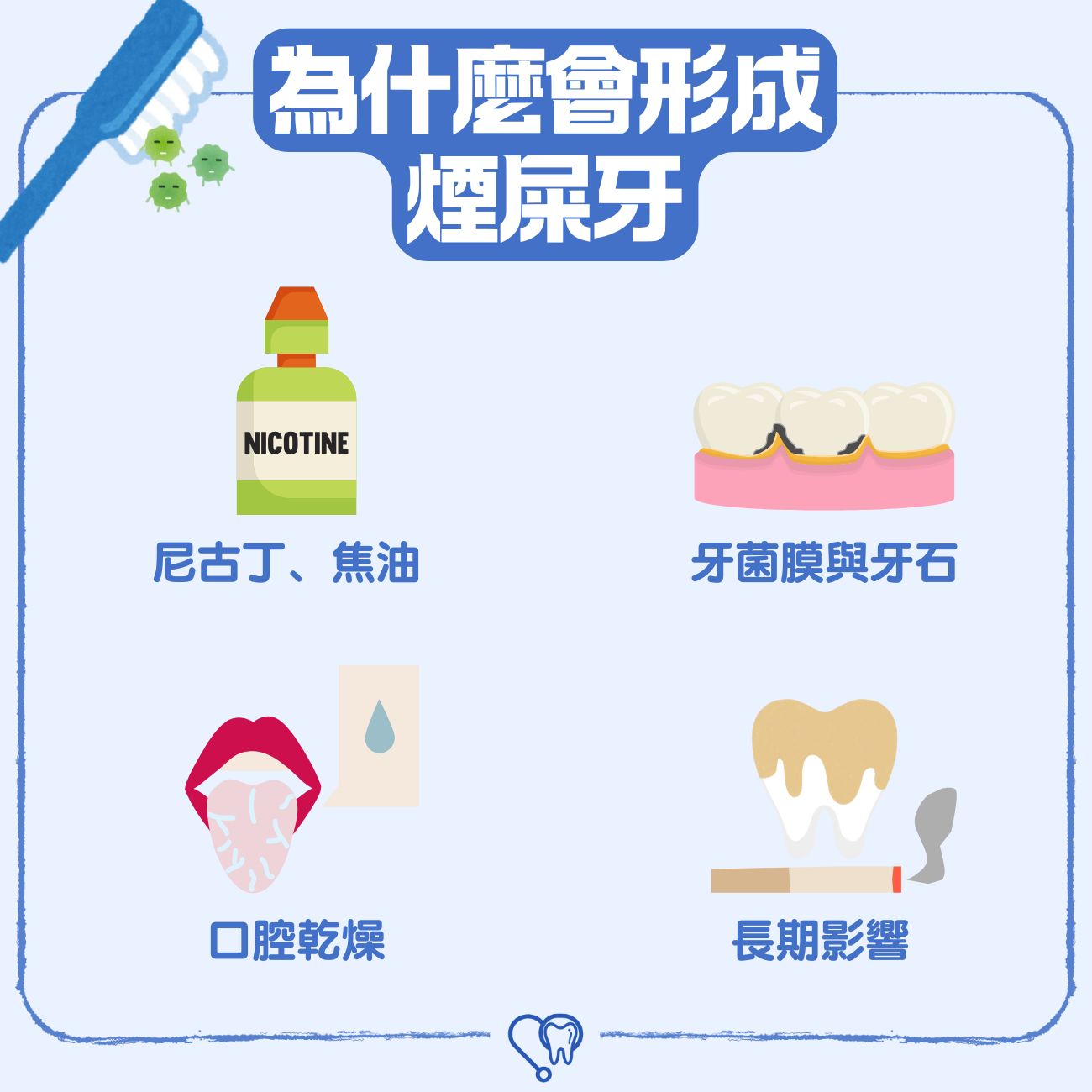
Effects of nicotine and tar
Substances such as nicotine and tar in cigarettes are the main culprits. Nicotine itself is colourless, but turns yellow when oxidised after contact with air, while tar sticks directly to the tooth surface and builds up over the years into stubborn tobacco stains.
Build-up of plaque biofilm and tartar
Smoking speeds up the accumulation of plaque biofilm. If this colourless, sticky bacterial film is not cleaned properly, it turns intotartar, which deepens yellow stains on the teeth and raises the risk of oral problems.
dry mouth
Smoking reduces saliva secretion and affects the mouth's ability to clean itself. Saliva rinses away bacteria and dirt in the mouth, and when there is less saliva, tobacco stains build up more easily and the teeth turn yellow faster.
Long-term effects
Tobacco stains penetrate the enamel, so the staining of the teeth becomes deeper and is hard to remove by ordinary brushing alone. Smoking for many years may even make the teeth turn grey or black, affecting appearance and health.
What are the effects of smoker's teeth on oral health?
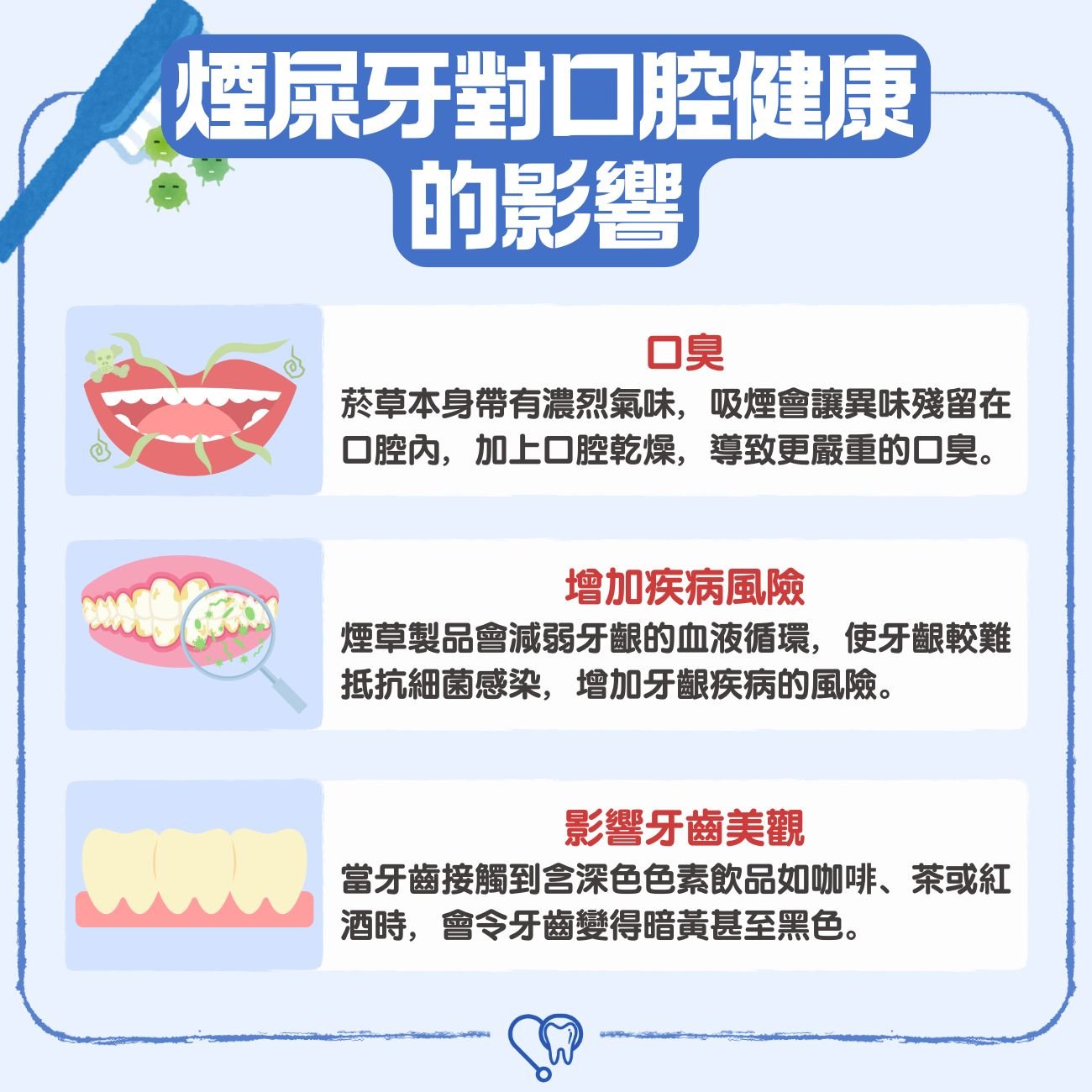
bad breath
Tobacco itself has a strong smell, and smoking leaves the odour in the mouth. Together with a dry mouth, bacteria multiply easily, leading to more seriousbad breathproblems.
Increased risk of disease
Tobacco products weaken blood circulation in the gums, making it harder for the gums to resist bacterial infection and raising the risk of gum disease (periodontitis) and oral cancer. Plaque biofilm and tartar built up with tobacco stains also promote tooth decay and make dental problems worse.
Affects the appearance of the teeth
The teeth are covered with thousands of tiny holes, but when the teeth come into contact with drinks containing dark pigments such as coffee, tea or red wine, these dark particles seep into the tiny holes and make the teeth dull yellow or even black. Over the long term this easily affects one's appearance and social performance, and may even leave a person lacking in confidence and afraid to show their teeth when smiling.
Ways to remove stains from teeth with mild tobacco staining
To remove stains and whiten the teeth, you must use the right methods. We offer a few common and effective methods for your reference:
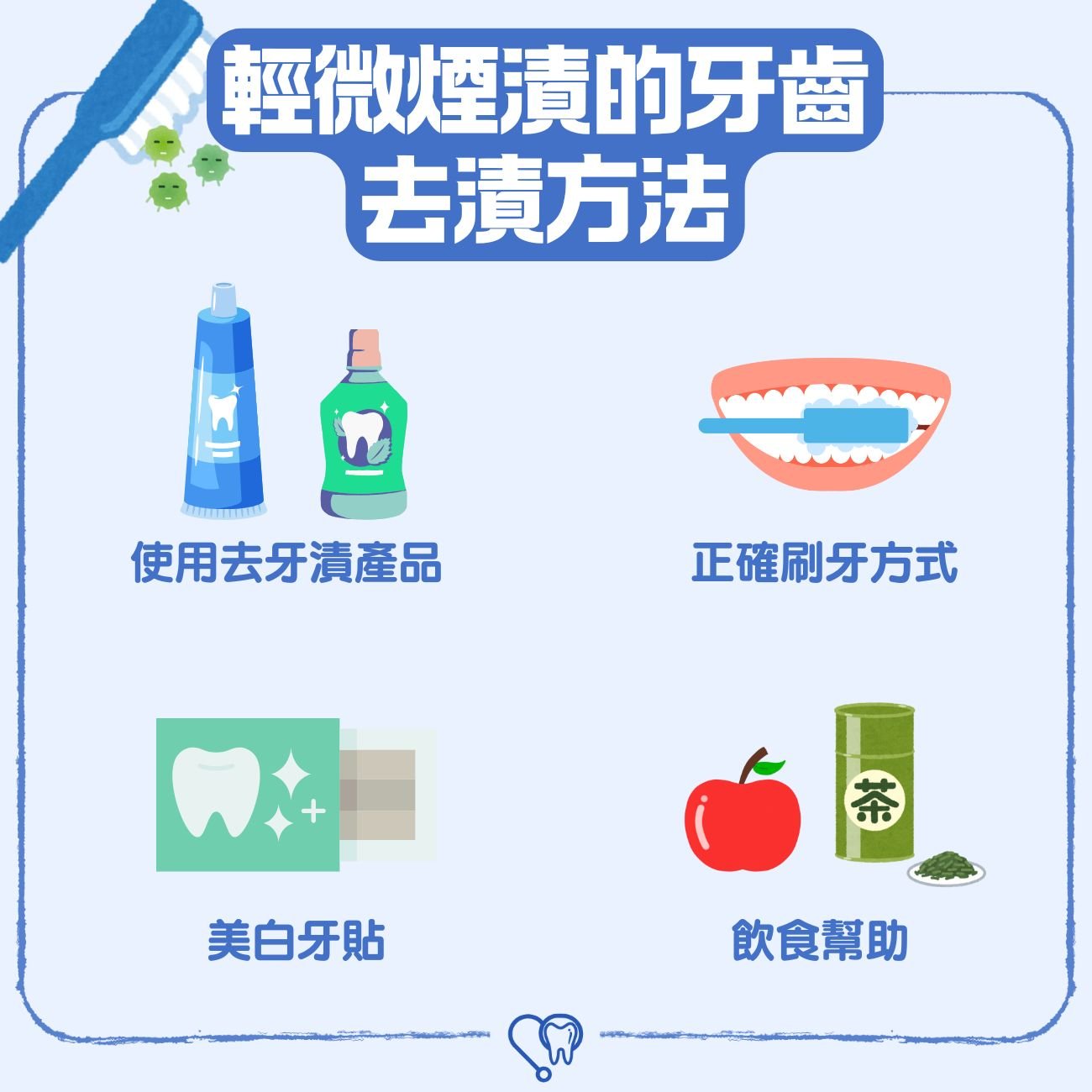
Using stain-removing products
There are many tooth whitening products on the market for consumers who intend to carry out their own tooth whitening.
Using whitening toothpaste (containing baking soda, activated charcoal or hydrogen peroxide) helps break down and remove surface tobacco stains; using mouthwash (containing antibacterial ingredients) can further reduce plaque biofilm build-up.
However, please do not use abrasive cleaners on the teeth, because they may cause permanent damage to the gums or enamel. Be sure to check the ingredients when choosing.
correct toothbrushing technique
BrushingWhen brushing, use a soft-bristled toothbrush with a gentle circular method, avoiding excessive force that harms the gums. It is recommended to brush at least twice a day and use dental floss to clean between the teeth, reducingplaqueand tartar formation.
Whitening strips
If the discolouration is not yet too severe, you can consider over-the-counter whitening products such as whitening strips, whitening gel or whitening pens. On the market there areWhitening stripsproducts containing low concentrations of whitening ingredients that can be used by yourself at home. Improvement can be seen after continuous use for several weeks.
Note, however, that if the discolouration is caused by tooth decay, the methods above not only fail to remove the unsightly colour but may also delay seeking treatment and make the condition worse.
Help from diet
Eat more foods that naturally clean the teeth, such as apples, celery and strawberries, which helps remove stains from the tooth surface. The catechins in green tea have an antibacterial effect and can reduce plaque biofilm build-up.
Teeth whitening methods for severe smoker's teeth
Smoking, coffee, tea or other eating and drinking habits may all cause yellow or dark deposits on the tooth surface. If you wish to improve tooth colour or remove stains, a dentist can first assess the cause of the discolouration, the type of stain and the condition of the mouth, and then choose a suitable cleaning or whitening method:
Air polishing
Air polishing uses a high-pressure air and water jet with fine powder to blast the teeth, which effectively removes stubborn stains. It is gentler than conventional scaling and polishing and gives noticeable results, and suits smokers.
Cold Light Whitening
Cool light whitening uses a professional bleaching agent together with blue light to quickly break down the pigment inside the teeth and bring back a bright white colour. The effect can usually last six months to one year.
Patients are advised to avoid hot and cold food for a period of time after the treatment, because the teeth and gums may become over-sensitive.
ceramic veneers
Porcelain veneers or crowns can cover the tooth surface and restore a bright white appearance while providing extra protection against further staining. They suit people who have smoked for a long time but want to keep their teeth white.
How to prevent smoker's teeth?

Quit smoking / smoke less
The most fundamental solution is of course to quit smoking. If you cannot quit completely, you can also try to smoke less often, reducing the chance of the teeth coming into contact with tobacco tar.
After quitting smoking the appearance of the teeth may not change much, and stains and deposits will remain, but gum health and the amount of saliva secreted may improve. Although quitting smoking itself does not make the teeth white, it helps reduce new stains building up and keeps the mouth cleaner between daily cleaning sessions.
regular scaling and polishing
It is recommended to have scaling and polishing at a dental clinic once every six months to remove accumulated plaque biofilm and tartar, to prevent tobacco stains, coffee stains and tea stains from becoming stubborn, and to reduce the bacteria that lead to periodontal disease.
Rinse after meals
After smoking or eating you can rinse with water or mouthwash to reduce residual stains. Using a drinking straw when drinking tea or coffee also helps reduce the chance of pigment touching the teeth.
Use an electric toothbrush
An electric toothbrush cleans the tooth surfaces more effectively than a conventional toothbrush and helps reduce the build-up of tobacco stains, making it a good choice for smokers.
Summary
Smoker's teeth affect not only appearance but also have a negative effect on oral health. Good cleaning habits, whitening care or seeking the help of a professional dentist can all effectively improve the problem. The best way of prevention, however, is still to quit smoking and keep good oral hygiene, so that the teeth can be restored to white!
Disclaimer
This article is for information only and does not contain any invitation or solicitation. Patients should seek a professional dentist for diagnosis and treatment according to their own circumstances. To find out more or book a service, we recommend contacting the relevant clinic directly. Please choose suitable dental services and clinics carefully yourself.



