
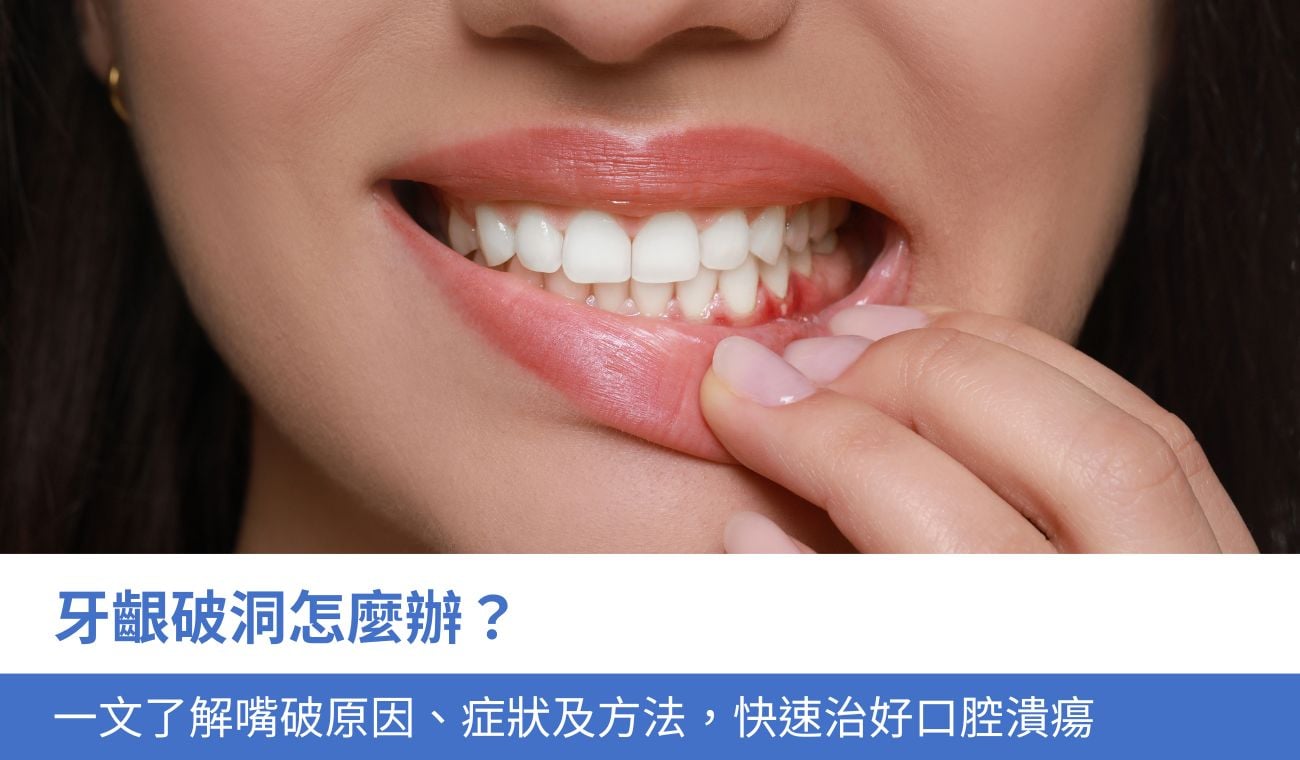
What should I do about a hole in the mouth or gums (mouth ulcers)? What causes it? A guide to the causes, symptoms, care and treatment advice for mouth sores, to ease the annoying pain and improve mouth ulcers.
A hole in the gumsWhat should you do? 3 main care tips
In Hong Kong, a hole in the gums is usually called "canker sore". It not only affects eating, but the pain is also really hard to bear.
A hole in the gums may be caused by broken gum skin, a gum ulcer or an injury. Although most are temporary problems, if left untreated they easily lead to infection or delay healing. To help the gums recover as soon as possible, you can start with the following three areas:

Brush with a soft-bristled toothbrush and rinse with warm salt water
Gentle oral cleaning is very important. Choose a soft-bristled toothbrush and brush gently morning and night, to avoid rubbing the wound again. You can also rinse with warm salt water or an alcohol-free mouthwash, which helps kill germs and also eases gum discomfort.
Use a repair gel or ointment with herbal ingredients
Using a repair gel or oral ointment, especially a product with herbal or anti-inflammatory ingredients, can form a protective layer over the wound surface, reduce irritation from food and bacteria and speed up healing.
Take antibiotics or anti-inflammatory medication as appropriate
If the hole already shows obvious redness and swelling, the pain gets worse, or a bacterial infection is suspected, take antibiotics or anti-inflammatory medication as instructed by the dentist. Never buy medication on your own, to avoid delaying treatment or developing resistance.
Causes of a hole in the gumsWhat are they?
There are many causes of mouth sores. Some are sudden injuries from external force, while others are warning signs of long-term oral health problems.
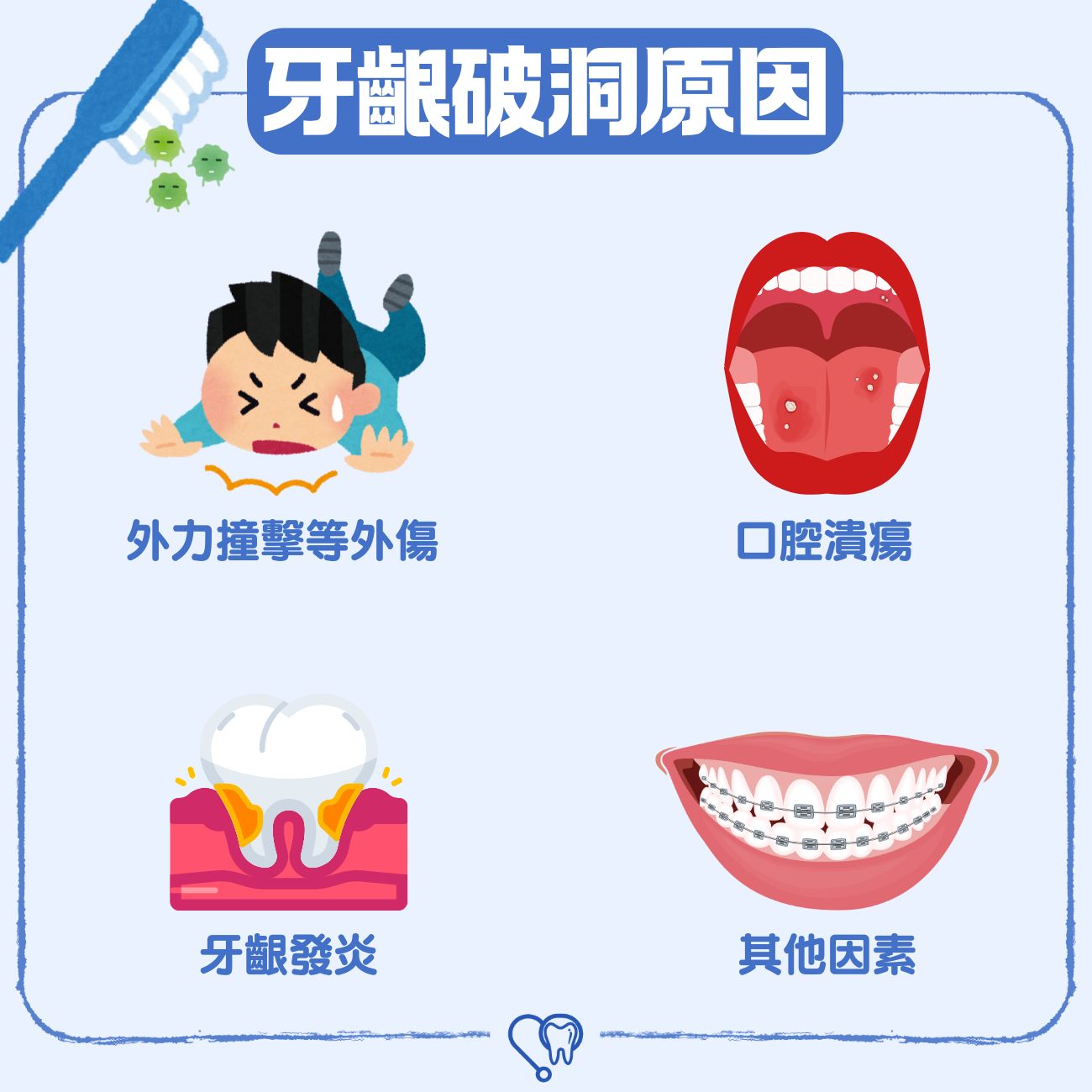
Injury from external force and the like
One of the most common causes is impact, a burn or a bite, for example biting on a hard bone, eating food that is too hot, or accidentally poking the gum with a toothpick, any of which can damage the gum tissue.
Sometimes the handle or head of the toothbrush knocking against the gums also causes small wounds. Brushing too hard in particular makes it easier forgum injury.
mouth ulcer
Another common cause is mouth ulcers, which may be related to overtiredness, a lot of stress, lowered immunity or a lack of nutrients.
Common bacteria and viruses include streptococcus, fungi, candida, enteroviruses and herpes viruses, and they appear not only on the tongue and lips but also on the gums.
Take particular note if it is a mouth ulcer caused by theherpes virus, as it is contagious and you need to be even more careful with personal hygiene.
gum inflammation
If the gums are in a long-term state of redness, swelling and inflammation, for example with periodontal disease or a build-up of tartar, the gum tissue becomes fragile and easily breaks with a little friction.
other factors
Other factors such as friction from dentures or braces, hormonal changes and medication side effects, which lead to reduced saliva production, can also cause broken gum skin or ulcers.
See a dentist early if you have these symptoms
Not every hole in the gums can heal slowly on its own. In some situations, you should see a dentist as soon as possible.
Not healed after more than two weeks, or recurring in the same place
Most mouth sores gradually improve within 7 to 14 days, but if it has not healed after more than two weeks, or red and white patches or pain appear, it may mean it is not simply a small wound and there may be chronic inflammation or another disease behind it.
If it recurs in the same place, or an ulcer appears every so often, it is necessary to check for immune problems or a structural abnormality of the teeth causing friction.
Accompanied by other symptoms, affecting eating or speaking
When the hole comes with other symptoms, such as heavy gum bleeding, pus oozing out,bad breathworsening or fever, you should be alert to whether it is a sign of infection or a more serious lesion. If it already affects eating or speaking and makes daily life inconvenient, we also recommend getting treatment early.
Key points for preventing gum ulcers
Gum ulcers and broken gum skin can very often be prevented, and the key lies in building daily habits.
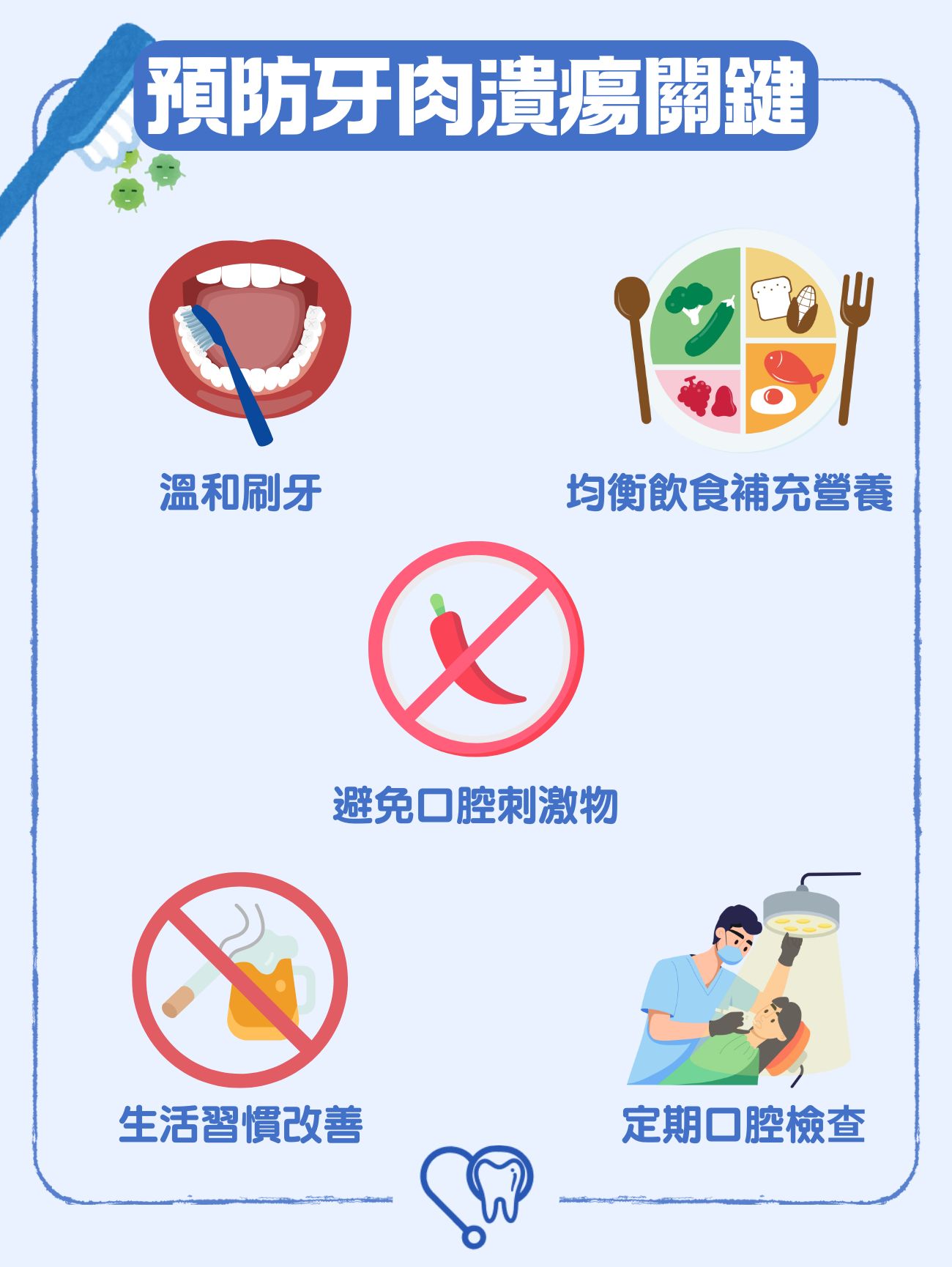
Brush gently
When brushing, do not use a hard-bristled toothbrush or rub the gums hard, because gum tissue is very fragile and excessive friction easily scratches it, forming sores or ulcers.
Choose a soft-bristled toothbrush with fluoride toothpaste, and brush in small, gentle circles, which both cleans the teeth and protects the gums from harm.
Eat a balanced diet to get enough nutrients
A lack of B vitamins and Vitamin C easily makes the oral mucosa fragile, and when immunity is low ulcers appear more easily.
In your daily diet, eat more fresh fruit and vegetables rich in nutrients, such as kiwi fruit, oranges, tomatoes and spinach, and also take in more wholegrains, protein and zinc, to help repair and protect the gums.
Avoid oral irritants
Spicy, scalding and overly hard irritating food all make it easier to cause broken skin or prolong healing time, especially when the gums are already slightly red and swollen. Also avoid excessive consumption of high-sugar drinks and alcohol, because these can affect the health of the oral environment.
lifestyle improvements
Bad habits such as high stress, staying up late and smoking lower the immune system and increase the chance of gum ulcers.
Keeping a regular routine, exercising moderately and getting enough sleep make the body more efficient at repairing the gums, and can also reduce repeated episodes.
Regular oral check-ups
Having a dental check-up once every six months can detect gum problems early, and professional scaling and polishing removes tartar and plaque, reducing the risk of periodontal disease and broken gum skin.
For people prone to frequent holes in the mouth and gum ulcers, regular check-ups are also the key to preventing recurrence.
FAQ
A hole in the gumsWill it get better by itself?
Most mild broken gum skin or ulcers heal on their own within one to two weeks, but only on condition that you keep the mouth clean and avoid irritation. If the sore persists or gets worse, you need to see a doctor.
A hole in the gumsWhich specialty should you see?
You should book with a dentist for broken gum skin or ulcers, and the dentist will check whether it is periodontal disease, a mouth ulcer or another cause, and refer you to the relevant specialist when necessary.
A hole in the gumsWhat should I apply?
You can use a repair gel, anti-inflammatory ointment or mouth ulcer patch recommended by the dentist, to help protect the wound and reduce pain.
Why do gum ulcers occur?
They may be related to injury, stress, lowered immunity, a lack of nutrients or chronic gum inflammation, and sometimes also to hormonal changes or medication side effects.
What should I do if a gum abscess bursts on its own?
Even if theabscesshas burst on its own, you still need to see a doctor to check that the infection is under control and to deal with the root cause, to avoid recurrence.
Summary
A hole in the gums is common, but there are many different causes, from simple broken skin to periodontal disease. Maintaining good oral hygiene, a balanced diet and regular check-ups in daily life is the best way to prevent gum ulcers and broken gum skin. Healthy gums affect not only chewing and speaking, but also your quality of life overall.
Disclaimer
This article is for information only and does not contain any invitation or solicitation. Patients should seek a professional dentist for diagnosis and treatment according to their own circumstances. To find out more or book a service, we recommend contacting the relevant clinic directly. Please choose suitable dental services and clinics carefully yourself.



