
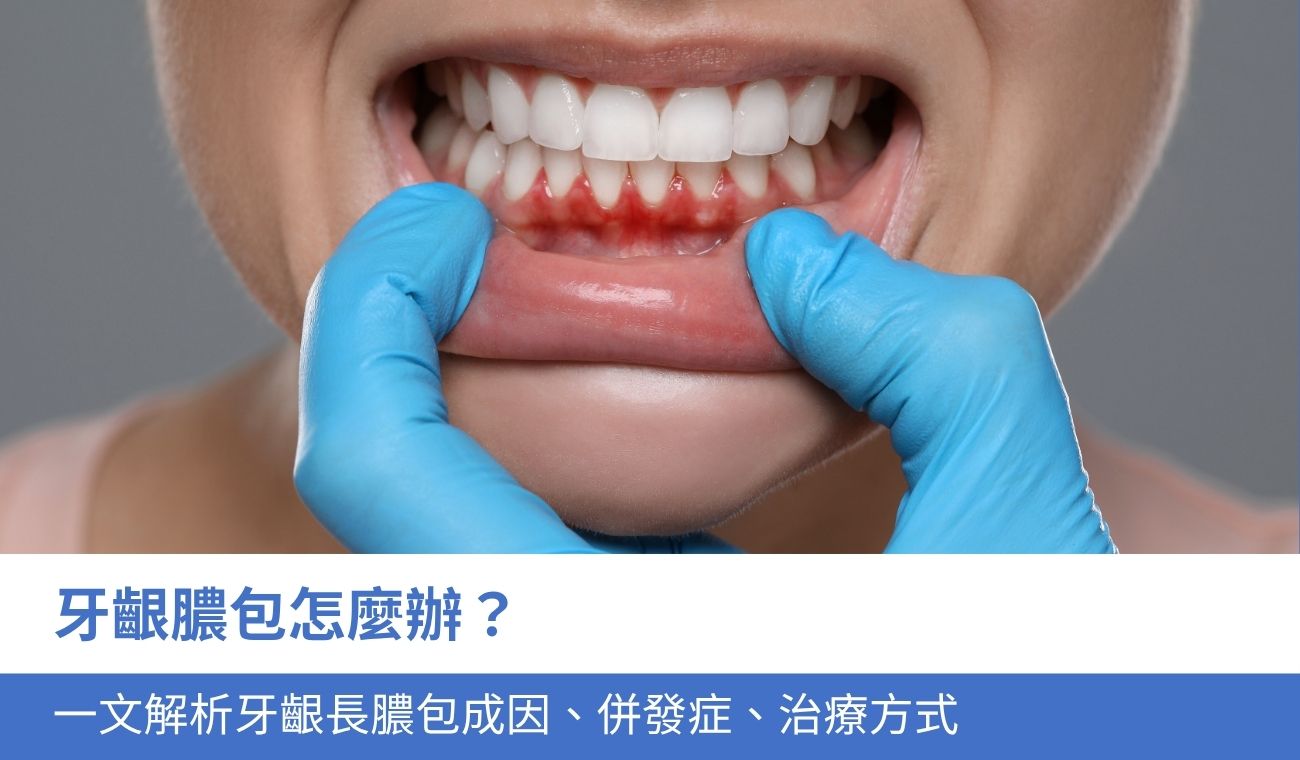
A gum abscess is a pocket of pus formed in the gum tissue because of a bacterial infection or a problem inside the tooth, and it will not heal completely on its own. It is usually diagnosed with X-rays and a periodontal examination, and then treated with drainage, root canal treatment or periodontal treatment.
Why do gums develop abscesses? 4 common causes of abscesses
A gum abscess is not simply caused by "internal heat" or "excess heat", but is a warning signal of a problem in oral health. The following four situations are the most common:
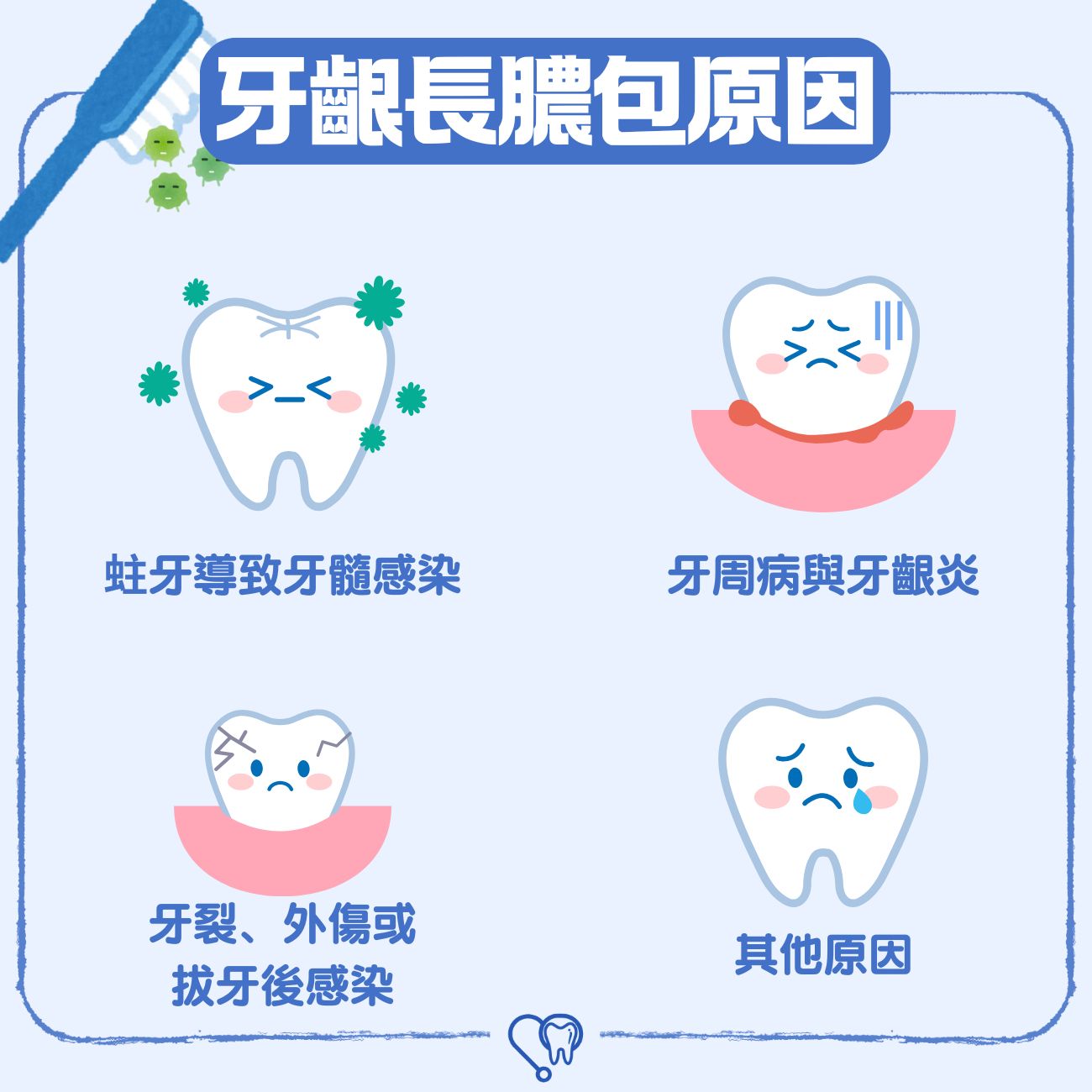
Pulp infection caused by tooth decay
When tooth decay keeps getting worse, bacteria invade the pulp chamber and cause infection around the root tip. The pus is then forced outwards and finally forms an abscess on the surface of the gum.
Many people mistakenly think it is only gum inflammation, but in fact the source of the problem is inside the tooth. If it is not treated early, the infection may spread to the root and even to the jaw bone.
Periodontal disease and gingivitis
Periodontal bacteria destroy the gums and alveolar bone, causing periodontal pockets to form, and once plaque and tartar get stuck inside, abscesses are easily triggered.
This type of abscess is often accompanied by typical symptoms of periodontal disease such as red, swollen gums, bleeding when brushing and bad breath, and is usually a sign that the supporting tissue around the tooth has already been damaged.
Cracked teeth, injury or infection after extraction
Sometimes a fractured or knocked tooth, or a wound from a recent extraction that has not been cared for properly, can let bacteria in and form a chronic infection deep in the gum.
In this situation, an abscess may appear within a few days, often accompanied by severe pain.
other causes
Besides the points above, in a few cases a gum abscess may also be caused by rare tooth development abnormalities, cysts or even low immunity. These conditions are uncommon, but when they occur they need professional intervention from a dentist.
Gum abscess Symptoms and risk of complications
A gum abscess is more than just a lump. Depending on severity, the symptoms and consequences also differ. If left untreated, the teeth and bone may gradually be damaged, and even overall health may be affected.
Local: abscess, pain, pus discharge / bleeding / bad breath
The most obvious signs are swollen, pus-filled gums with a small white spot or lump. Common accompanying symptoms include a dull ache in the tooth, discomfort when biting, and noticeablebad breath.
Systemic: fever, swollen lymph nodes and spreading infection
If the infection worsens, it may cause fever, facial swelling and even swollen lymph nodes in the neck. A more serious acute infection may also enter the bloodstream and cause cellulitis or systemic symptoms, posing a threat to health.
Possibility of recurrence and bone damage
If a gum abscess is only squeezed open on your own or left until the swelling goes down, it very easily comes back. If left untreated for a long time, the infection will slowly erode the alveolar bone, causing gum recession and loose or even lost teeth, with a very great effect on the bite and oral function.
Gum abscessWhat should I do? Debunking myths and correct treatment
When they find an abscess on the gum, many people's first reaction is to think they can just deal with it themselves, but this often backfires.
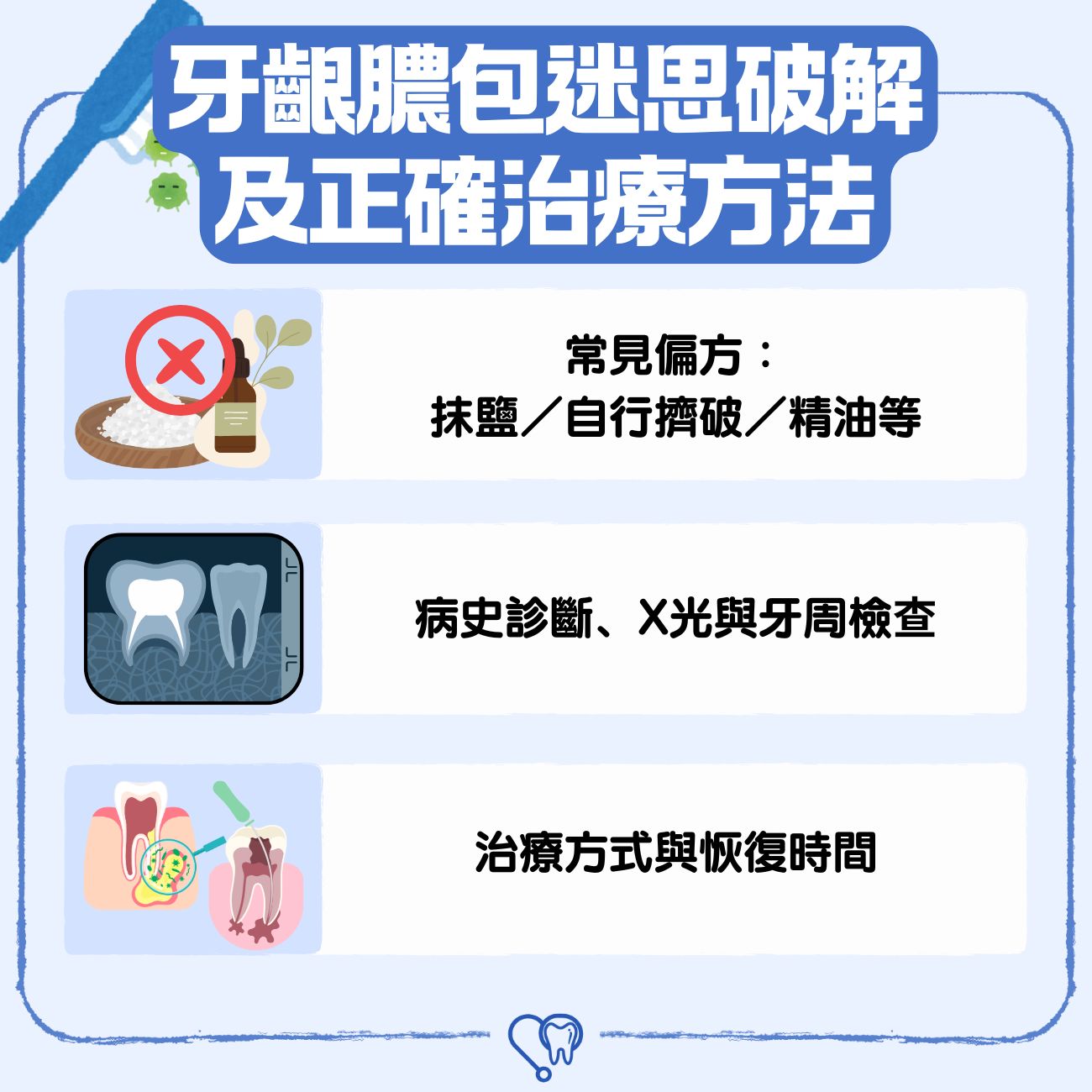
Common home remedies: applying salt, squeezing it open yourself, essential oils and so on
There are rumours that applying salt, tea tree oil or toothpaste can disinfect it, or even squeezing the abscess open directly.
Although they may temporarily reduce the swelling, these are home remedies with no scientific basis, and the source of infection has not been removed, so they can easily let the bacteria spread further and make the inflammation worse.
Medical history, X-ray and periodontal examination
The dentist will first take your oral history, and then confirm the source of the gum abscess through a clinical examination and X-rays. This step is important, because different causes (for example, a root tip infection vs periodontal disease) need completely different treatments.
Treatment methods and recovery time
Common treatments include:
- Draining the pus: first let the pus drain out to relieve pressure and pain.
- Root canal treatment: if the abscess comes from tooth decay or pulpitis, the pulp tissue needs to be removed, thoroughly disinfected and then sealed.
- Periodontal treatment: for abscesses caused by periodontal disease, deep cleaning, root planing or surgical treatment is carried out.
- Extraction or surgery where necessary: if the tooth or bone has been severely damaged, extraction or surgical treatment may be needed.
Recovery time depends on severity. A mild abscess can improve within one to two weeks after treatment, while a severe infection needs a longer period of follow-up and treatment.
Home care and prevention tips
After a gum abscess has been treated, it is more important to avoid recurrence. Developing the following daily care habits can greatly reduce the risk.
Maintain oral hygiene
Brush thoroughly twice a day, and use floss or interdental brushes instead of toothpicks to remove debris from between the teeth, and use an antibacterial mouthwash if necessary. Keeping the teeth and gums clean is the key to preventing bacterial build-up.
Adjusting diet and lifestyle
Eat fewer foods that are too sweet, too sticky or too hard, to avoid putting extra pressure on the teeth. Of course, quitting smoking and cutting down on sugary drinks are also very important keys to protecting the teeth and gums!
The importance of regular dental visits and early detection
It is recommended to have a dental check-up and scaling at least once every six months. If you already have periodontal disease or tooth decay, you should return for regular follow-up even more. A small abscess found early can often be handled in the least invasive way, without having to wait until it is severe and painful to treat.
FAQ
Gum abscessShould I burst it? Will it go away on its own?
It is not advisable to burst it yourself. Even if the pus drains out, the source of infection is still there and it will eventually come back, so dental treatment is still needed to resolve it completely.
Is a gum abscess caused by excessive internal heat?
No. Although Traditional Chinese Medicine holds that excessive internal heat may aggravate gum swelling and cause mouth ulcers (ulcers in the soft tissue of the mouth), a gum abscess is an inflammatory response in the periodontal tissue caused by a bacterial infection, and the two are not directly related in cause or symptoms.
How long does a gum abscess take to heal??
It depends on the situation. If it is only a mild infection, there is noticeable improvement about a week after treatment. But if pulp inflammation or periodontal disease is involved, it may take several weeks or even longer.
Summary
A gum abscess is not a minor problem, and it often means there is already a bacterial infection in the mouth or damage to the tooth structure. If you have a gum abscess, the safest approach is to seek medical attention as soon as possible for a professional diagnosis and treatment, and at the same time to develop good oral cleaning habits and regular check-ups, so as to avoid recurring episodes and keep your mouth healthy.
Disclaimer
This article is for information only and does not contain any invitation or solicitation. Patients should seek a professional dentist for diagnosis and treatment according to their own circumstances. To find out more or book a service, we recommend contacting the relevant clinic directly. Please choose suitable dental services and clinics carefully yourself.



