
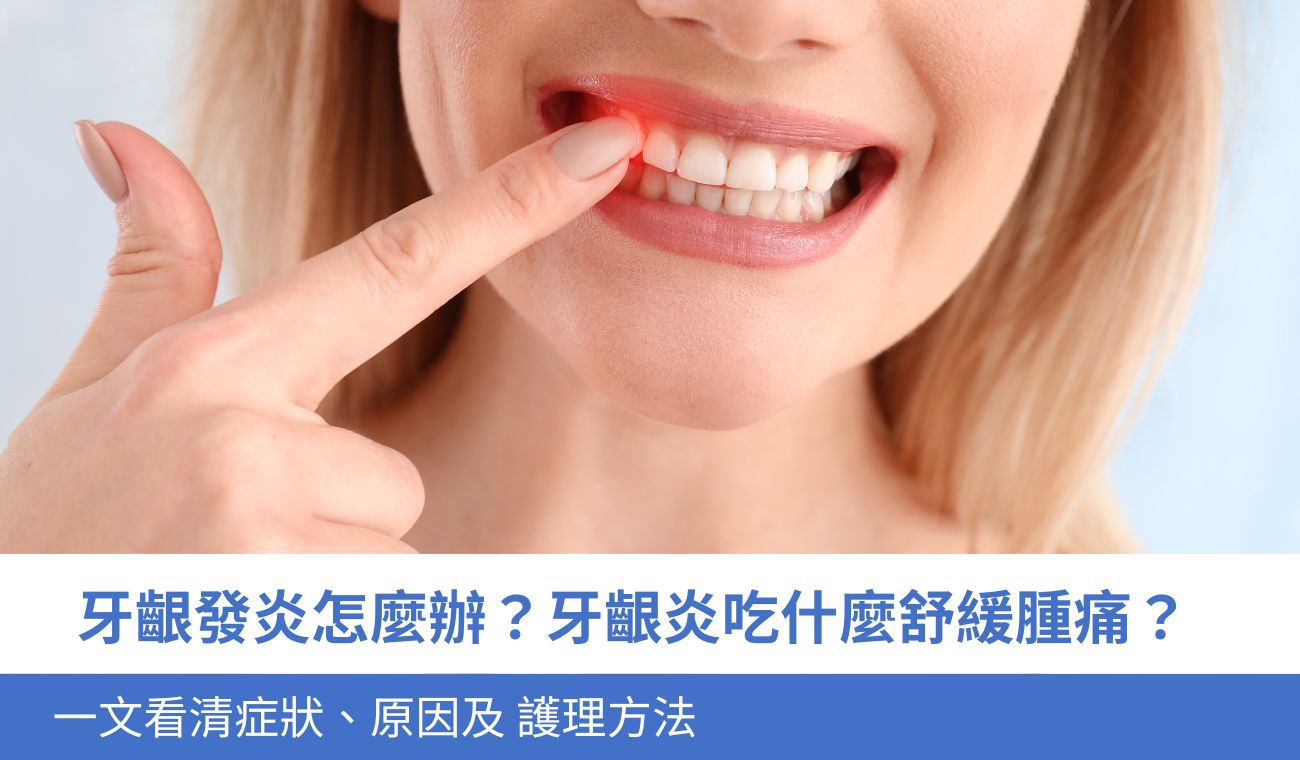
Gum inflammation (gingivitis) is caused by plaque building up along the gum line. As long as the plaque remains, the inflammation will not go away on its own; while the inflammation is still limited to the gums, they can usually recover once the plaque and tartar are removed.
Key points of this article
- Gingivitis is rarely painful; marked localised swelling and pain usually has other causes
- Plaque mostly builds up between teeth, on back teeth and along the gum line
- Hormones, blood sugar and medication can amplify the gums' reaction
- Pus in the gums or loose teeth means it is more than gingivitis
- Diet and mouthwash are only supplementary and cannot replace cleaning
What Is Gum Inflammation? Common Signs of Gingivitis
Gum inflammation (gingivitis) is inflammation caused when plaque attaches where the teeth meet the gums and bacteria continually irritate the gums. The inflammation is only in the surface layer of the gums; the periodontal ligament and jawbone that support the teeth are not yet affected. Common signs include:
- The gum margin changes from pink to red or dark red
- Swollen gums, with edges becoming thicker and rounder
- Bleeding when brushing or flossing
- Bad breath
Red, swollen and bleeding gums are often taken as a sign of 'heatiness', and people drink herbal tea or wait for it to settle. However, the cause is plaque and has nothing to do with 'heatiness'.
Besides gingivitis, bleeding when brushing can also be related to brushing technique, medication or general health. For how to tell the causes apart and treat them, see Causes of bleeding gums.
Are Swollen, Painful Gums Always Gum Inflammation? Other Possibilities When Swelling Is Localised or a Lump Appears
Gingivitis usually involves mild redness and swelling along a row of gum margins, with little noticeable pain. If the swelling and pain are concentrated around one or two teeth, the pain is marked, or a localised lump appears on the gum, it is more likely to have another cause, and a dental examination is needed to tell them apart.
Other common causes include:
- wisdom tooth pericoronitis: when a wisdom tooth has not fully erupted, the gum covering it easily traps food and bacteria, causing swelling and pain behind the last molar. For causes and treatment, see wisdom tooth inflammation.
- Periodontal abscess: bacteria build up in a periodontal pocket and form pus, causing a localised swelling of the gum; pus may come out when pressed. This is a sign of the periodontitis stage.
- Pulp or root infection: deep decay inflames the dental pulp, and when the infection spreads to the root tip, a small bump may form on the gum. The pain mostly comes from the tooth itself and is more noticeable when biting. For how to tell it apart from gum inflammation, see tooth root inflammation.
- Gum overgrowth or pregnancy tumour: some medications can cause gum overgrowth. Due to hormonal changes during pregnancy, some people develop a pregnancy tumour, an overgrowth of gum tissue that bleeds easily when touched.
If the swelling and pain affect eating, or come with fever or facial swelling, you should see a dentist as soon as possible. For temporary relief and other signs that you need to see a dentist, see What to do about swollen, painful gums.
Causes of Gum Inflammation: Where Plaque Builds Up and Factors That Make Gums More Prone to Inflammation
Gingivitis is caused by plaque. Hormones, blood sugar and some medications do not replace plaque as the cause; rather, they make the gums react more strongly to the same amount of plaque. The key to improving gingivitis is therefore to find where plaque builds up.
Plaque is a sticky film formed by bacteria and food debris. If it is not removed with daily cleaning, it keeps irritating the gums, and after building up for some time it hardens into tartar. Plaque tends to build up in the following places:
- Between teeth and on the contact surfaces, where toothbrush bristles cannot reach
- Back teeth and behind the last molar, which are further back and easily missed when brushing
- Where teeth are crowded or overlapping
- Around the edges of braces, dentures or fillings
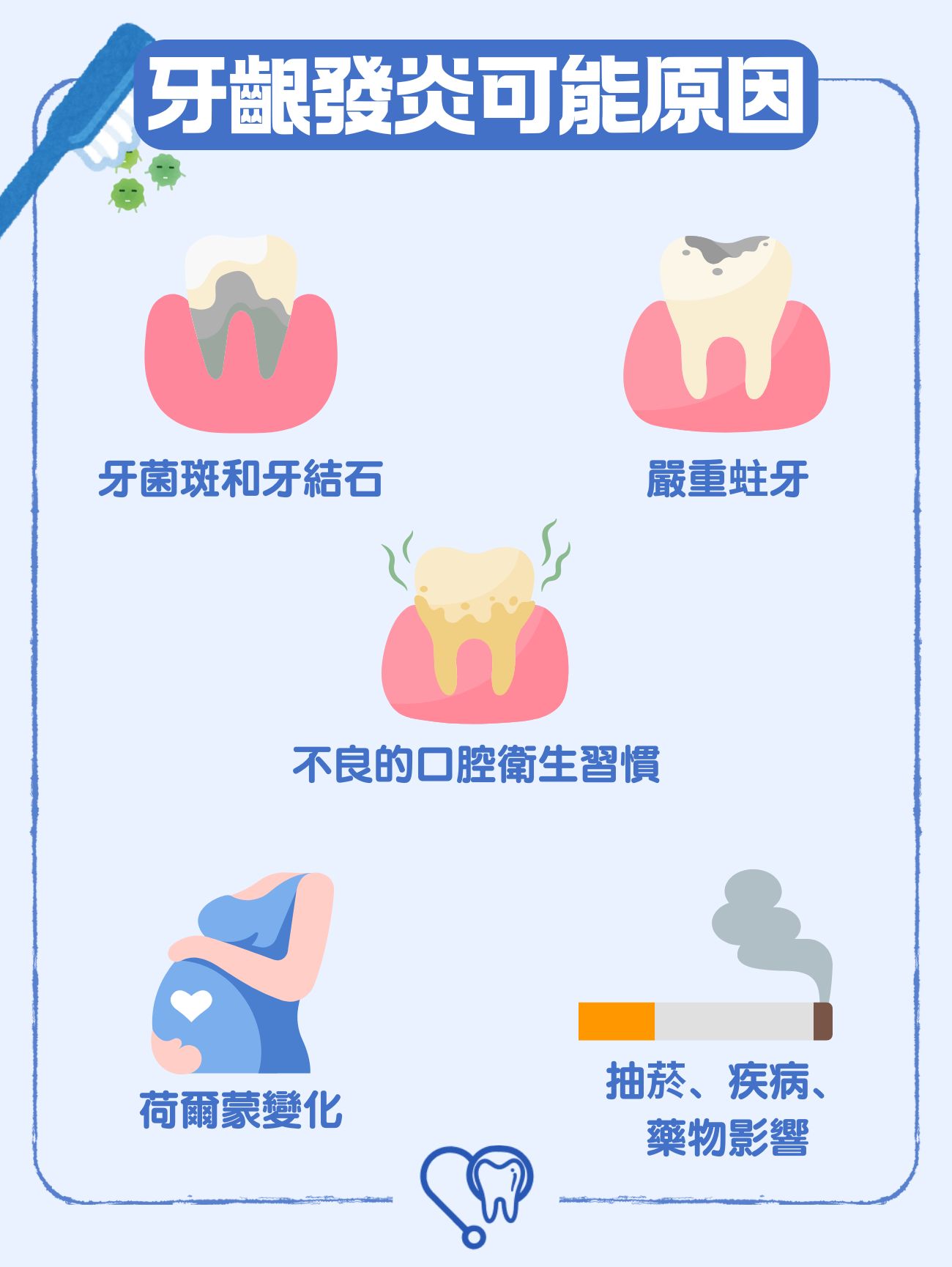
The following factors make gums more prone to inflammation:
- Hormonal changes: during puberty and pregnancy, the gums react more strongly to plaque, and redness, swelling and bleeding may occur even if cleaning habits stay the same.
- diabetes: when blood sugar is poorly controlled, the gums become inflamed more easily and the inflammation tends to recur.
- smoking: smoking affects blood circulation and resistance in the gums, making them more prone to inflammation, although bleeding may be less noticeable when they are inflamed.
- Certain medications: some anti-epileptic drugs, blood pressure medications and immunosuppressants can cause gum overgrowth, and the overgrown gum makes it easier for plaque to build up.
Does Gum Inflammation Go Away on Its Own? 3 Conditions for Gingivitis to Recover
Whether gum inflammation has improved depends on whether your gums no longer bleed when you brush and floss with normal pressure and whether the redness and swelling have gone down, not on whether there is pain. To reach this point, the following three conditions must all be met.
Condition 1: The inflammation is still limited to the gums, with no attachment loss or bone loss
If any of the following signs appear, it is most likely more than gingivitis:
- Pus in the gums, or discharge when pressed
- Loose teeth, or a change in how your teeth bite together
- Gaps between teeth gradually widening, and teeth looking longer
These signs show that the tissues supporting the teeth have been affected. For the symptoms at each stage of periodontal disease (gum disease), from early to advanced, see Symptoms of periodontal disease.
Not having these signs does not necessarily mean it is still gingivitis. Deepening periodontal pockets cause no sensation in the early stage and need to be measured with a probe by a dentist and confirmed with X-rays. For how gingivitis is distinguished from periodontitis by pocket depth, attachment loss and bone loss, see Complete guide to periodontal disease.
Condition 2: Plaque along the gum line and between teeth is removed every day
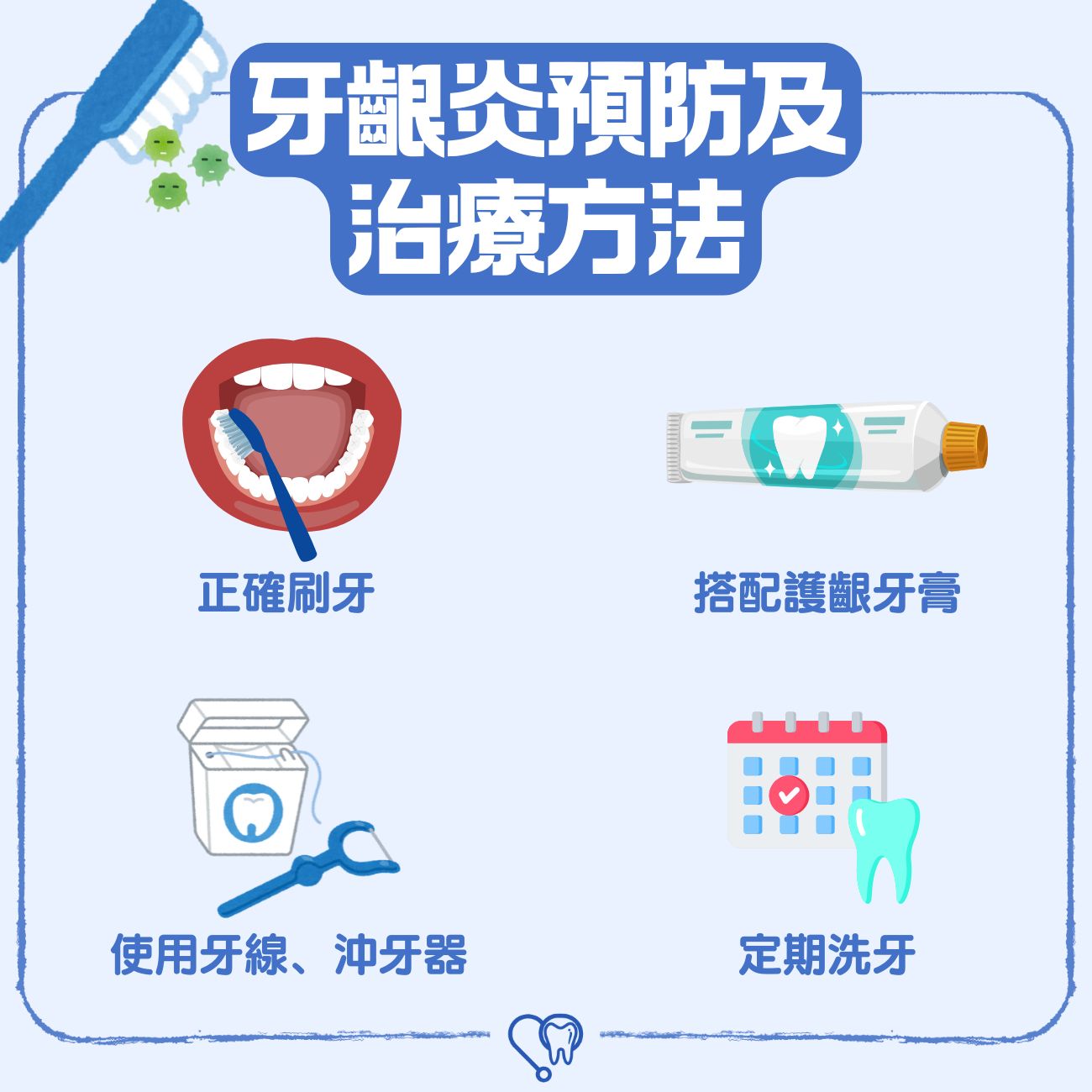
For gingivitis to recover, plaque must not keep irritating the gums. When brushing, aim the bristles at where the teeth meet the gums, and clean between teeth with floss or interdental brushes. Mouthwash is only supplementary and cannot remove plaque already attached to the tooth surface.
If the same spot keeps bleeding after you have improved your cleaning, there may be tartar or an area you cannot reach, and a dental examination is needed.
If your toothbrush bristles splay outwards soon after you start using it, you are probably brushing too hard. For how to choose floss and interdental brushes to suit the size of the gaps between your teeth, see Healthy gums.
Condition 3: Tartar that has formed is removed by scaling and cleaning
Tartar attaches to the tooth surface and cannot be removed by brushing or flossing, and it makes it easier for plaque to build up.
When periodontal pockets have not deepened, regular scaling and cleaning to remove tartar above the gum line is generally enough. If the pockets have deepened and tartar is attached to the root surface below the gum line, deep cleaning is needed. For the differences between the two in the areas cleaned, anaesthesia and suitable situations, see Deep Cleaning.
If an examination confirms periodontitis, treatment generally starts with scaling and cleaning and deep cleaning, taking about 2 to 8 weeks for mild cases and about 3 months to six months or more for moderate to severe cases. For the arrangements at each stage and when the maintenance phase begins, see How long does periodontal treatment take to work.
What to Eat for Gum Inflammation? What Diet Can and Cannot Do
Diet cannot remove the cause of gum inflammation; plaque and tartar still need to be dealt with through cleaning and scaling. What diet can do is avoid nutritional deficiencies that affect the gums, and reduce irritation while the gums are swollen and painful.
- Vitamin C: a deficiency affects the health of gum tissue; it can be obtained from vegetables and fruit. For people who already get enough, extra supplements will not make the inflammation subside faster.
- Sugary foods and drinks: sugar feeds the bacteria in plaque, and the more often you eat, the more easily plaque builds up.
- While gums are swollen and painful: very hot, spicy or hard foods may irritate the inflamed area, so you can switch to mild, softer foods for the time being.
Besides vitamin C, for how nutrients such as calcium, protein and omega-3 fatty acids relate to gum tissue, see What to eat for gum recession.
FAQ
Do I need anti-inflammatory drugs or antibiotics for gum inflammation?
Gingivitis generally does not need antibiotics, because it is caused by plaque attached to the tooth surface, which medication cannot remove; it is treated with cleaning and scaling. Antibiotics must be prescribed by a dentist or doctor as appropriate, usually when there is an abscess, fever or other sign of spreading infection, and should not be bought and taken on your own. Painkillers only relieve pain temporarily; if you need painkillers to eat, your condition needs to be checked by a dentist.
Can gingivitis come back after it clears up?
Gingivitis can come back after it clears up. Plaque forms again every day, and if cleaning slips or tartar builds up again, the gums may become red, swollen and bleed again. As long as there is no tissue loss yet, they can recover again after cleaning and scaling. If it has progressed to periodontitis, long-term maintenance is needed after treatment. For the causes and signs of recurrence, see Can gum disease be cured?.
Summary
Whether gum inflammation can recover depends on whether the inflammation is still limited to the gums, and whether plaque and tartar can be removed consistently; to judge whether it has improved, check whether the bleeding and swelling have gone down. If the same spot still bleeds after you have improved your cleaning, or there is pus, a loose tooth or marked localised swelling and pain, you can have a dental examination to find out whether it is periodontitis or something else.
Article last updated: 2026-10
Disclaimer
This article is for information only and does not contain any invitation or solicitation. Patients should seek a professional dentist for diagnosis and treatment according to their own circumstances. To find out more or book a service, we recommend contacting the relevant clinic directly. Please choose suitable dental services and clinics carefully yourself.



