An inflamed tooth root generally refers to inflammation of the pulp inside the tooth, and infection that spreads through the tip of the root to the surrounding tissue, mostly caused by tooth decay that has reached the pulp. In the early stage of inflammation, the pulp may still recover once the decay is removed; once the pulp can no longer recover, the treatment is root canal treatment or extraction, and it will not get better by itself.
Key points of this article
- An inflamed tooth root is mostly caused by tooth decay that reaches the pulp
- Pain that lingers after stimulation is a sign of pulpitis
- Pain that disappears may mean the nerve has died, and does not mean improvement
- Antibiotics can only control spread and cannot remove the source of infection
- Whether the pulp can be saved decides between a filling and root canal treatment
What is an inflamed tooth root? The difference between pulpitis and apical periodontitis
An inflamed tooth root is not a formal diagnosis. It generally refers to two connected conditions:pulpitisandApical periodontitis. The pulp chamber in the centre of the tooth contains nerves and blood vessels, collectively called the pulp; when bacteria invade the pulp and cause inflammation, it is called pulpitis. If pulpitis is not treated, the pulp gradually dies, and infection spreads through the tip of the root to the surrounding bone and tissue, forming apical periodontitis, and in severe cases an abscess.
An inflamed tooth root and inflamed gums are two different things. Gum inflammation affects the gum around the outside of the tooth and is mainly caused by plaque irritation. As long as the pockets have not deepened and there is no bone loss, the gums can recover after thorough cleaning. For the causes and key points of cleaning, see gum inflammation.
If the inflammation reaches deep into the bone that supports the teeth, it is periodontitis and the treatment goal becomes long-term control. For the boundary between gingivitis and periodontitis and treatment at each stage, you can read Complete guide to periodontal disease.
4 main causes of an inflamed tooth root: tooth decay, cracks in the tooth, impact and root decay
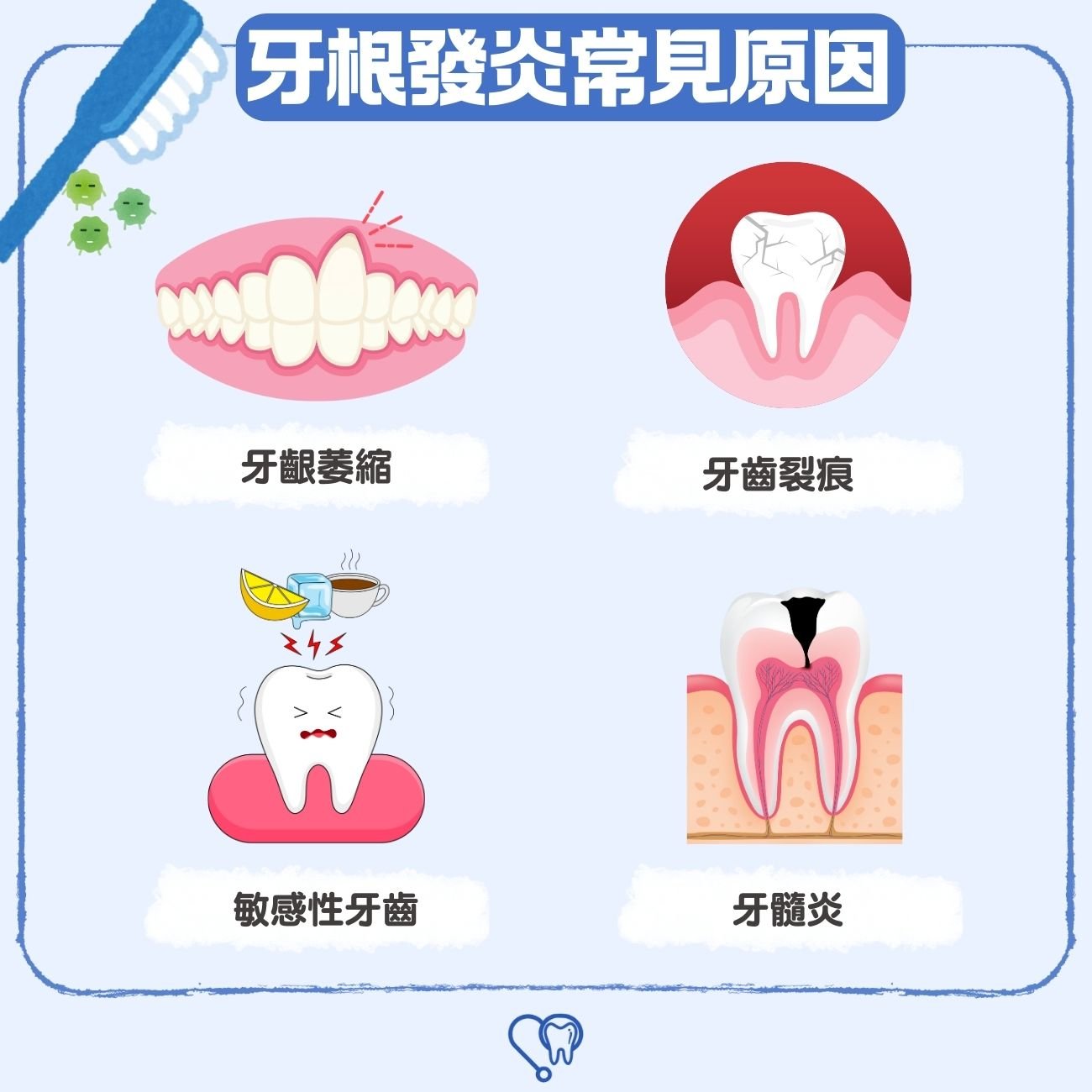
The common cause of an inflamed tooth root is that bacteria or external force break through the protection of the enamel and dentine and reach the pulp. Decay that reaches the pulp is the main route; others include cracks in the tooth, impact injury, and root decay that forms when the root is exposed after gum recession.
Decay that reaches the pulp
Tooth decay starts from the enamel on the tooth surface, erodes inwards into the softer dentine, and finally reaches the pulp chamber. When decay stays in the enamel there is usually no sensation; once it enters the dentine, the tooth starts to become sensitive to cold and sweet things, and when it reaches the pulp it may cause continuous or spontaneous pain.
Cracks in the tooth
Biting hard things such as ice or hard-shelled nuts, or grinding your teeth at night over a long period, may cause fine cracks in the tooth, and bacteria can seep along the cracks into the pulp. A typical sign of a cracked tooth is a sudden sharp pain when biting on a certain spot, or particular pain at the moment you release after biting down. If a crack has extended into the root, the tooth may be difficult to keep.
Impact injury
When a tooth is hit, even if there is no obvious damage on the outside, the blood vessels entering the pulp may be damaged, causing the pulp to slowly die. A tooth gradually turning grey or dark weeks or even longer after an impact is a common sign of pulp damage, and such cases do not necessarily come with pain.
Root decay after gum recession
Gum recession itself does not directly inflame the pulp, but after recession the exposed root surface has no enamel protection and is covered by softer cementum, so it decays more easily. If root decay progresses inwards, it can also reach the pulp.
Gum recession can be caused by brushing too hard or by periodontal disease: the former usually has no deep periodontal pockets, while the latter mostly comes with red, swollen, bleeding gums and bone loss. For how to tell the two kinds of recession apart by appearance and the direction of management, see gum recession.
Symptoms of an inflamed tooth root: how to tell tooth sensitivity, pulpitis and situations that need medical attention
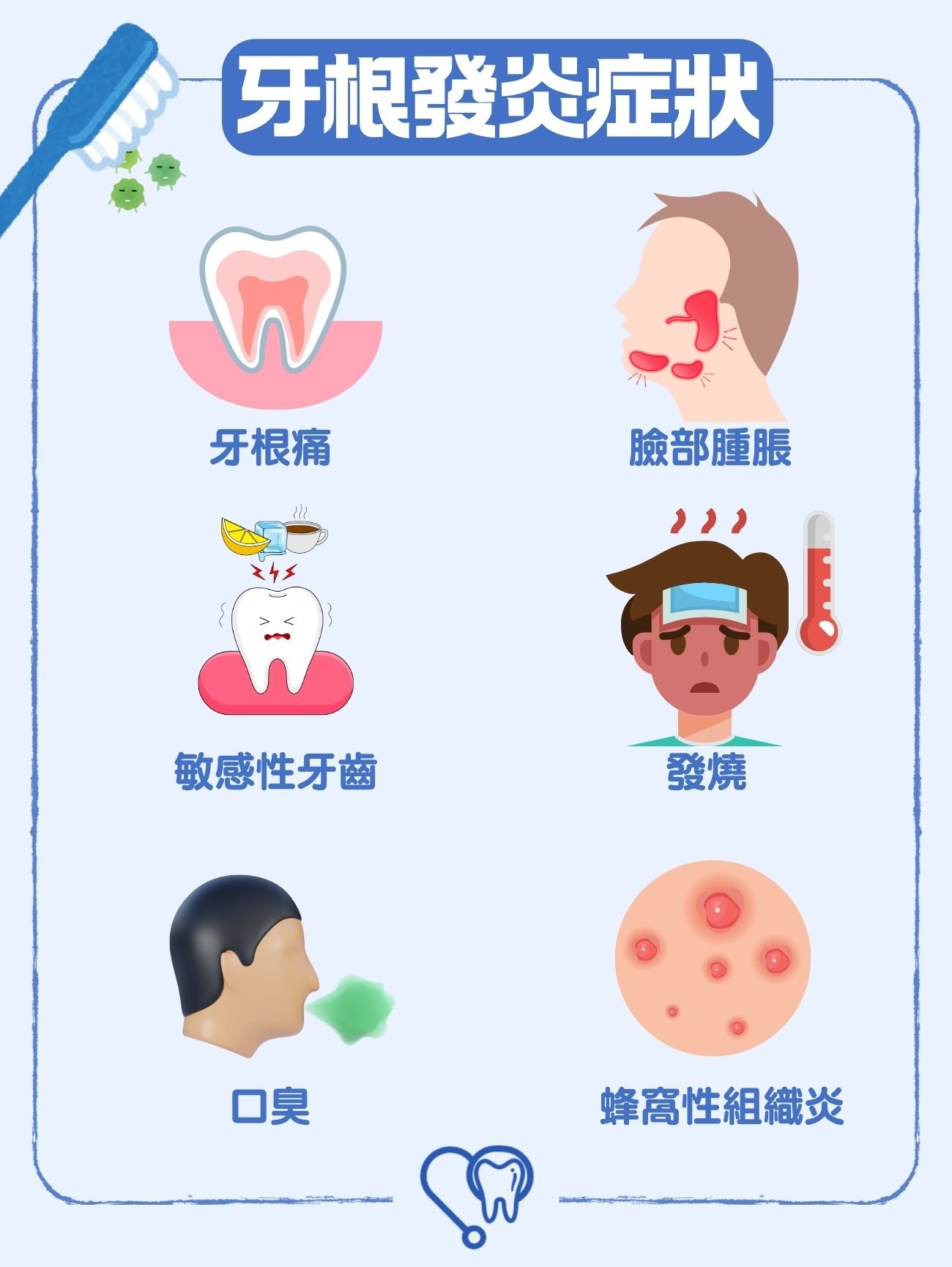
The symptoms of an inflamed tooth root change with the stage of inflammation: pulpitis is mainly lingering pain after hot or cold stimulation and spontaneous toothache; after the pulp dies, this turns into pain on biting and a pus bump on the gum; spread of infection causes facial swelling and fever.
Pain that lingers after hot or cold stimulation
Tooth sensitivity usually shows up as brief soreness when drinking cold drinks or brushing, and fades as soon as the stimulus is removed. If the pain continues for a while after the stimulus is removed, or changes from soreness to throbbing, the inflammation may already be affecting the pulp, and the pulp may not be able to recover.
Spontaneous toothache and pain at night
Sudden throbbing pain without eating or touching, pain that extends to the ear or temple, and pain that is especially noticeable when lying down are all typical signs of pulpitis.
Pain on biting, a feeling that the tooth is raised, and small pus bumps on the gum
After the pulp dies and the infection reaches the tip of the root, biting hurts, the tooth feels as if it is sticking up, and small pus bumps may repeatedly appear on the gum near the root. At this stage the tooth may no longer react to hot or cold.
Facial swelling, fever and situations that need immediate medical attention
When infection spreads to the surrounding tissue, swelling of the cheek or jaw and fever may occur. If swelling spreads quickly to below the eye or the neck, or there is difficulty swallowing or breathing, this needs immediate medical attention, and you should go to an emergency department or contact a dentist as soon as possible rather than waiting for an appointment.
Will an inflamed tooth root get better on its own? Pain going away does not mean it has healed
An inflamed tooth root does not heal by itself. In early pulpitis, causes such as decay need to be removed for the pulp to have a chance of recovering; once the pulp can no longer recover, it can only die off gradually.
If toothache suddenly stops after a while, the pulp nerve may have died and no longer transmits pain, while the infection is still inside the tooth and can later develop into apical periodontitis. Similar to the way early periodontal disease is painless, no pain does not mean there is no disease.
How do you choose treatment for an inflamed tooth root? Conditions for deciding between a filling, root canal treatment and extraction
The treatment choice for an inflamed tooth root depends on whether the pulp can recover and whether the tooth structure can be restored. When the pulp can still recover, a filling is used; when the pulp can no longer recover but the tooth can be restored, root canal treatment is generally chosen; when the tooth is severely damaged or the root has cracked, extraction will be considered.
Before treatment, the dentist will usually take an X-ray to assess the depth of the decay, the shape of the root canals and the condition of the bone around the root tip, and use hot and cold or other tests to see how the pulp responds.
To decide between a filling and root canal treatment, the focus is the state of the pulp, not the size of the cavity or how severe the pain is: if the decay reaches only the enamel or goes slightly into the dentine, a filling is mostly enough; if the decay has entered the pulp chamber, or there is continuous severe pain or the pulp has died, root canal treatment is needed. For how to check each situation yourself and the conditions the dentist actually looks at, see When is root canal treatment or a filling needed.
Whether a tooth is worth keeping is judged by considering three factors together: the remaining tooth structure, periodontal support and biting load. A tooth with a vertical root fracture usually needs to be extracted. For how the three conditions are assessed together, you can read Should severe tooth decay be treated with root canal treatment or extraction.
Once root canal treatment is decided on, most cases need 2 to 3 visits to complete, and the number of visits is affected by the position of the tooth, the number of root canals and the severity of infection. See How many visits does root canal treatment take.
The fee is mainly affected by the position of the tooth and the number of root canals. Front teeth are generally lower and molars and difficult cases are higher, and the actual fee depends on an assessment of each individual tooth. For the factors that affect the fee, see Root canal treatment fees.
Slight discomfort and fullness after treatment generally fades within a few days. If swelling keeps getting worse, or facial swelling or pus occurs, you need to return for a follow-up earlier. See Aftercare for root canal treatment. If inflammation recurs after root canal treatment, common causes include incomplete cleaning of the root canals, a poorly sealed filling, or cracks in the root. For the options for retreatment, see After-effects of root canal treatment.
Preventing an inflamed tooth root: controlling tooth decay and protecting tooth structure
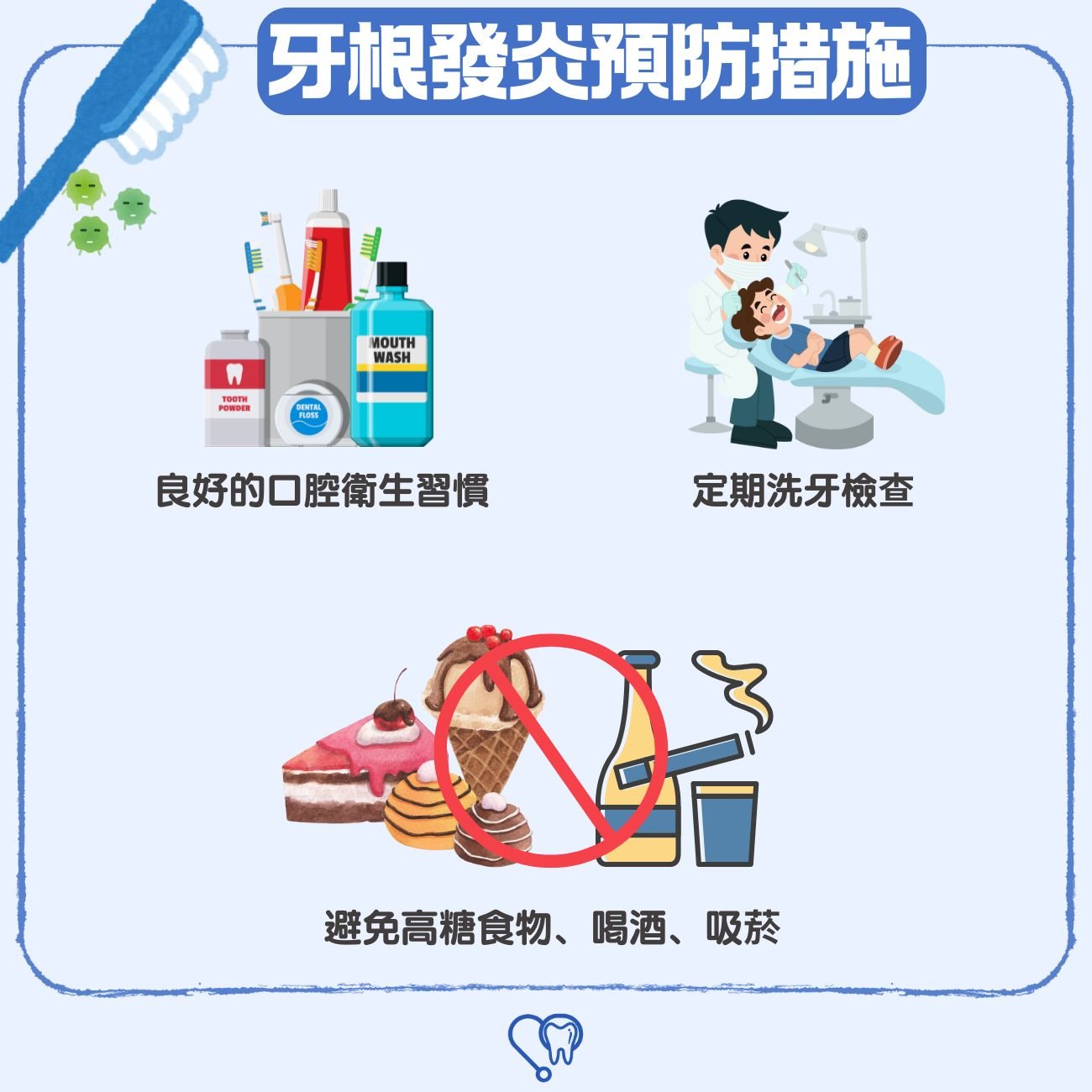
The key to preventing an inflamed tooth root is not to let decay progress to the pulp, and to reduce the chance of the teeth being damaged by external force.
- Use fluoride toothpaste and clean between the teeth: Fluoride toothpaste helps enamel resist acid erosion; the gaps between teeth are a common place for decay and hard to reach by brushing, so floss or interdental brushes are needed as well.
- Avoid brushing hard in a horizontal motion: Vigorous horizontal brushing easily wears away the gums and exposes the root, increasing the chance of root decay.
- Reduce frequent snacking on sweets and acidic drinks: Bacteria break down sugar and produce acid, and the more often you eat, the longer your teeth are exposed to acid erosion.
- Avoid biting hard objects, and consider a mouthguard if you grind your teeth: Bite ice and hard-shelled nuts less often; if you grind your teeth at night, you can discuss with your dentist whether you need a night-time mouthguard to reduce cracks in the teeth.
- Regular Check-ups: Early tooth decay is mostly painless, and regular check-ups allow a filling to be done while the cavity is still shallow. The check-up interval can be set according to the dentist's assessment of your personal decay risk.
FAQ
Can an inflamed tooth root be treated with antibiotics alone, without other treatment?
An inflamed tooth root cannot be treated with antibiotics alone. Antibiotics can help control the spread of infection when there is swelling or fever, but the medication cannot get into a dead pulp to remove the bacteria. If the source of infection is not dealt with, inflammation may come back after the medication is stopped, and root canal treatment or extraction is still needed.
With an inflamed tooth root, can I take painkillers first and wait to see the dentist?
For toothache caused by an inflamed tooth root, you may take painkillers according to the label or your doctor's instructions for temporary relief. Painkillers only reduce pain and do not treat the inflammation. If facial swelling or fever occurs at the same time, seek medical attention promptly rather than relying on painkillers and waiting.
Both an inflamed tooth root and a periodontal abscess cause pus bumps on the gum. How can you tell them apart?
The pus bump from an inflamed tooth root comes from inside the tooth, the pulp has usually died, and the bump is mostly near the tip of the root. A periodontal abscess comes from the periodontal pocket around the outside of the tooth and often comes with deepened pockets, and the tooth nerve may still respond. If the site bleeds and has pus at the first touch of the periodontal probe, a periodontal problem is more likely. The two sometimes occur together, and the dentist needs to tell them apart with a pulp test, periodontal probing and X-rays.
Summary
An inflamed tooth root does not heal by itself and cannot be treated with medication alone. If pain lingers after hot or cold stimulation, or if there is spontaneous toothache or pain on biting, it is advisable to see a registered dentist to find out a suitable way to manage it, even if the pain later stops.
Article last updated: 2026-10
Disclaimer
This article is for information only and does not contain any invitation or solicitation. Patients should seek a professional dentist for diagnosis and treatment according to their own circumstances. To find out more or book a service, we recommend contacting the relevant clinic directly. Please choose suitable dental services and clinics carefully yourself.