
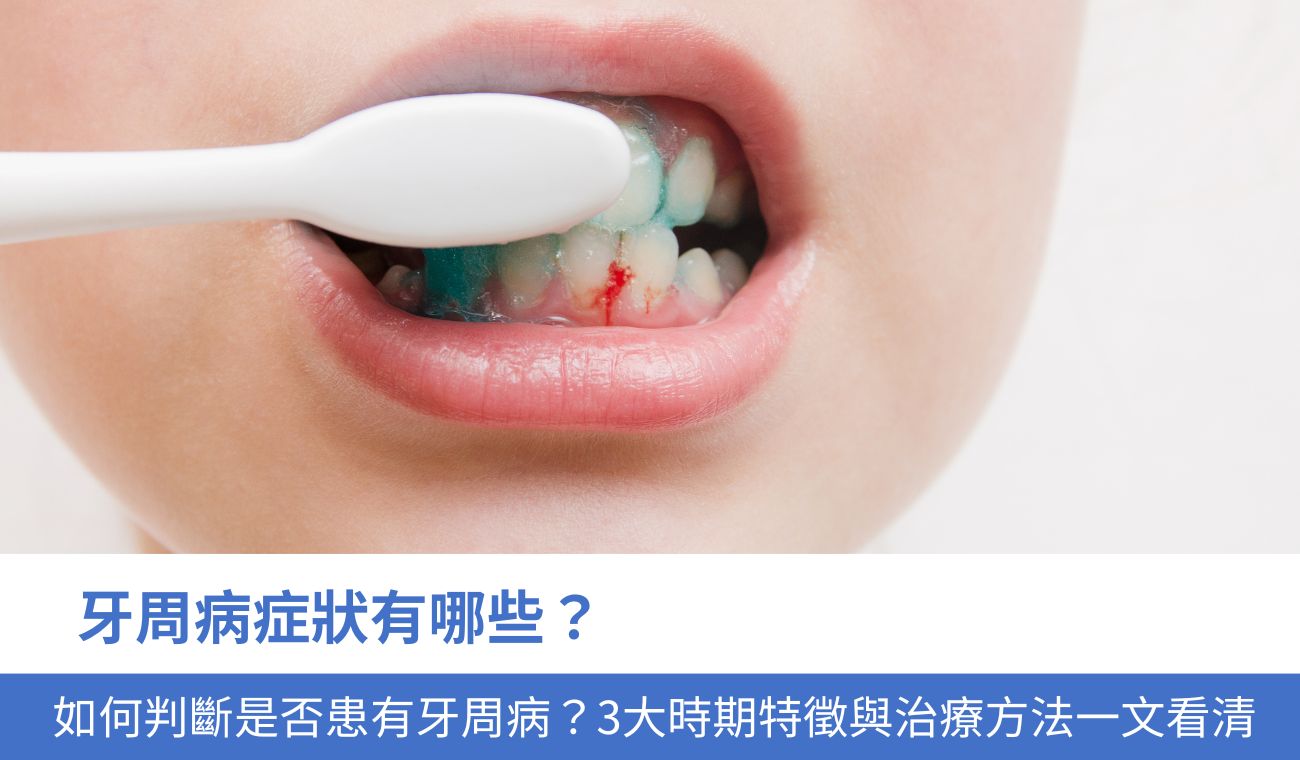
Common symptoms of periodontal disease (gum disease) include bleeding when brushing, red and swollen gums, or noticing wider gaps between teeth and slightly loose teeth. Symptoms change with each stage, and the early stage is mostly painless; pain and loose teeth usually appear later, by which time there is often already loss of the jawbone.
Key points of this article
- Early symptoms are concentrated in the gums and may still be reversible gingivitis
- You cannot detect deepening periodontal pockets and bone loss yourself
- Gum recession and gum boils are not necessarily caused by gum disease
- Having no symptoms does not mean you have no gum disease
- Symptoms coming and going does not mean it has improved
What Are the Symptoms of Gum Disease? Signs at Each of the 3 Stages
The stages of gum disease symptoms reflect how far the inflammation has spread from the gums into deeper tissues. The more the symptoms involve tooth stability and the bite, the more of the jawbone supporting the teeth has been lost, and bone that has been lost generally cannot be restored by cleaning.
| Stage | Warning signs | Changes in periodontal tissues | Can you notice it yourself? |
| Early |
|
Inflammation limited to the gums | Visible |
| Moderate stage |
|
Periodontal pockets deepen and the jawbone starts to be lost | Visible changes in appearance; deepening pockets cannot be felt |
| Advanced stage |
|
Extensive loss of jawbone, with teeth losing support | Noticeable |
Early Symptoms of Gum Disease: Bleeding When Brushing, Red and Swollen Gums and Persistent Bad Breath
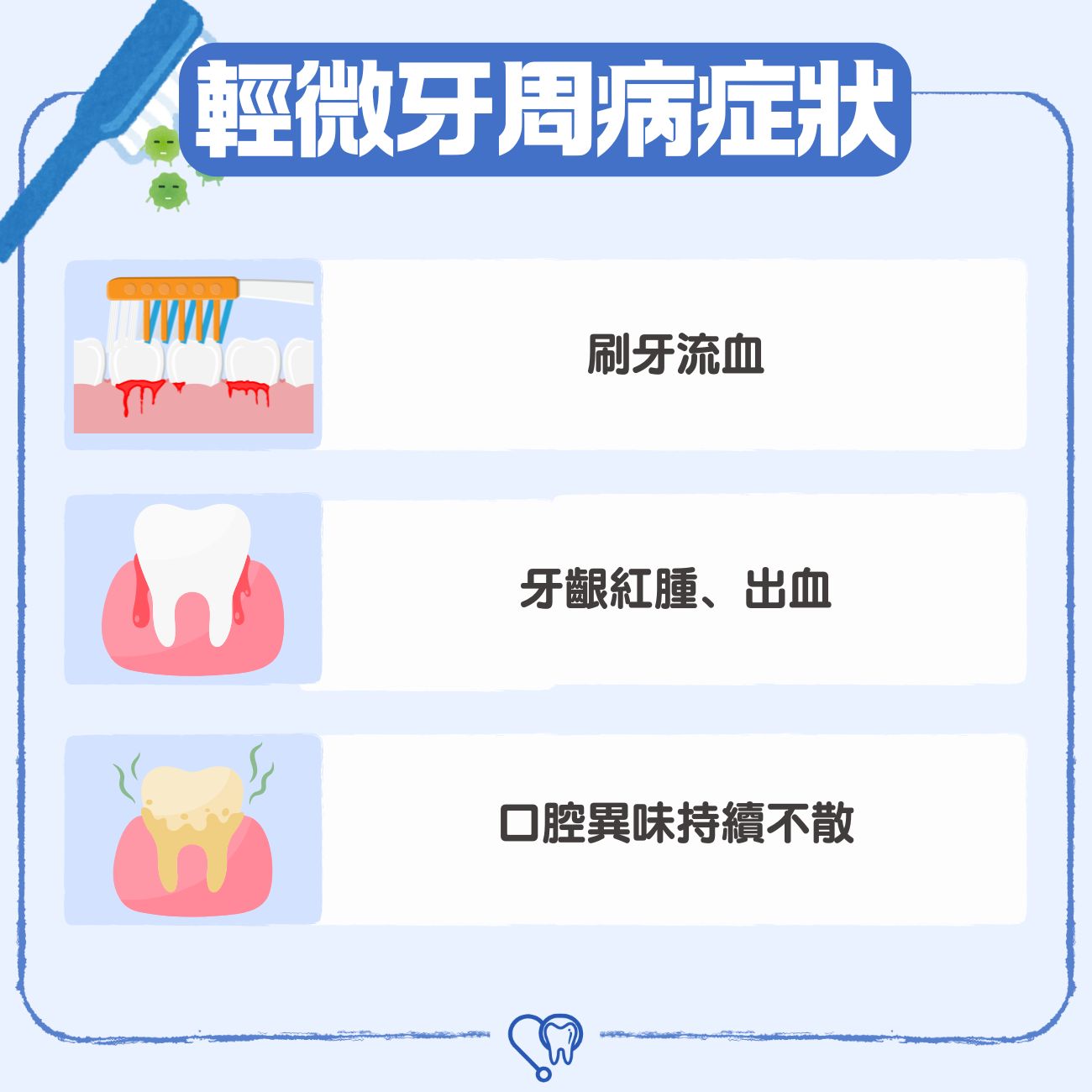
Early symptoms of gum disease are concentrated in the gums: bleeding when brushing or flossing, gum margins turning red and swollen, and bad breath that persists after brushing. These signs are often put down to brushing too hard or 'heatiness' and are left untreated.
At this stage, if the periodontal pockets have not deepened and no bone loss is seen on X-rays, it is still gingivitis, which can be reversed once plaque and tartar are removed. For the 3 conditions needed for gingivitis to recover and how to tell whether it has improved after better cleaning, see gum inflammation.
Bleeding when brushing may also be related to brushing technique, medication or general health. For the difference between normal and abnormal bleeding, see our article on bleeding gums. Persistent bad breath may also come from a dry mouth, sinus or digestive problems. For causes of bad breath other than the gums, see bad breath causes.
Moderate Symptoms of Gum Disease: Gum Recession, Wider Gaps Between Teeth and Discomfort When Chewing
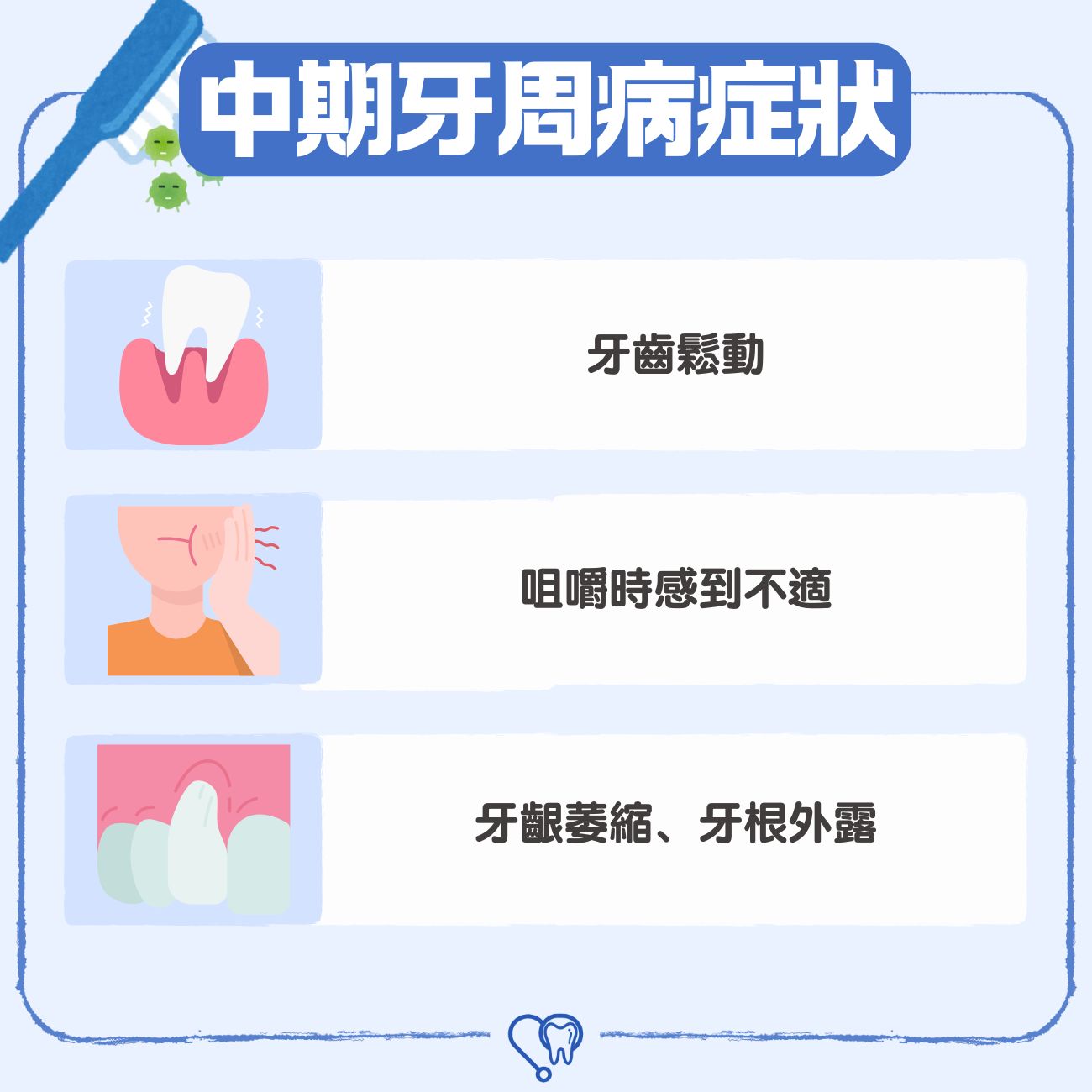
What moderate symptoms of gum disease have in common is that the supporting tissues below the gums have started to be lost, so the gum position, gaps between teeth and the feeling when chewing change. These changes can also be caused by brushing technique, tooth decay and other factors, so gum disease cannot be confirmed from appearance alone.
Gum recession, with teeth looking longer
When periodontal pockets deepen and the jawbone is lost, the gums recede and the exposed roots make the teeth look longer. Gum recession is not necessarily caused by gum disease; brushing too hard can also cause it. The key to telling them apart is whether there is also redness, bleeding and deepening pockets. For the difference in appearance between the two causes, see gum recession .
Wider gaps between teeth, with food getting stuck easily
When the gum and jawbone between teeth are lost, the gaps gradually widen and food gets stuck more often after eating. Wider gaps may also come from natural gaps, tooth decay or long-term missing teeth. For 6 causes and treatments such as fillings and orthodontics, see What to do about widening gaps between teeth.
Soreness when chewing or discomfort when biting
When periodontal tissues are inflamed, biting hard foods or chewing may cause soreness or a dull ache. Once roots are exposed, hot and cold can also make teeth feel sore. Sensitivity to hot and cold is also common with sensitive teeth, often caused by poor brushing technique or regularly eating acidic food. See Tooth Sensitivity.
Advanced Symptoms of Gum Disease: Loose and Shifting Teeth and Recurring Pus in the Gums
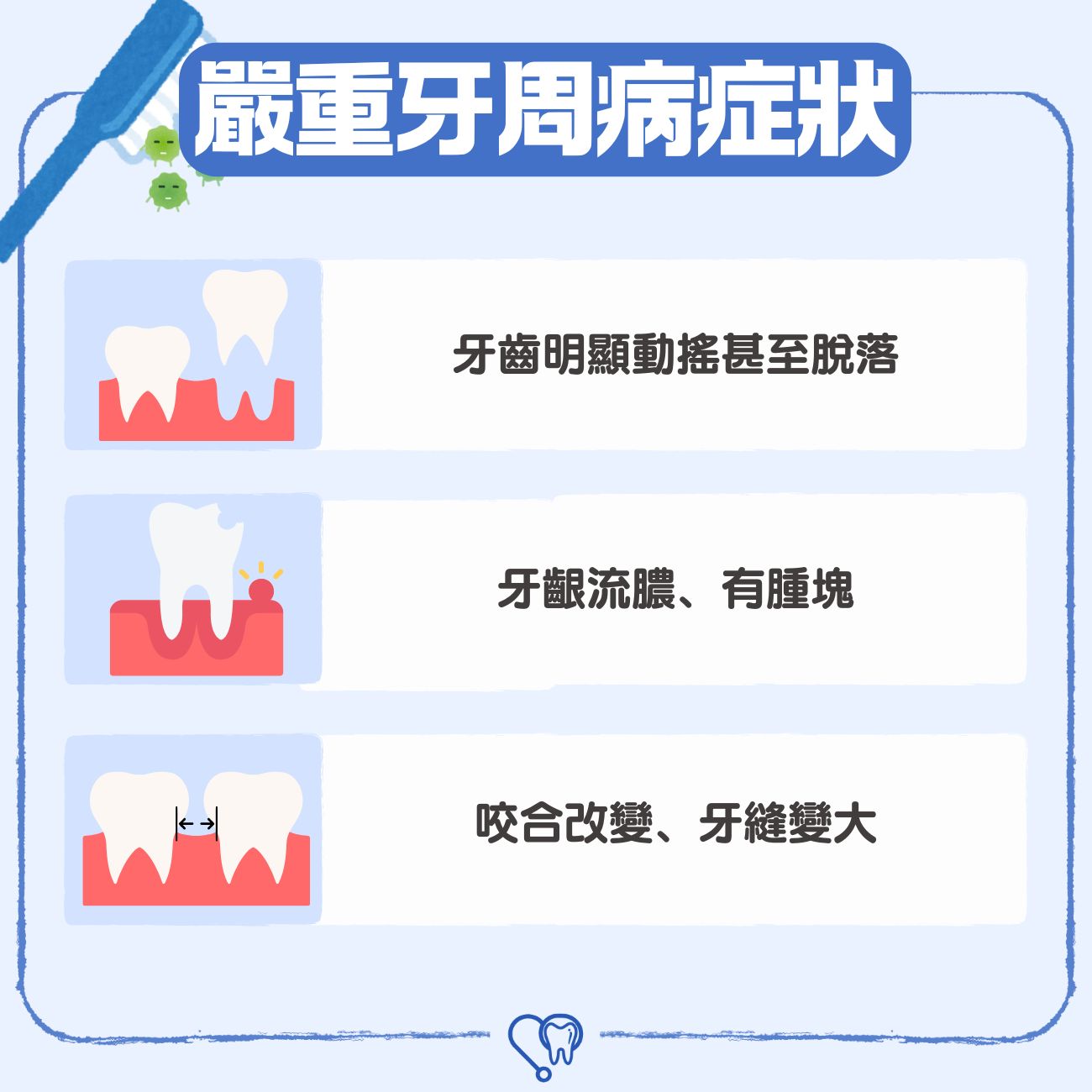
Advanced symptoms of gum disease are mostly noticeable and often come with pain. At this point, treatment is not just about the inflammation, but also whether the teeth can be saved.
Loose or shifting teeth, or a change in bite
After extensive loss of jawbone, teeth lose their support and become loose. Front teeth may drift outwards, new gaps may appear, and the way the upper and lower teeth bite together may change. Whether a tooth can be saved mainly depends on the remaining jawbone and how loose it is. For how this is assessed, see severe periodontal disease .
Gums repeatedly swelling or producing pus
The deeper the periodontal pocket, the more easily bacteria build up inside it, causing a periodontal abscess: the gum at the same spot repeatedly swells and produces pus, and it comes back after subsiding.
A gum boil can also come from a dead pulp with infection spreading through the root tip. For where each type of boil appears and how to tell them apart, see tooth root inflammation. If the swelling spreads to the face or comes with fever, you should see a dentist as soon as possible.
How Can You Tell Whether You Have Gum Disease? What You Can See Yourself and What Needs an Examination
By observing symptoms yourself, you can spot gum inflammation and changes in appearance; how deep the periodontal pockets are and whether bone has been lost can only be measured by a dentist and confirmed with X-rays. So whether to have an examination depends on whether symptoms persist or keep coming back, not on how severe they are.
When checking yourself, look out for the following:
- Whether there is blood on your toothbrush or in the water you spit out after brushing or flossing
- Look in the mirror to see whether your gums have turned red and the edges are swollen and rounded
- Compare teeth in the same position on the left and right to see whether any look longer or have wider gaps
- Whether any tooth feels sore when chewing, or feels loose or out of place when biting
During an examination, the dentist uses a periodontal probe to measure the depth at each point where the tooth meets the gum; healthy depth is about 1 to 3mm. Whether sites of 4mm or more are periodontitis must be judged together with attachment loss and X-rays. See What is a periodontal pocket.
Having no symptoms does not mean you have no gum disease. Deepening pockets cause no sensation in the early stage, and smokers' gums may not bleed noticeably even when inflamed. For the limits of judging by appearance alone, see Healthy gums.
If it is already periodontitis, deep cleaning or periodontal surgery is chosen according to pocket depth and the degree of bone loss. For when each level of treatment applies, see Complete guide to periodontal disease.
FAQ
If gum disease symptoms come and go, does that mean it has healed?
Symptoms of gum disease coming and going does not mean it has improved. Bleeding and swelling may ease temporarily with cleaning, rest or changes in general health, and a periodontal abscess may go down once the pus drains, but the plaque and tartar in the periodontal pockets remain and the inflammation continues. Even after symptoms ease, a periodontal examination is still needed to check the condition of the pockets and bone.
Summary
Symptoms of gum disease start with bleeding and red, swollen gums, progress to gum recession and wider gaps between teeth, and then to loose teeth and pus; the later the stage, the more tooth stability is affected. If symptoms persist or keep coming back, you can have a periodontal examination with your dentist to confirm whether it is gingivitis or periodontitis, and what stage it has reached.
Article last updated: 2026-10
Disclaimer
This article is for information only and does not contain any invitation or solicitation. Patients should seek a professional dentist for diagnosis and treatment according to their own circumstances. To find out more or book a service, we recommend contacting the relevant clinic directly. Please choose suitable dental services and clinics carefully yourself.



