
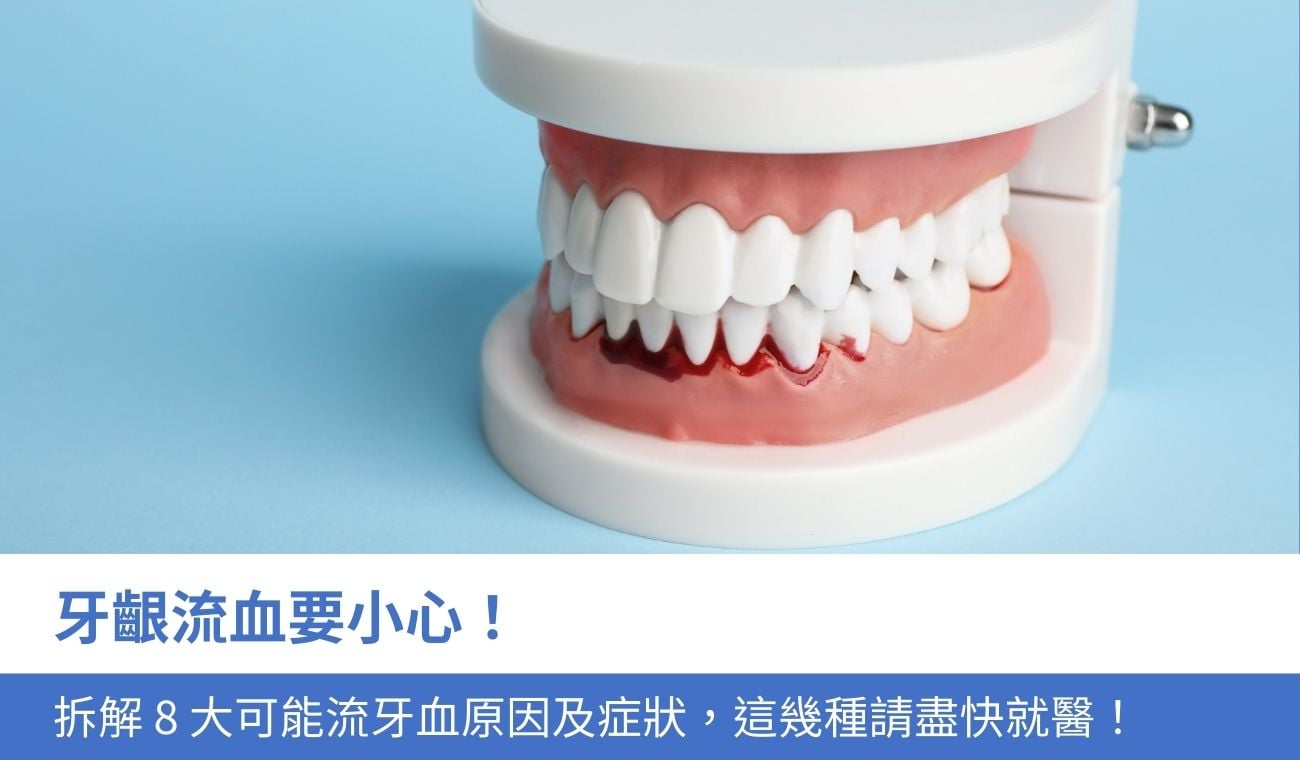
Bleeding gums are mostly caused by gum inflammation, excessive plaque, improper brushing or systemic clotting problems. If there is no improvement after several weeks of better daily oral care, seek a medical check-up early.
Why do my gums bleed? Don't ignore it
Many people think a little blood when brushing is no big deal, but gum bleeding is often the body sending out a warning signal.
Gums should normally be pink, firm and healthy, and frequent bleeding means the gums are inflamed or there is an underlying problem. To improve things, you first need to find out the reason behind it so that the problem can be solved at its root!

Causes of bleeding gums 1: Periodontal disease (gingivitis, periodontal disease)
The most common cause of bleeding gums is periodontal disease. When bacteria accumulate around the teeth for a long time, they may release toxins that make the gums red, swollen and sensitive, so that they bleed with a light brush.
The early stage is called "gingivitis", when the gums are red and swollen and bleed easily; if left untreated, the inflammation may go deep into the tooth root and alveolar bone and develop into "periodontitis". At this point the teeth begin to loosen, the gums recede and bleed frequently, and there may even be bad breath or painful gums.
Causes of bleeding gums 2: Nutritional deficiency (vitamins C and K and others)
If your diet is unbalanced, especially lacking vitamin C or K, the gums can also become fragile, with blood vessels that rupture easily and bleeding.
Vitamin C helps gum tissue to repair and maintains the structure of collagen, while vitamin K is related to the blood clotting mechanism.
You can eat more fruit rich in vitamin C, such as kiwi fruit, oranges and strawberries, or green vegetables that supply vitamin K, such as spinach and broccoli.
Causes of bleeding gums 3: Systemic disease factors (diabetes, blood disorders)
Some people brush correctly and their teeth are not particularly dirty, but their gums still often bleed when brushing, and this is when you need to suspect a systemic disease.
For example, in people with diabetes, unstable blood sugar control leads to lower immunity and a poorer ability of periodontal tissue to repair, so the gums become inflamed and bleed easily. Blood disorders such as leukaemia and thrombocytopenia also make blood clotting abnormal, increasing the risk of gum bleeding.
If, besides bleeding gums, you also bruise easily, have reduced energy or have swollen, painful gums that do not go away, it is advisable to seek a medical check-up early to rule out such systemic diseases.
Causes of bleeding gums 4: Medication side effects
Some medications affect the blood's ability to clot, for example anticoagulants (such as aspirin and warfarin) or certain blood pressure medications and contraceptives, and long-term use may make the gums bleed easily.
This does not mean you should stop the medication on your own, but that you should tell your dentist about the medication you are currently using, so that the dentist can adjust the treatment and cleaning advice to ensure safety.
Causes of bleeding gums 5: Hormonal changes
Hormonal fluctuations are also a common but easily overlooked cause. During puberty, pregnancy or menopause, or when taking contraceptives, hormonal changes in a woman's body make the blood vessels in the gums dilate and the gums more sensitive to irritation, so that slight brushing may cause bleeding.
If a pregnant woman has obvious bleeding or swelling and pain in the gums, she should not delay, because if pregnancy gingivitis gets worse and is not treated in time, it may affect overall health and even the risk of premature birth. It is advised that expectant mothers, whose gums may bleed with slightly firmer brushing, clean especially gently and keep the mouth clean.
Causes of bleeding gums 6: Oral injury
Sometimes bleeding gums are simply an injury to the gums. Biting too hard when eating, being scratched by a fish bone or hard food, a knock to the gums, or even broken skin caused by friction from braces can all cause local bleeding.
If the bleeding is only slight, you can rinse with saline solution to keep the area clean, and it will heal naturally after a few days. But if the bleeding is heavy or does not stop, a dentist needs to check the wound to make sure there is no deeper problem.
Causes of bleeding gums 7: improper oral care
Brushing too hard, a toothbrush with bristles that are too hard, brushing in the wrong direction, and not using floss or interdental brushes easily let plaque biofilm and tartar build up between the teeth, causing the gums to become inflamed, damaged and bleed.
Good oral hygiene is the first step in controlling gum bleeding. A correct cleaning method is the key to keeping the gums stable. When brushing, hold the toothbrush at a 45-degree angle to the gums, gently draw small circles with slight vibrating up-and-down movements, and clean the gum margin rather than scrubbing sideways with force.
Causes of bleeding gums 8: Unsuitable dental products
Some people use a toothbrush that is too hard, or a toothpaste or mouthwash that is strongly irritating, out of convenience, and chemical ingredients irritate the gums and cause bleeding. Others wear dentures or braces that do not fit or bite properly and scrape the gums, leading to long-term local redness, swelling and bleeding.
If you suspect this is the cause, you should return for a follow-up so that the dentist can adjust or replace the dental products with suitable ones, to prevent the gums from being continually injured.
When should I seek medical help for bleeding gums?
If bleeding gums only happen occasionally and improve within a few days, they are mostly caused by mild inflammation or improper technique. But if any of the following symptoms occur, seek medical help as soon as possible:
- Bleeding that is frequent, heavy or lasts more than a week without improvement
- Accompanied by toothache, an abscess, bad breath or loose teeth
- Bleeding that does not stop, or gums that are dark red or purplish red
- Accompanied by other abnormal bleeding or bruising on the body
Treatment varies with each person's situation, and only regular check-ups can correctly find the cause and treat it thoroughly!
The dentist will carry out an examination according to the state of inflammation of the gum tissue, such as periodontal pocket probing, X-ray examination or, where necessary, referral for a blood test. Treatment may include professional scaling, periodontal treatment, local medication control, or adjusting dentures and cleaning habits.
Further reading:[Bleeding gums] What to do about bleeding gums? 5 causes, treatment and prevention
FAQ
How do I stop bleeding gums?
First press gently on the bleeding area with clean gauze and keep the mouth clean. If it is caused by brushing too hard, switch to a soft-bristle toothbrush and the correct brushing technique. If the bleeding recurs or lasts more than a few days, you should have a dentist check it.
What deficiency causes bleeding gums?
The most common are deficiencies of vitamins C and K. These can be topped up from fruit and vegetables, leafy greens or multivitamins, but if the bleeding is frequent, it is still necessary to confirm whether you have periodontal disease or another systemic disease.
Is it normal for gums to bleed when flossing?
When you first use floss, if the gums are already inflamed they will bleed, which is a temporary phenomenon. After a few days of continued use, the condition of the gums will improve and the bleeding will naturally decrease. But if they still bleed after more than a week of use, it means you have gingivitis and should have it assessed by a dentist.
Summary
Bleeding gums may seem a small matter, but they may be a sign of periodontal disease, nutritional deficiency or a medical condition. The most important thing is not to ignore them. If you find that bleeding continues or comes with pain or loose teeth, it is advisable to see a professional dentist for assessment straight away, so that the problem can be solved at its root and your gums can return to a healthy, stable state.
Disclaimer
This article is for information only and does not contain any invitation or solicitation. Patients should seek a professional dentist for diagnosis and treatment according to their own circumstances. To find out more or book a service, we recommend contacting the relevant clinic directly. Please choose suitable dental services and clinics carefully yourself.



