As new parents, how should you deal with baby tooth decay the first time? Will severe tooth decay in toddlers affect baby teeth or the health of later permanent teeth? This article shares the causes oftooth decay in toddlersand related points to note.
What should you do about tooth decay in babies and toddlers?
Tooth decay (dental caries) is a common oral disease that affects not only adults but also babies and toddlers.
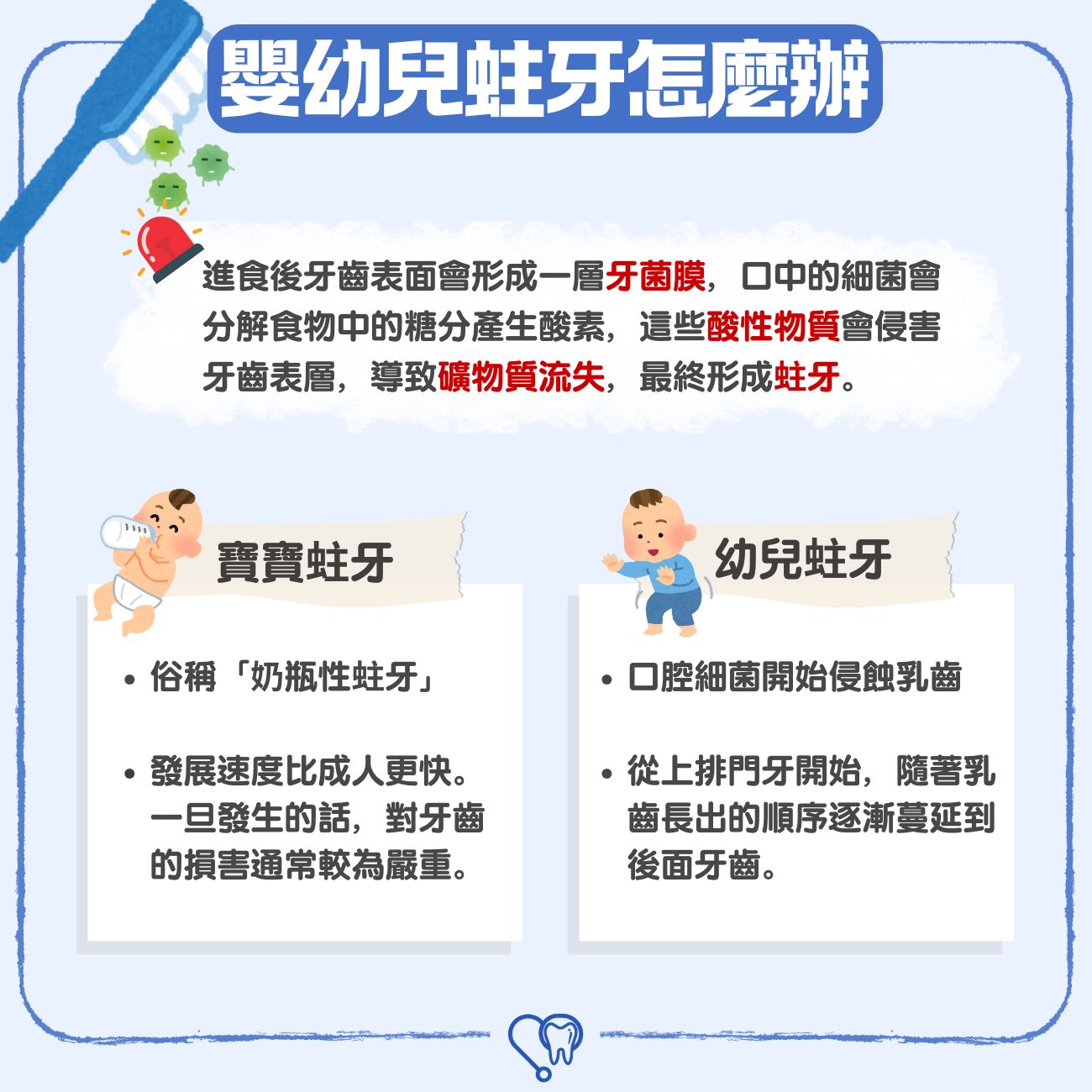
After every meal, a layer ofplaqueforms on the tooth surface, and bacteria in the mouth break down the sugars in food to produce acids. These acids attack the surface of the tooth, causing loss of minerals and eventually tooth decay.
Although saliva can neutralise acids and stop mineral loss, if food is eaten too often, saliva cannot neutralise the acids effectively, and the tooth surface is still eroded continuously and decays.
Baby tooth decay(infant decay)
Baby tooth decay is mainly caused by long exposure to milk or sugary drinks, commonly known as "baby bottle tooth decay".
Unlike adult tooth decay, which may affect only one specific part, infant decay often affects the whole tooth. And because a baby's tooth structure is not yet fully mature, decay develops faster than in adults. Once it happens, the damage to the tooth is usually more severe.
tooth decay in toddlers
Toddler tooth decay is when bacteria in the mouth start to attack baby teeth. Compared with infant decay, toddler decay usually starts from the upperfront teethand, following the order in which the baby teeth came through, gradually spreads to the back teeth, meaning decay may start soon after the baby teeth come through, and large cavities appear on the surface.
What causes severe tooth decay in toddlers?
There are two main causes of severe tooth decay in babies and toddlers: improper feeding methods and poor oral hygiene habits.
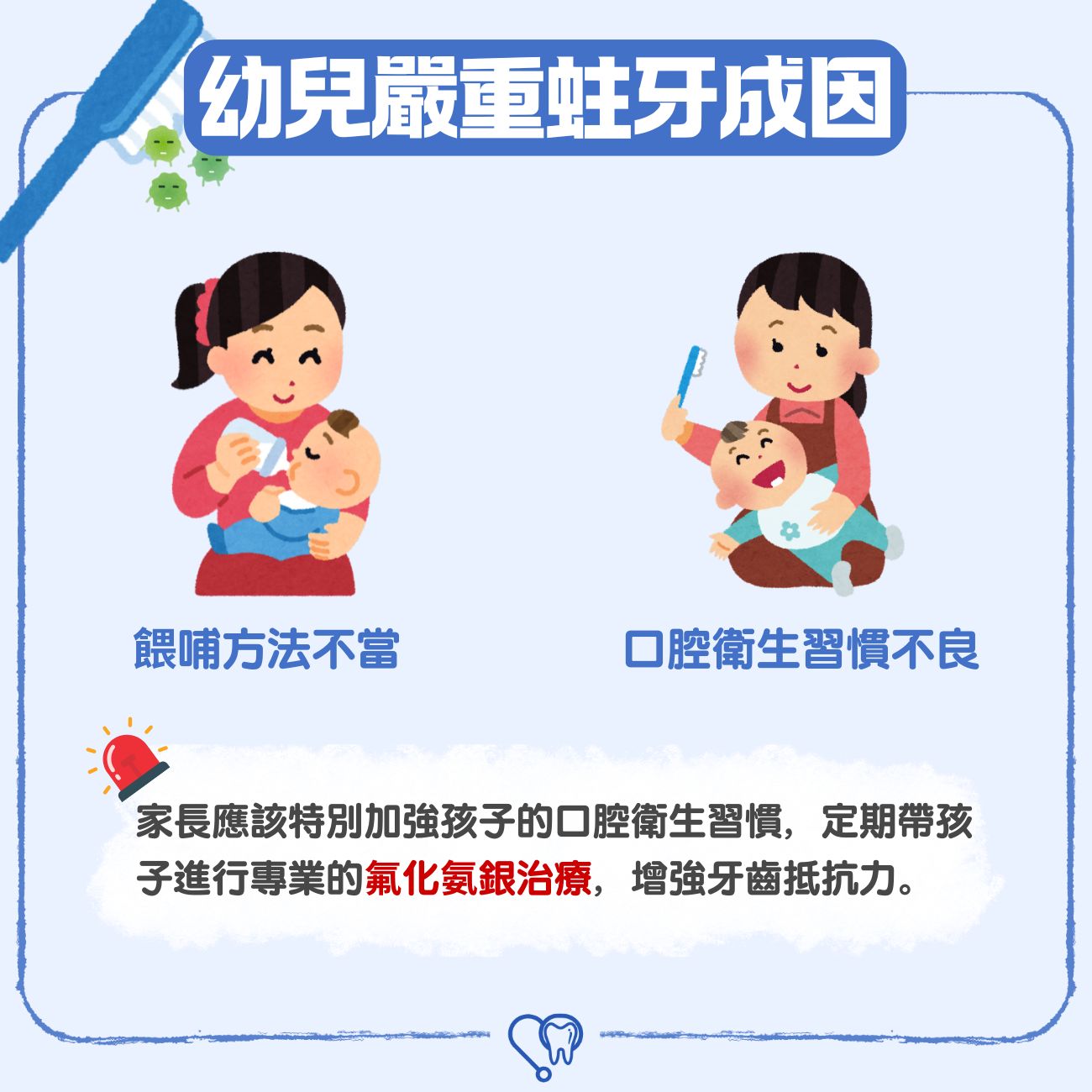
Improper feeding methods
Some parents still feed their baby frequently and at irregular times after the baby is 6 months old, which causes bacteria in the mouth to keep producing acids that attack the teeth. Or when feeding milk before bed, they let the toddler fall asleep holding the bottle, so the teeth soak in milk for a long time, which also increases the risk of tooth decay.
Toddlers can generally hold a bottle themselves after the age of one. If parents overuse the bottle at this point and let the toddler drink milk or other drinks from the bottle at any time, the time of exposure to sugar is prolonged.
Poor oral hygiene habits
After a toddler's teeth come through, parents fail to thoroughly remove the plaque biofilm from the tooth surface every day. They also fail to arrange regular oral check-ups, and so miss the chance of early detection and treatment.
Some parents use the child's cutlery to eat or kiss the child on the mouth. In fact, these actions spread decay-causing bacteria from the parent's mouth into the child's mouth.
Early signs of tooth decay in toddlersand their characteristics
As parents, you may want to know how to spot a toddler's tooth decay as early as possible. Here are a few early signs that help parents recognise decay in their child:
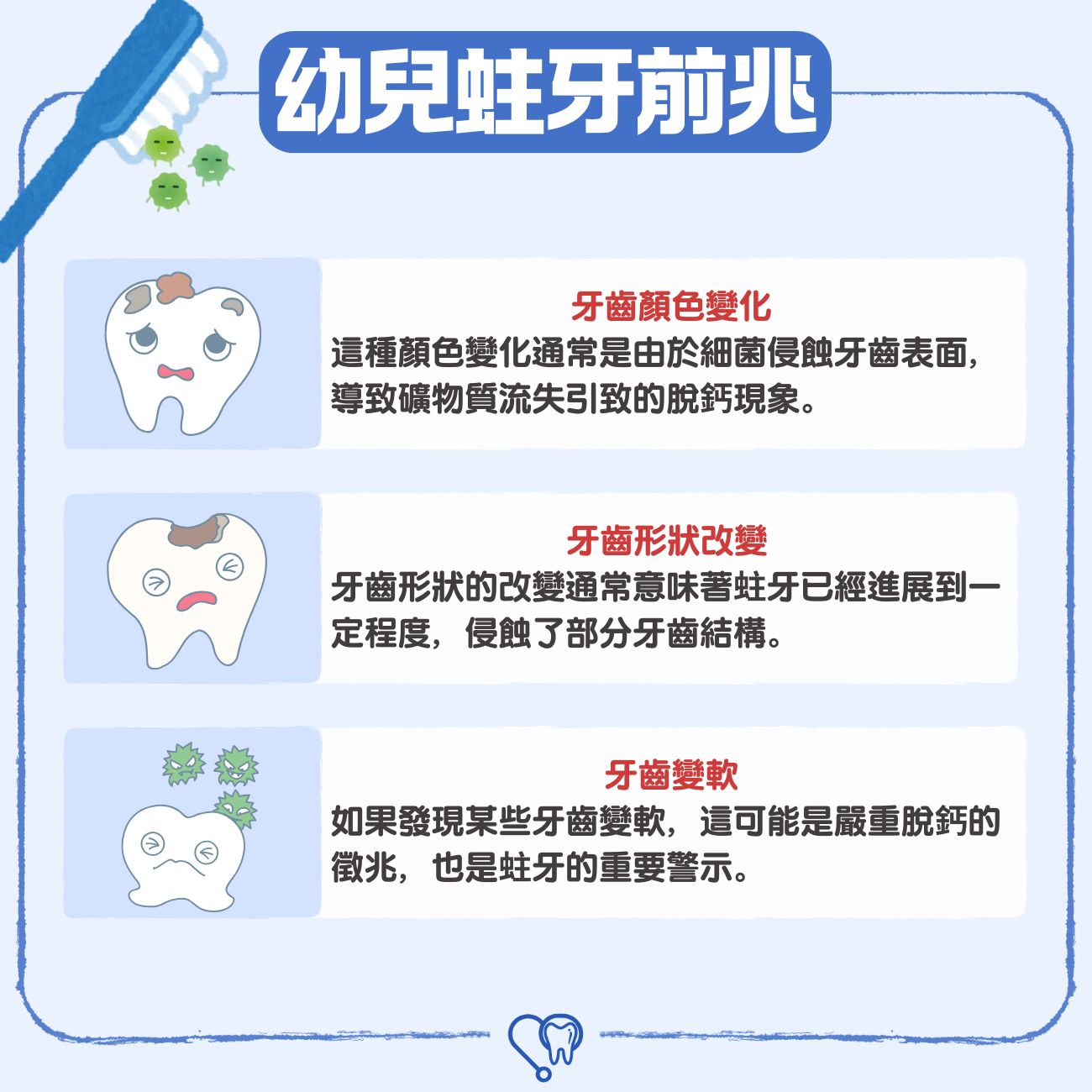
Changes in tooth colour
If you find brown or white spots on your child's tooth surface that are hard to remove, this may bean early sign of tooth decay. This colour change is usually a demineralisation phenomenon caused by bacteria attacking the tooth surface and causing mineral loss.
Changes in tooth shape
If a child's tooth suddenly develops a dent or chip without any recent knock or fall, it is very likely a sign of tooth decay. A change in tooth shape usually means the decay has progressed to a certain extent and has eroded part of the tooth structure.
Softening of teeth
Although baby teeth are smaller and less hard than permanent teeth, they should still be firm under normal circumstances. If you find some teeth have become soft while brushing your child's teeth or checking them, this may be a sign of severe demineralisation and an important warning of tooth decay.
Severe tooth decay in toddlers should not be ignored
If a young child at home shows the signs above, parents can discuss with a dentist whether preventive measures such as silver diamine fluoride treatment are suitable. Timely diagnosis and treatment can prevent the decay from getting worse and protect oral health.
Ways to prevent tooth decay in babies and toddlers
Tooth decay not only affects quality of life but may also affect the growth of future permanent teeth. Prevention is better than cure. The following effective ways of preventing decay help parents better protect their child's oral health:
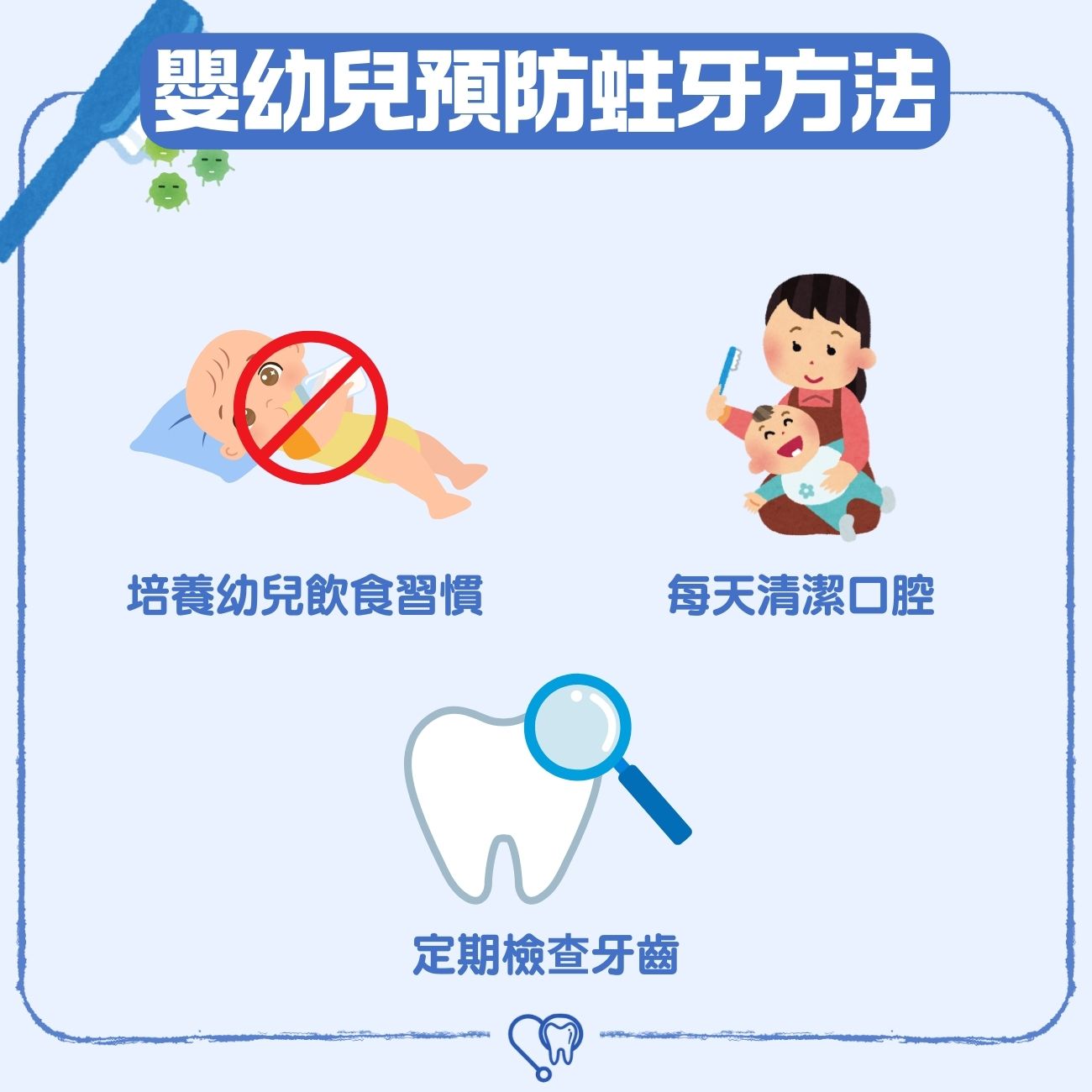
Build toddlers' eating habits
Both breast milk and formula contain lactose. If a baby falls asleep straight after drinking milk before bed without the mouth being cleaned, bacteria easily multiply and the risk of tooth decay increases.
Parents can gradually cut down the habit of drinking milk before bed, especially for babies who have already moved on to solid foods. Control the number of times of eating each day. For children over 2 years old, it is best to keep to three main meals and, if necessary, add one snack between meals. Avoid letting toddlers sleep with the bottle in their mouth, and start trying to drink water from a cup at around 9 months.
Clean the mouth every day
From the time a baby is born, good oral cleaning habits should be built. Below are different cleaning methods for different stages, for parents' reference:
- Newborns (0-6 months): gently wipe the gums with a clean, damp gauze pad or cloth.
- After teeth come through (6 months-2 years): clean the tooth surfaces, and once the baby molars have come through, brush with a soft-bristled, small-headed toothbrush.
- Once the child can spit out water (2-6 years): you can use a children's toothpaste containingfluorideand brush in the morning and evening every day. If possible, brush once more for the child after they brush at night, to make sure the cleaning is thorough.
Children of different ages should use different amounts of fluoride toothpaste. For 0-3 years, a rice-grain-sized amount is recommended; for 3-6 years, a pea-sized amount; children over 6 can use an adult amount of fluoride toothpaste.
regular dental check-ups
Have the first check-up within 6 months after the child's first tooth comes through, or at around one year old. After that, have an oral check-up at least once a year.
Regular check-ups not only help detect problems early but also help the child get used to the clinic environment and reduce fear of the dentist.
Treatment for tooth decay in toddlers' baby teeth
Although prevention is important, if decay has already appeared in a tooth, timely and appropriate treatment is crucial. According to the severity of decay, restoration methods fall into the following three types:

Mild decay
Mild decay refers to demineralisation on the enamel surface. At this point, oral care should be stepped up and the tooth surfaces cleaned thoroughly. We suggest taking your child for a professional fluoride application every 3 months and strengthening daily oral care to prevent the condition from getting worse.
moderate tooth decay
When bacteria attack the dentine layer, the child may feeltooth soreness, which means it has entered the moderate decay stage. At this point you can choose a filling to treat the decay, or protect the tooth with a stainless steel crown (Crown) to prevent secondary decay and keep the tooth developing normally.
deep tooth decay
If a child has severe toothache, the decay may have developed into deep decay. If the pulp is badly decayed, it leads to inflammation of the pulp or gradually forms a dental abscess, andRoot Canal Treatmentis needed to remove the infected pulp tissue. If the tooth is severely damaged, affecting eating or speaking, it may even need to beExtraction.
FAQ
Can a one-year-old child get tooth decay?
This is a question many new parents often wonder about. The answer is: yes, a one-year-old child can indeed get tooth decay.
Although a child of this age has only just had teeth come through, tooth decay is not rare in babies and toddlers, especially when they drink milk before bed without the mouth being cleaned, which easily increases the chance of decay.
Does a child's tooth decay always need a filling?
There is no single answer to this question, and it depends on the actual decay. Generally speaking, whether a filling is needed depends on factors such asthe extent of decay, the type of tooth (baby tooth or permanent tooth) and the child's age.
When decay has affected the function of the tooth or may cause pain, a filling becomes a necessary choice.
Parents should remember that even baby teeth play an important role in a child's oral health. They not only help the child chew food and learn to speak but also keep space for the future permanent teeth.
What is silver diamine fluoride treatment?
Silver diamine fluoride treatmentis the application of a silver diamine fluoride solution to the decayed part of the tooth to halt the decay process. It works by inhibiting bacteria, strengthening the tooth and slowing the speed of decay, and is a preventive and treatment method for decay in children.
It is suitable for children who have several decayed teeth, are prone to decay or have difficulty going through the whole filling process.
It should only be applied to suitable children by a dentist or qualified dental personnel under a dentist's supervision. Feel free to consult your dentist!
Summary
Tooth decay in toddlers is a problem that should not be ignored. Through a good diet and oral hygiene habits and regular dental check-ups, the risk of decay in a child can be effectively reduced. If decay does appear, seek medical attention promptly and choose a suitable treatment method to make sure your child has healthy teeth.
Disclaimer
This article is for information only and does not contain any invitation or solicitation. Patients should seek a professional dentist for diagnosis and treatment according to their own circumstances. To find out more or book a service, we recommend contacting the relevant clinic directly. Please choose suitable dental services and clinics carefully yourself.