

What should you do if your teeth feel sore when brushing, or sometimes your whole cheek, jaw and the area near the ear hurt? We have set out the causes and symptoms of sore teeth to help you understand whether the pain is tooth decay or tooth sensitivity, and we offer effective ways to relieve it.
Why do teeth suddenly feel sore and weak? Are aching teeth tooth decay?
What causes sore teeth? A sudden sore, weak feeling in the teeth may be caused by many factors and does not necessarily meantooth decay.
Sore teeth are usually an over-reaction to outside stimuli, and if ignored for a long time may lead to more serious oral problems. Here are several common main causes:
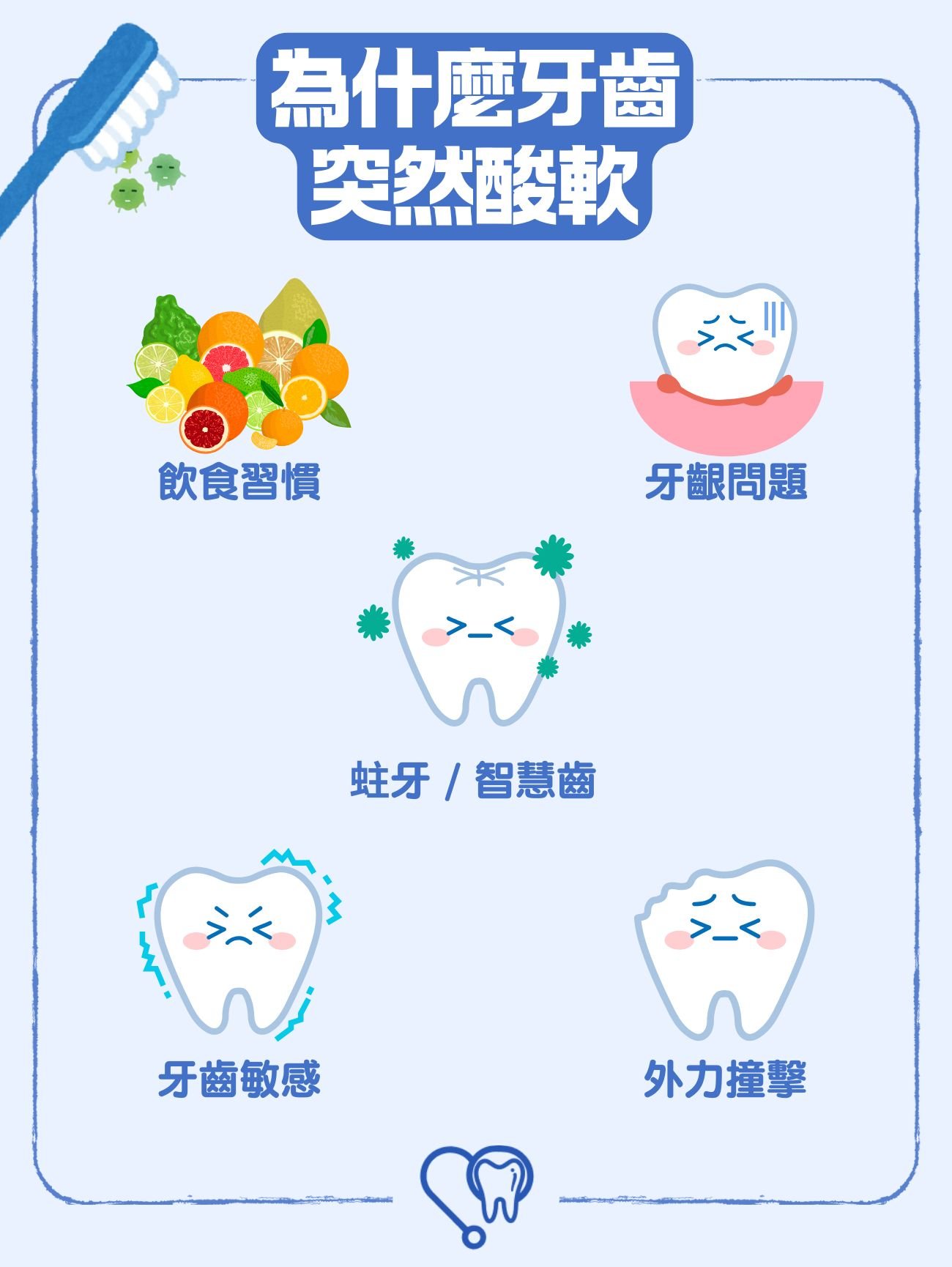
eating habits
Daily diet has a great effect on dental health, and the following foods in particular easily make teeth sore: highly acidic foods such as citrus fruits, carbonated drinks and vinegar, which erode the enamel if taken over a long period.
High-sugar foods such as desserts and sugary drinks easily breed bacteria and produce acidic substances that erode the teeth. Foods at extreme temperatures, such as iced water or very hot soup, may cause brief discomfort in the teeth, especiallysensitive teeth.
Gum problems (inflammation)
gum inflammation(gingivitis orperiodontal disease) lead to gum recession, exposing the tooth roots and reducing the protective layer, so that the teeth become more sensitive to outside stimuli.
Common symptoms include red, swollen and bleeding gums, discomfort when brushing or flossing, and gum recession that leaves the tooth roots exposed.
Tooth decay / wisdom teeth
Tooth decay damages the tooth structure. When the cavity goes deep into the enamel or even the dentine, the tooth becomes especially sensitive to stimuli such as hot, cold, sour and sweet. Early tooth decay may cause only slight sensitivity without obvious pain, but ifthe decay reaches the pulp, severe pain such as toothache and nerve pain may also occur.
Wisdom teeth:Eruption or abnormal growth may also cause toothache, especially when wisdom teeth affect the neighbouring teeth, which increases local sensitivity.
Tooth Sensitivity
Tooth sensitivity is usually related to wear of the outer enamel or exposure of the dentine. Common causes include wrong brushing methods, such as brushing too hard, using a hard-bristled toothbrush or overusing whitening toothpaste, all of which can make teeth sensitive. Night-timeteeth grindingor excessive chewing of hard objects makes the enamel thinner, and a long-term acidic diet speeds up loss of enamel.
Impact from external force
An impact from an external force may cause cracks in the tooth or hidden damage, making the tooth more sensitive to outside stimuli. For example, sports or accidental knocks may damage the teeth, or biting on hard objects (such as ice cubes and nuts) may cause tiny cracks.
Symptoms of sore teeth
When the teeth come into contact with cold, hot, sour or sweet foods, you may suddenly feel a sharp pain or discomfort. Some people also feel soreness when brushing or flossing, and sometimes a brief but marked soreness may occur when the teeth are exposed to temperature changes or wind.
What to do about aching teeth? Ways to relieve mild tooth soreness
If your teeth feel sore, it may be because the dentine has been eroded by acidic substances, or because of tooth decay or gum problems. Tooth sensitivity may be related to diet and oral hygiene habits.
The following methods can help you relieve sore teeth effectively, but if symptoms persist without improvement, it is still advisable to consult a doctor as soon as possible, to make sure the problem does not get worse or lead to other after-effects.
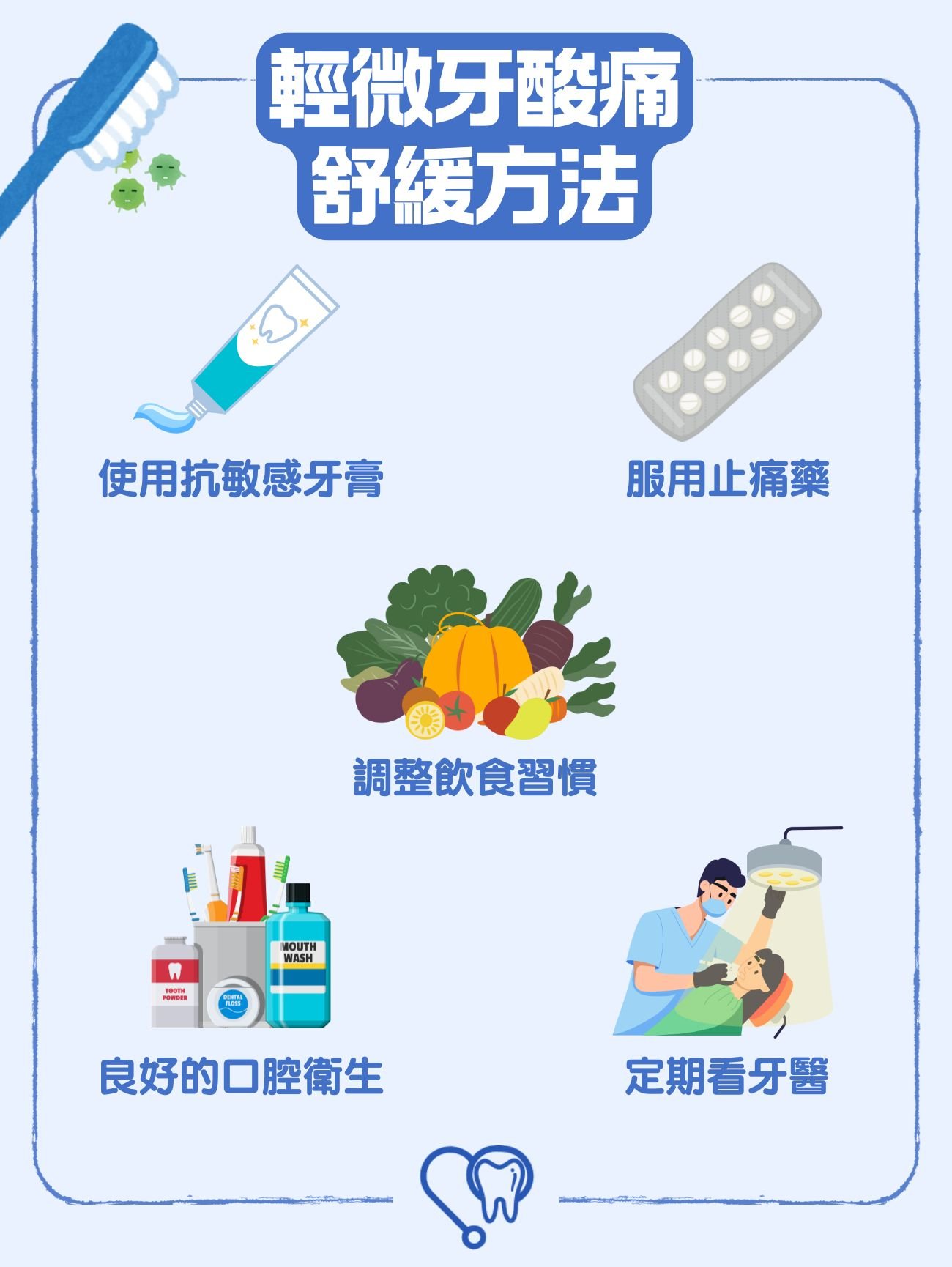
use sensitivity toothpaste
When teeth become sensitive, many people start with toothpaste. There are now many desensitising toothpastes, with ingredients such as herbal extracts or potassium nitrate added, which can help ease the discomfort when the tooth nerve is irritated.
If you use it regularly when brushing morning and evening, you can usually feel an improvement within a few days, though the effect varies from person to person and you still need to keep using it for a period of time.
take painkillers
If the toothache is unbearable, you can first take a painkiller to dull the pain. Ibuprofen and paracetamol, commonly available on the market, are of some help for this kind of toothache.
Note, however, that medicine only relieves the pain and does not cure the cause. If symptoms keep coming back or get worse, it is still advisable to see a dentist for an examination as soon as possible.
Adjust eating habits
Sometimes what you eat can also make your teeth more sensitive. Sour, very sweet or very hard foods can all further irritate the tooth nerve.
So you can eat more vegetables and fruit in daily life, and keeping hydrated is also important. These all help the mouth maintain a healthy acid-base balance, help protect the enamel and reduce tooth discomfort.
good oral hygiene
People with sensitive teeth should pay even more attention to oral hygiene. Using dental floss and mouthwash together with brushing every day not only clears food particles hidden between the teeth but also reduces the build-up of bacteria, so that the teeth are less easily irritated.
In particular, it is advisable to use a mouthwash containing fluoride, which helps strengthen the tooth surface and reduces the likelihood of sensitivity.
see the dentist regularly
Tooth sensitivity is not a minor matter. Many people put up with it at first, and then regret not seeing a dentist earlier when it really starts to hurt.
In fact, regular follow-up visits let the dentist track the condition of your teeth and deal with potential problems early. If the dentine really is exposed, the dentist can also carry out fluoridefluorideapplication, or treat it with a desensitising agent, for faster improvement.
How to deal with severe tooth soreness
If the tooth soreness is severe, it may mean the decay has gone deep into the pulp or the enamel is too badly damaged, and further treatment is needed.
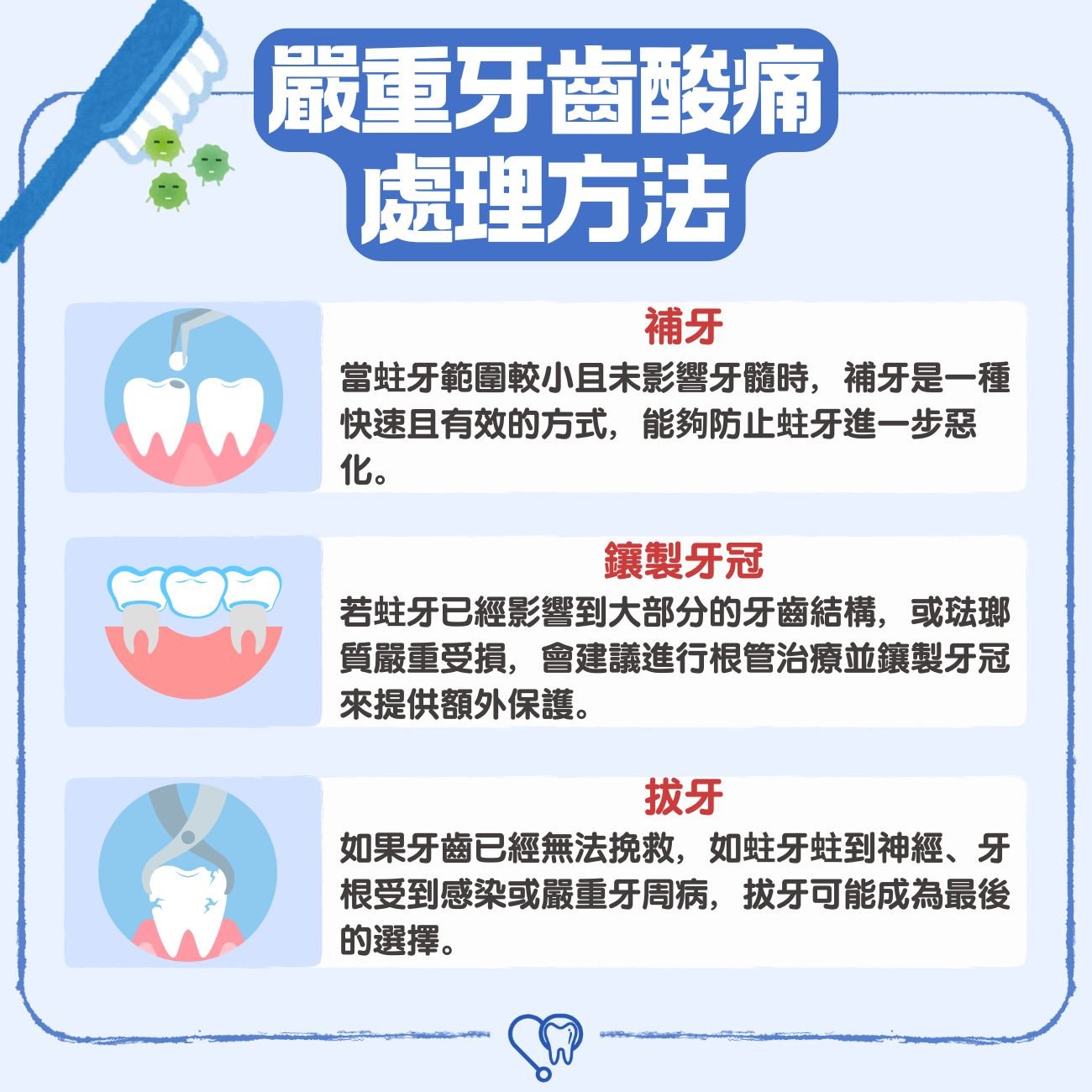
Dental Fillings
If the tooth decay is not too serious and only a small area is damaged, thenDental Fillingsis the quickest and simplest way to deal with it.
The dentist first removes the damaged part, then fills the cavity with materials such as resin or silver amalgam, so that the tooth is restored to its original shape and function. As long as the filling is done in time, further worsening of tooth decay can usually be avoided.
Crown
But if the decay is deeper and even the structure of the tooth has been damaged, things may not be so simple.
If the enamel has become brittle and the tooth breaks easily, the dentist may suggest root canal treatment first, followed by fitting a crown.CrownLike a protective shell covering the outside of the tooth, whether ceramic or metal, it can increase the durability of the tooth and prevent it from deteriorating further.
Extraction
If the decay has reached the point that even the tooth root is damaged, the inflammation is very severe, or the pain is such that you cannot sleep, then the tooth really can only be taken out. Althoughextractinga toothis the last resort, it is sometimes the way that relieves the pain best.
After a tooth extraction, the dentist will, depending on your condition, see whether you need to have aDental Bridge,Dental Implantsor removabledenturesto fill the space left by the missing tooth, restore the bite function and also keep your smile tidy and attractive.
Summary
There are in fact many possible reasons behind toothache, such as tooth decay, pulp inflammation, or even a poor bite or poor brushing habits. Whichever the case, never wait until the pain is unbearable before seeking treatment. The earlier a dentist diagnoses it and treats it accordingly, the more you can avoid the problem getting worse, and the more of your original teeth can be kept.
Disclaimer
This article is for information only and does not contain any invitation or solicitation. Patients should seek a professional dentist for diagnosis and treatment according to their own circumstances. To find out more or book a service, we recommend contacting the relevant clinic directly. Please choose suitable dental services and clinics carefully yourself.



