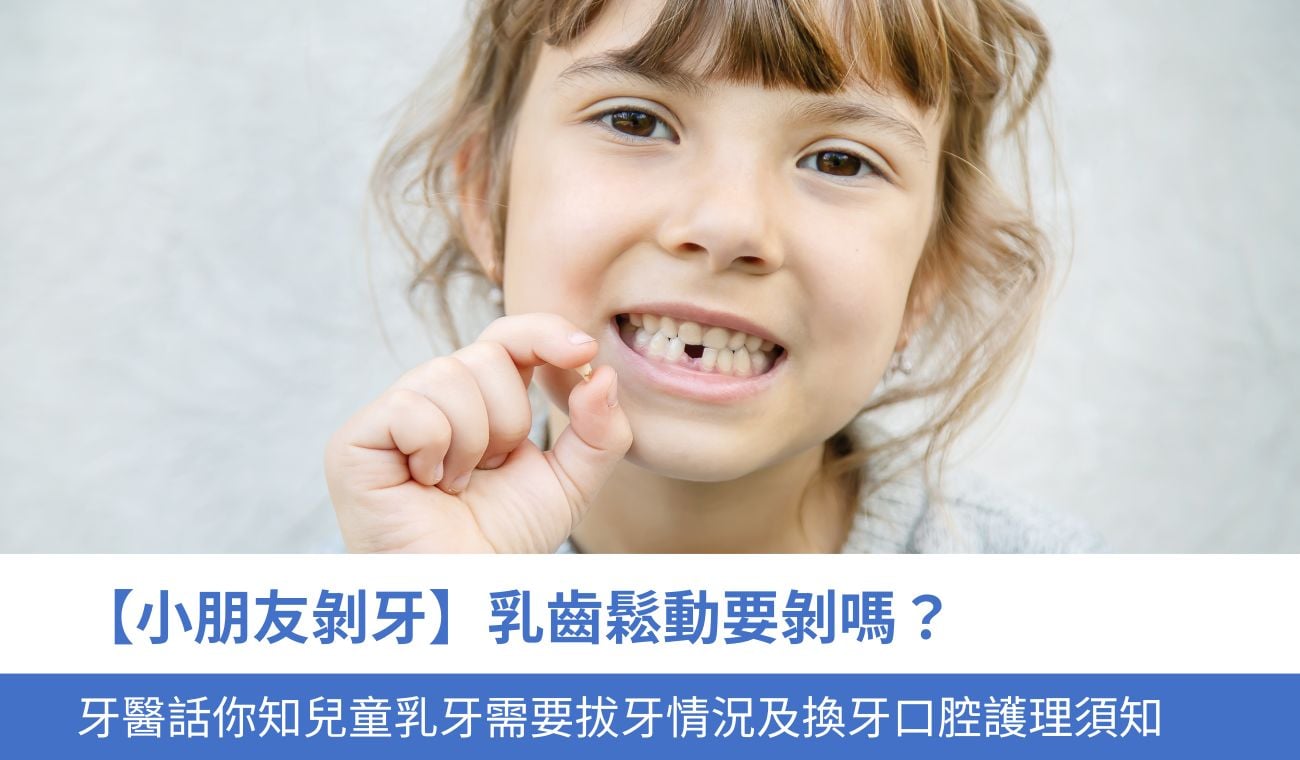
Many parents worry about what to look out for when their child starts losing teeth. Should a wobbly baby tooth be pulled out? A paediatric dentist tells you the cases in which a child needsTooth Extractionand the points to note for oral care, to help you look after your child's oral health.
How a child's teeth change
During a child's growth, losing baby teeth is an important milestone that marks the development of the child's body.
The tooth-changing process usually starts at around 6 years old and is completed at around 12 to 13. During this time the child's mouth goes through a series of changes, gradually moving from fragile baby teeth to stronger permanent teeth.
Order of tooth change
The tooth-changing process usually follows a certainorder: lower incisors → upper incisors → lateral incisors → first molars → second molars → canines.
The loss of the lower incisors marks the start of the process and often excites the child and parents. Next come the upper incisors, then the lateral incisors (upper and lower). At this stage the child's smile can look especially amusing, because obvious gaps appear in the front teeth.
At around 6 years old, the first molars (commonly known as the "six-year molars") come through behind the row of baby teeth. The second molars usually come through between 10 and 12 years old, further strengthening the child's chewing ability. Last come the canines, which usually grow in gradually between 8½ and 12½ years old and replace the baby teeth.
Some children may have the permanent lower incisors come through behind the baby incisors, forming a "double row of teeth". This is usually temporary, and parents do not need to worry too much. But if it lasts too long or affects the child's chewing and oral hygiene, we suggest consulting a dentist.
Should a wobbly baby tooth be extracted or left to fall out naturally?
When a baby tooth starts to wobble, many parents hesitate over whether to take it out themselves. Generally a baby tooth falls out naturally once its root has shrunk to a certain extent. This not only reduces pain but also ensures the permanent tooth has enough time and space to grow correctly.
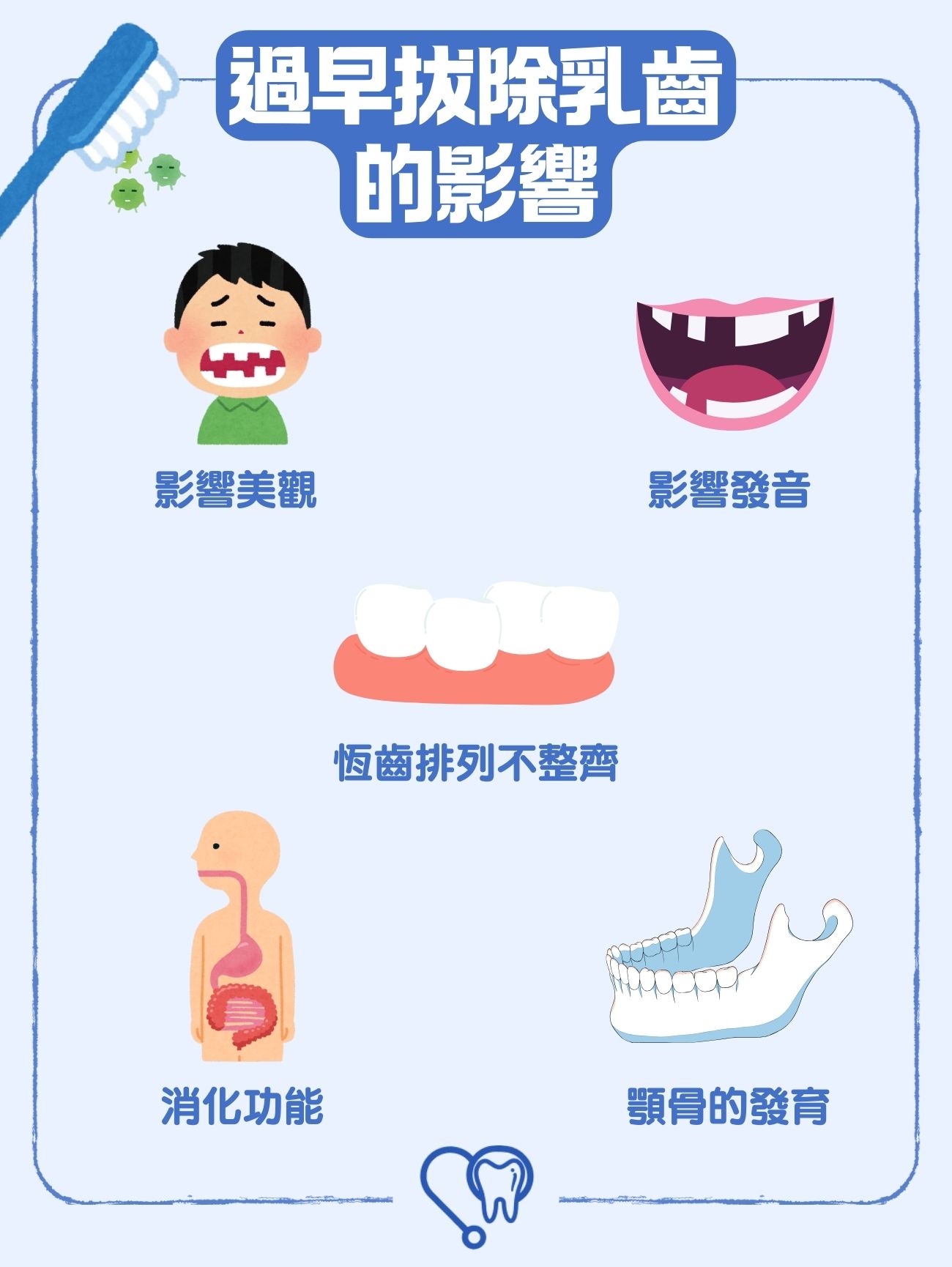
Extracting a baby tooth too early not only affects appearance but also affects speech, digestion and jaw development, and may even cause the permanent teeth to line up unevenly.
If a wobbly baby tooth makes the child uncomfortable when eating or brushing, or may affect the eruption of the permanent tooth, a professional assessment can be considered, so that the dentist can decide whether the baby tooth needs to be extracted.
4 situations where a baby tooth needs extraction
In the management of children's oral health, the care of baby teeth is often overlooked. Although in most cases it is encouraged to let baby teeth fall out naturally, sometimes it may be necessary to extract a tooth to let the child's teeth grow healthily. Here are the usual reasons for extraction:
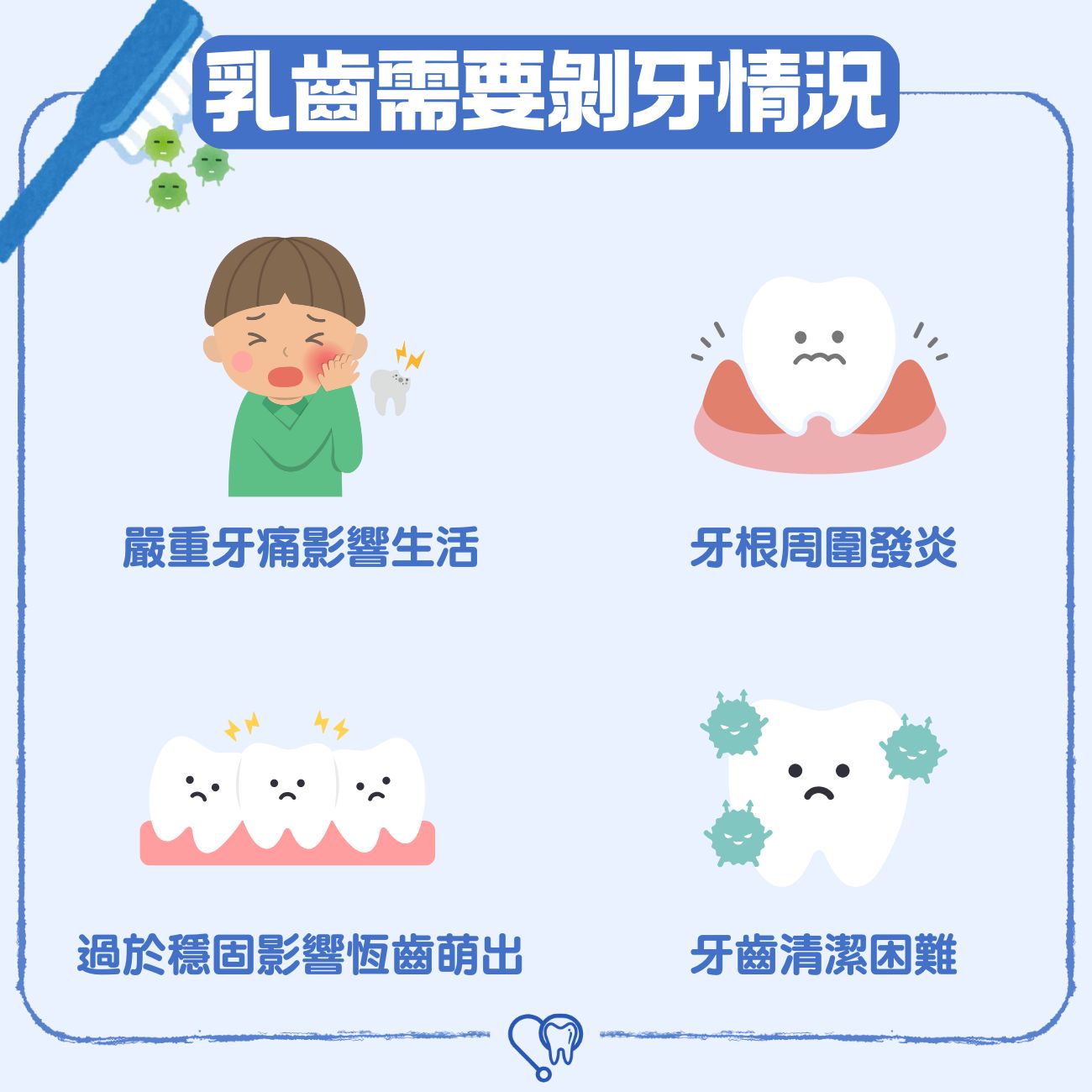
Severe toothache affecting daily life
If parents find that their child often seems uncomfortable or refuses certain foods, this may be a sign that extraction should be considered.
When persistent pain from a baby tooth starts to seriously affect the child's daily life, it can not only reduce the child's appetite but also affect sleep and mood, and may even cause other complications, such as the spread of infection or an effect on the health of neighbouring teeth. In this situation we suggest extracting the problem tooth early to reduce the child's pain and anxiety.
Inflammation around the root
If there is fairly severe inflammation around a baby tooth, it may cause symptoms such as pain, swelling or discomfort when chewing. If the inflammation or infection keeps spreading, it may also affect the tissues around the root and the developing permanent tooth bud underneath.
In a small number of more serious cases, it may be related to later discolouration, abnormal shape or a changed eruption position of the permanent tooth. We suggest having a dentist examine and assess treatment according to the condition of the mouth.
Too firm, affecting the eruption of permanent teeth
In the normal tooth-changing process, baby teeth should gradually loosen and fall out as the permanent teeth grow. Sometimes, however, a baby tooth may be unusually firm and stay firmly in place even after the permanent tooth has started to come through. This may cause the permanent tooth to come through in an abnormal position, affecting the overall bite and the symmetry of tooth alignment.
Over the long term it may lead to a series of oral problems, such as a poor bite and crowded teeth. When a permanent tooth has started to come through but the corresponding baby tooth is still firm, we suggest seeking an assessment promptly, so that the dentist can judge the development of the permanent tooth through detailed examination such as X-rays and decide whether extraction is needed.
Difficult to clean
When the space between a baby tooth and a newly erupted permanent tooth is too crowded, it not only increases the bacteria left behind but may also lead totooth decayand other oral problems. For younger children in particular, keeping these narrow spaces clean may be beyond their ability.
In this situation, extraction can effectively improve oral hygiene, help prevent tooth decay and gum disease, and help the child build better brushing habits.
Children's tooth extractionaftercare points
Tooth extraction is something children need parents to pay special attention to. Whether it is because a baby tooth is loose or for other oral problems, proper aftercare helps the wound recover faster and prevents complications.
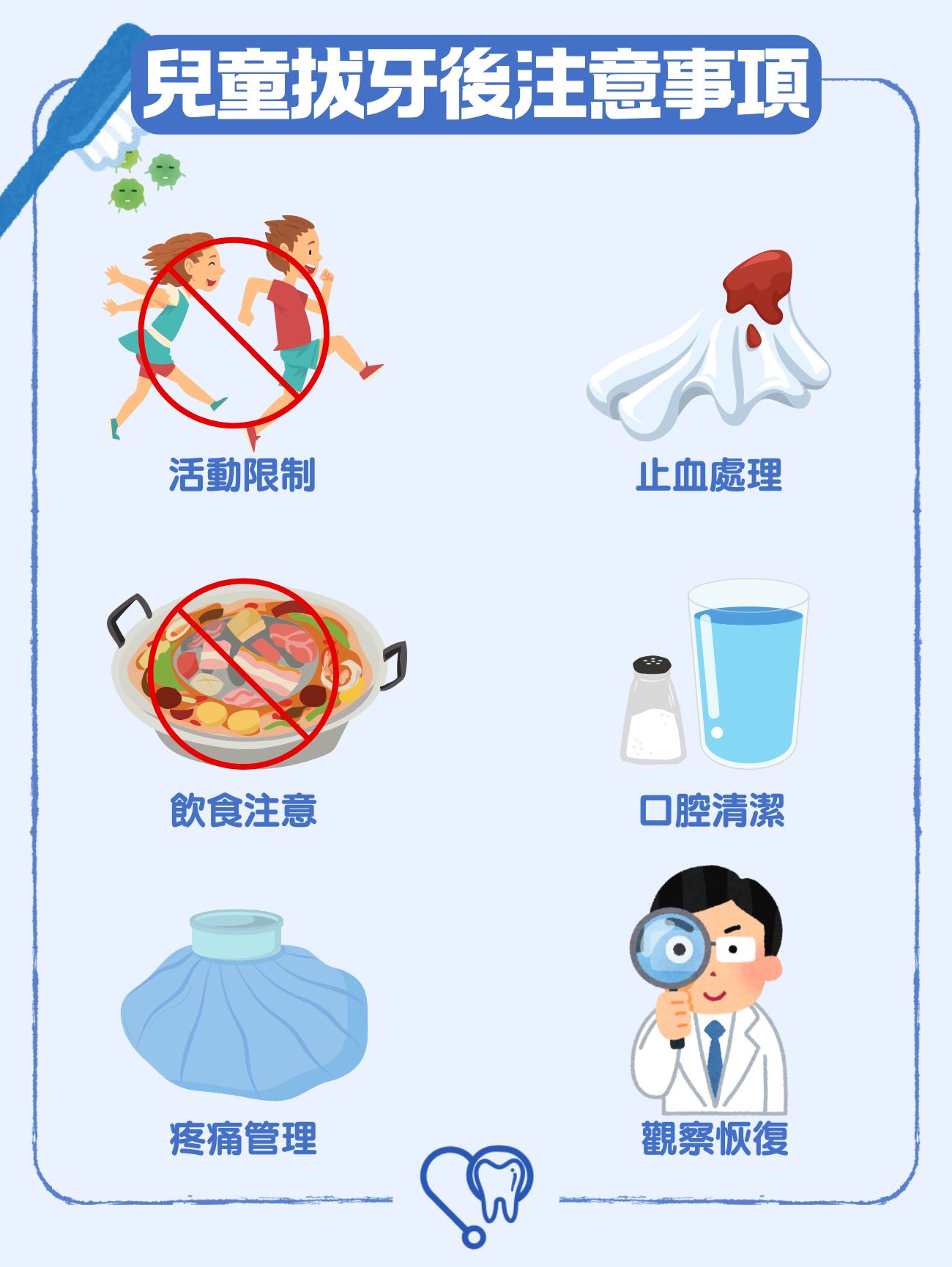
Keep the head raised and limit activity
The first few hours after extraction are the most critical. Parents need to avoid vigorous exercise or overactivity to reduce the risk of bleeding and promote wound healing. Parents can arrange quiet activities, such as reading or drawing, to distract the child.
Controlling bleeding
Have the child bite firmly on a piece of sterile gauze for about 20 to 30 minutes to help stop bleeding and promote wound healing. If bleeding continues, change to fresh gauze and keep applying pressure. It is important to teach the child not to touch or suck the wound frequently with the tongue, as this may disturb the formation of the blood clot.
dietary points
Generally, hot and hard food should be avoided within 24 hours after extraction, to prevent irritating the wound or disturbing the newly formed blood clot. We suggest eating soft food, such as soup and congee. Note in particular that if local anaesthesia was used, wait until the anaesthetic has completely worn off before eating, to avoid accidentally biting the lip or tongue.
Avoid using a straw, because the sucking action may put extra pressure on the wound and increase the risk of bleeding or infection.
oral cleaning
Avoid rinsing the mouth within 24 hours after extraction, so as not to disturb the formation of the blood clot. After that, you can gently rinse with warm salt water, which helps clean the wound and promote healing.
Brush gently with a soft-bristled toothbrush, taking care to avoid the extraction site. If food debris is stuck near the wound, it can be rinsed gently with normal saline.
Pain management
In the days after extraction, the child may feel some pain and discomfort. An ice pack wrapped in a towel can be applied intermittently to the outside of the cheek to soothe swelling. If the pain is fairly obvious, a painkiller suitable for children can be taken as directed by the dentist.
Monitoring recovery
Parents should keep a close eye on the child's recovery. Normally, swelling and discomfort gradually fade within a few days and the wound slowly heals. But if there is abnormal swelling, continued bleeding, a high fever that does not go down or severe pain, seek medical attention immediately.
Children's tooth extraction how should you look after oral care during this period?
Care during the period after extraction also affects a child's long-term oral health.
After the recovery period, parents still need to encourage the child to keep up oral cleaning habits, including brushing at least twice a day and using dental floss or an interdental brush to clean the gaps. Regular oral check-ups are also important, as they help detect and deal with potential oral problems early.
For children who are in the tooth-changing period, parents should pay particular attention to the condition of the other baby teeth, making sure they can fall out naturally or seeking medical attention promptly when necessary.
Building good oral hygiene habits and having regular dental check-ups from an early age can greatly reduce the chance of needing oral treatment in future.
Summary
A child's tooth extraction needs patience and care from parents. Each child's situation may differ slightly, and if you have any questions along the way, you should seek the advice of a professional dentist promptly. Through proper care and preventive measures, help your child have healthy, neat teeth and a bright smile.
Disclaimer
This article is for information only and does not contain any invitation or solicitation. Patients should seek a professional dentist for diagnosis and treatment according to their own circumstances. To find out more or book a service, we recommend contacting the relevant clinic directly. Please choose suitable dental services and clinics carefully yourself.