Not sure what to do the first time your child's teeth start changing? Should a wobbly baby tooth be pulled out? This article explains when baby teeth start to change, what to note during the tooth-changing period and what you need to know about teeth, to help you protect your child's oral health.
Children's tooth changeTime
Changing teeth is an important milestone in every child's tooth growth. It marks not only an important stage in the child's physical development but also reflects the body's ability to adapt to different needs in life. So why do teeth need to change? This is related to our physical development and changes in eating habits.
Why do teeth change?
As we get older, our eating habits gradually change, from the liquid food of infancy to solid food. At the same time, our lower jaw bone is also continuing to develop. These changes require the structure and texture of our teeth to adjust accordingly, to better suit new chewing needs.
Although baby teeth play an important role in early childhood, their structure and size can no longer meet the needs of a growing body, so the process of tooth change is needed, letting larger, stronger permanent teeth take their place.
At what age do baby teeth start to be replaced by permanent teeth?
The tooth-changing process usually starts at 6 years old and continues until it ends at around 12 to 13. At this stage baby teeth become loose as their roots shrink and fall out one after another in order, while permanent teeth come through one by one in the gaps.
Is it normal to start changing teeth at age five?
Although we usually think of 6 years old as the standard starting age for changing teeth, 1-2 years either side of the standard age can be regarded as normal. This is why some children may start changing teeth at 5 while others may not start until 7-8.
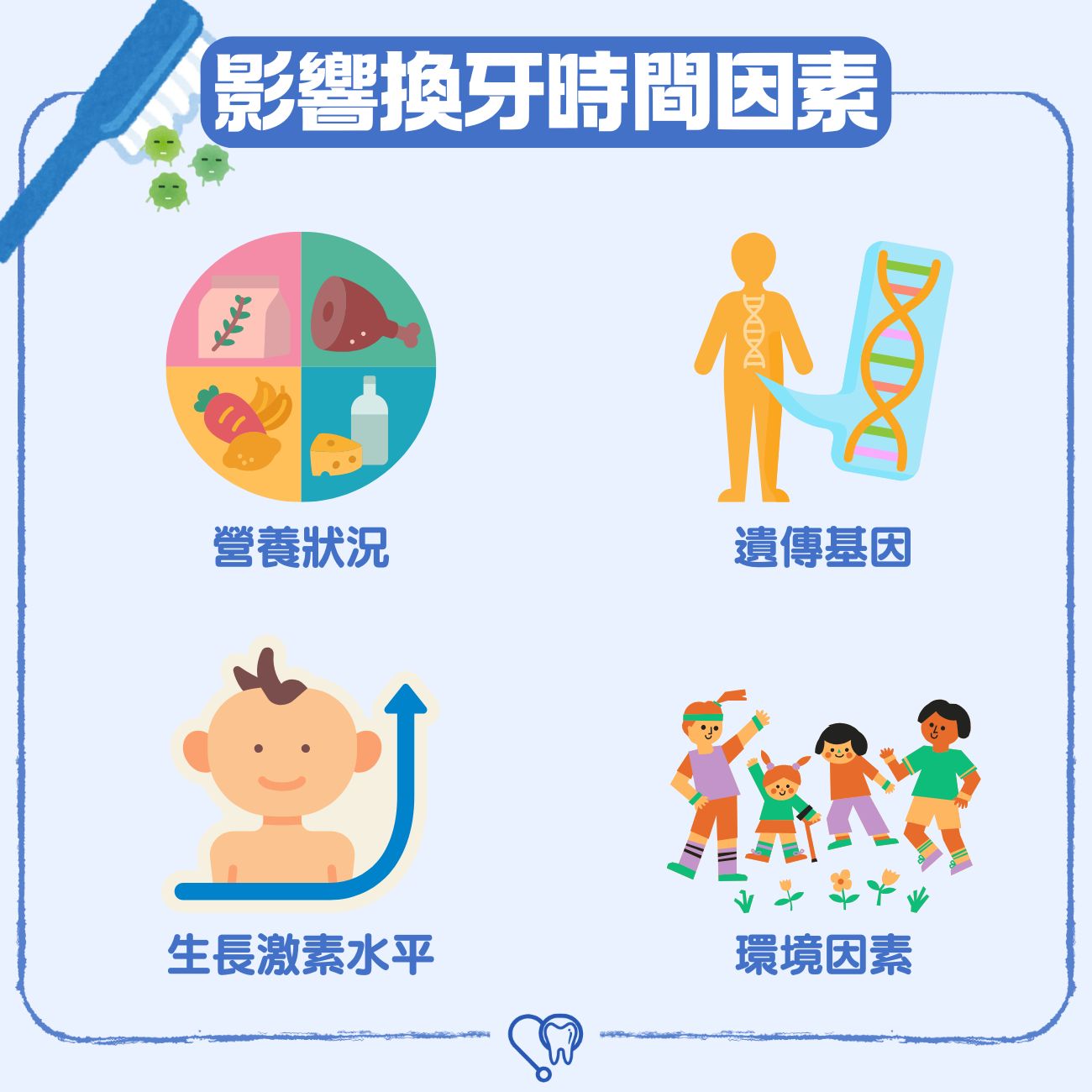
Factors affecting the timing of tooth change include nutrition, genes, growth hormone levels and environmental factors. If your child starts changing teeth at 5, there is no need to worry too much. What matters is whether the whole tooth-changing process goes smoothly.
Children's tooth-change timetable (order of tooth change)
Order of tooth changeusually follows a regular pattern. It generally starts with the lower front teeth, followed by the upper front teeth, then the first permanent molars (commonly known as the six-year molars), which come through directly behind the existing baby teeth without replacing any baby tooth. Gradually all 20 baby teeth are replaced by 32 permanent teeth.
Below is a tooth eruption timetable for parents' reference:
| Permanent teeth | Eruption age |
| Central incisors | 6 – 8 years |
| Lateral incisors | 6½ – 9 years |
| canine teeth | 8½ – 12½ years |
| First premolars | 8 – 12 years |
| Second premolars | 8½ – 13 years |
| First molars | 5 – 7 years |
| Second molars | 10 – 14 years |
| Third molars (wisdom teeth) | 17 – 25 years |
Dealing with a child losing baby teeth
The first time facinga child losing baby teethwhat should you do? How should you handle your child's emotional reaction? Many children may feel uneasy, scared or excited when they find a tooth wobbling or falling out. As a parent, the first task is to help your child understand and cope with this natural process correctly.
Parents can patiently explain the physiological process of tooth change, so that the child understands it is a sign of growing up and not something to worry about.
You can also use small tips, such as sharing fun tooth-changing traditions (the story of the tooth fairy) or turning the fallen tooth into a keepsake, to help distract the child and ease anxiety.
Should a loose baby tooth be pulled out?
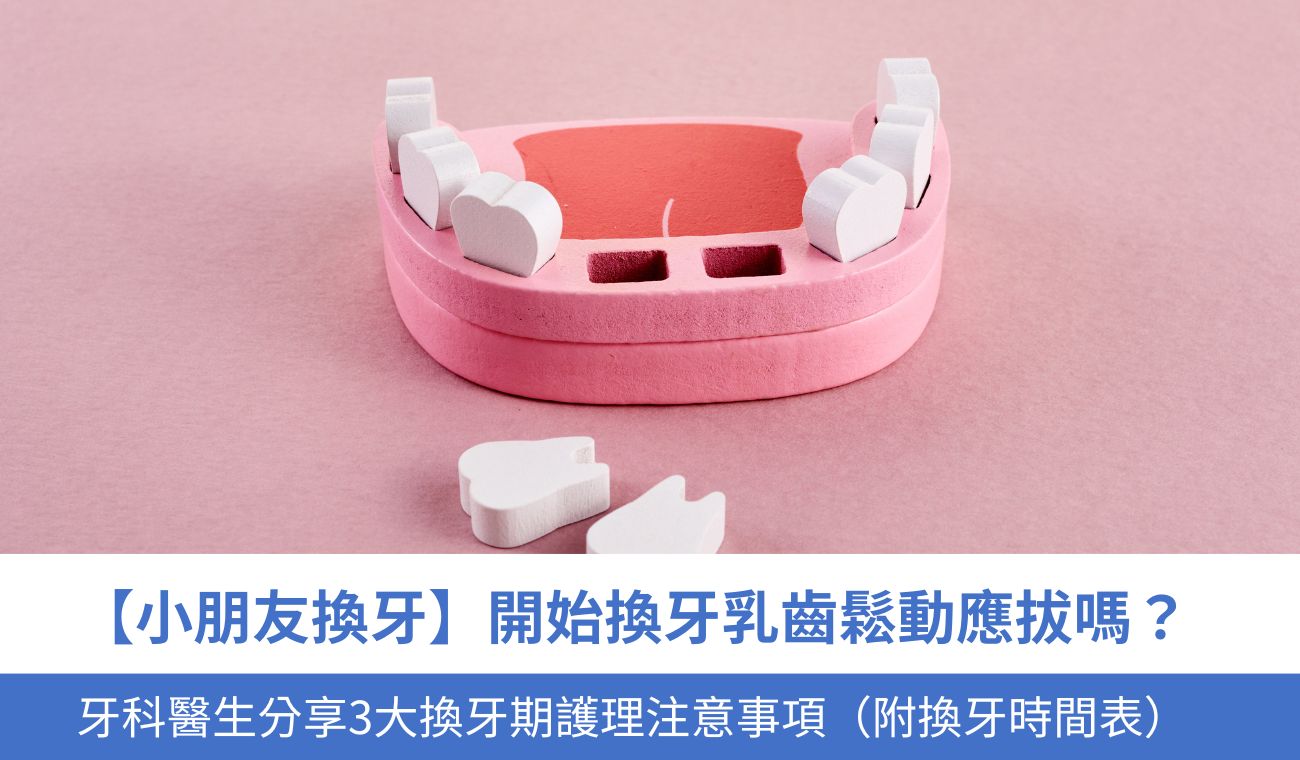
When you find that your child's baby tooth is starting to loosen, many parents hesitate over whether they should activelyExtraction. In fact, in most cases baby teeth fall out naturally. Taking one out too early may actually cause the permanent teeth to line up unevenly.
But if a loose baby tooth affects the child's eating or speaking, if a baby tooth stays loose for a long time without falling out and affects the eruption of the permanent tooth, or if there are signs of infection or pain around the baby tooth, we suggest consulting a dentist for professional advice to decide whether the baby tooth needs to be extracted.
How should you deal with a child losing a tooth?
If the tooth falls out naturally, pick it up carefully, avoiding touching the root. You can rinse the tooth gently with clean water to remove dirt from the surface.
Bleeding after the tooth falls out is common and there is no need to worry too much. You can rinse gently with warm salt water and then bite on sterile gauze or a clean handkerchief for about 15-20 minutes, which usually stops the bleeding effectively.
Sometimes a child may accidentally swallow a fallen tooth while eating. In most cases it passes out naturally through digestion and has no effect on health. But if the child has any discomfort, seek medical attention promptly.
A child's permanent tooth has come through but the baby tooth has not yet fallen out?
This situation is usually called a "double row of teeth", meaning permanent teeth and baby teeth exist at the same time, forming two rows of teeth. Although it may look worrying, it is actually a normal phenomenon that many children experience during the tooth-changing process.
The most important thing at this point is to stay patient and keep good oral hygiene habits. Regular brushing and flossing become even more important, because food debris more easily builds up in these areas. At the same time, you can encourage the child to wiggle the loose baby tooth gently to help it come out.
Most baby teeth fall out naturally over time. Only in very rare cases, where a double row of teeth seriously affects chewing or oral hygiene, does extraction of the baby tooth need to be considered.
A baby tooth has fallen out but the permanent tooth has not come through?
Usually after a baby tooth falls out, the permanent tooth should come through within 6 months. But because every child grows at a different speed, the timing of eruption of permanent teeth also varies.
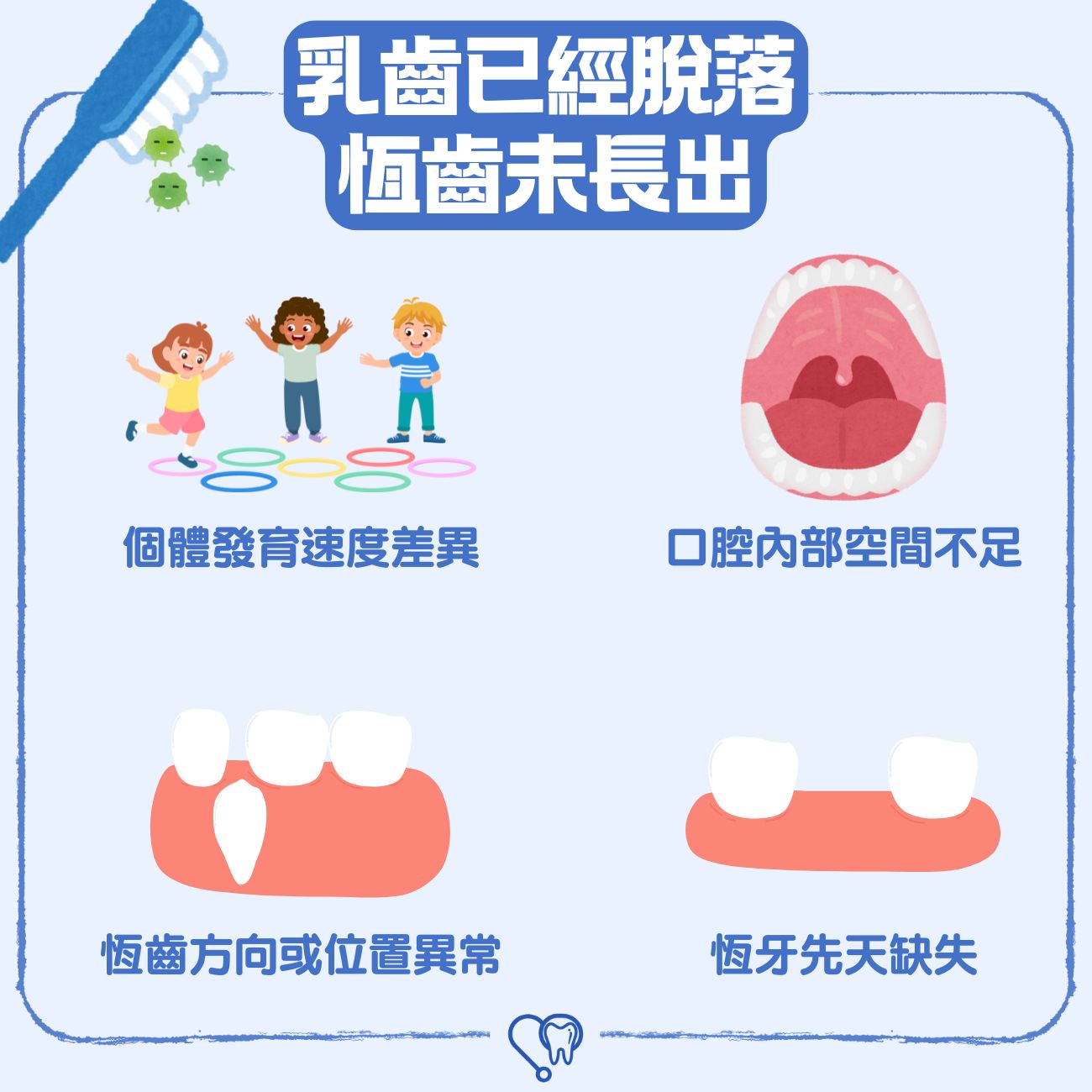
Possible causes are differences in individual development speed, insufficient space in the mouth, an abnormal direction or position of the permanent tooth, or, in very rare cases, congenital absence of the permanent tooth. Any of these may cause the corresponding permanent tooth not to come through after the baby tooth falls out.
If the permanent tooth has still not come through after 6 months, we suggest taking the child for a full oral examination (including X-rays) to determine the position and development of the permanent tooth, so that the dentist can assess whether treatment is needed.
Points to note for children's dental care
The tooth-changing period is a key stage for children's oral health. Correct oral care not only ensures current dental health but also lays a good foundation for future tooth development. And because newly erupted permanent teeth are more easily affected bytooth decayand other oral problems, a child's cleaning habits become even more important.

oral cleaning
Build a habit of brushing at least twice a day, after getting up and before going to bed. Choose a soft-bristled toothbrush suited to children, as it cleans the teeth effectively without hurting fragile gums, together with fluoride toothpaste to strengthen the teeth's resistance to decay.
For younger children, parents can accompany them while they brush, to make sure every tooth surface is thoroughly cleaned.
Besides daily brushing, using dental floss or interdental brushes is also an important way to maintain oral hygiene, especially during the period when a "double row of teeth" appears. These tools can remove food debris and plaque from between the teeth and prevent tooth decay and gum disease.
Regular Check-ups
Regular dental check-ups are an important part of children's dental care. We suggest taking your child for a dental check-up every six months, so that potential oral problems can be found and dealt with in time.
Regular check-ups let the dentist assess the growth of the permanent teeth and check for tooth decay, gum disease or bite problems. They can also help the child build a positive impression of the dental clinic and reduce anxiety about future visits.
eating habits
Eating habits have a direct effect on children's oral health. A correct diet can not only promote the healthy growth of permanent teeth but also effectively prevent oral problems such as tooth decay.
Parents can give their children more foods rich in calcium, vitamin D and other necessary nutrients to promote the development of teeth and jaw bones. Encourage children to eat more vegetables, fruit and grains. These foods are not only nutritious but also help clean the teeth.
Remember also to limit sugar and acidic food, because these foods increase the risk of tooth decay. Drinking more water is also an important factor in keeping the mouth healthy, as it rinses away food debris and helps maintain the pH balance in the mouth.
Common problems during the tooth-changing period
Is it normal for permanent teeth to look yellow when they come through?
Newly erupted permanent teeth look yellower than baby teeth, which is normal. This is because the enamel of permanent teeth is more translucent than that of baby teeth, and the dentine inside is darker in colour. As time passes, the colour of permanent teeth usually gradually becomes whiter.
But if permanent teeth look clearly yellow or brown, it may be a sign of dental fluorosis or another problem, and we suggest consulting a dentist for further advice.
Changing teeth too earlywill it affect the mouth?
Every child grows and develops at a different speed, and the timing of tooth eruption also varies. Generally speaking, starting to change teeth between 5 and 7 years old is within the normal range. Changing teeth too early (such as at around 4 years old) is uncommon but does not necessarily have a negative effect on the mouth.
However, because the mouth does not yet have enough room for the larger permanent teeth, changing teeth too early may affect tooth alignment and the bite. We suggest taking the child for a professional dental assessment to make sure the permanent teeth can grow and line up normally.
Fever when a child's molars come through?
In fact, teething itself does not directly cause a fever. It is only that the process of teeth coming through may cause discomfort, showing as symptoms such as a slight fever, irritability or loss of appetite. These symptoms are usually temporary, and parents do not need to worry too much. They can be eased with suitable care (such as a cold compress).
If a child has a high fever that does not go down or severe discomfort, seek medical attention promptly, because this may be a sign of another health problem.
Summary
A child's tooth change is a key period for children's oral health. By keeping good oral hygiene habits, having regular dental check-ups, arranging the diet sensibly, and paying attention to and dealing with any problems promptly, you can help your child get through the tooth-changing period smoothly. But remember that every child's situation is different, and if you have any concerns, we suggest consulting a professional dentist.
Disclaimer
This article is for information only and does not contain any invitation or solicitation. Patients should seek a professional dentist for diagnosis and treatment according to their own circumstances. To find out more or book a service, we recommend contacting the relevant clinic directly. Please choose suitable dental services and clinics carefully yourself.