

Jaw joint pain is not just internal heat! Besides soreness, patients may find that the normal movement of the jaw joint is affected. This article explains the causes and treatments of temporomandibular joint pain, to relieve jaw joint pain, jaw joint displacement and inflammation.
What is jaw joint pain?
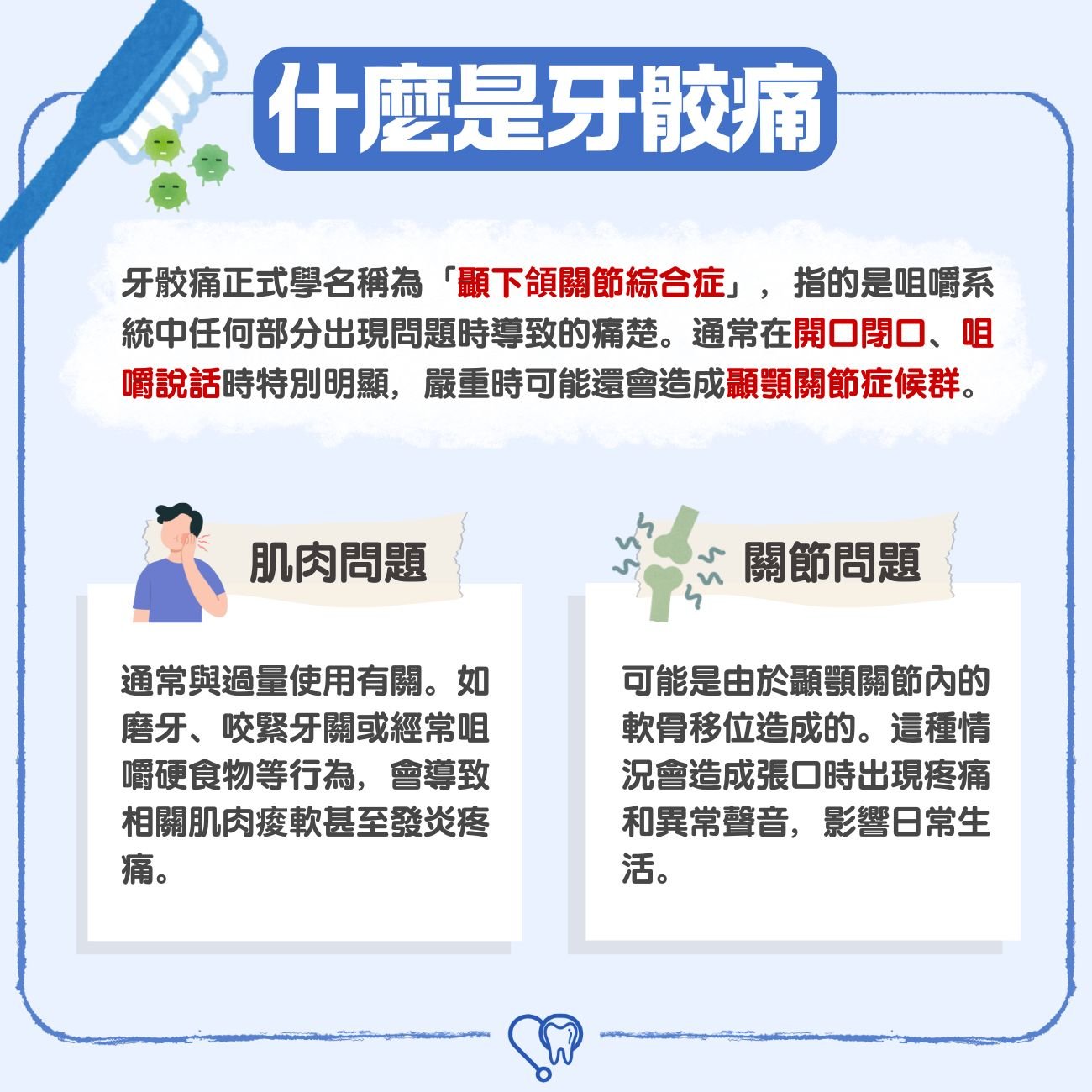
Jaw joint pain, formally known as "temporomandibular joint disorders", refers to pain caused by a problem in any part of the chewing system.
The human chewing system includes the teeth, the chewing muscles and the temporomandibular joint. When these parts have problems, such as spasm of the chewing muscles or pressure on and damage to the temporomandibularjoint, jaw joint pain easily results. The feeling is usually especially noticeable when opening and closing the mouth, chewing and speaking, and in severe cases it may also causetemporomandibular joint syndrome, leading to ear pain, headache, toothache and pain in the face and neck.
Temporomandibular joint pain
The causes of temporomandibular joint pain fall mainly into two categories, muscle problems and joint problems:
Muscle problems
In 80%-90% of patients, jaw joint pain is caused by muscle problems, which are usually related to overuse. For example,teeth grinding, clenching the jaw or often chewing hard food (such as chewing gum and shredded dried squid) can make the related muscles sore and even inflamed and painful.
Joint problems
Joint problems may be caused by displacement of the cartilage inside the temporomandibular joint. This causes pain and abnormal sounds when opening the mouth and affects daily life.
Jaw joint painsymptoms
Jaw joint displacement
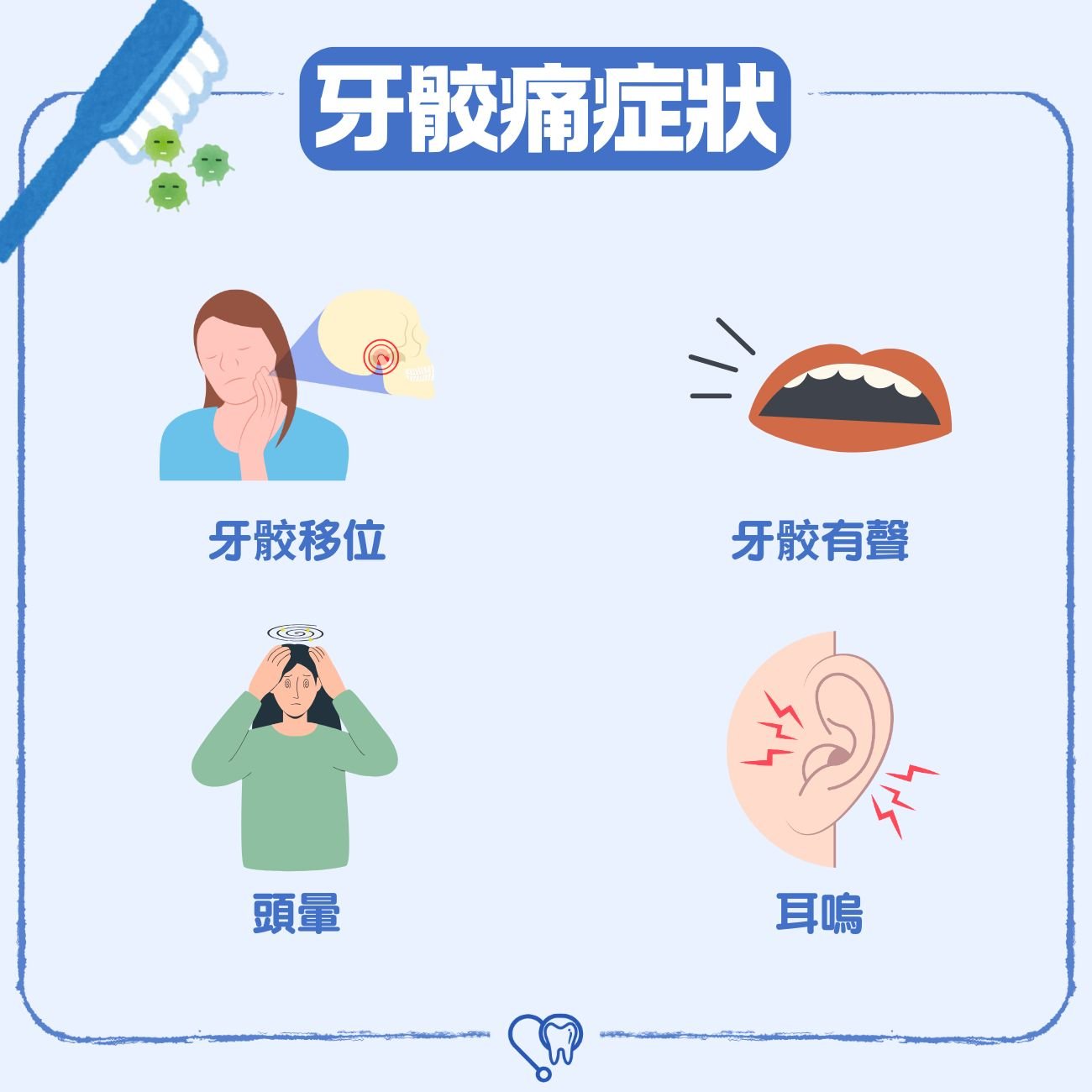
Jaw joint displacement refers to the lower jaw deviating from its normal position, which may shift forwards, backwards or sideways. This not only affects the jaw bone and mouth but may also extend to the head, shoulders, back, waist and even the whole body, and may affect the state of mind.
Clicking jaw joint(making a "clicking" sound)
A displaced temporomandibular joint keeps the muscles and joint tense for a long time, so that the lower jaw keeps drawing in towards the skull, and the jaw joint is slowly locked and becomes harder and harder to move. This makes the mouth give out a "clicking" sound when opening and closing, yawning and swallowing, and may be accompanied by being unable to open the mouth or chew smoothly.
Dizziness and tinnitus
As the temporomandibular joint is close to the ear canal and is supplied bytrigeminal nerve, about six to seven in ten patients with temporomandibular joint disorders have symptoms such as dizziness, ear pain and tinnitus. This is because the temporomandibular joint and the structures of the ear are separated only by a thin membrane, so when there is a problem with the temporomandibular joint, the ear is affected and related symptoms result.
Why does jaw joint pain happen?
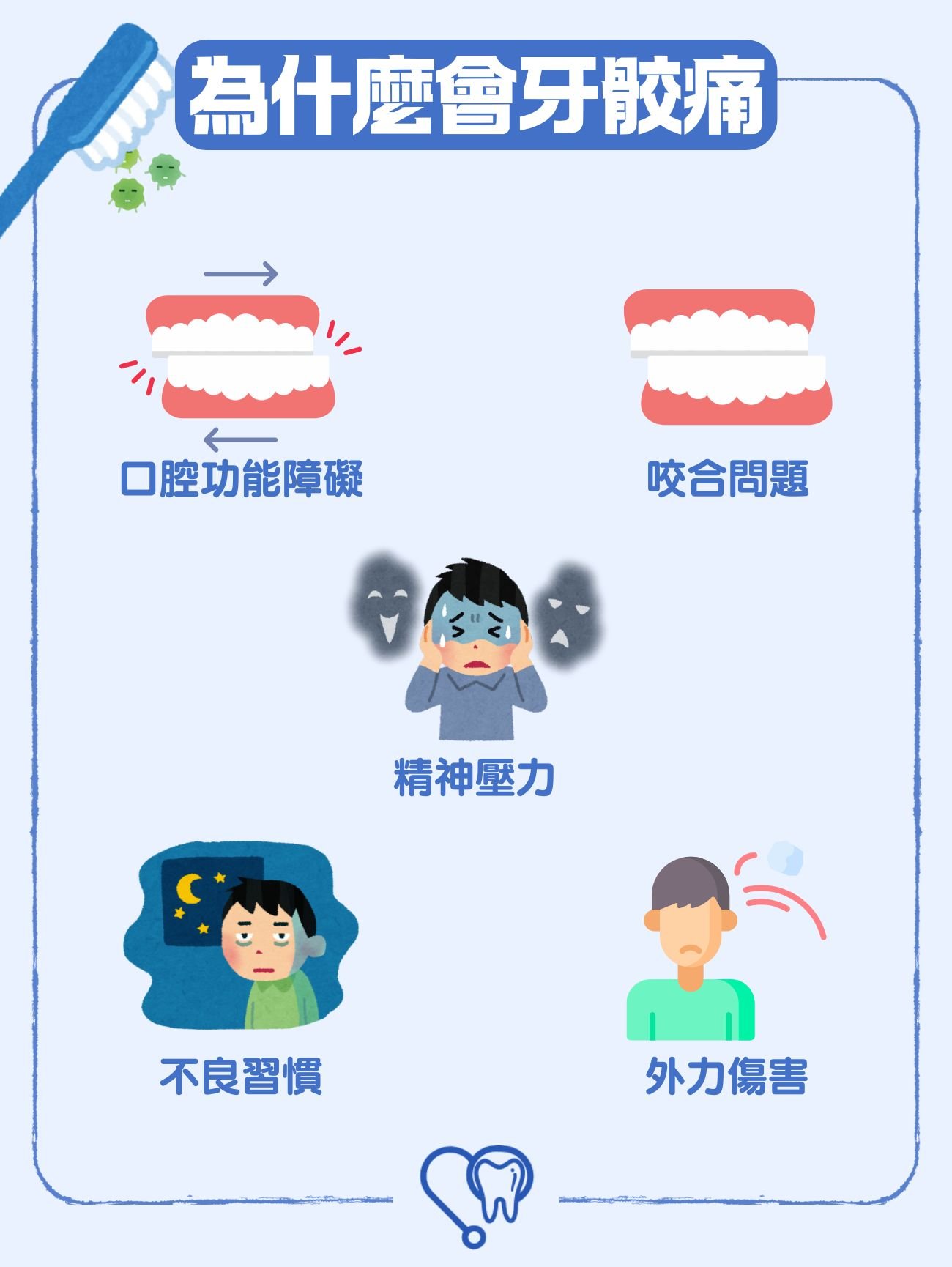
The jaw joint is located on both sides of the face, in front of the ears. Jaw joint pain is pain and abnormal function occurring in the temporomandibular joint and the chewing muscles of the face. Here are some common causes:
Oral dysfunction
Habitual chewingchewing gum, teeth grinding or clenching not only tire the muscles but also easily cause dysfunction of the muscles related to the temporomandibular joint. This leads to remodelling of the head of the temporomandibular joint or degeneration of the joint cartilage, causing temporomandibular arthritis.
bite problems
A poor bite,denturespoorly designed prostheses, a crooked facial skeleton, too many missing teeth or fillings that are too high can all be potential causes of jaw joint pain. These bite problems force the lower jaw to move in an unnatural position, increasing the pressure on the joint and muscles and causing pain and discomfort.
mental stress
Personality and constitution (such as being prone to tension, anxiety, irritability or perfectionism) may also increase the risk of jaw joint pain. Stress and other psychological factors easily cause activation and fatigue of the muscles related to the temporomandibular joint, and may even lead to spasm.
This psychological stress makes people clench their teeth or grind them without realising, further aggravating an uneven bite.
Bad habits
Bad lifestyle habits such as irregular routines, poor sleep quality, a preference for chewing on one side, and long-term poor head and neck posture all carry a higher chance of causing strain on the muscles of the mouth, leading to tension in the neck and shoulder muscles and affecting the health of the temporomandibular joint.
Injury from external force
Impact injury to the head and neck is one of the main causes of temporomandibular joint syndrome. The direct impact of an external force may cause displacement of or damage to the joint, leading to persistent pain and dysfunction.
How is jaw joint pain treated?
Staying relaxed and getting appropriate rest can not only relieve the symptoms of jaw joint pain but also prevent future attacks of pain. Of course, the best approach is to seek assessment from a professional dentist early and receive appropriate treatment to prevent the condition from getting worse.
Here are some common and effective related treatments:
Physical therapy
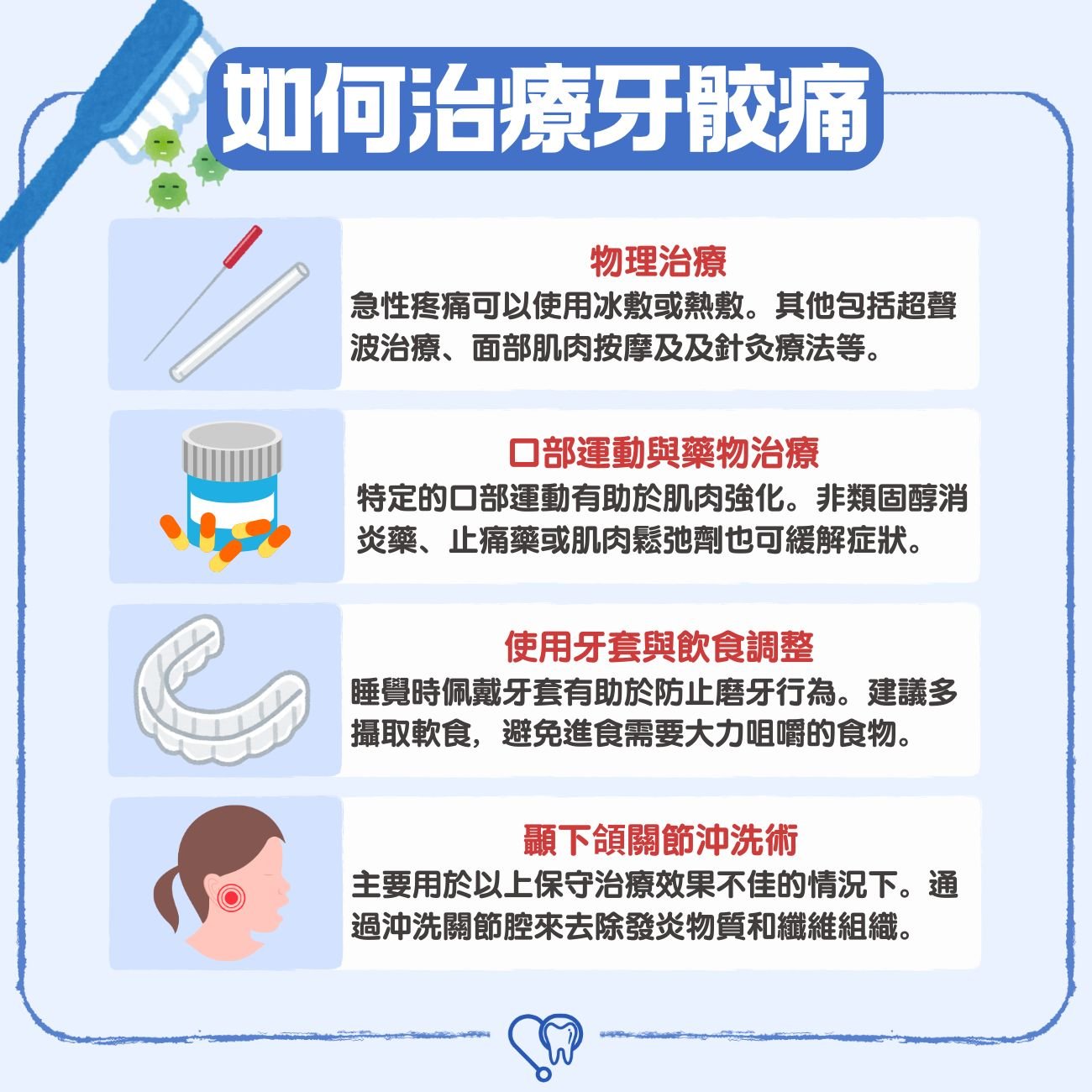
For acute pain, cold compresses help reduce swelling and discomfort, while heat application can increase blood circulation and help relax the jaw muscles.
Physical therapy includes techniques such as ultrasound therapy, facial muscle massage and acupuncture, which can also help tense muscles relax and promote healthy working of the joint, so that the jaw joint returns to its original position.
Mouth exercises and medication
Specific mouth exercises help strengthen the muscles and improve function, raise the elasticity and endurance of the muscles and reduce the occurrence of pain.
As for medication, non-steroidal anti-inflammatory drugs, painkillers or muscle relaxants can be used to relieve symptoms, effectively reducing inflammation and relaxing the muscles.
Using a mouthguard and adjusting the diet
Wearing a mouthguard while sleeping helps prevent teeth grinding and can effectively ease muscle tension and stress.
In terms of diet, it is recommended to eat more soft food and avoid food that needs hard chewing, such as tough meat or nuts, to reduce the load on the affected area.
Temporomandibular joint lavage
Temporomandibular joint lavage is a minimally invasive procedure, used mainly when the conservative treatments above have not worked well. The aim of the procedure is to flush the joint cavity to remove inflammatory substances and fibrous tissue, reducing pain and improving function. The procedure is as follows:
- Anaesthesia: the procedure is usually carried out under local or general anaesthesia.
- Puncture: the doctor makes a small incision in the area of the temporomandibular joint and then inserts a slender needle or endoscope.
- Flushing: saline is injected through the needle to wash the joint cavity, and hyaluronic acid is injected inside to lubricate the joint, so as to remove inflammation and fibrous tissue.
FAQ
Jaw joint pain on one side, or sudden jaw joint pain: what should you do?
If you have jaw joint pain on one side or sudden jaw joint pain, treatment usually starts conservatively, for example anti-inflammatory medicines for jaw joint pain, physical therapy and eating soft food.
But if the symptoms do not improve, seek a diagnosis from a dentist orspecialistdoctor immediately. These symptoms may point to an underlying temporomandibular joint disorder or other health problem.
Jaw joint painWhich doctor should you see?
Jaw joint pain may involve several fields, including dentistry, ear, nose and throat, psychosomatic medicine and Traditional Chinese Medicine, but it is usually handled by a dentist. In some cases, however, the help of an oral and maxillofacial surgeon or a physiotherapist may be needed.
Jaw joint painWill it get better by itself?
Jaw joint pain may sometimes ease by itself, especially if it is caused by stress or mild muscle tension. But if the pain persists or gets worse, it is advisable to seek professional medical advice immediately, to avoid long-term health problems.
Summary
Maintaining a good mental state and avoiding overuse of the temporomandibular joint are important measures for preventing jaw joint pain. Once you notice any symptom of jaw joint pain, it is advisable to seek assessment from a dentist early for a detailed examination, so that the doctor can give appropriate treatment and advice.
Disclaimer
This article is for information only and does not contain any invitation or solicitation. Patients should seek a professional dentist for diagnosis and treatment according to their own circumstances. To find out more or book a service, we recommend contacting the relevant clinic directly. Please choose suitable dental services and clinics carefully yourself.



