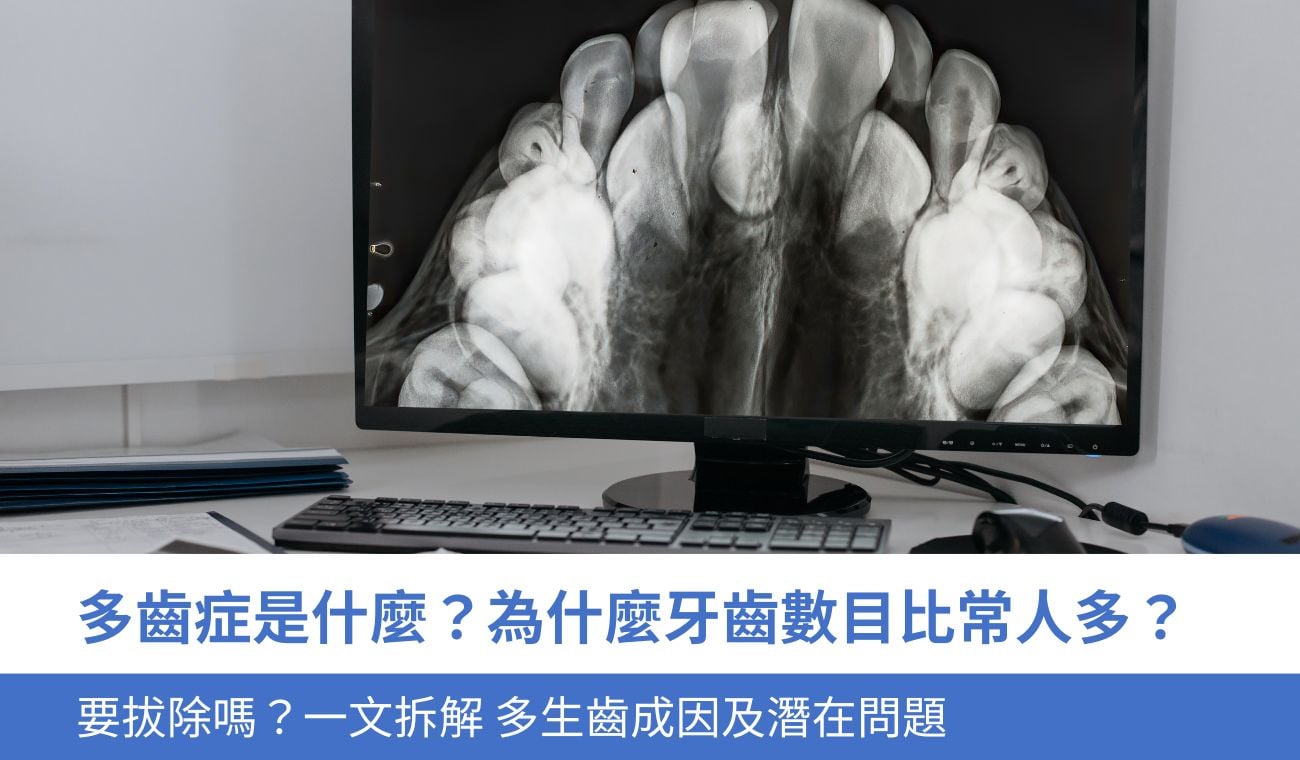
Have you heard of hyperdontia? Why do some people grow extra teeth? Do they need to be removed? This article explains the causes, effects and treatment of supernumerary teeth.
Hyperdontiawhat are they?
The person with the most teeth in the world is a Canadian man, Evano Mellone, who has 41 teeth. Around 2% to 3% of the population worldwide has supernumerary teeth, which means about 1 in 50 people has hyperdontia.
Normal number of teeth: 20 baby teeth and 32 permanent teeth
Over a person's lifetime, teeth go through the process ofchanging from baby teeth to permanent teeth. Children usually grow baby teeth first, and the 20 baby teeth then gradually fall out and are replaced by 32 permanent teeth. This process is gradual, and different permanent teeth come through at different ages.
What are supernumerary teeth?
Hyperdontia is a common dental condition in which the number of teeth in the mouth exceeds the normal range.
Children have 20 baby teeth, and a normal adult has 32 permanent teeth, including 4 wisdom teeth. A child with more than 20 teeth, or an adult with more than 32 teeth, has hyperdontia.
Supernumerary teeth:can you find them yourself?
Supernumerary teeth are not easy to diagnose, because they usually grow inside the jaw bone and are hard to see with the naked eye. Most patients have no symptoms, and unless the supernumerary tooth comes through naturally without obstruction, most patients may not notice.
They are only found through X-ray examination when a supernumerary tooth has become exposed or affects the alignment of other teeth or the structure of the mouth. Usually only a small number of supernumerary teeth grow outwards so that the patient or dentist can see them directly.
HyperdontiaCommon locations
Supernumerary teeth are the specific manifestation of hyperdontia. They may appear anywhere in the mouth, but the most common positions are between the two upper front teeth or near the lower premolars. Most people with hyperdontia usually grow only 1 to 2 extra teeth, but in very rare cases there may be more.
Causes of hyperdontia
Hyperdontia is a common dental abnormality with complex and varied causes, but they can mainly be grouped into two categories: genetic factors and developmental disorders:
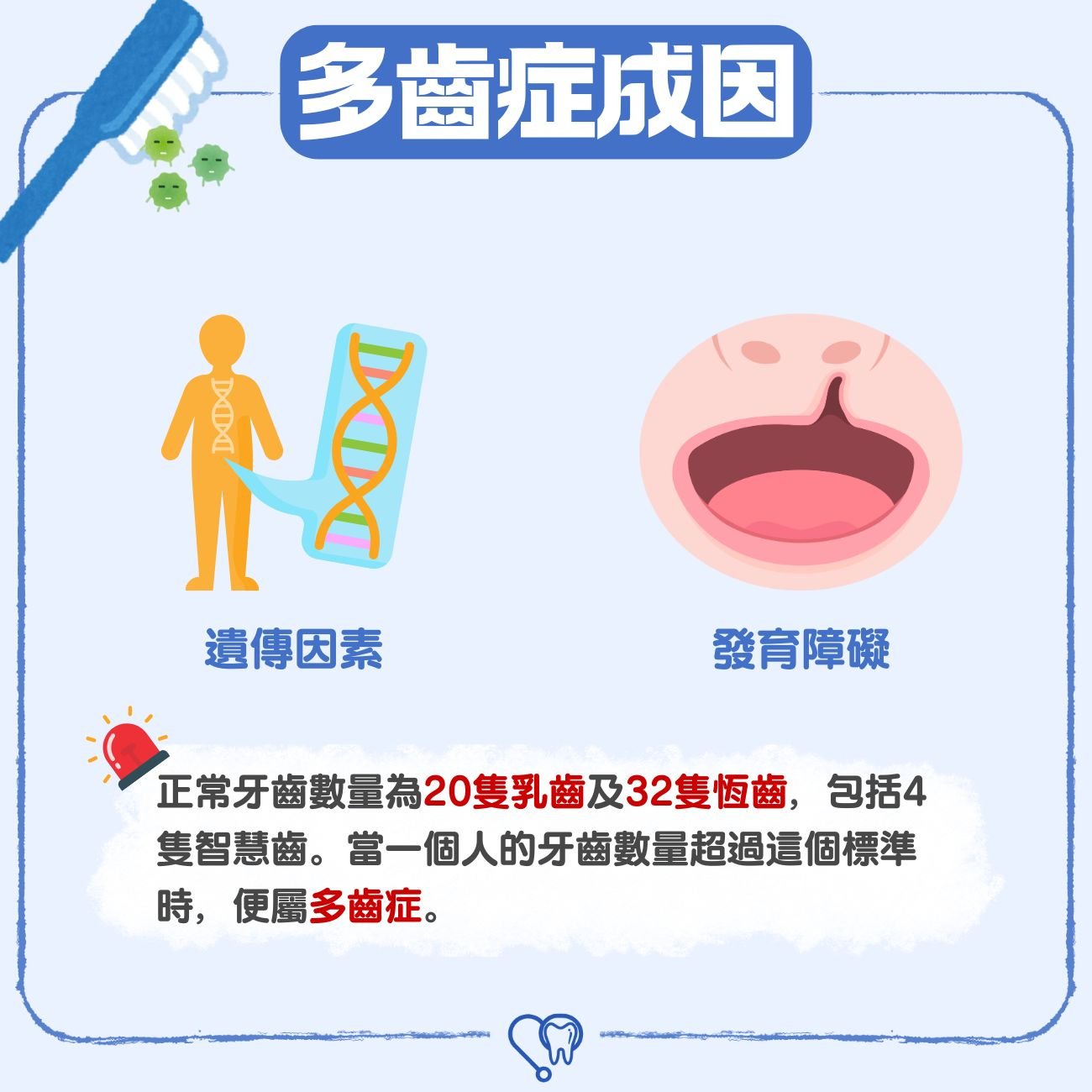
genetic factors
If a family member has had hyperdontia, the chance of a child having the condition also increases, but it is not 100%.
This genetic tendency is more obvious in certain groups. The proportion is relatively high among Asians, and about 3% to 8% of children may have supernumerary teeth.
Developmental disorders
Besides genetic factors, certain developmental disorders may also lead to hyperdontia. For example, patients with cleidocranial dysplasia and cleft lip and palate are more likely to have it. Some studies also point out that hyperdontia may occur together with certain syndromes, such as Gardner syndrome.
4 harms and potential problems of supernumerary teeth
Supernumerary teeth are not only a matter of an abnormal number of teeth but may also cause a series of long-term effects on oral health. Here are these potential harms, in the hope that they will help with diagnosis and treatment.
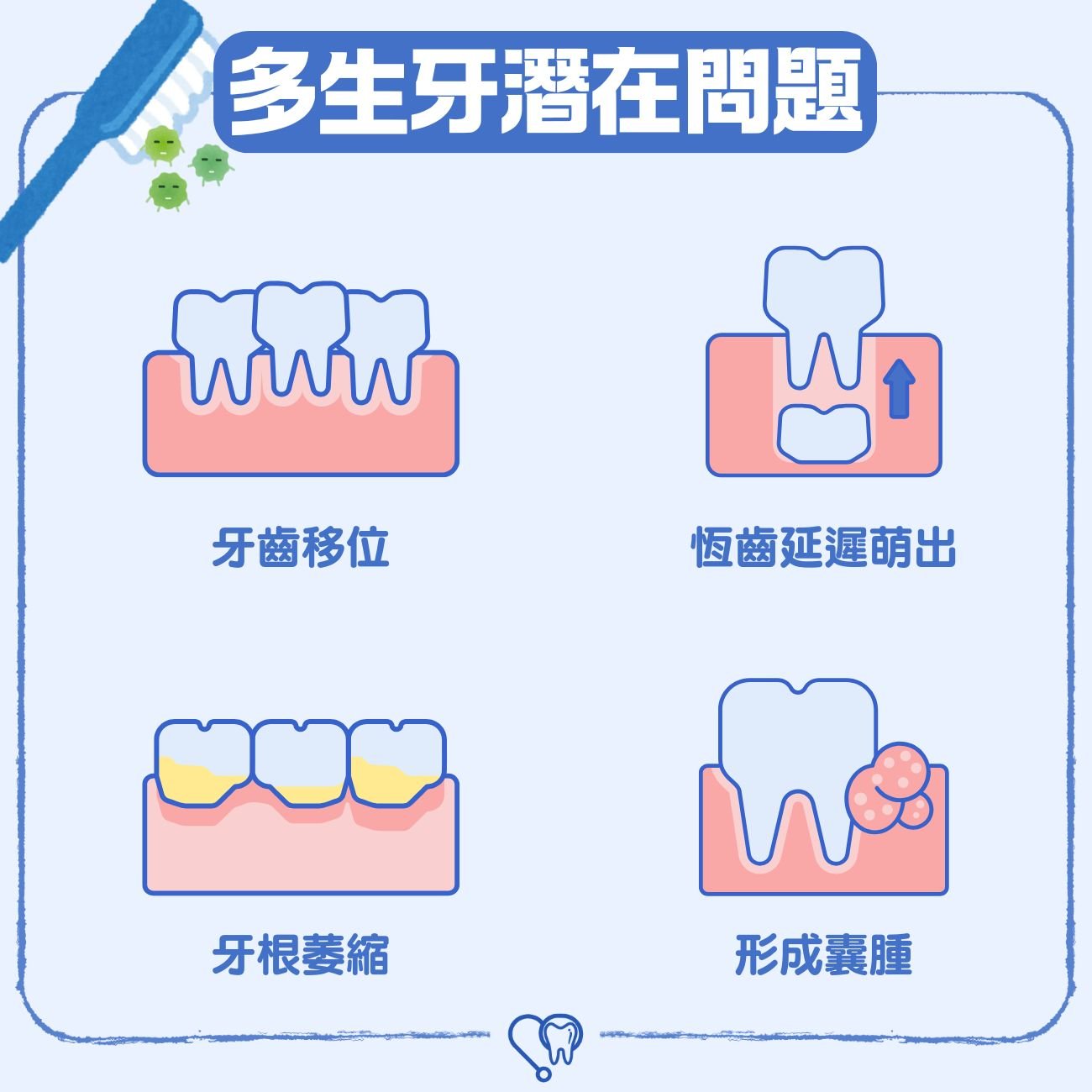
tooth shifting
When extra teeth appear in the mouth, they take up space that does not belong to them and in turn push against the surrounding normal teeth. This pushing may cause teeth to line up unevenly, which not only affects appearance but may also cause a poor bite, affecting chewing efficiency and clarity of speech.
In addition, misaligned teeth are harder to clean, increasing the risk ofchildren's tooth decayandperiodontal diseaserisks.
Delayed eruption of permanent teeth
When a supernumerary tooth occupies the position where a permanent tooth should come through, it blocks the growth of the permanent tooth. This not only delays the time the permanent tooth appears but may also cause the permanent tooth to grow in an abnormal direction, or even fail to come through at all.
Delayed eruption of permanent teeth may have a long-term effect on a child's oral development. In serious cases it affects the development of the bite and facial bones and may even require surgical treatment.
Root resorption
The tooth root is the foundation of the tooth, fixing the tooth in place and providing nourishment. When a root is under continuous pressure, it may gradually be resorbed, weakening the overall structure of the tooth. This leads to loose teeth, increases the risk of tooth loss and may also affect the tooth nerve.
Formation of cysts
A supernumerary tooth buried in the jaw bone for a long time may form a cyst. As time passes, the cyst gets bigger and bigger, damaging the surrounding bone tissue and causing inflammation or loosening of other teeth, and a dentist's intervention is then needed.
Cyst formation may not only cause inflammation; in a few serious cases it may also lead to facial deformity or affect neighbouring teeth and nerves, causing tooth sensitivity or pain, and may require root canal treatment or evenExtraction.
Treatment of hyperdontia
Treatment of hyperdontia depends mainly on the position of the supernumerary tooth and how much it affects the growth of other teeth. But not all supernumerary teeth need to be removed. If they do not affect the alignment of other teeth or oral hygiene, no treatment may be needed.
Removing supernumerary teeth in adults
If the health of the mouth and other teeth is affected, removing the supernumerary tooth becomes necessary. For example, if a supernumerary tooth blocks the normal growth of other teeth or makes oral cleaning difficult, the dentist will usually suggest extraction. This procedure usually needs local anaesthesia and is relatively simple.
If the supernumerary tooth is buried deep in the jaw bone or involves blood vessels and nerves, a more complicated operation under general anaesthesia may be needed, or the patient may be referred to an oral and maxillofacial surgeon.
Do a child's supernumerary teeth need to be extracted?
For children with hyperdontia, the decision on whether to extract supernumerary teeth is more complicated, and the dentist will take the following factors into account:

Eruption of permanent teeth
If a supernumerary tooth is in the growth path of a permanent tooth, it may block the eruption of the permanent tooth. In this situation, extraction is usually recommended to ensure the permanent tooth can grow normally.
Tooth alignment
Supernumerary teeth may cause other teeth to line up unevenly or rotate, which may affect appearance and the bite. If a supernumerary tooth has already grown and is blocking the alignment of other teeth, extraction can avoid more complicated orthodontic treatment in future.
May lead to other potential lesions
A supernumerary tooth buried in the jaw bone for a long time may form a cyst or inflammation. Even if it is not causing obvious discomfort at present, it may need to be removed surgically as a preventive measure, to avoid complications in future.
However, removal in children may need anaesthesia, so children aged 8 to 12 are recommended as more suitable, to avoid the anaesthetic risk of being too young.
Summary
Although hyperdontia is not a serious disease, it may affect oral health. Regular dental check-ups can help us detect and deal with this oral abnormality early. If there are signs of a supernumerary tooth, you should consult a professional dentist immediately and draw up a suitable treatment plan, to prevent potential problems and ensure oral health.
Disclaimer
This article is for information only and does not contain any invitation or solicitation. Patients should seek a professional dentist for diagnosis and treatment according to their own circumstances. To find out more or book a service, we recommend contacting the relevant clinic directly. Please choose suitable dental services and clinics carefully yourself.