

Why does my tooth hurt when I bite? Is ittooth decay? What should I do about pain when biting? A guide to the common causes of toothache (periodontal disease, inflammation and so on) and care tips. Helps you relieve the pain when problems appear and consult a dentist early!
Teeth hurt when biting but not when not biting?
Have you also had the experience of your teeth being quiet and fine as usual, but suddenly feeling a sharp or aching pain as soon as you bite something? Many people do not take it seriously at first, and a small problem is left to turn into a big one.
In fact this situation of "hurting when biting but fine otherwise" is very common in dental clinics, and it usually means there is a problem with the teeth or gums. Put simply, this pain is the body sending you a warning, and you need prompt medical treatment so that the problem can be solved effectively and kept from getting worse.
So what is causing your teeth to hurt when biting? And how should it be dealt with? Let us take you through it step by step below.
Pain when bitingWhat should you do? 4 steps to solve the problem of bite pain
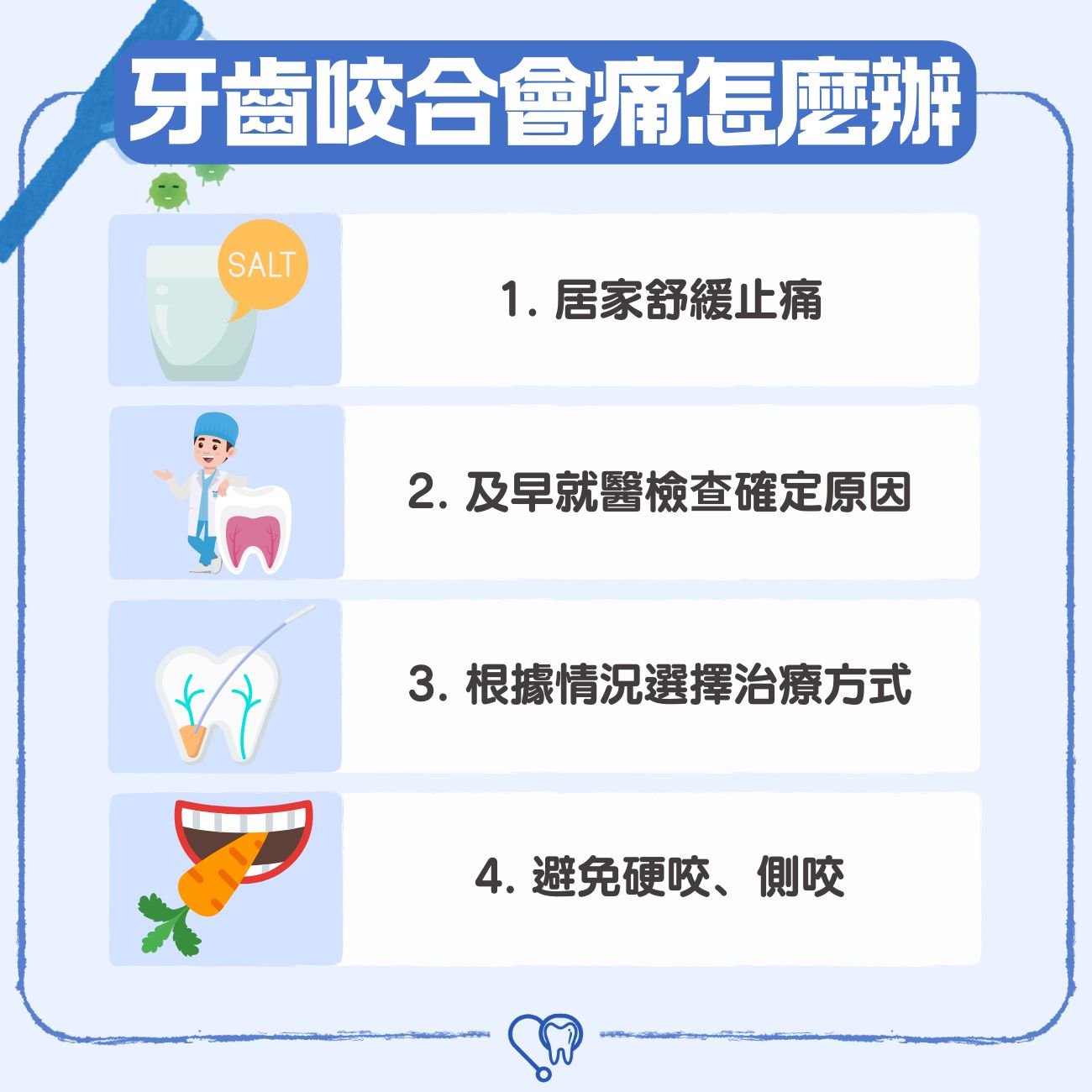
Relief at home
When a tooth suddenly hurts on biting, the first thing you can do is some simple measures at home, such as avoiding chewing on that side, rinsing with warm salt water or taking an ordinary toothache painkiller to relieve the symptoms temporarily.
However, these methods only relieve the pain temporarily and cannot cure it. The key is still to find the root of the pain.
See a dentist early to identify the cause
There are many possible causes of bite pain. Some may be just a small cavity, but it may also be periodontal disease,tooth root inflammationor even a deeper health problem caused by jaw development. It cannot be judged by the naked eye, and only through a professional dentist's examination, X-rays or other diagnostic tools can the source be pinpointed.
Choose treatment according to the situation (fillings, root canal treatment, orthodontic treatment and so on)
Once the dentist has diagnosed the cause, the treatment plan will be adjusted according to the situation.
If it is caused by tooth decay, a filling orRoot Canal Treatmentwill be done. If it is gum recession or periodontal disease, scaling and polishing or further periodontal treatment may be needed. For teeth that are misaligned or have an improper bite, we recommendorthodontic treatmentto redistribute the biting force evenly and reduce the pain.
Avoid biting hard and chewing on one side
During treatment, or after the symptoms have healed, you still need to take care when eating in daily life. Try to avoid biting food that is too hard, and do not keep chewing on one side only. Over the long term these habits may put too much load on certain parts of the teeth, easily causing discomfort or repeated injury.
Why do teeth hurt when the upper and lower teeth bite together? 5 common causes of pain
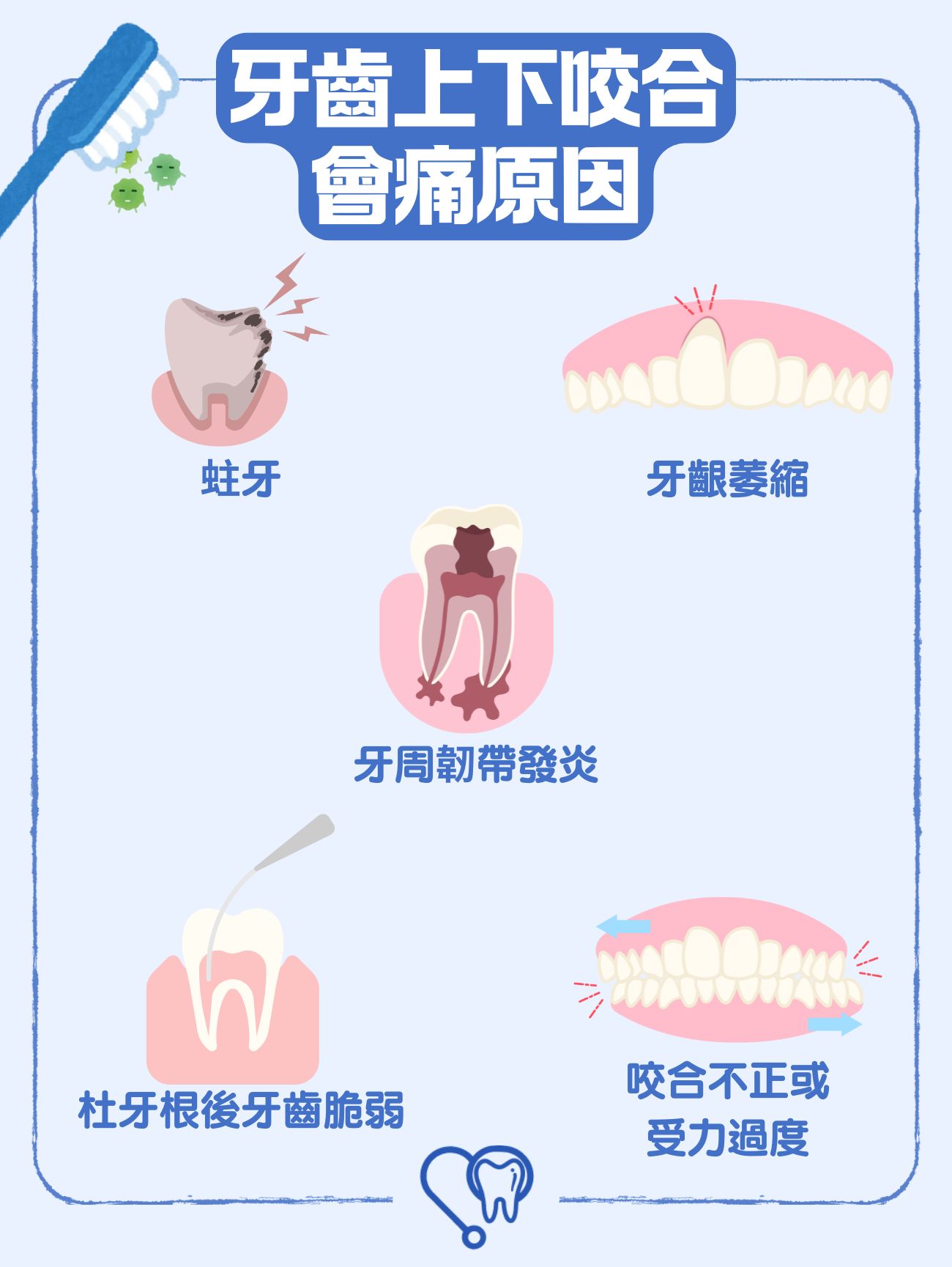
tooth decay
Some cavities are not obvious ones, a black patch on the surface, but hide between the teeth or beneath the tooth surface. They look fine, but the decay inside is already very deep. When decay gets close to the pulp, it hurts as soon as you bite something, and this pain comes from irritation of the nerve.
Gum recession (periodontal disease)
With age or inadequate cleaning, some people develop gum recession, exposing the tooth roots. The tooth root, unlike the crown, does not haveCrowna thick layer of enamel to protect it, so once it is irritated (by heat, cold or pressure), it easily becomes sensitive or painful.
Inflammation of the periodontal ligament
The periodontal ligament is an important structure connecting the tooth and the alveolar bone. If it becomes inflamed, the tooth will be especially sensitive or even painful when biting. This is common with overuse of the teeth, night-timeteeth grindingor suddenly biting on something too hard.
Teeth are fragile after root canal treatment
A tooth that has had root canal treatment loses its nerve and blood supply, and over the long term becomes more fragile than a normal tooth. Some people do not have a crown to protect the tooth after root canal treatment, and when biting it is prone to cracks or tiny chips, which can also cause discomfort when biting.
Misaligned bite or excessive force
Some people chew only on one side for a long time or have a misaligned bite, which makes certain teeth bear too much pressure, and over time this easily causes micro-trauma to the teeth or periodontal inflammation. Once the load on a tooth exceeds what it can bear, pain occurs when biting.
Daily care recommendations to avoid toothache
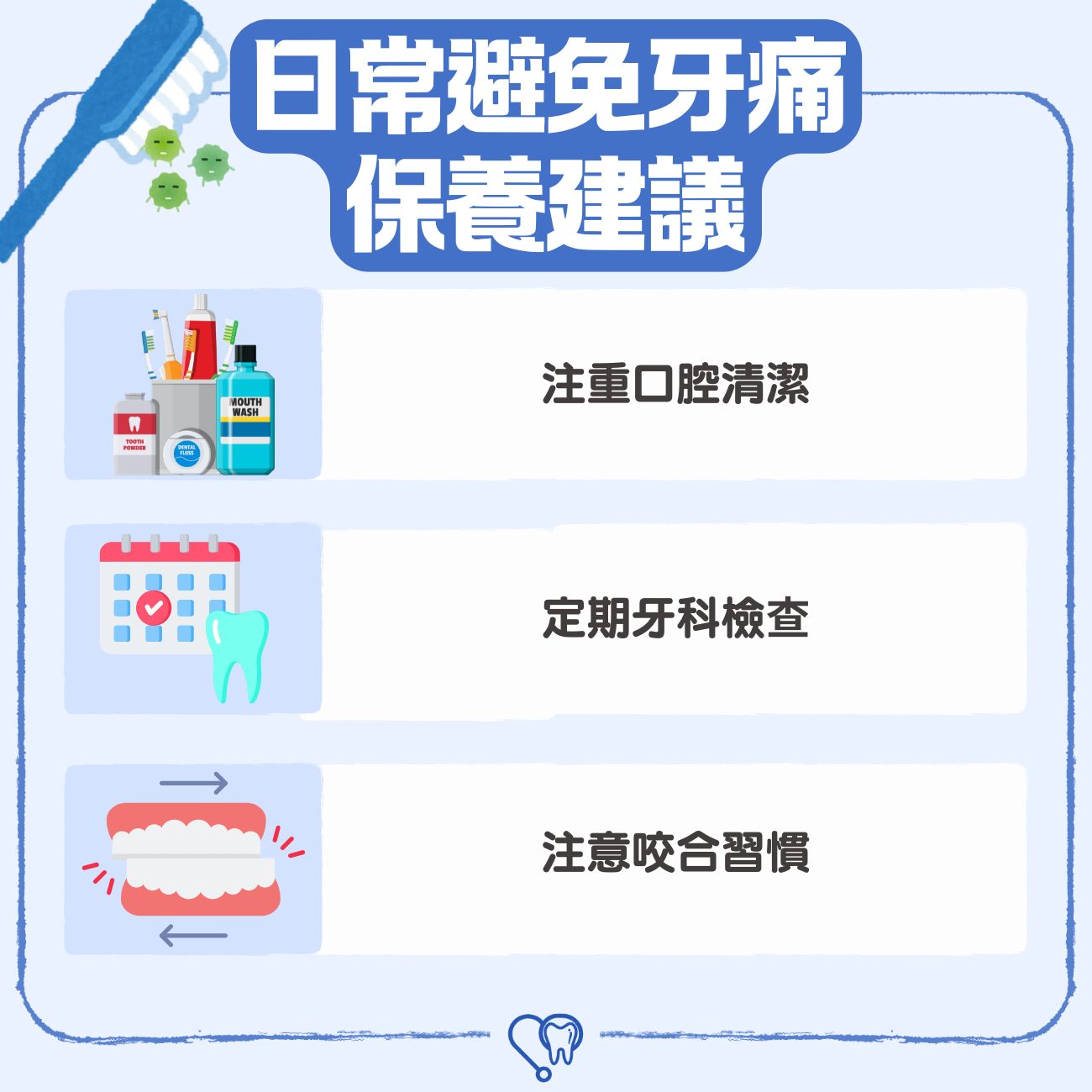
pay attention to oral cleaning
Brushing twice a day and using dental floss or a water flosser to clean between the teeth is the most basic and most effective way to maintain oral health.plaqueand food debris that are not cleaned away easily accumulate bacteria and cause tooth decay or gum inflammation, all of which are potential triggers of bite pain.
regular dental check-ups
Some problems do not necessarily have obvious symptoms in the early stage, but regular check-ups can detect them in advance, such asearly tooth decay, periodontal disease and a misaligned bite. Dealing with them early can prevent them from becoming real toothache and saves a lot of trouble.
Pay attention to biting habits
Try not to bite ice, bones, hard sweets and other hard food, as the damage these do to teeth should not be ignored. Also avoid bad habits such as chewing on one side and biting pen tops, as these small actions may leave the teeth under uneven force over the long term and cause pain.
FAQ
Will pain when biting go away on its own?
Some mild bite pain does ease within a few days, for example brief discomfort from biting something hard. But if the pain lasts more than three days or gets worse, we recommend seeing a dentist as soon as possible, to avoid missing the golden window for treatment.
How can I tell whether it is a tooth or the gums that hurt?
Tooth pain is usually especially noticeable when biting on a particular tooth, and may be a problem with the nerve or the tooth itself, while gum pain may be redness, swelling and bleeding of the whole gum or discomfort when brushing. The location and feeling of the two are different, and if you cannot tell, having a dentist check is the safest approach.
Why do my teeth hurt when there is no tooth decay?
Not seeing a cavity does not mean everything is really fine. Sometimes the possible cause of pain comes from the tooth root, the periodontal tissue or biting force, or even a tiny crack in the tooth or excessive pressure on the tooth nerve, none of which can be judged directly by the naked eye. If you suspect something is wrong with a tooth, you still need a professional diagnosis to be accurate.
Summary
There may be more causes behind pain when biting than you imagine, and each symptom has a different way of being treated. If you are experiencing this kind of trouble, do not just get by on painkillers, and do not think it will go away on its own. Seeking a professional dentist early and getting the right treatment is the only way to truly relieve the trouble that toothache brings.
Disclaimer
This article is for information only and does not contain any invitation or solicitation. Patients should seek a professional dentist for diagnosis and treatment according to their own circumstances. To find out more or book a service, we recommend contacting the relevant clinic directly. Please choose suitable dental services and clinics carefully yourself.



