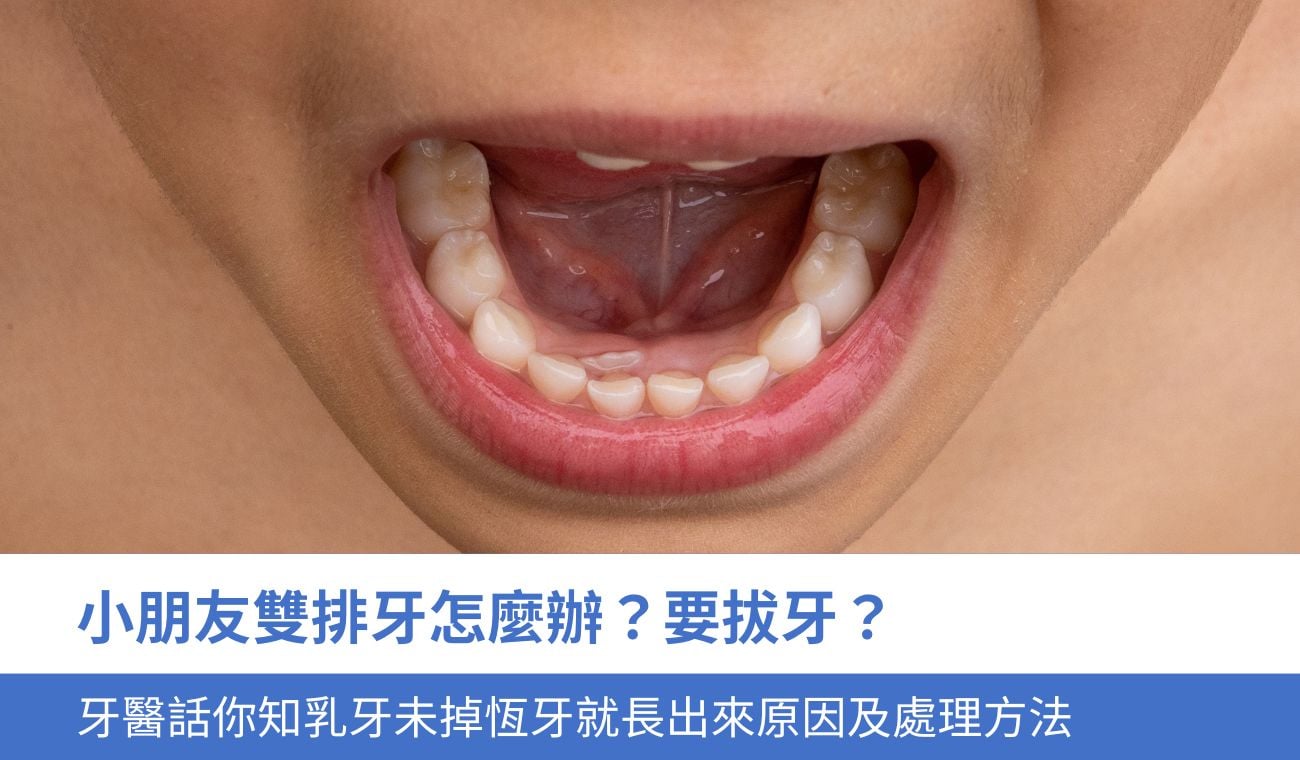
How should you deal with a child's double row of teeth? IsTooth Extractionneeded? In fact this is a normal part of changing teeth. Below we explain the effect of permanent teeth coming through before baby teeth have fallen out, and when extraction is needed, so we can protect your child's dental health together!
What is a double row of teeth (overlapping teeth)?
Human tooth development begins as early as the foetal stage. Tooth buds appear in the baby's mouth during pregnancy, and as the baby grows, these buds gradually mature and finally come through at the right time.
Babies usually get their first baby tooth at around 6 to 10 months after birth, and other baby teeth then come through one after another. By 2 to 3 years old, a full set of baby teeth has come through.
Children start to lose baby teeth at around 6 years old. At this stage, permanent teeth slowly grow in from beneath the baby teeth, while the baby teeth slowly wobble and fall out. This process usually continues until about 12 years old, when all of them have been changed.
Baby teeth and permanent teeth, two rows of teeth existing at the same time
Somechildren during the tooth-changing stagemay have baby teeth and permanent teeth in the mouth at the same time. We call this a double row of teeth (overlapping teeth), rather thansupernumerary teeth. It is most common in the lower front teeth, because this is where tooth change starts earliest.
What causes a double row of teeth?
Many things can cause a double row of teeth, including a child's jaw bone being too small and not enough space in the mouth. Although a double row of teeth may worry some parents, who wonder whether it will affect the child's tooth order or ability to eat, it is in fact a normal transitional phenomenon that many children may experience during thetooth-changing period.
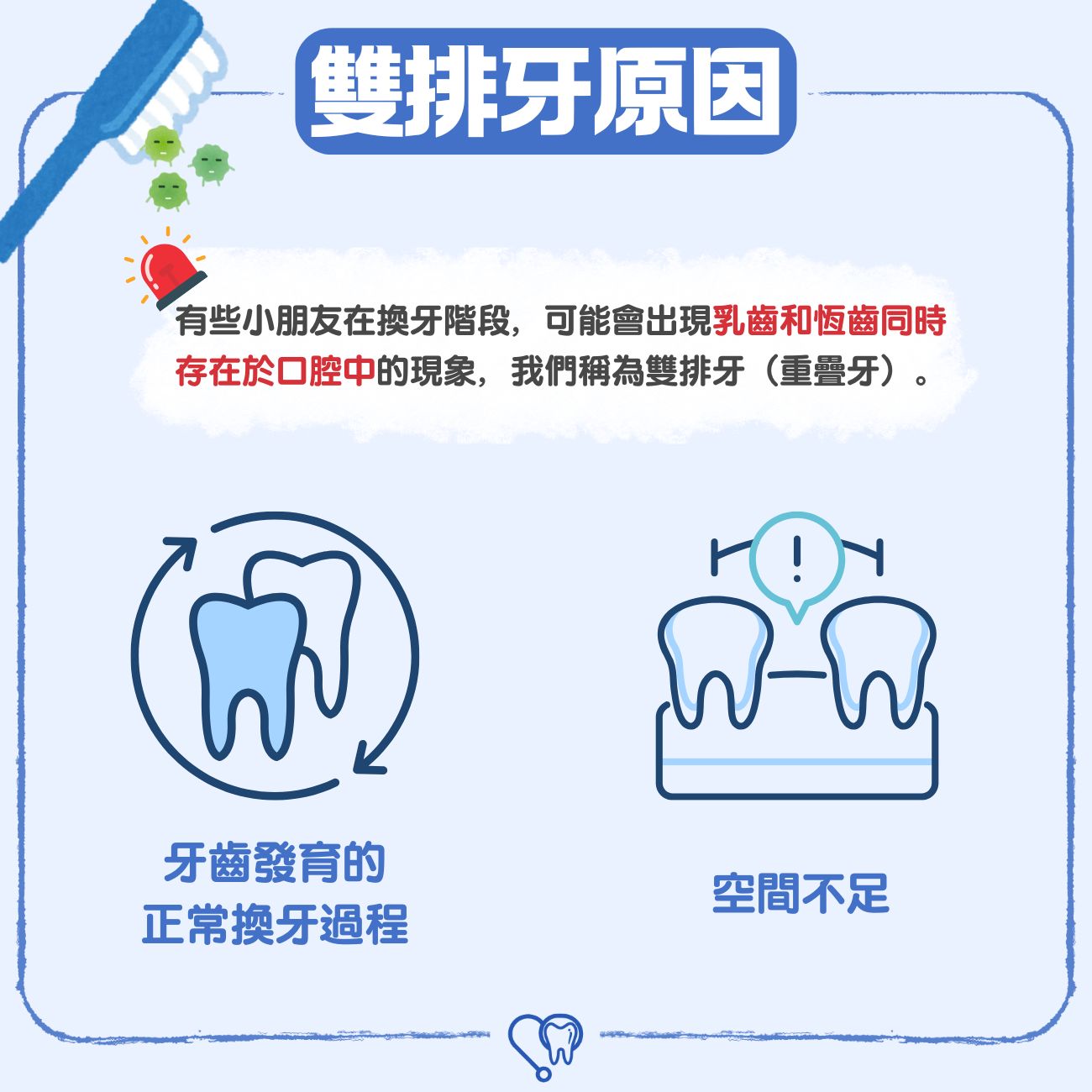
The normal process of tooth change in tooth development
In a normal tooth-changing process, the roots of baby teeth are gradually resorbed by the permanent tooth buds coming through beneath them, which finally makes the baby teeth loose and fall out.
Sometimes the permanent tooth may develop in a direction towards the tongue side of the baby tooth, so that the baby tooth root is not completely resorbed, creating a double row of teeth. This situation usually has no long-term effect on the child's oral health and is simply a normal tooth-changing course.
Not enough space
A double row of teeth is related not only to whether baby teeth are loose but also to whether there is enough space for the lower front teeth. Even if there is not enough space in the mouth, parents do not need to worry too much or rush to have the tooth extracted. As the child grows and develops, the space in the mouth gradually increases, providing enough room for the permanent teeth to line up normally.
Will permanent teeth coming through before baby teeth fall out affect the bite?
Although a double row of teeth is mostly normal, when a permanent tooth has come through before the baby tooth has fallen out, many parents fear that extracting the tooth too late will cause misaligned teeth or even affect the child's bite.
In fact, a poor bite is usually caused by heredity, environment and specific factors. A short-term double row of teeth usually does not seriously affect a child's bite.
In most cases, you can give the child some time, as the baby tooth usually falls out naturally before the permanent tooth has fully come through. But if the baby tooth is not loose at all, or the permanent tooth is clearly growing in the wrong direction, you need to consider seeking the advice of a professional paediatric dentist.
How to deal with a child's double row of teethmethods
Some parents are anxious to take their child to the dentist, hoping to have the baby tooth extracted straight away to solve the problem. But in most cases, this worry is unnecessary. When facing a double row of teeth, the most important thing is to stay calm and patient. You can refer to the following ways of handling it:
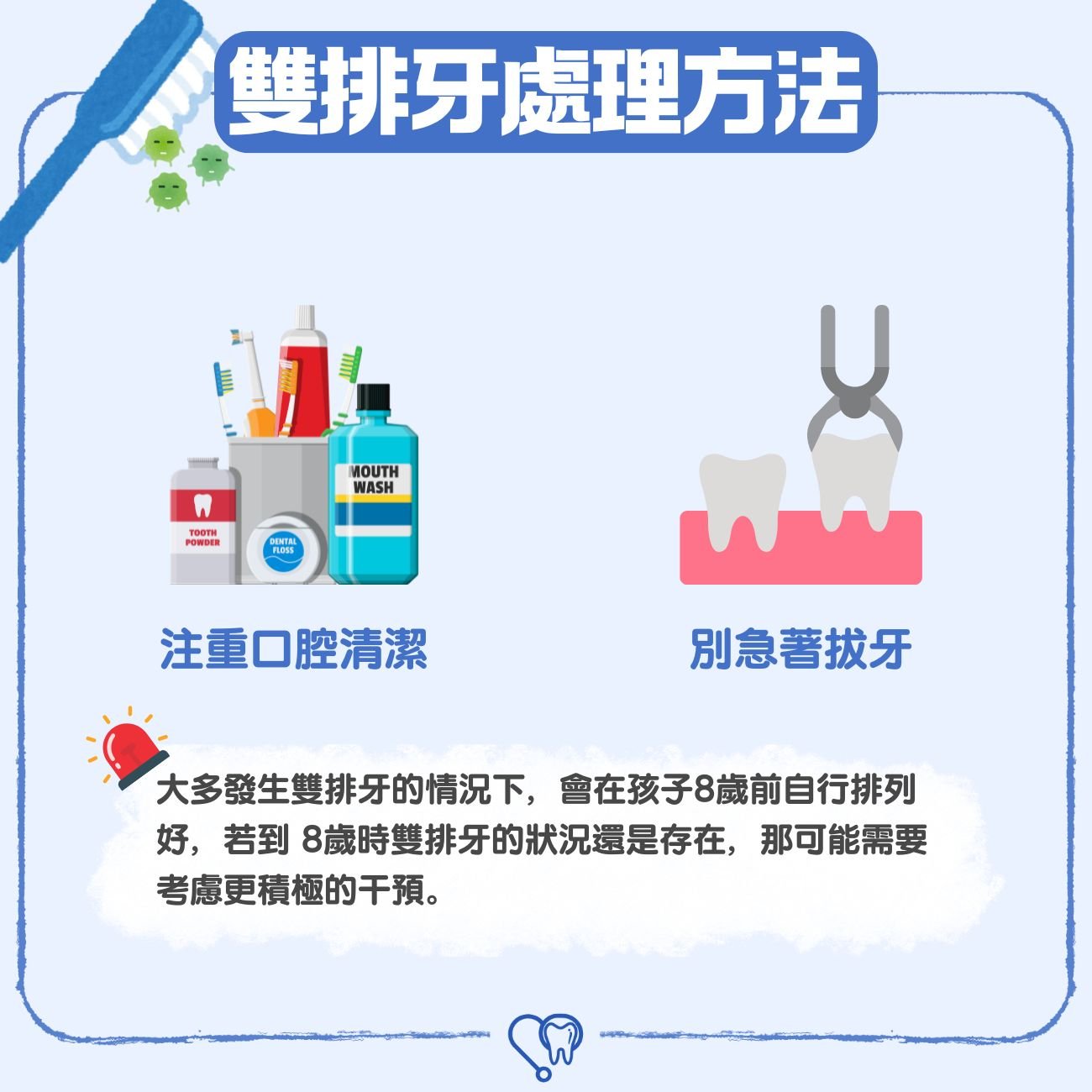
pay attention to oral cleaning
After a child's first baby tooth comes through, you should start to build good oral hygiene habits. Brush at least twice a day using a toothbrush with toothpaste containing 1000 ppm fluoride. In addition, using a plaque disclosing agent can help the child better understand how well they have brushed and improve the quality of brushing.
For children under 6 years old, fluoride can be applied every six months to prevent tooth decay. For children from 6 up to under 12 years old, fissure sealants on the first permanent molars can be considered, to effectively prevent the problems caused by overly deep grooves in the molarstooth decay.
Do not rush to extract
Research shows that as permanent teeth come through one after another and the jaw develops, most cases of double row of teeth resolve naturally over time.
As baby teeth fall out and with natural pushing from the tongue, the permanent teeth in most double rows return to the correct position. Overseas research even points out that, during the tooth-changing period, lower front teeth with crowding of around 4 mm may well line up naturally. Unless there are special circumstances, early extraction is not recommended.
In most cases of double row of teeth, the teeth line up by themselves before the child is 8 years old. If the double row is still there at 8 years old, more active intervention may need to be considered, such as extracting the primary central incisors.
When is extraction needed?
Although most children with a double row of teeth do not need immediate intervention, in some cases the dentist may suggest extraction:
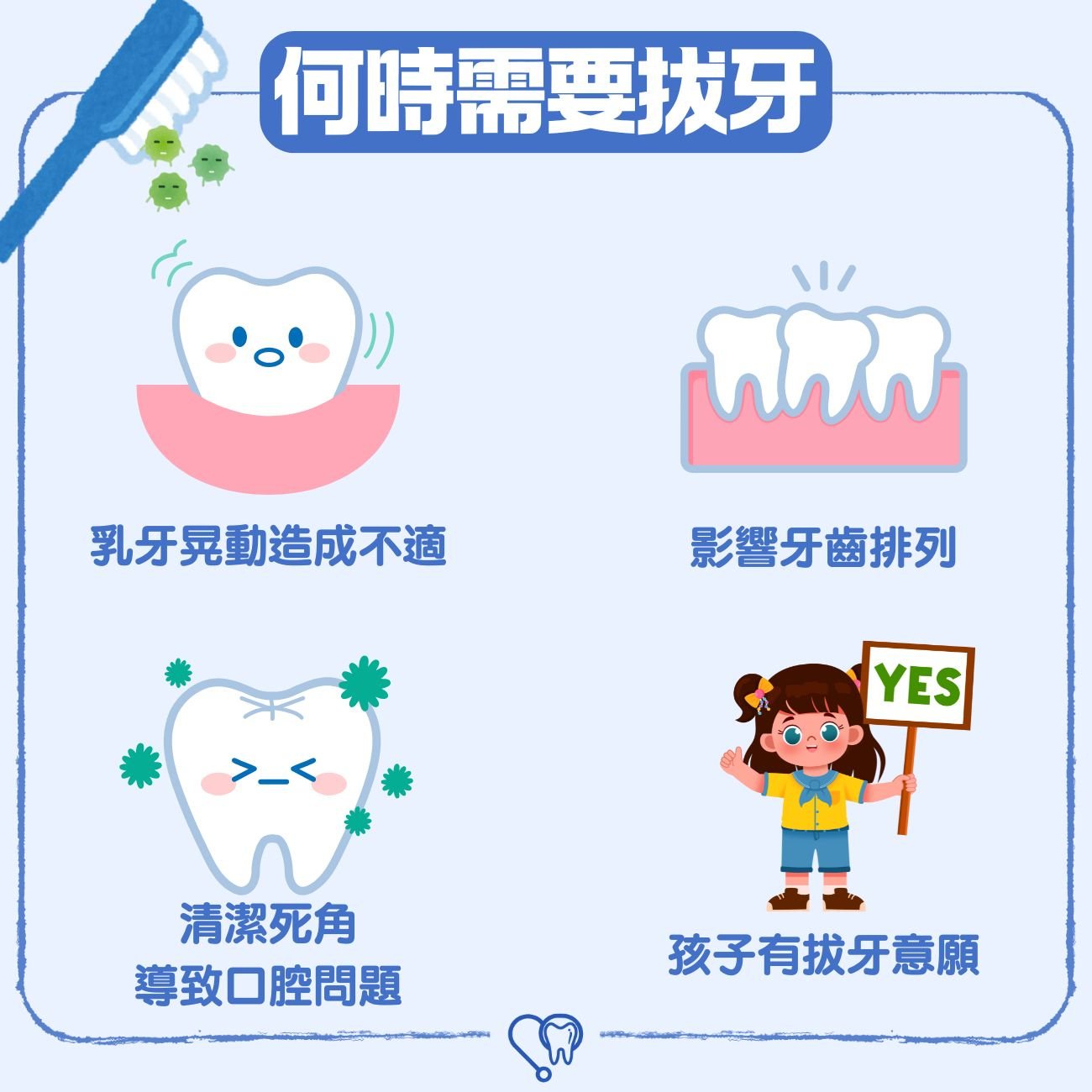
A wobbly baby tooth causing discomfort
If a wobbly baby tooth affects the child's eating or speaking, extraction may be needed.
Affecting tooth alignment
If a double row of teeth causes the permanent tooth to deviate seriously from its normal position, the baby tooth may need to be extracted to make room for the permanent tooth.
Hard-to-clean spots causing oral problems
A double row of teeth makes oral cleaning difficult, increasing the risk oftooth decayor gingivitis.
The child is willing to have the tooth extracted
Some children may feel uncomfortable or self-conscious because of a double row of teeth. If the child says they want the wobbly baby tooth pulled out, this can be considered provided safety is assured.
Summary
A double row of teeth is a common phenomenon in children's tooth-changing period, and in most cases there is no need to worry too much or rush to intervene. By keeping good oral hygiene habits, having regular dental check-ups and giving enough time and patience, most double-row problems can resolve naturally.
But remember that every child develops at a different pace, and staying patient and having regular professional check-ups are the key to ensuring oral health.
Disclaimer
This article is for information only and does not contain any invitation or solicitation. Patients should seek a professional dentist for diagnosis and treatment according to their own circumstances. To find out more or book a service, we recommend contacting the relevant clinic directly. Please choose suitable dental services and clinics carefully yourself.