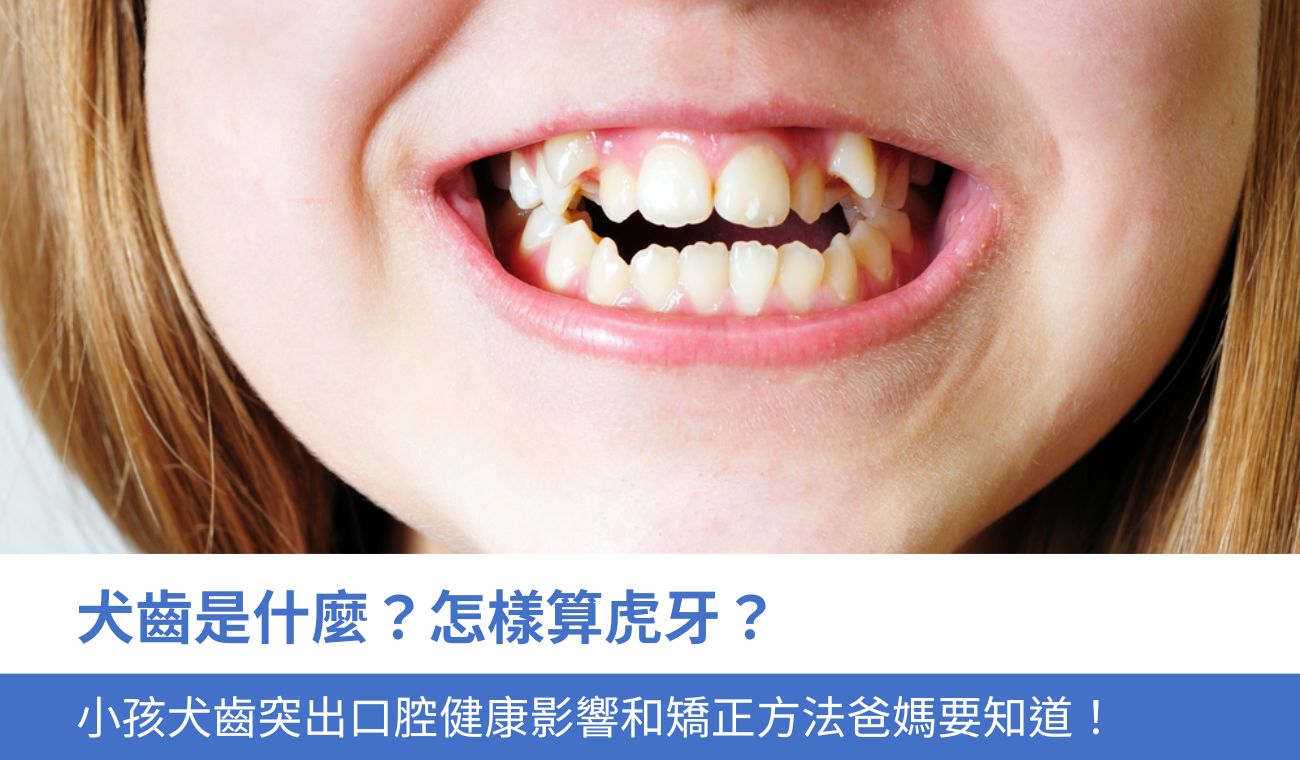
The "canine tooth" is the third tooth counting sideways from the front teeth. If it is impacted, the situation commonly known as "fang teeth" arises. Do fang teeth need correction? At what age is the golden period for correction? This article sets out the causes of protruding canines in children and how they are corrected, to help you protect your child's oral health.
canine teethwhat are they?
Everyone has four canine teeth in the mouth, one on each side of the upper and lower jaws. They are the third teeth on either side of the midline of the upper and lower dental arches, right next to the lateral incisors and the premolars.
For children, baby canines usually come through at 16 to 23 months old.
canine teethStructure and function
The canine tooth has a unique structure. The upper canines in particular sit directly below the eyes and are sharp and cone-shaped.
This special shape makes the canine the tooth in our mouth best suited to tearing food. When we need to chew tougher food such as meat, the role of the canines becomes very important. The strong root and sharp shape can grip food effectively and tear it into small pieces, making it easier to swallow and digest afterwards.
Other types of teeth
Besides canines, the mouth also has incisors, first molars and second molars. These four types of teeth together make up a child's baby teeth system.
Each tooth has four surfaces: the outer surface, inner surface, chewing surface and the surface between neighbouring teeth. Incisors cut food and also help with pronunciation when speaking. The first and second molars grind food. This complex structure lets us handle all kinds of food, from soft to hard.
The difference between fang teeth and canines
In daily life we often hear the term "fang teeth". But is there any difference between fang teeth and canines?
What counts as fang teeth?
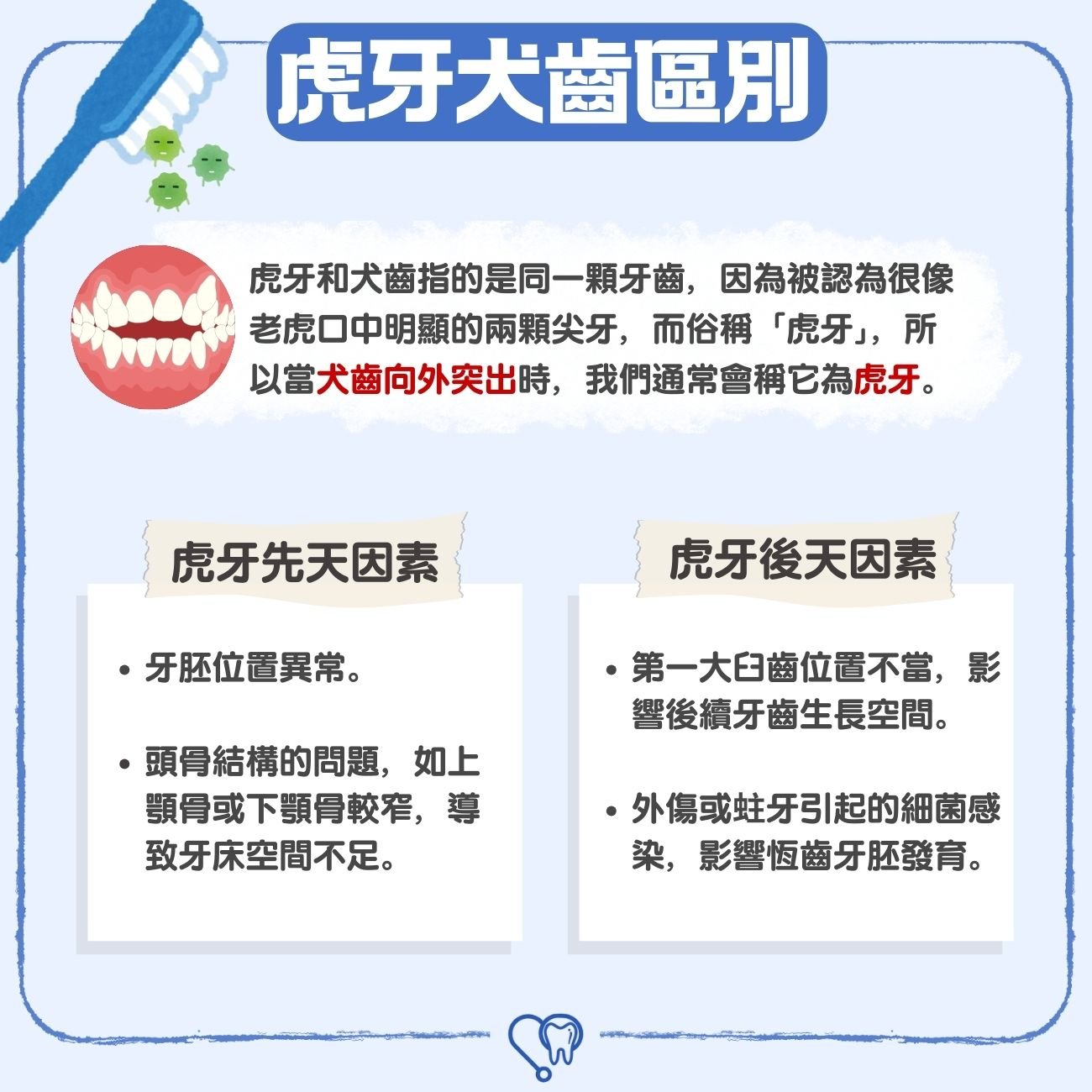
In fact, fang teeth and canines refer to the same tooth. Because they are thought to look much like the two obvious pointed teeth in a tiger's mouth, they are commonly called "tiger teeth" (fang teeth). So when a canine sticks out, we usually call it a fang tooth.
Congenital factors behind fang teeth
Some people are born with fang teeth, which may be because the tooth bud is in an abnormal position, so the tooth cannot grow in the right place.
Another possibility is a problem with the structure of the skull, such as a narrow upper or lower jaw bone, leaving not enough space in the gum, forcing the canine to grow outwards.
Acquired factors behind fang teeth
The order and position in which permanent teeth grow have an important effect on canine growth. If the first permanent molar (which usually comes through at 5 to 7 years old) is in the wrong position, it may affect the space for later teeth to grow and force the canine to grow outwards.
Injury at the baby tooth stage, ortooth decaybacterial infection and similar factors, may also affect the development of the permanent tooth bud, so that the canine cannot grow normally.
What if a tooth grows above the gum line? Effects of fang teeth
Some people think fang teeth look cute and special, but when a canine is impacted above the gum and left untreated, a series of oral problems may follow.

Difficult to clean
The most direct effect of protruding fang teeth is that they make oral care and cleaning more difficult. Because fang teeth may overlap with the front teeth and the first premolars, cleaning the surrounding teeth becomes difficult, and plaque and food debris easily build up.
Oral health risks
Over the long term, a hard-to-clean situation may lead the teeth to more oral problems, such as gingivitis,tooth decayandperiodontal diseaseand so on, having a greater effect on oral health.
bite problems
A bite problem not only affects overall chewing function but may also lead to excessive wear of other teeth. When teeth cannot line up correctly, every chew may put extra pressure on certain teeth, and over the long term wear or damage can easily appear.
Appearance
From an aesthetic point of view, protruding fang teeth easily cause the lips to protrude slightly, making the smile look unnatural, and also make it hard to close the mouth tightly, leading to the bad habit of mouth breathing, which over time may affect facial harmony.
This change in appearance may affect a child's confidence among their peers, and the effect may be more obvious for teenagers in particular.
Treatment for canines: orthodontic treatment
To improve fang teeth,Orthodonticsis the most common and effective treatment. The dentist will carry out a specific treatment plan according to the severity of the protruding canine.
Braces are mainly used to improve tooth alignment and the bite, and in some cases may also affect the appearance of the face.
After correction, teeth that are better aligned are usually easier to clean, which may help reduce the risk of tooth decay and periodontal disease. After the bite improves, abnormal tooth wear may also be reduced and chewing function improved.
However, extracting a fang tooth to improve tooth alignment or a bite problem needs very careful consideration. Because the root of a fang tooth is long and no other tooth can replace its function, it should be done only after assessment and advice from a professional dentist.
The best time to correct protruding fang teeth
The best time to correct fang teeth is usually during the teenage years, specifically between about 7 and 14 years old.
In childhood and the teenage years, the jaw bones and oral muscles are still developing and the bones are relatively adaptable. If there is abnormal eruption, abnormal loss of baby teeth or lack of space during the tooth-changing period, a dentist or orthodontist can assess whether early intervention is needed.
Depending on the case, early correction can be used to guide the direction of tooth eruption, adjust space or improve bite development, and may reduce the complexity of later treatment.
The result and length of orthodontic treatment are affected by age, tooth alignment, skeletal development, bite and cooperation, and it is not the case that the younger the age, the better the result or the shorter the treatment will always be.
Summary
Although fang teeth may bring a range of oral health and aesthetic problems, with timely intervention and appropriate treatment these problems can be effectively resolved. Whether for oral health or appearance, seeking professional advice in good time is an important step in looking after your teeth and overall health.
Disclaimer
This article is for information only and does not contain any invitation or solicitation. Patients should seek a professional dentist for diagnosis and treatment according to their own circumstances. To find out more or book a service, we recommend contacting the relevant clinic directly. Please choose suitable dental services and clinics carefully yourself.