

"With a toothache, even a delicacy like dragon meat tastes of nothing." Toothache is a very tormenting feeling, especially when the pain affects the nerve. Have you ever had tooth nerve pain? What should you do if you cannot see a doctor right away? This article sets out the causes of tooth nerve pain, how to relieve it effectively and the follow-up treatment methods.
What should you do when a toothache reaches the nerve?
Tooth pain that reaches the nerve may be caused by many factors, anything from tooth decay to pulpitis. You may feel that "the tooth hurts one moment and not the next" or "the tooth has a dull ache", and these are common symptoms. Understanding the different causes of the symptoms and the treatment options can help you deal better with tooth pain.
"The tooth hurts one moment and not the next"
This is the feeling most patients report. If you have this kind of pain too, you need to pay attention!
Intermittent toothache is usually a forerunner of the tooth nerve starting to be damaged or irritated. This pain may be related to tooth sensitivity, especially when eating or drinking hot, cold or acidic foods and drinks triggers a reaction in the nerve.
This situation usually means the tooth may already have early tooth decay, gum recession or exposed dentine, so that outside stimuli easily reach the pulp, irritating the nerve and causing pain.
"The tooth has a dull ache"
This is also a fairly common symptom, in which the tooth has a dull ache. This discomfort may be more lasting, and although it is not necessarily severe pain, it is very hard to ignore.
This dull ache may be an early sign of pulpitis. When bacteria invade the pulp chamber, the nerve and blood vessel tissue inside the tooth becomes inflamed, raising the pressure inside the tooth and so producing a dull ache.
Other symptoms of tooth nerve pain
Besides intermittent pain and dull ache, there are some other common symptoms.
For example, a slight radiating pain may be felt near the cheek or neck, usually because the tooth nerve pain has spread to a neighbouring group of nerves.
In addition, continuous pain, pain that gets worse at night, or strong discomfort when chewing are also signs of a tooth nerve problem. If the pain keeps recurring, or is even accompanied by symptoms such as swelling and fever, a more serious infection may well have developed, and professional dental treatment should be sought immediately.
Tooth nerve paincauses
Tooth nerve pain is a very painful and common oral problem that makes it hard to concentrate or carry out daily activities. This pain is usually caused by inflammation of, or damage to, the pulp deep inside the tooth, and anything from gum disease to tooth sensitivity, tooth decay, tooth grinding and cracked teeth may cause pain.
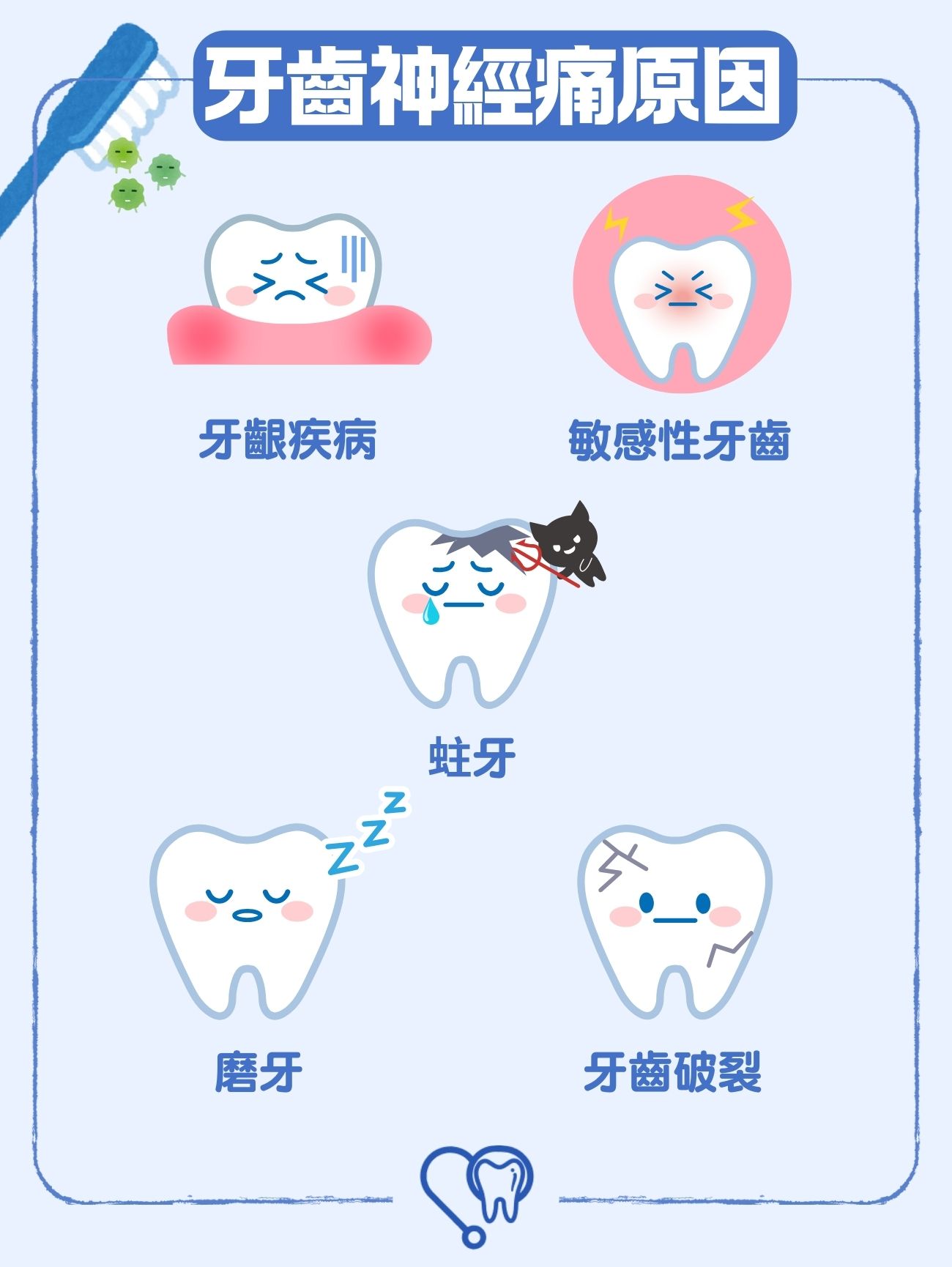
Tooth nerve pain is in the pulp (understanding tooth structure)
To understand the causes of tooth nerve pain, we need to know where the tooth nerve actually is. A tooth is in fact made up of 4 main parts:

| Structure | Explanation |
| enamel | Also called dental enamel, the hard outer layer made of calcium and phosphate |
| Dentine | Also called the dentine layer, the main body of the tooth, covered and protected by the enamel |
| Cementum | Also called the chalky layer, covering the surface of the dentine at the tooth root |
| pulp | The innermost layer of the tooth, containing nerves and blood vessels |
The most direct cause of tooth nerve pain is inflammation of, or damage to, the pulp inside the tooth.
When these nerves are stimulated by outside factors, such as when the nerve endings of the tooth are irritated by tooth decay or tooth damage, a stabbing pain is caused. If the enamel on the outer layer of the tooth is destroyed and bacteria or other irritants enter the pulp, the pain becomes worse.
Gum disease
Early symptoms usually include red, swollen gums, bleeding,bad breathand so on. When gum recession causes the tooth root to be gradually exposed, plaque builds up more easily, starts to erode the enamel on the tooth surface and slowly seeps into the pulp nerve, causing inflammation around the tooth root and finally causing tooth nerve pain.
sensitive teeth
Tooth sensitivity is usually because the protective layer of the tooth has become thinner or the dentine is exposed, so the nerve is stimulated by outside factors and produces pain. If a tooth sensitivity problem goes unresolved for a long time, the pain may get worse and turn into continuous nerve pain.
tooth decay
is one of the most common causes of tooth nerve pain. Early tooth decay may cause only slight sensitivity, but as the decay deepens and bacteria further erode the tooth, causing inflammation or infection of the pulp, the nerve pain becomes stronger and stronger.
teeth grinding
at nightteeth grindingThis unconscious behaviour wears down the protective layer of the tooth surface excessively, leaving the nerve directly exposed to outside stimuli, causing tooth nerve pain, and may even trigger symptoms such as headaches and a tense jaw.
cracked tooth
Whether the cracks are caused by accidental injury or by biting hard objects, a broken tooth exposes the pulp to the outside, so that the nerve is stimulated and causes severe pain. Bacteria easily enter the inside of the tooth through the cracks, further worsening the infection and pain.
Tooth nerve painHow can you relieve it?
When you have tooth nerve pain, the most effective solution is of course to seek professional dental treatment, but if you cannot see a dentist right away, we can still first take some simple measures to ease the pain.
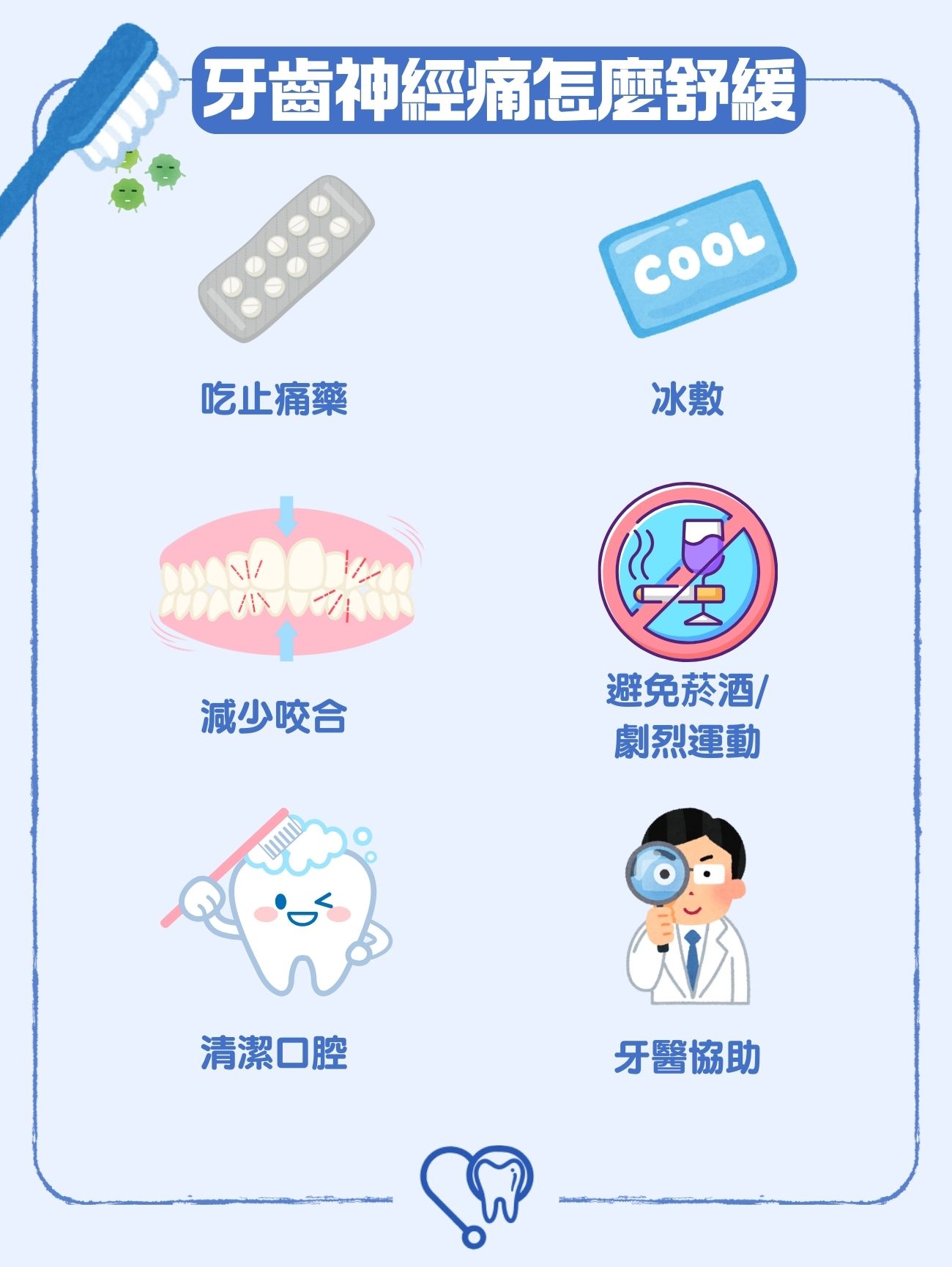
Taking painkillers
Painkillers are a common choice for relieving tooth nerve pain and can quickly reduce the pain. In general, over-the-counter painkillers such as ibuprofen or paracetamol can provide short-term relief and help ease the pain.
When taking medication, be sure to follow the instructions or the doctor's advice, to avoid side effects caused by overdose or improper use.
Reduce biting
Avoid touching or biting foods that are too hard, and avoid overusing the teeth. For eating, have mainly soft, easy-to-chew semi-liquid foods, such as cooked vegetables, soup or fruit purée, which can help you keep eating normally during the period of discomfort.
When there is pain inside the mouth, it is even more important to avoid biting hard, to reduce further irritation of the teeth and gums.
Clean the mouth
Good oral hygiene habits, such as rinsing with warm water or salt water, can help reduce inflammation of the gums and promote healing of the wound.
Brush gently to avoid irritating the affected tooth and gums. At the same time, use dental floss to clean food debris from between the teeth to prevent further infection.
cold compress
Cold compresses can help reduce swelling and ease pain. Wrap an ice pack in a towel and place it gently on the outside of the painful area, using a pattern of 3 minutes of icing and 3 minutes of rest, which can effectively relieve the discomfort caused by nerve pain.
Never hold ice cubes directly in the mouth, to avoid making the tooth nerve pain worse.
Avoid drinking alcohol, smoking and vigorous exercise
Alcohol and tobacco both irritate the teeth, which not only worsens inflammation but may also affect blood circulation in the gums, prolonging the recovery time of the pain.
Vigorous exercise or soaking in a hot bath raises blood circulation, which may cause the pulp to become congested and press on the nerve. It is recommended to avoid these habits to promote recovery of the tooth.
Seek help from a dentist as early as possible
Although the relief methods above can help you ease the pain for a short time, the fundamental solution still depends on professional dental treatment. If the tooth nerve pain persists or gets worse, be sure to seek professional dental diagnosis and treatment promptly.
Treatment for tooth nerve pain
When facing tooth nerve pain, seeking appropriate treatment can help you deal effectively with the pain.
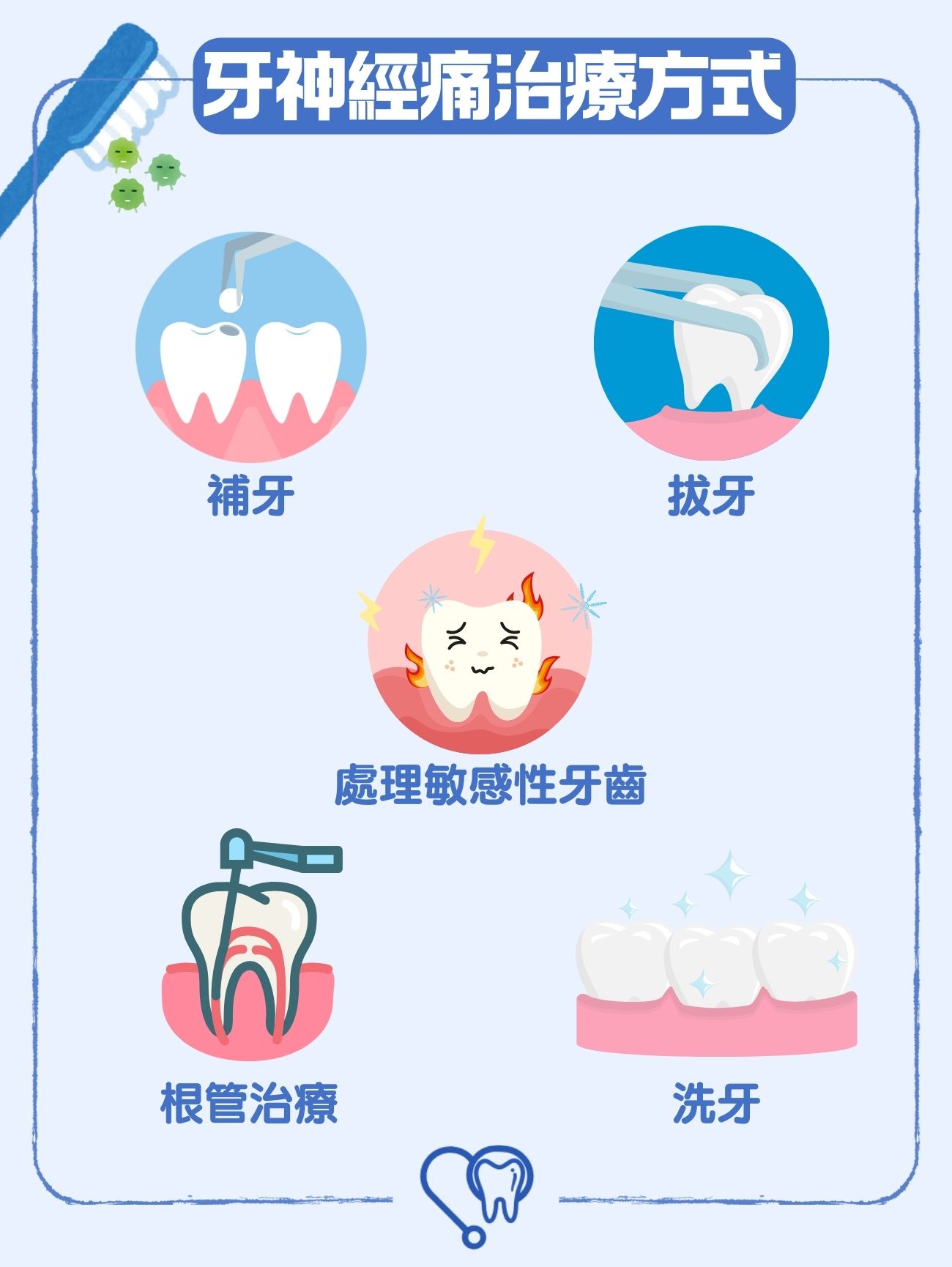
Dental Fillings
If a tooth has a defect because of tooth decay or other reasons,Dental Fillingsis a common treatment. The filling process usually includes removing the damaged part of the tooth and then filling it with a suitable material to restore the appearance and function of the tooth. The process is relatively simple, and in most cases no anaesthesia is needed.
Extraction
When a tooth is decayed, the infection has spread to the surrounding tissue, or the tooth is cracked, and health cannot be restored by other treatments, tooth extraction may become the only option.
Although tooth extraction is a painful process, in some cases it can avoid more serious health problems and help improve overall oral health.
Root Canal Treatment
Root canal treatment, commonly known as "nerve removal", is one of the most common and effective ways of treating tooth nerve pain. When the pulp is infected or damaged, the dentist carries out root canal treatment to remove the affected pulp tissue and to disinfect and fill the space inside the root canal.
Treating sensitive teeth
Sensitive teeth are a common cause of tooth nerve pain. In this situation, it is recommended to use toothpaste designed specifically forsensitive teeth. These toothpastes containfluorideor potassium ions, which can help strengthen the teeth's defences and reduce pain. The dentist may also recommend applying a sealant to further protect the exposed dentine and reduce discomfort.
Teeth Cleaning
Although scaling and polishing is not a direct treatment, it can effectively reduce the chance of tooth nerve pain.
regular scaling and polishingIt can not only remove the dental deposits andtartarfrom the tooth surface, but also reduce inflammation and bleeding of the gums and help prevent the development ofperiodontal disease. Through professional cleaning, the dentist can better observe the condition of your teeth and give treatment promptly where it is needed.
FAQ
How can you tell toothache, trigeminal neuralgia and tooth nerve pain apart?
The pain of the three feels clearly different. In general, toothache is usually caused by tooth decay, gum disease or tooth injury, and the pain may be intermittent and related to contact with hot or cold foods. This kind of pain is often concentrated on the tooth surface or the gum area, and its range is relatively limited.
Trigeminal neuralgia may cause a sudden, unusually severe pain on one side, which is hard to bear. The pain spreads around the eyes, around the ears and over the face, and ordinary toothache painkillers have no relieving effect on trigeminal neuralgia.
Tooth nerve pain usually comes from inflammation of, or damage to, the nerve inside the pulp, and may persist whether or not you are eating or biting. The features of nerve pain are continuous, more severe pain, and there may even be throbbing or radiating pain that spreads to the face or ears.
Will tooth nerve pain get better by itself?
In most cases it will not heal by itself. When the tooth nerve is infected or damaged, the nerve tissue cannot recover by itself, and further worsening may causepulp necrosis, leading to the need for more extensive treatment.
Still have toothache after root canal treatment?
Root canal treatment is usually done to deal with a pulp infection or nerve damage, but sometimes toothache still appears after treatment, and there may be several reasons for this.
Slight discomfort or pain in the early period is a normal reaction after the procedure and usually fades within a few days. But if the pain persists, it may be because the root canal was not completely cleaned, the infection was not completely eliminated, or inflammation has appeared in the periodontal tissue.Crownor a problem with the filling material may also be one of the causes.
If you still feel pain after root canal treatment, you should contact your dentist for a further check, to make sure no problem has been left behind.
Is tooth nerve pain tooth decay?
Tooth nerve pain is not always caused by tooth decay, but tooth decay is one of the common causes of tooth nerve pain. When decay goes deep into the inner layer of the tooth, bacteria infect the tooth nerve, causing inflammation of the pulp and triggering nerve pain. As the decay develops it gets worse, going from slight sensitivity in the early stage to continuous severe pain.
Does tooth nerve pain mean the tooth must be extracted?
Not all tooth nerve pain requires extraction. In many cases, root canal treatment can effectively remove the infection and keep the original tooth. But if the tooth is seriously damaged and cannot be repaired, or the infection has spread to the root, extraction may become the last resort.
Summary
Tooth nerve pain is a common and uncomfortable oral problem that may be caused by tooth decay, gum disease, cracked teeth or nerve damage. For different situations, the dentist will offer you the most suitable treatment plan, effectively reducing discomfort and protecting oral health.
Disclaimer
This article is for information only and does not contain any invitation or solicitation. Patients should seek a professional dentist for diagnosis and treatment according to their own circumstances. To find out more or book a service, we recommend contacting the relevant clinic directly. Please choose suitable dental services and clinics carefully yourself.



