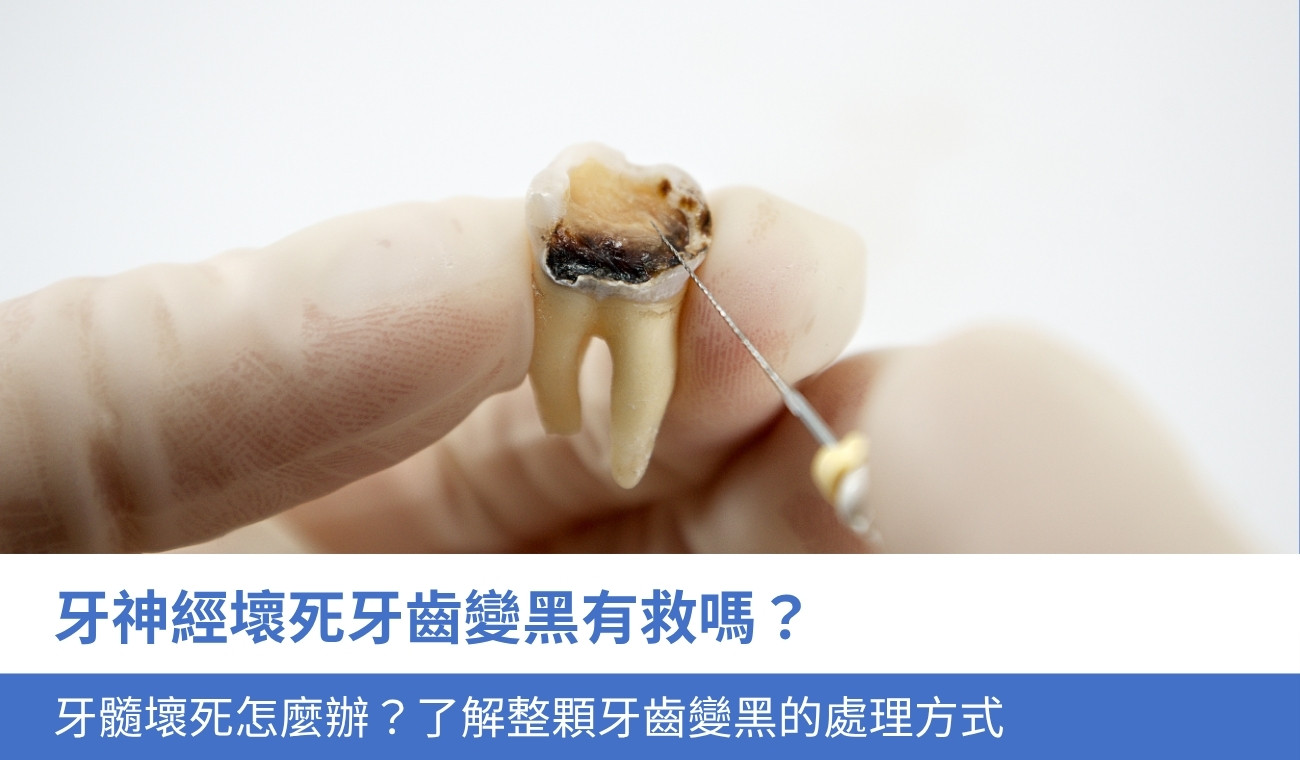
After the nerve of a tooth dies, the tooth loses its source of nutrition and may turn black. It can be restored with root canal treatment, whitening, veneers or crowns, and seeing a dentist early helps save the tooth and restore its appearance.
Tooth turned black from a dead nerveCan it be saved? 4 ways to treat it
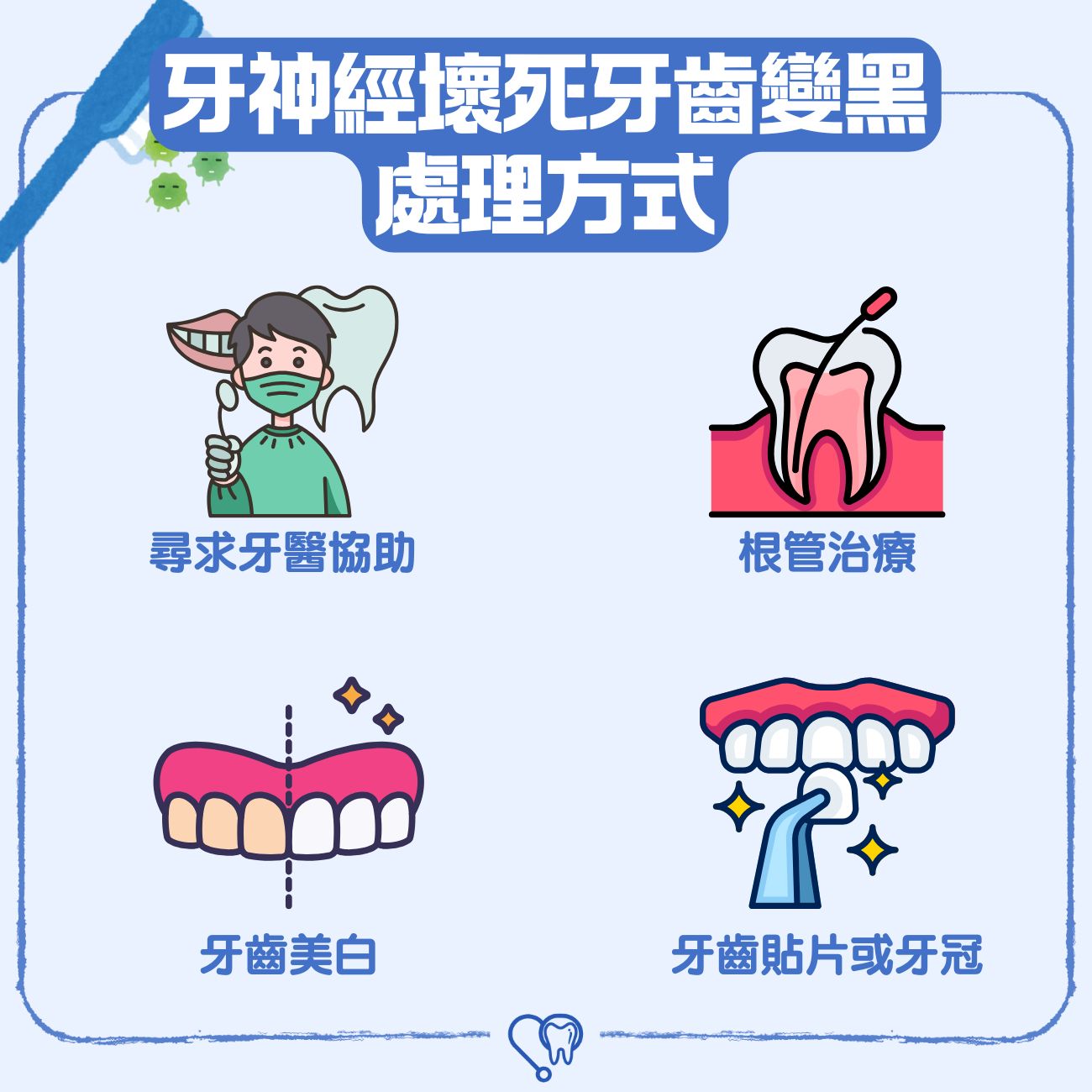
Seek help from a dentist
As soon as you notice an abnormal tooth colour, the first step is to see a dentist for diagnosis as soon as possible.
An X-ray or professional testing can confirm whether it is caused by nerve death or by other factors. It is advisable to seek a dentist's diagnosis early for a better treatment outcome.
Root Canal Treatment
If the nerve of the tooth is confirmed to be dead, the most common treatment is to carry outRoot Canal Treatment, that is, root canal treatment.
By removing the infected or damaged pulp tissue and bacteria, and then sealing the root with a filling material, the structure of the tooth can be kept and extraction avoided. After root canal treatment the tooth becomes more fragile, but with suitable restoration it can still be used normally.
Teeth Whitening
Some teeth turn black only because of pigment deposits or extrinsic staining, for example from long-term tea, coffee or smoking. As the pigment stays in the enamel and has not reached the dentine, the teeth can usually return to their original shade more easily after professional teeth whitening.
However, if the tooth has already had root canal treatment, you may need to consider "internal bleaching", in which the whitening agent is placed inside the tooth to achieve the whitening effect.
Veneers or crowns
When the discolouration covers a large area or the colour is too dark for whitening to be effective, the dentist may recommend porcelain veneers or full porcelain crowns.
This not only improves the appearance thoroughly, but also increases the strength of the tooth and reduces the risk of fracture. Veneers and crowns are the most effective solutions, especially for discoloured front teeth that affect appearance.
Is a fully blackened tooth always caused by a dead nerve?
A blackened tooth is not necessarily caused by a dead nerve. The following situations can also make a whole tooth suddenly turn black:
Severe Tooth Decay
If tooth decay is not treated in time, black holes will appear on the tooth surface, which can look as if the whole tooth has turned black, and it is usually accompanied by tooth sensitivity or pain. The decay needs to be treated first before the tooth can look healthy again.
Tooth staining
Some people have discoloured teeth from long-term exposure to dark foods, drinks or smoking. This is extrinsic staining, which can mostly be improved by scaling or whitening and does not mean the nerve has died.
Impact injury
After a tooth is hit or injured, the pulp may gradually lose its vitality, and the colour slowly turns grey or even black. In such cases it is advisable to let the dentist judge further whether the nerve needs to be removed.
Root canal treatment
In some cases, a tooth that has had root canal treatment may become darker because it has lost its nerve and blood supply, which is a common occurrence. It can be improved with tooth whitening orveneers, or crowns.
How can I prevent a tooth from turning black after root canal treatment?
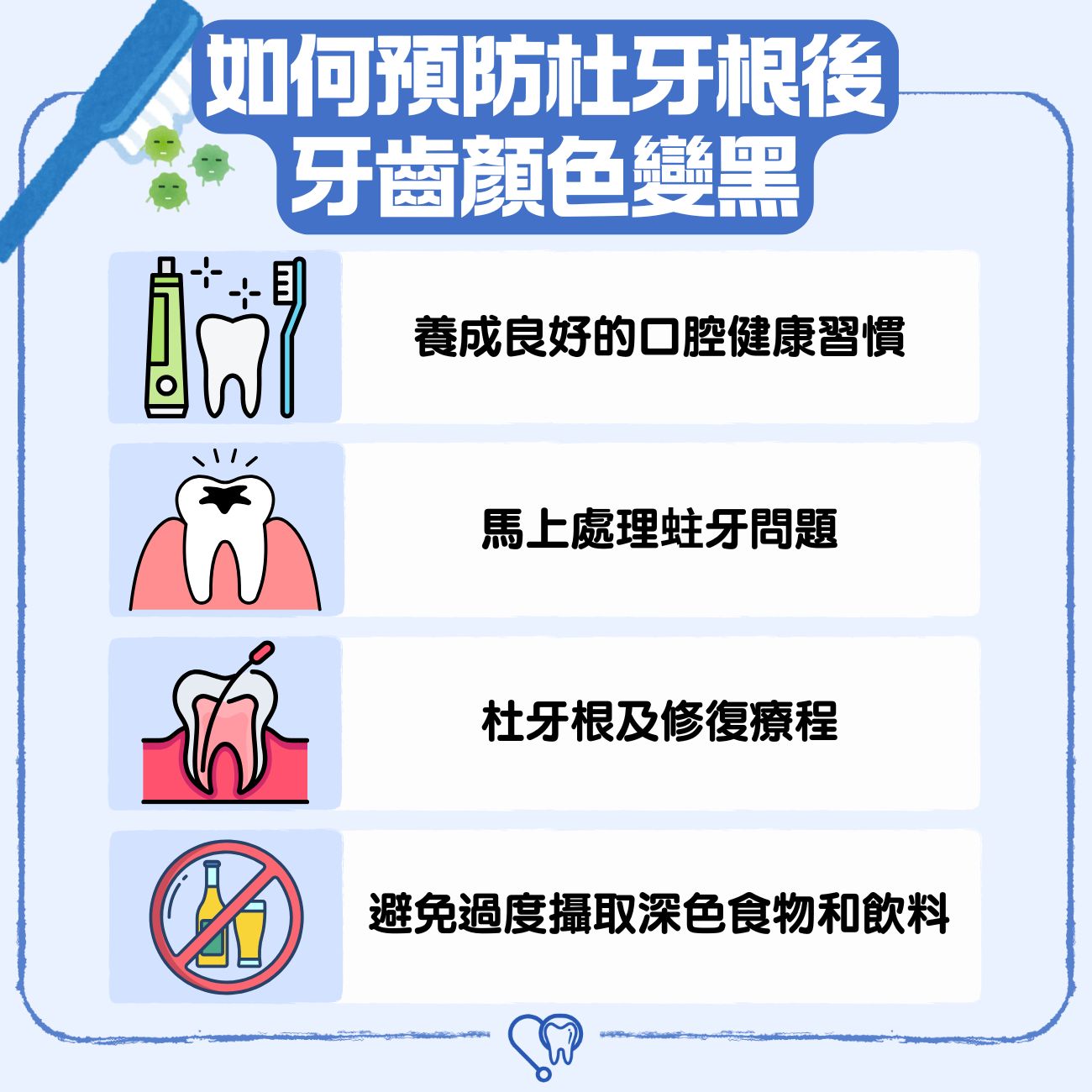
Develop good oral health habits
Brushing twice a day, together with floss or a water flosser, reduces the build-up of plaque and lowers the risk of tooth decay and pulp inflammation, preventing nerve death at its source.
Treat tooth decay promptly
Early tooth decay is almost painless, but the colour may start to darken. Having a filling early at this stage prevents it from getting worse to the point where the nerve needs to be removed.
Root canal treatment and restoration
If a tooth is not suitably restored after root canal treatment, it can easily become discoloured and brittle.
Having a dental crown (cap) fitted promptly after treatment is the key to maintaining the success rate of the root canal treatment and the appearance and function of the tooth.
Avoid too many dark foods and drinks
Coffee, tea, red wine and smoking can all make teeth yellow or black. If they cannot be avoided, it is advisable to rinse your mouth or brush your teeth right after consuming them, to reduce the time the pigment stays on the tooth surface.
FAQ
Will a dead nerve heal on its own?
No. Once the nerve has died, it cannot repair itself. The only way is to have the dead tooth tissue removed through dental treatment.
What should I do if a decayed tooth turns black??
Have a filling as soon as possible, and if the decay is so deep that it affects the nerve, root canal treatment is needed. Do not rely on whitening alone to cover it up, otherwise the problem will become more serious.
Dead tooth nerveIs extraction or an implant always necessary?
Not necessarily. In most cases the tooth can be kept with root canal treatment. Extraction, and then possibly an implant, is only needed when the tooth structure is severely damaged and cannot be restored.
Dead tooth nerve Will it smell?
Yes. A dead nerve and the breakdown of bacteria can produce an odour, and some people notice bad breath or feel there is an unpleasant smell in the mouth.
How long does it take for a tooth nerve to die?
There is no fixed time. It may take a few weeks to a few months, and in some cases it takes years before the nerve dies completely, depending on whether it is caused by tooth decay or injury.
How can I tell if a tooth nerve has died?
Common signs include the tooth turning black or dark, swollen gums, a pimple-like abscess, or a tooth that used to ache but suddenly feels nothing for a long time. If it is not treated in time, the infection will continue to spread towards the root tip, and in serious cases it may even lead to cellulitis. However, the most accurate way is still to have it examined by a professional dentist.
Summary
A blackened tooth is worrying, but it does not necessarily mean it cannot be saved. If you notice an abnormal tooth colour, it is advisable to consult a dentist for an examination, and with treatment function and appearance can be restored in most cases.
Disclaimer
This article is for information only and does not contain any invitation or solicitation. Patients should seek a professional dentist for diagnosis and treatment according to their own circumstances. To find out more or book a service, we recommend contacting the relevant clinic directly. Please choose suitable dental services and clinics carefully yourself.