
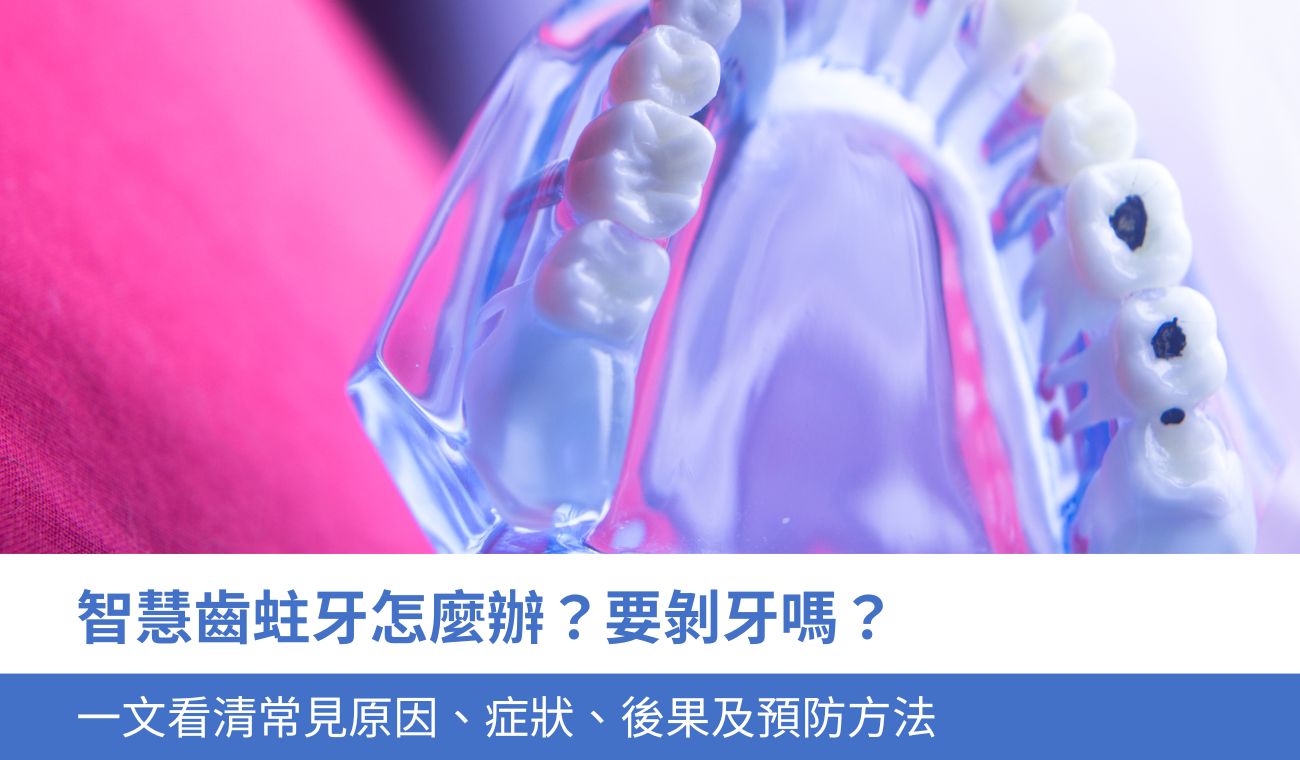
Growing wisdom teethis troublesome? What should I do if a wisdom tooth gets decay? Does a decayed tooth always have to be extracted? This article takes you through the common causes, symptoms, consequences and prevention of wisdom tooth decay. Understand how wisdom tooth decay is dealt with and protect your oral health!
Why are wisdom teeth especially prone to decay?
Wisdom teeth (third molars) are the last group of teeth at the very back of our mouth. Although the name sounds quite clever, they often bring not wisdom but trouble, especially decay.

Position makes cleaning harder
The wisdom tooth is the tooth closest to the throat, and whether with a toothbrush or dental floss, the corner at the back is really not easy to clean.
Many people easily overlook this area when brushing, so over time plaque and food debris build up, leading to decay. If the wisdom tooth has not fully come through, a small pocket forms between the gum and the tooth, which more easily traps dirt.
Malocclusion and crowded teeth
Modern people have smaller jawbones, and when the mouth does not have enough room for the wisdom teeth to grow, it can causeImpacted Wisdom Tooth, such as growing sideways, growing at an angle, or being partly buried in the gum.
In this case not only does food easily get stuck, but it also affects the bite. If it presses on the second molar in front, that healthy tooth may also develop problems.
Incomplete eruption increases room for bacteria to grow
Not every wisdom tooth can come through fully. When only a small part shows, it is quite likely to make it easier for bacteria to grow, increasing the risk of wisdom tooth decay. Andearly tooth decaymay not feel like much, but by the time it hurts it is usually too late to remedy.
wisdom tooth decaycommon symptoms
When a wisdom tooth has decay, there may not necessarily be obvious discomfort straight away in the early stage. But as the decay deepens, several common symptoms begin to appear:
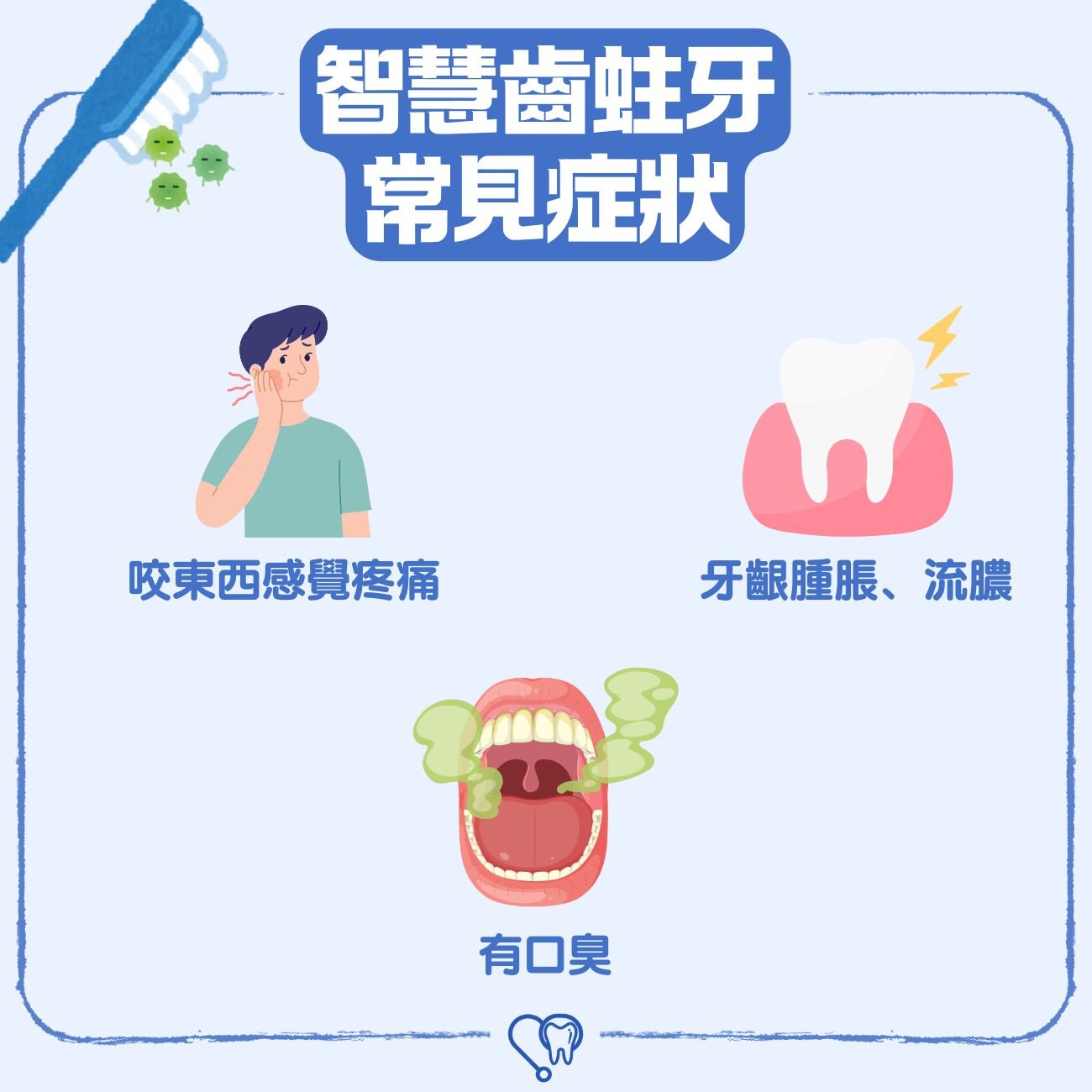
Pain when biting
With wisdom tooth decay, biting causes aching or sharp pain, especially more obvious with hot, cold or sweet foods. The pain may not be obvious at first, but as the decay worsens, the pain becomes more and more frequent and harder to ignore.
Swollen gums, pus and bad breath
If decay is not treated, it can very likely cause local inflammation, leading to red and swollen gums and even pus.
Some people notice when they get up in the morning thatbad breathhas become worse, which may also be caused bywisdom tooth inflammation. If you have the symptoms above, you are advised to consult a dentist for an assessment.
wisdom tooth decayWhat to do? Filling or extraction?
When decay is found in a wisdom tooth, the doctor will judge, based onseverity of tooth decay, the position and growth angle of the wisdom tooth, whether it should be extracted orDental Fillingsis enough.
Mild decay can be filled, depending on position and growth angle
If the decay is very mild, the wisdom tooth has not grown crooked, can be reached with a toothbrush and the bite is fine, then filling can usually be considered.
But note that even if the restoration is successful, this wisdom tooth still needs regular follow-up to make sure there is no further decay or inflammation.
For teeth that are hard to fill or keep getting inflamed, extraction is the better choice
But in reality, most wisdom teeth are in poor positions, hard to clean and prone to causing inflammation.
If the cavity is already hard to repair, and to avoid repeated discomfort or serious problems later, the doctor will mostly recommend extracting the wisdom tooth.
What happens if wisdom tooth decay is ignored?
May affect the neighbouring second molar
Wisdom tooth decay is not an isolated problem. If an impacted wisdom tooth tilts forward, it may affect the tooth in front. The second molar is a main chewing tooth, and damage to it has a greater impact. If the wisdom tooth is stuck there and never cleaned thoroughly, the healthy tooth next to it may also decay.
Repeated inflammation causing discomfort, and even periodontal disease
Untreated wisdom tooth decay often causes swollen and inflamed gums that recur and become chronic, and may even further affect the periodontal tissues. At this point it is not just one tooth that suffers; the health of the whole mouth may be dragged down.
In severe cases, surgical extraction and debridement are needed
If the decay has spread to the pulp, or caused an abscess or infection of the lower jawbone, the gum may need to be cut open and the tooth surgically extracted. This is not only more painful, with a longer recovery period, but also costs more.
However, modern extraction techniques have advanced a great deal, and local anaesthetic is given before the procedure, so you basically do not feel pain during it. Even if there is some bleeding or swelling of the wound after extraction, it can be relieved with painkillers, and usually returns to normal within two or three days.
How to prevent wisdom tooth decay

regular scaling and polishing check-ups
Even if there is no obvious discomfort, it is recommended to have your mouth checked by a dentist every six months, to see whether the wisdom teeth are growing normally and whether there are any hard-to-clean spots.Scaling and PolishingThis not only removes tartar but also detects dental problems early.
Use dental floss and a water flosser
Back teeth are really hard to clean, especially wisdom teeth, for which a toothbrush alone is really not enough. It is recommended to use dental floss or a water flosser every day to help remove food debris in the gaps between the teeth and at the gum margin.
maintain good oral hygiene habits
The most basic and most effective oral care is to make brushing a life habit, and not only to brush "the places you can feel", but not to skip even the wisdom tooth area at the very back.
Brushing before bed is especially important, and combining it with fluoride toothpaste and mouthwash can prevent oral problems more effectively.
Summary
Not everyone has problems with wisdom teeth, but once there is decay or inflammation, they become a big trouble that makes people miserable. Decay may have no symptoms in the early stage, and by the time you seek help because the pain is unbearable, it is often already too late. Rather than remedy it afterwards, it is better to prevent it well from the start and have regular follow-ups. Regular check-ups help detect dental problems early.
Further reading:What are wisdom teeth? Is it normal not to have wisdom teeth? Growth time, extraction situations and common questions all answered at once
Disclaimer
This article is for information only and does not contain any invitation or solicitation. Patients should seek a professional dentist for diagnosis and treatment according to their own circumstances. To find out more or book a service, we recommend contacting the relevant clinic directly. Please choose suitable dental services and clinics carefully yourself.



