
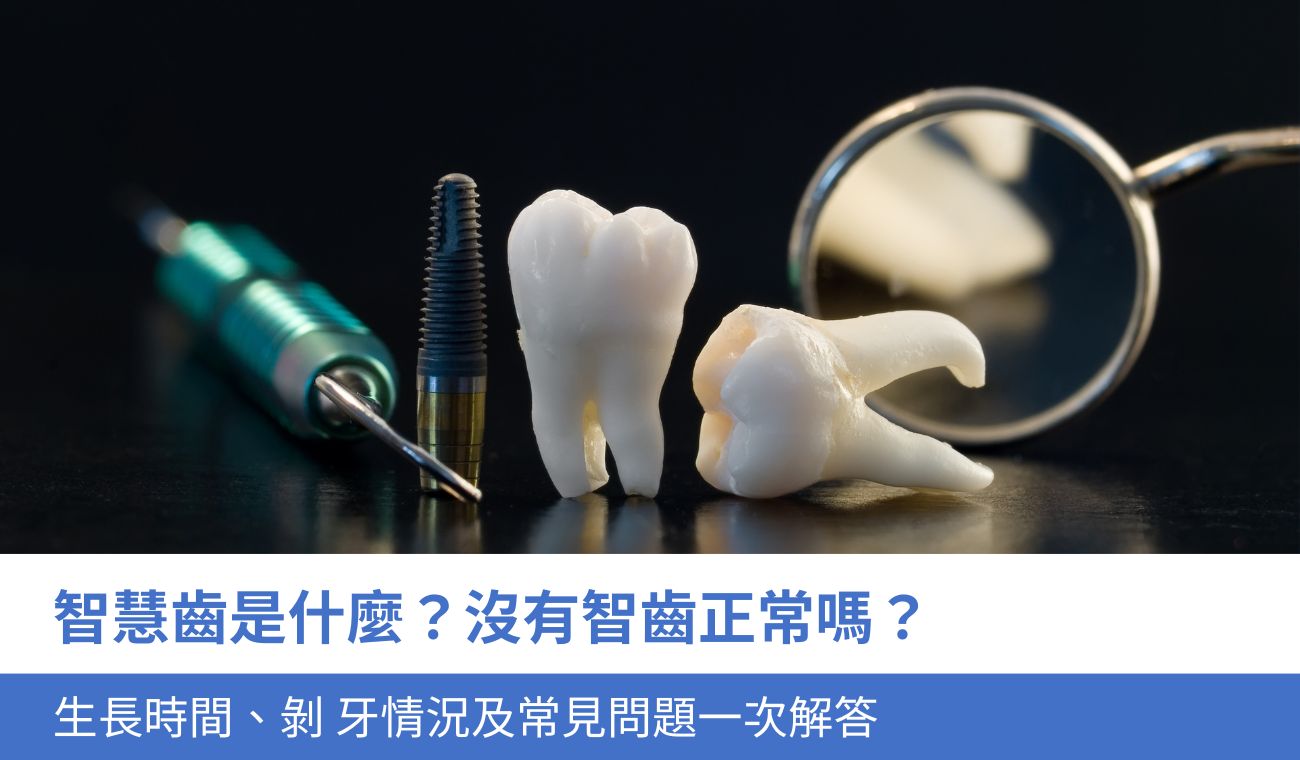
Wisdom teeth are third molars that come through relatively late in the mouth. When growing space is limited they easily become impacted, inflamed or decayed, and whether they need to be removed depends on the individual situation.
Key points of this article
- Wisdom teeth are third molars that come through relatively late in the mouth, and the number varies from person to person
- Insufficient growing space easily leads to problems such as impaction, inflammation or decay
- Discomfort from early eruption and pathological inflammation need to be judged separately
- Whether removal is needed depends on growth direction, how hard the tooth is to clean and the effect on neighbouring teeth
Are you experiencing discomfort from your wisdom teeth? This article sets out what wisdom teeth are, how they grow, why they become impacted, and how to tell early eruption from inflammation, to help you understand the oral problems wisdom teeth may cause and judge when further treatment is needed.
Wisdom teeth:what are they?
The name, number and growth position of wisdom teeth vary from person to person, and none of these is a health problem in itself; what really needs attention is whether the wisdom tooth has enough space to come through normally. This is also the key starting point for later problems such as impaction, inflammation and decay.
Origin of the name wisdom teeth, and their function
Wisdom teeth usually come through from the age of 10-odd to around 20, which is why there is a saying thatthey grow in when you grow up and become wiser, but from a dental point of view, wisdom teeth have no special function in themselves and are not necessarily helpful for the bite.
In ancient times, diets were harder and chewing demands were high, so wisdom teeth did have a use; but with modern refined diets and smaller jawbones, the growing space for wisdom teeth has become narrow, and they instead easily cause problems.
How many wisdom teeth are there?
In theory, everyone can have at most four wisdom teeth, one in each of the upper and lower, left and right positions, but in practice it varies from person to person. Some people grow only one or two, some have all four, and some have none at all. These are all normal, and are mainly related to genes, jawbone development and the space in the dental arch.
Where wisdom teeth grow
Position of wisdom teethThey sit at the very back of the arrangement of teeth, and if both upper and lower rows grow in fully, they take up the last slot in the mouth. Because the space is narrow, if the growth direction is wrong or there is not enough space, impaction or horizontal positioning easily occurs.
When do wisdom teeth come through??
Most people's wisdom teeth come through between the ages of 17 and 25, but some people start to show signs at 14 or 15. During this period jawbone development is roughly complete and teeth come through one after another, but not everyone's wisdom teeth come through on schedule, and some people may never get them in their lifetime.
Is it normal to get wisdom teeth at age 12?
Wisdom tooth-related symptoms at age 12 are indeed early, but the possibility cannot be ruled out. In some people tooth development is faster, and X-rays may already show the wisdom tooth bud forming, but actual eruption usually still takes several years.
Is it normal not to have wisdom teeth? Will wisdom teeth always grow?
Not growing wisdom teeth is not uncommon and is related to genes. Modern people have less space in the jawbone, and some people are born without wisdom tooth buds, which means they will never grow wisdom teeth. This is a normal individual difference.
Wisdom teeth:Is impaction common?
Wisdom tooth impaction is quite common, mainly because of insufficient growing space or a wrong growth direction. Because wisdom teeth sit deep and are hard to clean, the chance of decay or inflammation following impaction is also higher than with impaction of other teeth.
Wisdom tooth impaction means the tooth is blocked as it comes through, stuck by gum, bone or other teeth so that it cannot come out normally. Because wisdom teeth sit further back in the mouth with limited growing space, they are more prone to impaction than other teeth.
The most common cause of impaction is lack of space, so the tooth has no room and can only come through at an angle or sideways. A wrong growth direction, jawbone development problems, or long-term lack of regular monitoring may also let impaction persist, leading to inflammation or gum swelling and pain.
In the early stage of wisdom tootheruption, what does it feel like?
The discomfort of early wisdom tooth eruption is usually just local gum sensitivity, slight redness and swelling, or a tight feeling when chewing. It is part of normal growth and does not necessarily mean inflammation or infection.

Tooth Sensitivity
When wisdom teeth start to come through, some people feel a slight ache in the back teeth area and become more sensitive to hot and cold. This is because the gum is being pushed apart and the tooth nerve is starting to feel things.
Red, swollen gums and pain
This is a common early symptom. As the wisdom tooth comes through it irritates the surrounding gum, which may become red, swollen and locally painful, and sometimes you can feel a lump or a feeling of fullness at the back of the mouth.
Discomfort when chewing and difficulty opening the mouth
If the inflammation is more marked, biting is a little painful and even opening the mouth feels tight, which means the inflammation may already be affecting the jaw muscles. If symptoms keep worsening, or come with fever or pus, it may already have progressed to inflammation.
Common dental problems caused by wisdom teeth
These three kinds of problems are often interlinked: cleaning blind spots easily cause both decay and gum inflammation; horizontal growth, besides pressing directly on the neighbouring tooth, also increases cleaning blind spots, creating a vicious circle. Dealing with one of them early usually lowers the chance of the others occurring.
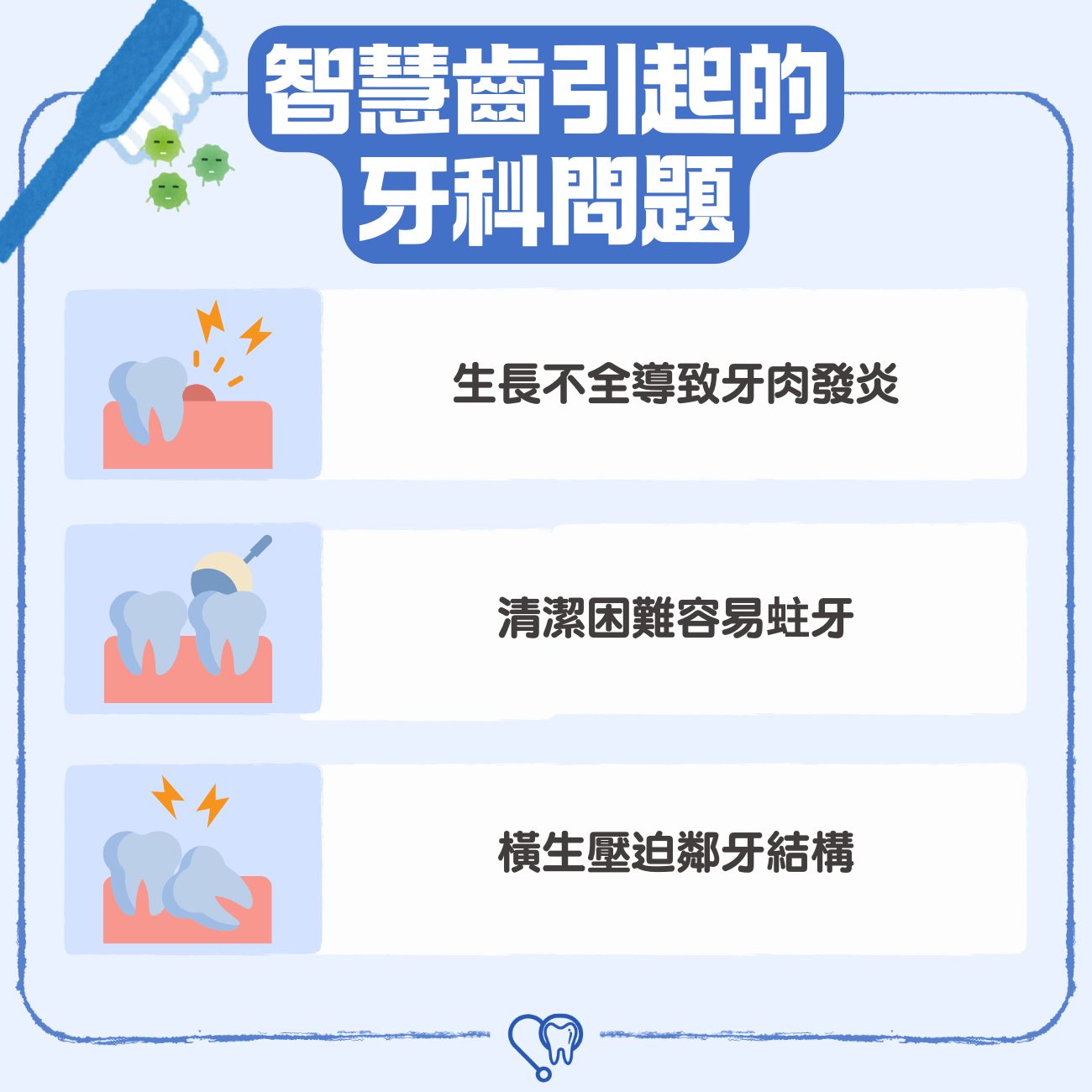
Incomplete eruption causing gum inflammation
Impacted wisdom teeth often show only a small part, with the gum pushed apart but the tooth unable to come through fully. This state easily accumulates bacteria and causes pericoronitis, and if not dealt with, the inflammation may keep spreading. To understand the full symptoms and management of inflammation, seeSymptoms and causes of wisdom tooth inflammation.
Difficulty cleaning leads to decay
Wisdom teeth sit further back in the mouth where a toothbrush cannot easily reach, and being hidden away, food debris and bacteria easily build up in the gap between the tooth and the gum, which over time may lead totooth decay, periodontal disease, and sometimes even the neighbouring second molar is affected.
Horizontal growth pressing on neighbouring tooth structure
If a wisdom tooth grows horizontally or at a wrong angle, it puts pressure on the tooth in front, which may cause the neighbouring tooth to loosen, root resorption, and even affect tooth alignment and the bite. To understandhow impacted wisdom teeth are managed, including horizontal cases, you can read further.
Wisdom teeth:prevention and treatment recommendations
The principle for managing wisdom teeth is to observe first and then decide whether to treat depending on the situation: prevent problems day to day with regular check-ups and good cleaning; once growth starts to affect oral health, early treatment is usually simpler than continuing to wait.
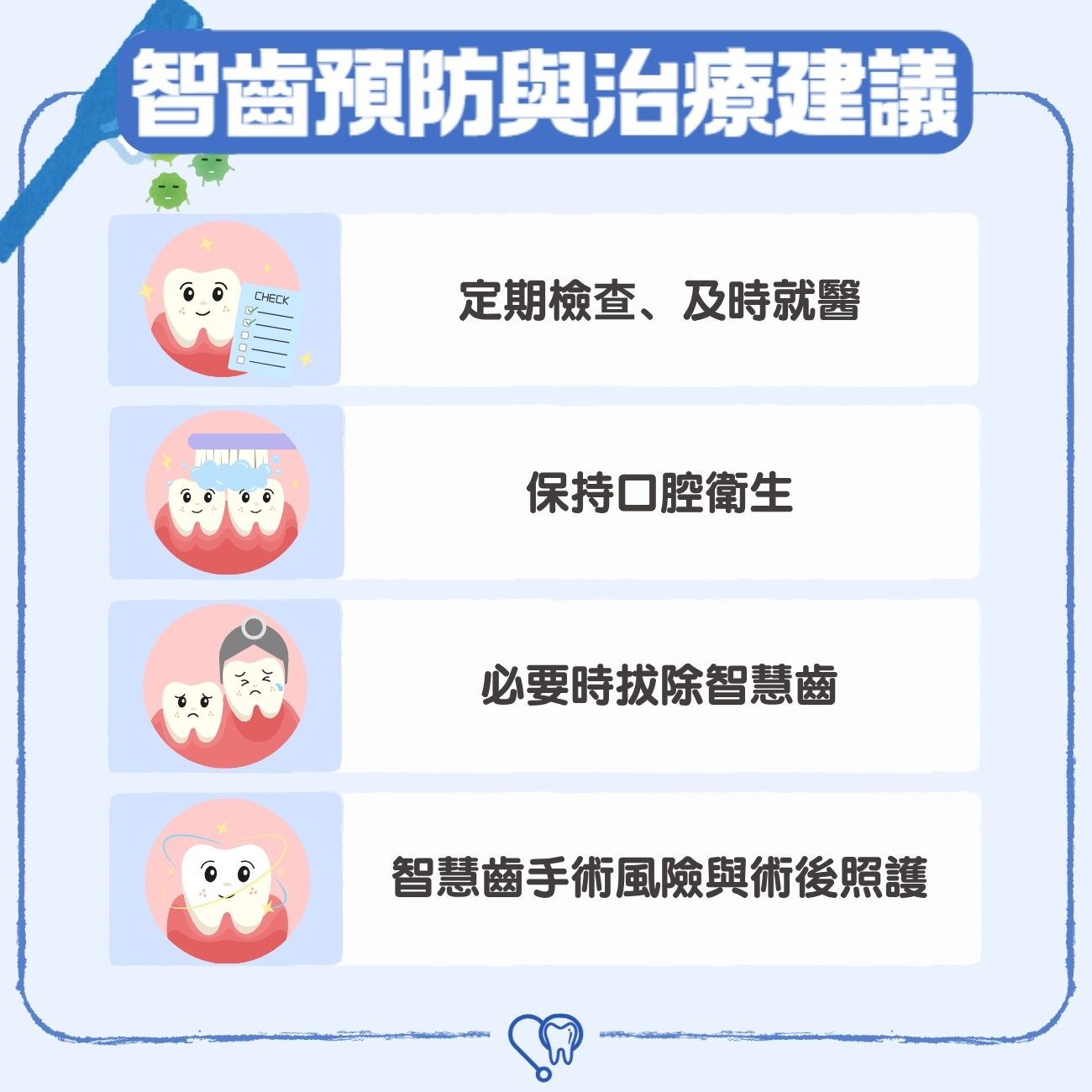
Regular check-ups and timely medical attention
Regular dental check-ups and X-rays are an effective way to understand how wisdom teeth are growing. It is recommended to build up dental imaging records in the teenage years, so that whether treatment is needed can be judged early, before the wisdom teeth have fully come through.
maintain oral hygiene
Cleaning around wisdom teeth is harder, so it is recommended to use dental floss or interdental brushes to strengthen cleaning and avoid food debris building up between the teeth and gums. You can also use antibacterial mouthwash to lower the risk of inflammation.
Removing the wisdom tooth when necessary
Not every wisdom tooth needs to be removed, but if the growth direction is abnormal, or it causes toothache, inflammation, decay or pressure on other teeth, the dentist will usually recommend removal, and the timing of treatment affects how complex it is afterwards.
Risks of wisdom tooth surgery and aftercare
If a wisdom tooth is impacted or in a complex position, surgical removal may be needed. For a complete explanation of the surgical procedure, aftercare and after-effects, seearticle on wisdom tooth extraction; if you want to know more about the specific number of days of recovery and activity restrictions, seeRecovery time after wisdom tooth surgery.
Want to learn more about other wisdom tooth questions?
If you are going through different situations with your wisdom teeth, you can refer to the following articles to understand them in more depth:
- Persistent pain; want to know how to relieve it or judge whether to have the tooth removed → Pain relief for wisdom tooth pain and when to extract
- Gums already red, swollen and pus-filled, with fever or difficulty opening the mouth → Symptoms, causes and management of wisdom tooth inflammation
- Horizontal or impacted wisdom tooth; want to know how it is managed → how impacted wisdom teeth are managed
- Worried about the cost of wisdom tooth treatment → Factors affecting wisdom tooth extraction fees
- Already decided to have the tooth removed; want to understand the full procedure, after-effects and aftercare → Wisdom Tooth Extraction
FAQ
How long does pain last while wisdom teeth are coming through? How can it be relieved?
Some people only have slight discomfort when a wisdom tooth comes through, while others have pain on and off for several days or even a week or two. In the early stage you can apply cold compresses and use painkillers; if it keeps recurring or affects eating, it is advisable to see a dentist to assess whether to remove the tooth.
When should a wisdom tooth be removed?
If there is no obvious discomfort at present, but regular check-ups or X-rays show that the growth direction of the wisdom tooth is abnormal and it may press on a neighbouring tooth or be hard to clean in future, the dentist will sometimes recommend preventive removal, and it is not always necessary to wait until symptoms appear.
Can wisdom teeth be removed during pregnancy?
Tooth extraction is generally not recommended during pregnancy, especially in the first three months and the last three months. However, if inflammation is severe and affects the pregnant woman's health, relatively safe treatment may also be arranged in the second trimester (months 4–6) after assessment by a dentist.
Is it okay to have wisdom tooth pain but not want to have it removed?
If it is only temporary discomfort, it is sometimes indeed not necessary to remove it right away. But if the pain persists, inflammation keeps recurring or it affects daily life, continuing to delay usually does not let the condition improve by itself, and it is advisable to have the dentist assess before deciding.
Are there after-effects or complications from wisdom tooth extraction?
In most cases recovery from wisdom tooth extraction goes smoothly, but a few people may still have swelling, bleeding, infection, ordry socketand so on. For the complete explanation of after-effects and aftercare notes, seeA full analysis of the after-effects of wisdom tooth extraction.
Summary
Whether a wisdom tooth needs treatment depends on its growth direction, how hard it is to clean and whether it affects neighbouring teeth, and not simply on whether there is obvious discomfort. Regular check-ups let you keep track of how wisdom teeth are growing early, and if you are still undecided about whether to remove one, having the dentist assess before deciding is more accurate than judging by yourself.
Article last updated: 2026-09
Disclaimer
This article is for information only and does not contain any invitation or solicitation. Patients should seek a professional dentist for diagnosis and treatment according to their own circumstances. To find out more or book a service, we recommend contacting the relevant clinic directly. Please choose suitable dental services and clinics carefully yourself.



