
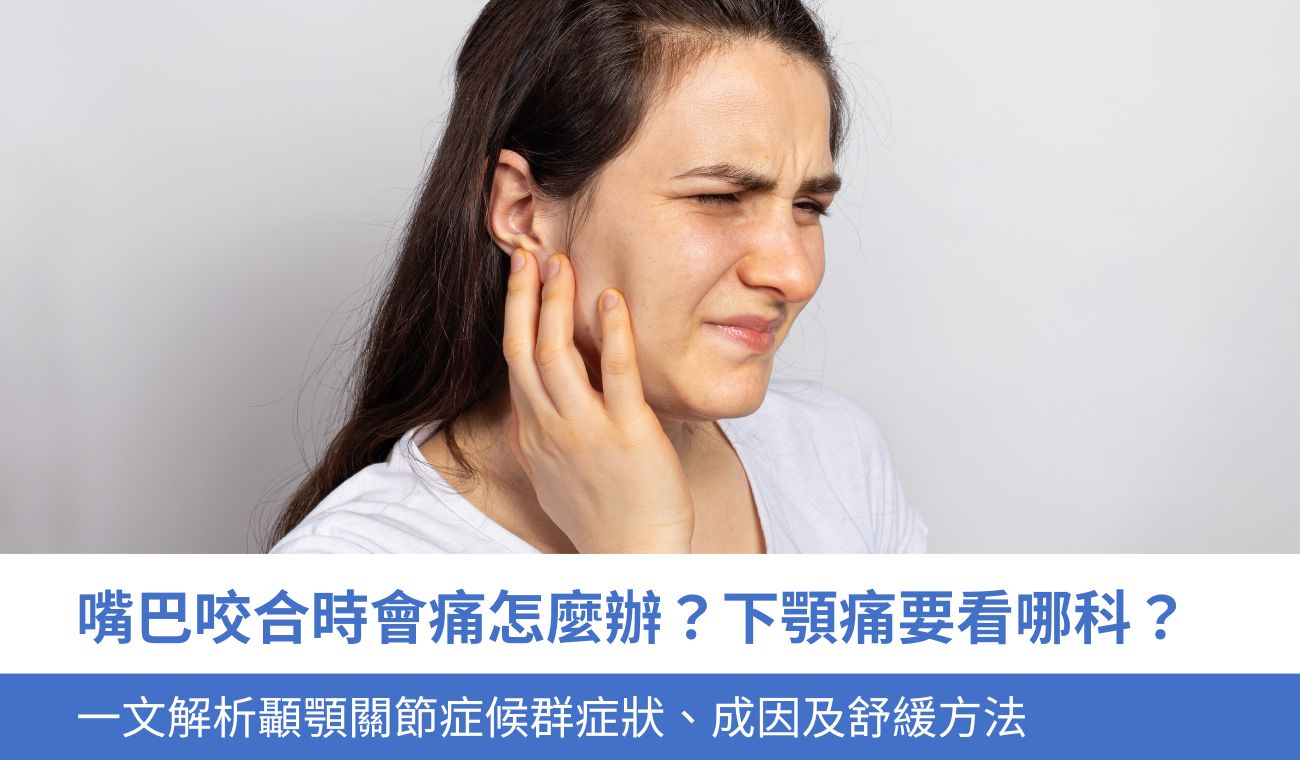
Pain when biting down, pain when chewing: what should you do? Beware, it may be temporomandibular joint disorder! This article analyses the causes and symptoms of lower jaw pain, which specialty to see for temporomandibular joint arthritis, and how to self-assess, to help you find the right direction for seeking care and relieve the discomfort.
Mouth pain and lower jaw pain: what is going on? First understand the temporomandibular joint (TMJ)
Sometimes it hurts to chew and your chin aches, you cannot open your mouth wide when yawning, or your jaw makes clicking sounds when eating. Have you come across these?
In fact, these may all be linked to a common but often overlooked problem, namely temporomandibular joint disorders (Temporomandibular Joint Disorders, abbreviated TMD).
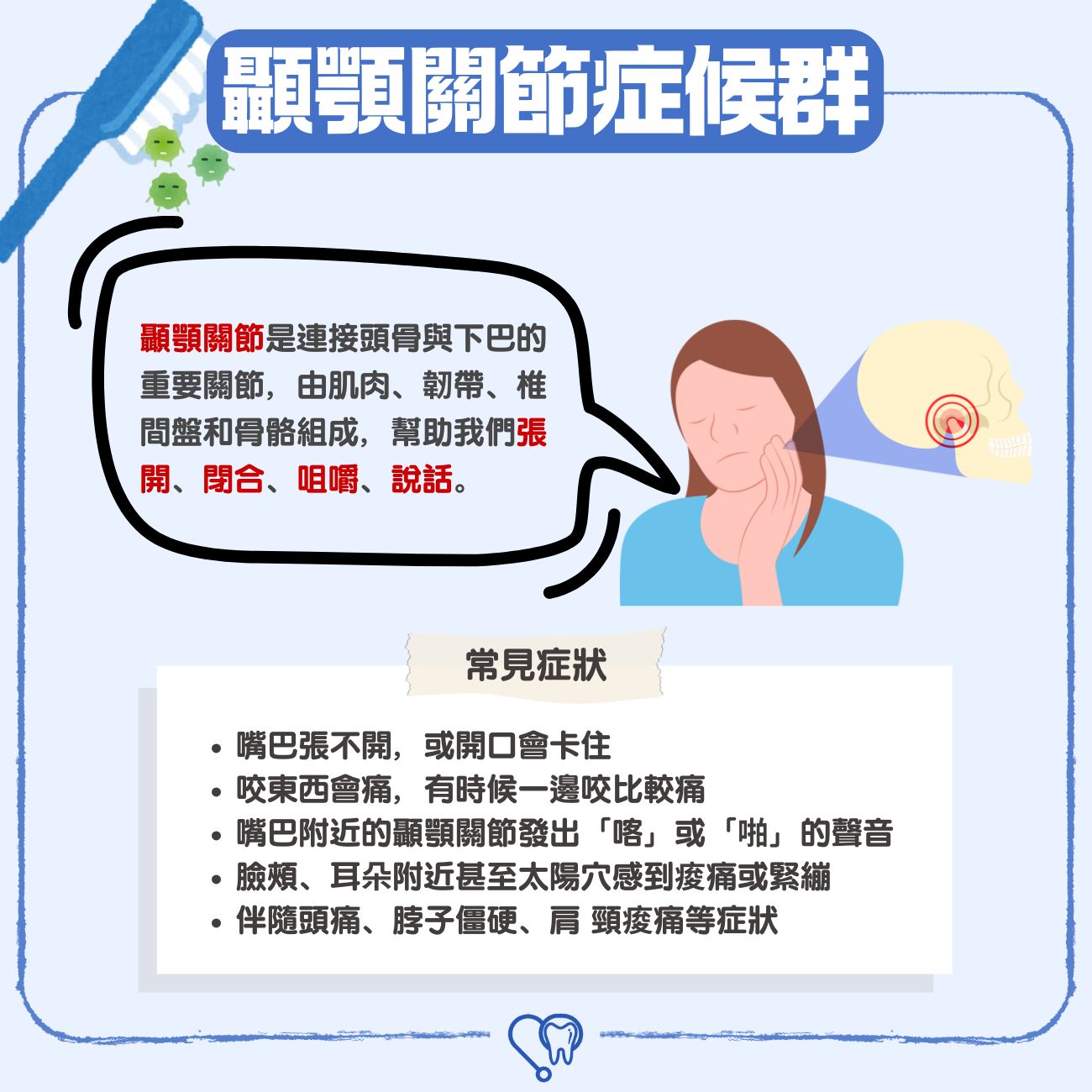
The temporomandibular joint (The Temporomandibular Joint, commonly called the jaw joint) is an important joint connecting the skull and the lower jaw, a complex system made up of muscles, ligaments, discs and bone, helping us open and close the mouth, chew and speak.
When this joint has a problem, there may be pain, a sense of catching, joint noises, and even discomfort in the whole face. This discomfort is not limited to the lower jaw, and may spread to the ear, the cheek and even near the temple, which is very troublesome.
temporomandibular joint syndromecommon symptoms
Temporomandibular joint disorders present in many ways. Besides pain around the chin, the most common symptoms may also include:
- Being unable to open the mouth, or the mouth catching when opening
- Pain when biting, sometimes worse when biting on one side
- The temporomandibular joint near the mouth makes a "click" or "pop" sound
- Aching or tightness in the cheeks, near the ears and even the temples
- Accompanying symptoms such as headache, neck stiffness and aching shoulders and neck
Some people mistake it for a simple toothache, and after seeing a dentist find the teeth are fine, when the problem is actually in the temporomandibular joint.
Chin pain, pain in the cheek near the ear: could it be temporomandibular joint arthritis?
If you feel a stabbing pain, swelling or even a feeling of warmth in the cheek near the ear when biting or talking, it may be inflammation of the temporomandibular joint.
This inflammation is sometimes chronic damage caused by long-term malocclusion, excessive stress, or even habitualteeth grindingor clenching of the teeth, and may also be acute inflammation caused by a sudden external force or opening the mouth too wide.
Inflammation of the temporomandibular jointwhat are the symptoms?
When the temporomandibular joint is inflamed, slight fluid build-up or swelling occurs inside the joint capsule, causing difficulty moving and pain. Some people think it is an ear infection; in fact the joint is very close to the ear, and when it hurts it is really hard to tell them apart.
Ear pain is not necessarily otitis media; it may also be a problem with the temporomandibular joint. If the ear hurts but hearing is fine, there is no fever or pus, and it is especially obvious when biting, it is more likely to be a joint problem than a disease of the ear itself.
However, if you are not sure, it is still recommended to have a professional doctor check, to avoid misdiagnosis.
Will temporomandibular joint disorders go away by themselves? Related symptoms and causes
Many people ask: "Will temporomandibular joint disorders go away by themselves?" In fact, how well it recovers depends greatly on the cause and lifestyle habits.
Mild symptoms can sometimes slowly improve through rest, hot compresses and changing chewing habits. But if it has not got better after some time, or the condition keeps recurring, it should no longer be delayed.
Can mild cases relieve by themselves?
If there is only occasional mild discomfort, for example the lower jaw feels a bit tight on waking but is fine after moving about, this kind of situation may just be temporary muscle tension, which can usually be relieved by relaxation exercises or avoiding hard foods.
Warning signs that need professional treatment
But if any of the following occur, it is recommended not to wait and to ask a dentist or specialist doctor for help directly:
- Constant pain when biting
- Being unable to open the mouth wide or the mouth catching
- Pain lasting more than two weeks
- Affecting eating, speaking and even sleep
If it is left alone and ignored, the joint will not only become stiffer and stiffer, but even the lower jawbone may wear down, which may lead to permanent joint degeneration.
What is worse, an imbalanced bite may also affect the overall face shape and tooth alignment, making later treatment more troublesome.
lower jaw painwhat other causes are there?
Although the temporomandibular joint is one of the main causes, lower jaw pain may also be related to other problems:
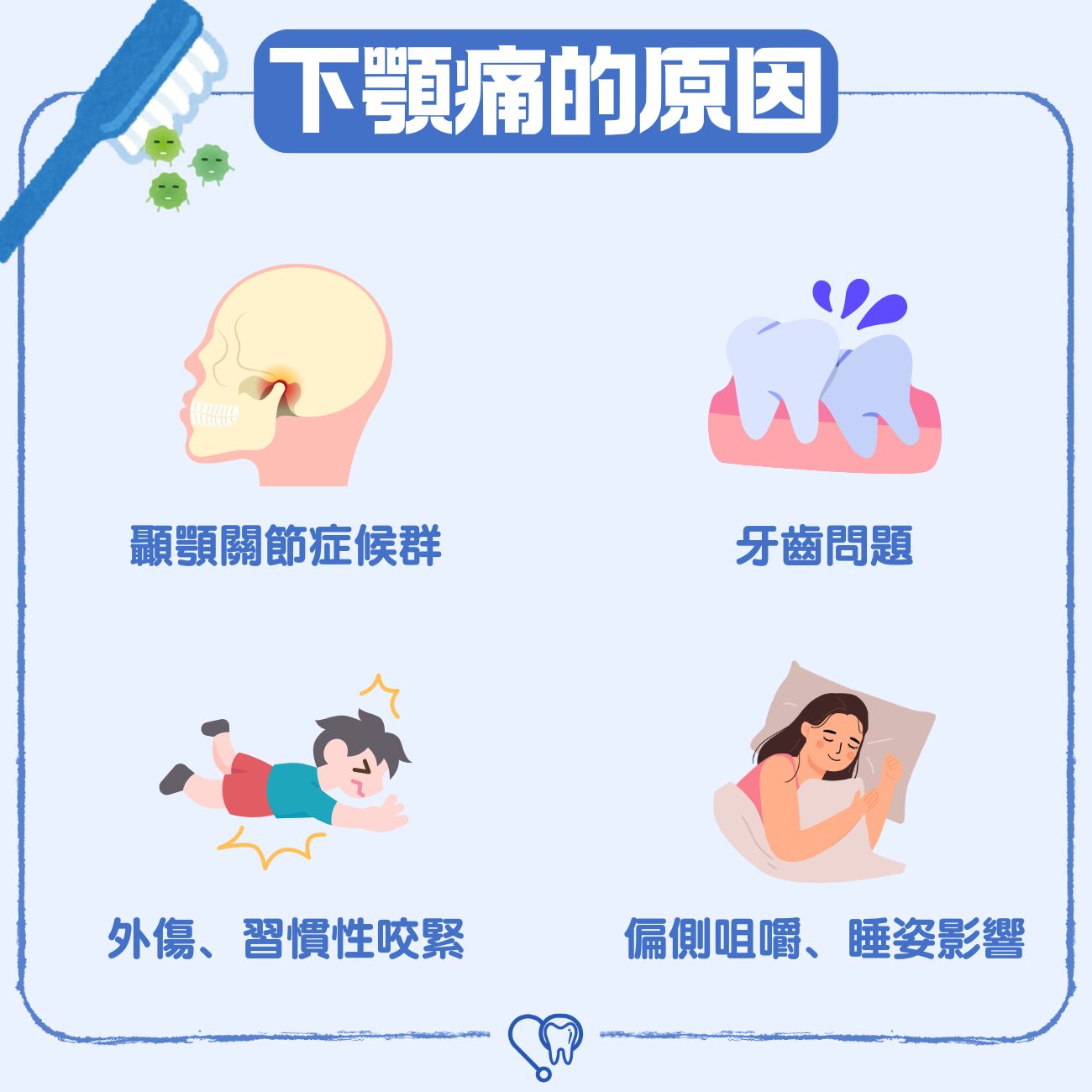
Dental problems (wisdom teeth, tooth decay, abnormal bite)
Impacted Wisdom Tooth, decay that is too deep, or an upper and lower bite that does not meet properly can also put uneven pressure on the lower jaw and cause pain. Such problems can usually be found through CT scans and X-ray examination.
Trauma, habitual clenching
A past fall hitting the chin, after-effects of a car accident, or teeth grinding and clenching caused by long-term high stress can all make the lower jaw muscles overused and cause pain.
One-sided chewing and sleeping posture
Some people habitually chew only on one side, or habitually sleep on their side pressing on the chin. Over time, these habits also make the two sides of the lower jaw bear uneven force, causing discomfort.
One-sided lower jaw pain vs pain on both sides: what is the difference?
One-sided pain is usually caused by unbalanced chewing habits, dental problems or inflammation of the joint on one side. Pain on both sides is more common with general joint inflammation, a habit of grinding teeth at night, or muscle fatigue caused by a misaligned bite of the lower jaw.
If it is only occasional aching and you can eat normally, it may just be a temporary problem. But if the pain persists, makes eating inconvenient or affects closing, it is recommended to seek medical attention as soon as possible.
lower jaw painWhich specialty should you see?
The causes of temporomandibular joint pain may involve ENT, psychiatry, dentistry, Traditional Chinese Medicine and other fields, and many people get stuck at this step, not knowing which specialty to see. In fact, you can judge as follows:
If you feel your bite is strange, you cannot open your mouth, or it hurts to bite, these are usually related to the jaw joint, and it is recommended to see a dentist first. If there is pus from the ear, fever or worsening hearing, it is more in the ENT area.
Temporomandibular joint problems are best diagnosed by a specialist dentist
Not every dental clinic has experience in handling TMJ, so it is recommended to look for an experiencedspecialist dentist, or even oral and maxillofacial surgery or restorative dentistry, which will be more accurate.
How can you relieve temporomandibular joint discomfort and lower jaw pain?
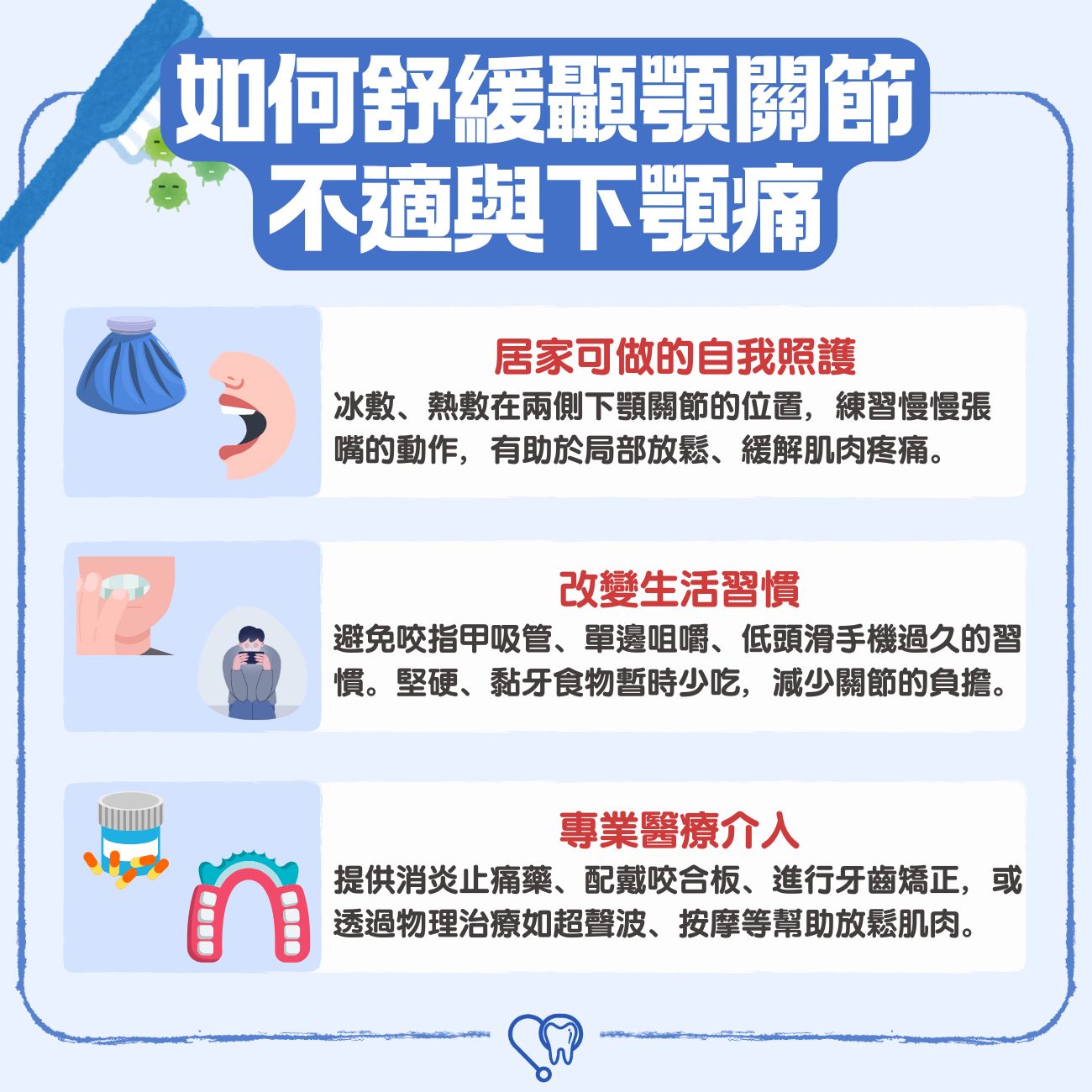
Self-care you can do at home
The most basic are cold and hot compresses. You can use an ice pack or a hot towel on the positions of the joints on both sides of the lower jaw for about ten minutes, which helps local relaxation and relieves muscle pain.
If the joint feels a bit stuck, you can also practise slowly opening the mouth, without pulling it open too hard. Just open gently and softly a few times, so that the joint gets used to this range of movement.
From diet to posture: these lifestyle habits need to change
Avoid everyday careless bad habits such as nail biting, biting straws and chewing gum, which in fact keep the lower jaw tense for long periods. Chewing on one side and looking down at the phone for too long may also have knock-on effects, and over time will worsen temporomandibular joint pain and inflammation.
In terms of diet, eat less for now of hard, sticky foods such as beef jerky and peanut candy, to reduce the burden on the joint.
Professional medical intervention
The doctor may provide anti-inflammatory painkillers,, wearing an occlusal splint, orthodontic treatment, or physiotherapy such as ultrasound and massage, to help relax the muscles and improve the range of joint movement.
From the perspective of Traditional Chinese Medicine treatment, acupuncture or massage is often used on acupoints on the head and face such as Touwei, Xiaguan and Jiache, or Hegu on the hand and otheracupoints, to unblock the meridians and collaterals and relieve Temporomandibular joint disorders.
Summary
Lower jaw pain is not a small matter, especially when it affects our eating, speaking and even sleeping, when it cannot be ignored. Although temporomandibular joint disorders are common, with early detection and appropriate treatment, they can in fact improve very well. Stop ignoring the warning signs from your mouth; pain is not normal, but the body reminding you that "it is time to deal with it!"
Disclaimer
This article is for information only and does not contain any invitation or solicitation. Patients should seek a professional dentist for diagnosis and treatment according to their own circumstances. To find out more or book a service, we recommend contacting the relevant clinic directly. Please choose suitable dental services and clinics carefully yourself.



