
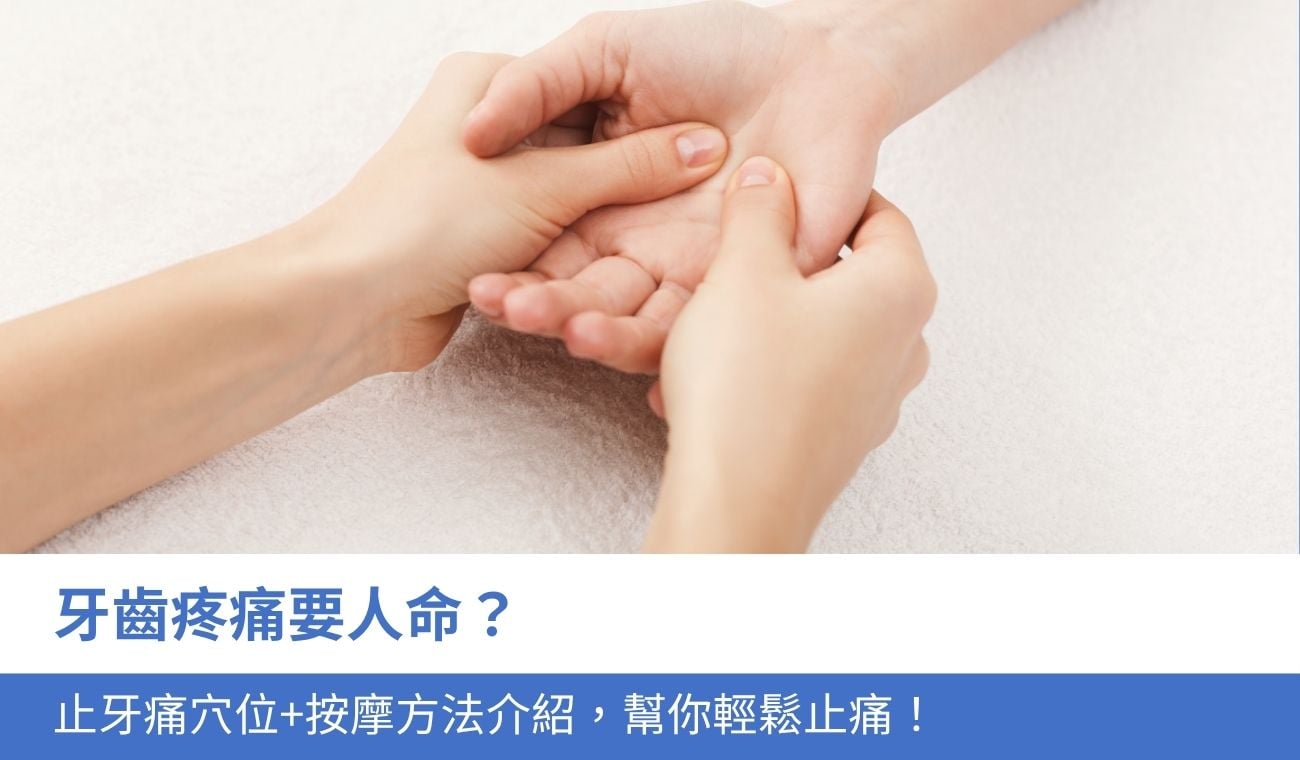
For a toothache, you can press acupoints such as Hegu (LI4), Jiache (ST6), Xiaguan (ST7) and the toothache point for 3 to 5 minutes to relieve the pain temporarily. If the pain lasts more than 24 hours, or there is swelling or fever, see a dentist as soon as possible.
Toothache acupointsCan they relieve pain? A Traditional Chinese Medicine meridian perspective
"A toothache isn't a disease, but when it hits, it's unbearable!" You must have heard this saying too.
Many people think of taking painkillers first when they have a toothache, but in Traditional Chinese Medicine theory each tooth has a fixed meridian, and different toothache locations and oral conditions are said to reflect different organ disorders. Pressing suitable points can relieve the pain temporarily.
These points are mainly located on the hands, face and head, and by stimulating the meridians they can help promote the circulation of qi and blood and so relieve pain.
Traditional Chinese Medicine holds that the teeth belong to the "bone" and are related to the kidney, stomach and large intestine meridians, so when treating a toothache, points related to these meridians are chosen.
The following reflects traditional Chinese medicine theory and is not a recommendation of modern evidence-based dentistry.
5 common acupoints for toothache relief + massage methods
Here are several acupoints commonly used in Traditional Chinese Medicine for toothache relief, with their locations and simple massage methods, as a first-aid measure when a toothache strikes suddenly.
Hegu point (LI4)
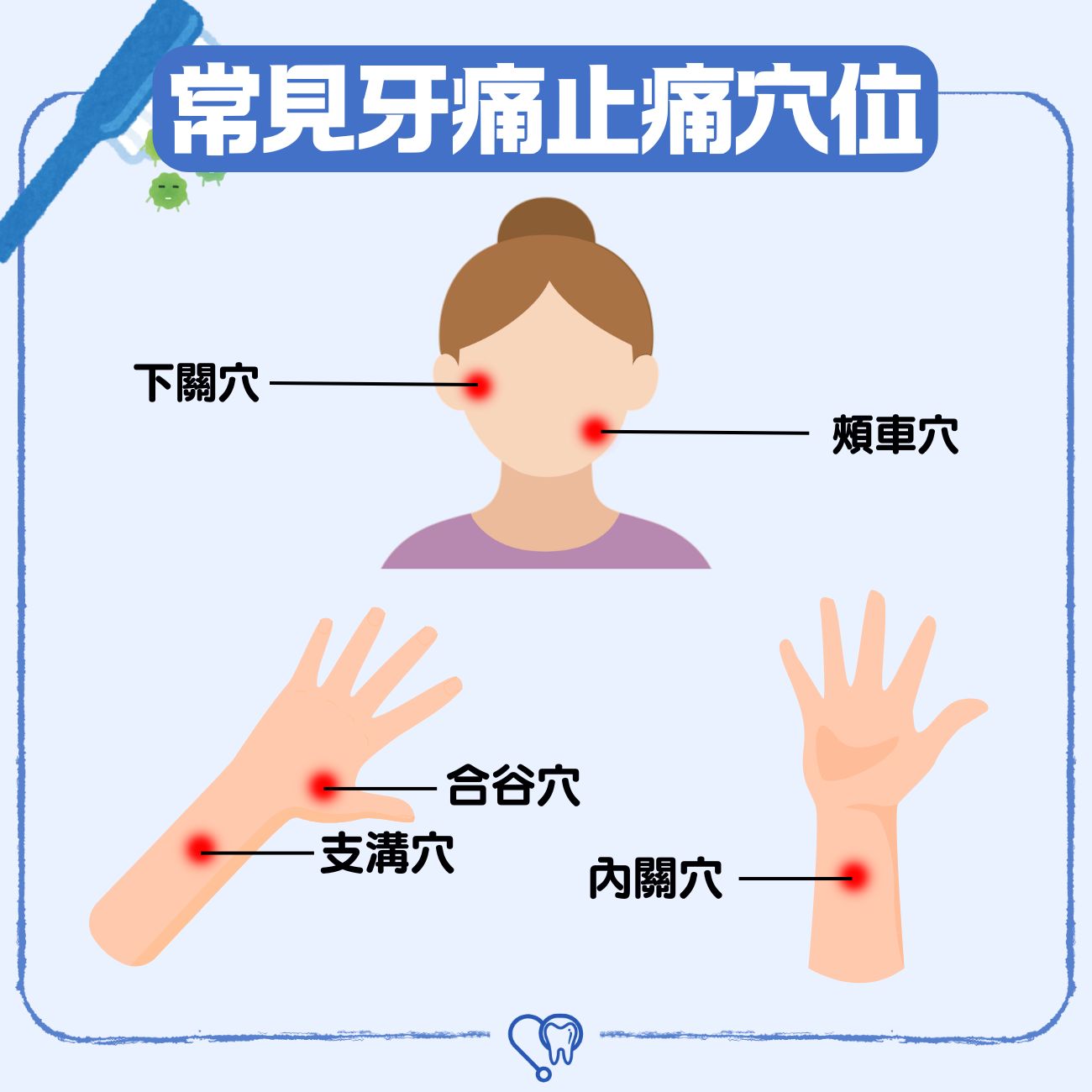
The Hegu point is on the back of the hand at the web between the thumb and index finger, that is, where the muscle bulges most when the thumb and index finger are spread apart. It belongs to the Large Intestine Meridian of Hand-Yangming and is the one most often mentioned for relieving toothache.
When massaging, press with the thumb of the other hand for 3 to 5 minutes, and you will feel a slight soreness or distension. The Hegu point not only relieves toothache, but is also often used to ease headaches, migraines or the discomfort of fever.
Jiache point (ST6)
The Jiache point is located at the lower edge of the cheek. When you clench your teeth, you can feel a raised muscle point at the angle of the lower jaw, and that is where the point is.
This location is close to the teeth and gums, so it is especially effective forswollen and painful gumsand toothache. When massaging, apply slight pressure with the middle or index finger and hold for a few minutes, which usually lowers the local discomfort.
Xiaguan point (ST7)
The Xiaguan point is in front of the ear. When the mouth is open, you can feel a depression at the joint.
It belongs to the Stomach Meridian of Foot-Yangming and is commonly used to relieve toothache and jaw joint discomfort, and is even helpful for facial spasms. When massaging, press lightly with the index finger and make small circular movements to help ease local tension.
Toothache point (extra point)
As the name suggests, this is an extra point specifically for toothache, located on the back of the hand in the depression between the second and third metacarpal bones.
This point does not belong to the twelve meridians, but is often used to relieve toothache. When pressed, there is an obvious sore, numb feeling on the back of the hand, and 2 to 3 minutes is enough.
Other points to consider (Zhigou, Neiguan and others)
Besides the common points above, Traditional Chinese Medicine sometimes also uses the Zhigou point (back of the forearm) or the Neiguan point (inner side of the wrist) as an aid to treatment.
These points are said to help regulate the flow of qi and blood, and also offer some relief for red, swollen gums or toothache caused by excessive "heat" or digestive problems.
Important reminder: acupressure is only a temporary first-aid measure. If the pain is severe, see a dentist early!
Although acupressure can bring some relief for a toothache, it is not a fundamental way of treating dental disease.
Many toothaches actually come from swollen gums, tooth decay or periodontal disease. If you only delay by pressing acupoints, the condition may well get worse, and you may even need toExtraction. So if a toothache keeps coming back or lasts too long, you should see a dentist promptly and let them find the root cause and treat it.
FAQ
Can I press acupoints often to relieve toothache?
Acupressure is a non-drug supportive approach, and using it often over a short period is generally not a big problem. But if toothache occurs frequently, it means the teeth or periodontal tissue already have a problem, and you cannot rely on acupressure alone; a dental examination is still needed.
Is acupressure for pain relief also suitable for children and older people?
Most acupressure is gentle, so in theory children and older people can try it too. However, take care not to press too hard, and it should be done with the help of an adult or an experienced person, to avoid injury to the skin or muscles.
How long does the pain relief from acupressure last?
The pain relief from acupressure is mostly temporary and may last from a few minutes to an hour or two, varying from person to person. If the cause of the toothache is severe tooth decay or infection, the effect will be even shorter and may not fully relieve the pain.
Summary
Acupressure can indeed help ease discomfort briefly when you have a toothache, and it is a first-aid method that needs no medication. However, it only relieves symptoms and does not actually treat dental disease. If toothache occurs frequently or keeps getting worse, the safest approach is still to seek professional treatment from a dentist. Keeping your mouth clean day to day also reduces the chance of toothache at the root.
Disclaimer
This article is for information only and does not contain any invitation or solicitation. Patients should seek a professional dentist for diagnosis and treatment according to their own circumstances. To find out more or book a service, we recommend contacting the relevant clinic directly. Please choose suitable dental services and clinics carefully yourself.



