

Mouthwash for children is generally recommended only from the age of six, as it can lower the risk of tooth decay and improve breath, but it is not recommended under six because children may swallow it, and parents need to assess whether to use it and be present.
Do children need mouthwash?
Many parents wonder whether, if their child brushes every day, they still need to usemouthwash? In fact, children's mouthwash is not a "must-have", but in some situations it can serve as a useful supplement.
In particular, for children who have developed good brushing habits but are still prone to tooth decay, fluoride mouthwash can serve as an extra line of defence in addition to fluoride toothpaste, strengthening overall oral protection.
Of course, not all age groups of children are suitable to use it, so make sure you check the timing and age recommendations carefully.
Children's mouthwashCommon ingredients
Most children's mouthwashes on the market particularly emphasise being "safe and low-irritation". Common formulas include fluoride (helps prevent tooth decay), antibacterial ingredients (keep the mouth clean),xylitol(suppresses bacteria in the mouth), and mild flavourings (to make it more acceptable to children). Some products also stress that they are alcohol-free and have no artificial colouring, to give parents more peace of mind.
One thing to note in particular is that chlorhexidine is a highly effective antibacterial ingredient designed to prevent periodontal disease, but for most children it is too irritating, may damage the oral mucosa and can discolour the teeth or tongue, so it is not suitable for children to come into contact with or use.
At what age can children start using mouthwash?
According to paediatric dentistry recommendations, most mouthwashes are suitable for children aged 6 and above.
This is mainly because children aged six and above are better able to control the rinsing action and can spit the mouthwash out correctly without swallowing it. For children aged 4 to 6 who have clearly learned the "do not swallow" action, conditional use under a parent's supervision is also acceptable.
However, this depends on the child's maturity and actual circumstances, and cannot be judged by age alone.
Why use is not recommended for children under 6
Because children under six still do not have mature control of their mouths, they can easily swallow mouthwash by accident when using it.
If fluoride mouthwash is swallowed, long-term excessive intake may cause dental fluorosis, and in very rare cases may even carry a risk of fluoride poisoning.
For these potential reasons, most dentists do not recommend use by children under 6, or allow only small amounts under strict parental supervision.
Benefits of fluoride mouthwash for children
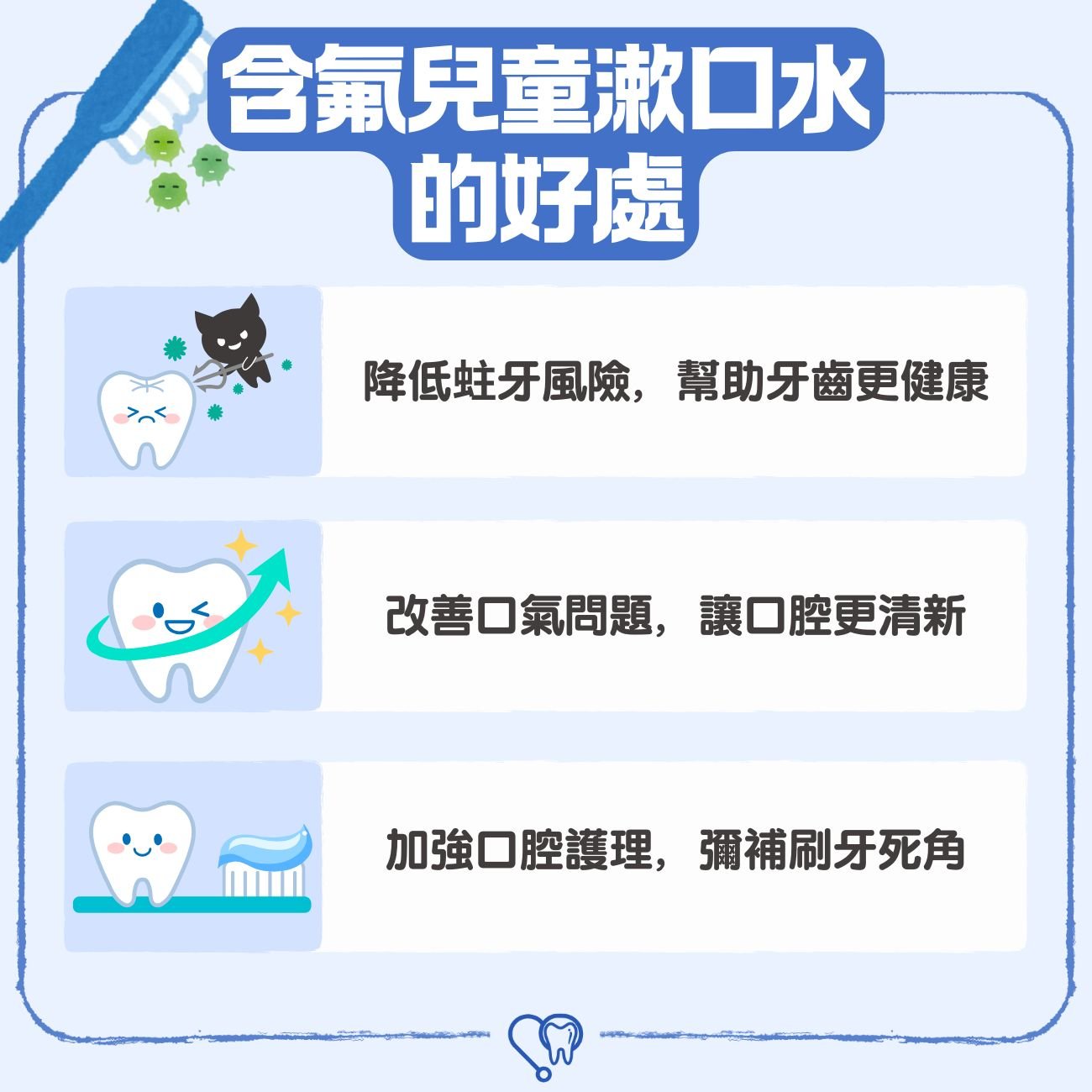
Lower the risk of tooth decay and help keep teeth healthier
Studies have confirmed thatfluorideis currently one of the most effective anti-decay ingredients. It strengthens the enamel and resists acid attack from bacteria.
For children who are prone to tooth decay, fluoride mouthwash is an effective extra protective measure, and the tooth-protecting effect is better when used after meals or before bedtime.
Improves breath problems and keeps the mouth fresher
Some children develop breath problems because of food debris or inadequate oral cleaning. Children's mouthwash containing fresh flavourings or antibacterial ingredients can help suppress the source of the odour, so children can speak with more confidence.
Strengthens oral care and covers the spots brushing misses
Even if you brush every day, you may not reach every corner. Especially in easily overlooked places such as between the teeth and near the gum line, mouthwash can penetrate these narrow gaps and make up for what the toothbrush and dental floss may have missed.
Is it dangerous for children to use fluoride mouthwash?
Overuse may cause dental fluorosis
Taking in too much fluoride over a long period can cause white spots on the tooth surface, which is known as dental fluorosis. This usually happens because the child accidentally swallows fluoride products or uses them too many times.
Is there a risk of poisoning if mouthwash is swallowed by mistake?
Normally, if a child only accidentally swallows a tiny amount of mouthwash, it is unlikely to cause any serious problem. But if a large amount of fluoride product is swallowed by mistake within a short time, it may cause mild poisoning reactions such as dizziness, nausea and stomach pain, and in serious cases medical attention may even be needed.
So when using it, make sure the child understands that mouthwash is not a drink and must not be swallowed.
Children's mouthwashpoints to note when using
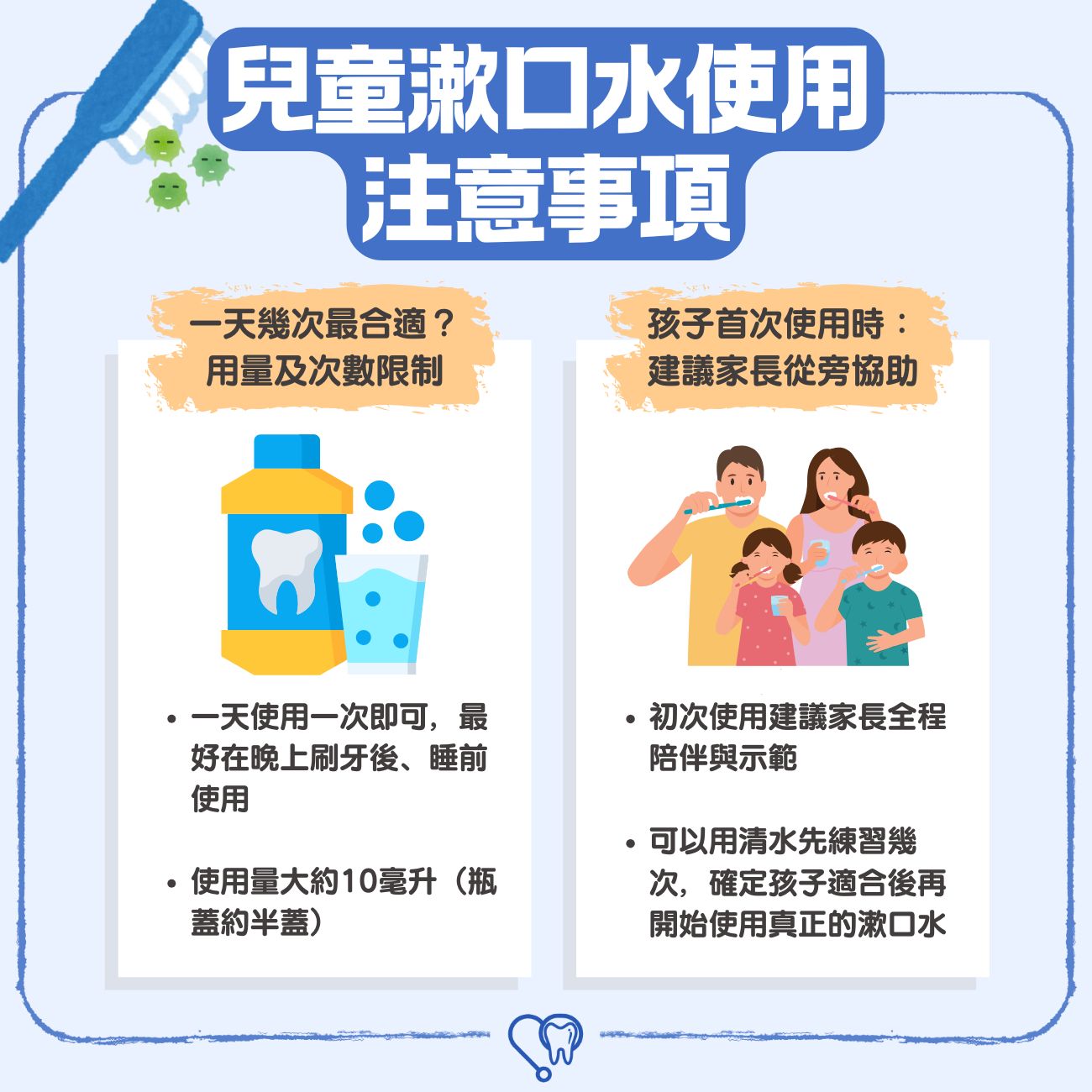
How many times a day is best? Limits on amount and frequency
We recommend using it once a day, preferably at night after brushing and before bedtime, so the fluoride stays on the tooth surface for longer. There is no need to use it morning and night as with brushing, to avoid taking in too much fluoride. About 10 ml (roughly half a bottle cap) is enough.
When a child uses it for the first time: parents are advised to help
When a child uses mouthwash for the first time, we recommend that parents stay with them and demonstrate throughout, so the child learns how to hold the mouthwash in the mouth, rinse and spit it out. You can also practise with plain water a few times first, to confirm that the child is ready before starting on the real mouthwash.
Busting myths: have you fallen for these misunderstandings about children's mouthwash?
Is brushing enough, with no need for mouthwash?
Brushing is of course the most basic way to clean the mouth, but it is not a cure-all.
If a child is particularly prone to tooth decay or has a complicated oral structure (such asuneven teeth), mouthwash can help clean the hard-to-reach spots. It is an extra helper, not a replacement for brushing.
Can fluoride mouthwash completely prevent tooth decay?
No product can "prevent tooth decay 100%". Fluoride mouthwash is only an aid for lowering the risk of tooth decay. It still needs to be combined with correct brushing, flossing, diet control and regular visits to the dentist to genuinely clean the mouth thoroughly.
Can adults use children's mouthwash?
Yes, but there is no need. The ingredients and fluoride content of children's mouthwash are usually milder, and may not be strong enough in function for adults. If an adult wants a more advanced level of oral care, it is better to choose a product designed for adults.
Summary
Children's mouthwash is not a product that every child must use, but if the child is of a suitable age, their oral condition calls for it and they can use it correctly, it can provide a good protective effect. If you are choosing mouthwash for your child, you may wish to start with three points: safety, ingredients and age recommendations, to find the one that best suits your little one.
Disclaimer
This article is for information only and does not contain any invitation or solicitation. Patients should seek a professional dentist for diagnosis and treatment according to their own circumstances. To find out more or book a service, we recommend contacting the relevant clinic directly. Please choose suitable dental services and clinics carefully yourself.



