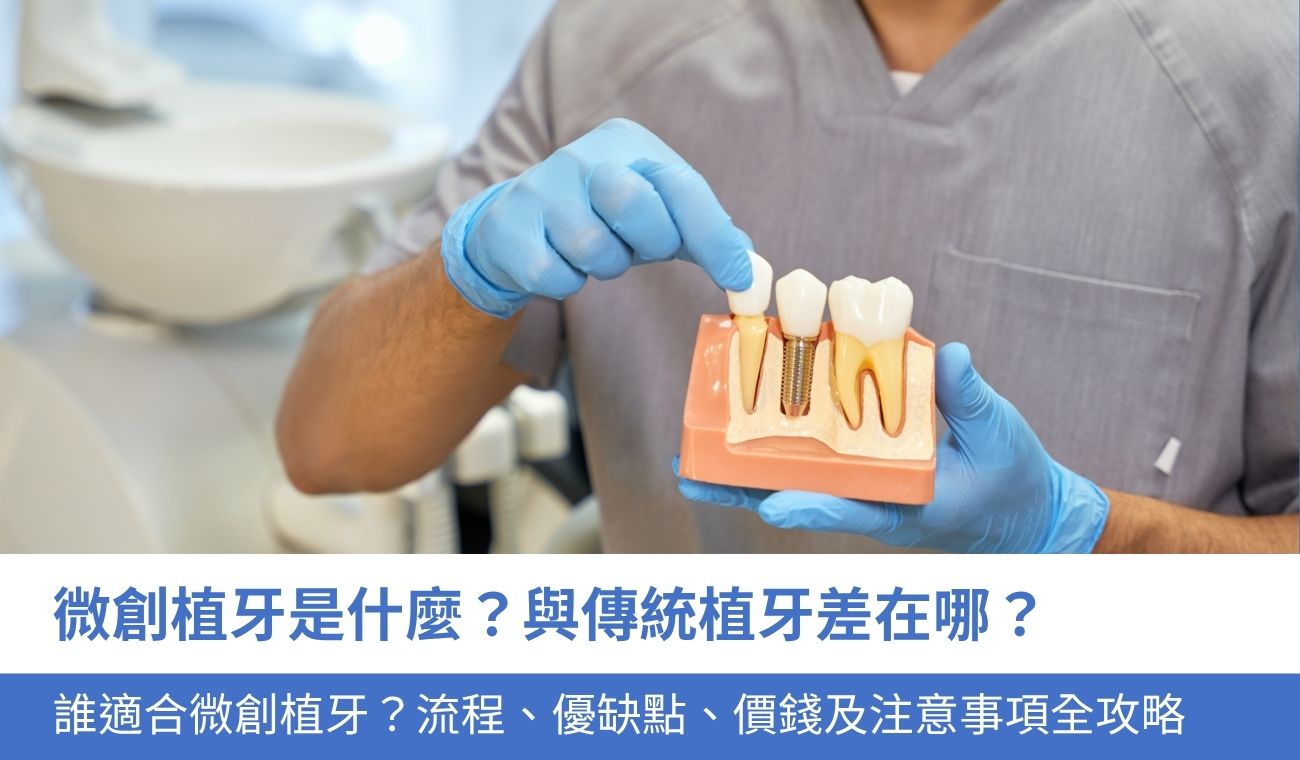
Whether minimally invasive dental implants can be used depends on the bone volume and gum condition at the missing tooth site: they are only suitable when bone width and height are ample and there is enough keratinised gum. When these conditions are not met, conventional flap implant surgery is the safer option.
Key Points
- The difference between the two is whether the gum is lifted during surgery
- Minimally invasive surgery needs to be pre-planned with 3D imaging and a surgical guide
- When bone grafting or gum treatment is needed, flap surgery is usually used instead
- Minimally invasive surgery is still surgery, and there may still be swelling and pain afterwards
- The cost of minimally invasive surgery depends on pre-operative planning and whether bone grafting is needed
What Are Minimally Invasive Dental Implants? How They Differ from Conventional Implants
Minimally invasive dental implants (flapless implants) involve making a small opening in the gum at the implant site, drilling through this opening and placing the implant, without lifting the gum. Conventional flap implant surgery involves cutting and lifting the gum to expose the jawbone before the implant is placed.
| Item | Minimally invasive implants (flapless) | Conventional implants (flap) |
| Gum handling | A small opening is made in the gum; the gum is not lifted | The gum is cut and lifted to expose the bone surface |
| Positioning | A surgical guide is designed from a 3D cone beam CT (CBCT) scan, and drilling follows the guide | Assessed with imaging before surgery; the bone surface can be seen and adjustments made during surgery |
| Post-operative wound | Smaller wound, usually needing no stitches or only a few | Stitches are needed; the wound is larger |
Besides minimally invasive and conventional flap surgery, implants can also be placed at different times, such as immediate implant placement. For an overall comparison of implant structure, suitable candidates and the various surgical methods, seeDental Implants Explained.
Who Is Suitable for Minimally Invasive Dental Implants? 3 Conditions That Must All Be Met
In minimally invasive implant surgery the bone surface cannot be seen, so the safety margin can only come from the bone volume itself and pre-operative planning. The following 3 conditions must therefore all be met; if any one is lacking, the dentist will generally use conventional flap surgery instead.
Condition 1: Ample jawbone width and height
Bone width and height must be enough to hold the implant, with bone walls surrounding it on all sides. After an extraction, the jawbone keeps shrinking over time, so at sites where a tooth has been missing for a long time, the bone may not be wide enough for minimally invasive surgery.
Condition 2: Enough healthy keratinised gum at the missing tooth site
Keratinised gum is the firmer gum tissue attached tightly to the bone surface. It will surround the neck of the implant and withstand the friction of brushing and chewing. Minimally invasive surgery does not lift the gum and only makes an opening in the existing gum, so the missing tooth site itself must have enough healthy keratinised gum.
Condition 3: Positioning with a 3D cone beam CT (CBCT) scan and a surgical guide
CBCT shows the height and width of the bone and its distance from the nerve and maxillary sinus. The dentist plans the position and angle of the implant from the images and then makes a surgical guide; during surgery, the guide is fixed in the mouth to guide the drilling position and angle.
When Is Conventional Flap Implant Surgery Needed?
When the bone surface needs to be seen clearly, or the bone and gum need to be treated at the same time, conventional flap implant surgery is more suitable. There are 3 common situations:
- Insufficient bone volume requiring bone grafting: the dentist needs to see the location and extent of the bone defect directly to place the bone graft material and membrane accurately.
- Keratinised gum that is too thin or insufficient: the gum needs to be repositioned or grafted at the same time to treat the soft tissue.
- Close to a nerve or the maxillary sinus: the gum needs to be lifted to confirm the implant position with a full view.
Uncontrolled periodontal disease (gum disease), diabetes, smoking and similar conditions affect whether and when an implant can be placed, not which surgical method is used. These conditions generally need to be controlled first before bone volume and surgical method are assessed. For how far each needs to be managed, see Pre-implant Requirements.
Are Minimally Invasive Implants Always Less Painful? Advantages and Limitations
Minimally invasive implants are not necessarily less painful. When the conditions are met, not lifting the gum generally means less swelling and pain after surgery and faster recovery, but post-operative experience varies from person to person, and these advantages only apply when bone volume and gum condition are sufficient.
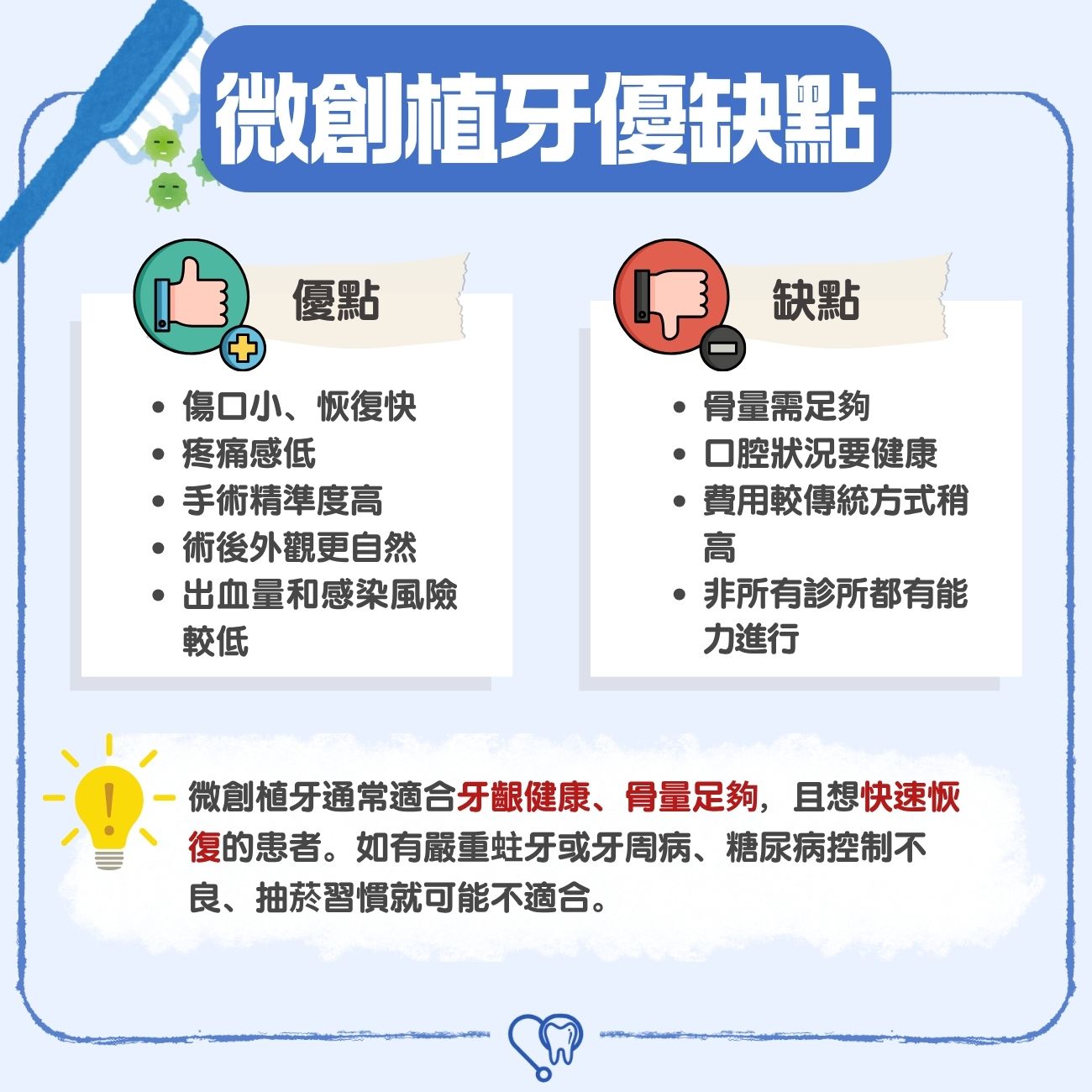
When the conditions are met, because the gum is not lifted, minimally invasive implants generally cause less swelling and pain after surgery and allow faster recovery.
Minimally invasive implants also have the following limitations:
- Position depends on pre-operative planning:The implant position depends on the accuracy of the pre-operative imaging and surgical guide. If minimally invasive surgery is used where bone width is insufficient, the implant may perforate the bone wall or be placed off position.
- It is still implant surgery: minimally invasive surgery is also carried out under local anaesthesia, and there may still be a dull ache and swelling in the first few days after surgery. For which post-operative reactions are normal and which need a follow-up visit, see do dental implants hurt.
- It does not shorten osseointegration time: minimally invasive surgery shortens the healing of the gum wound, but the time needed for the implant to bond with the bone is the same as for conventional implants.
What Is the Minimally Invasive Implant Process? Steps from Pre-operative Planning to Fitting the Crown
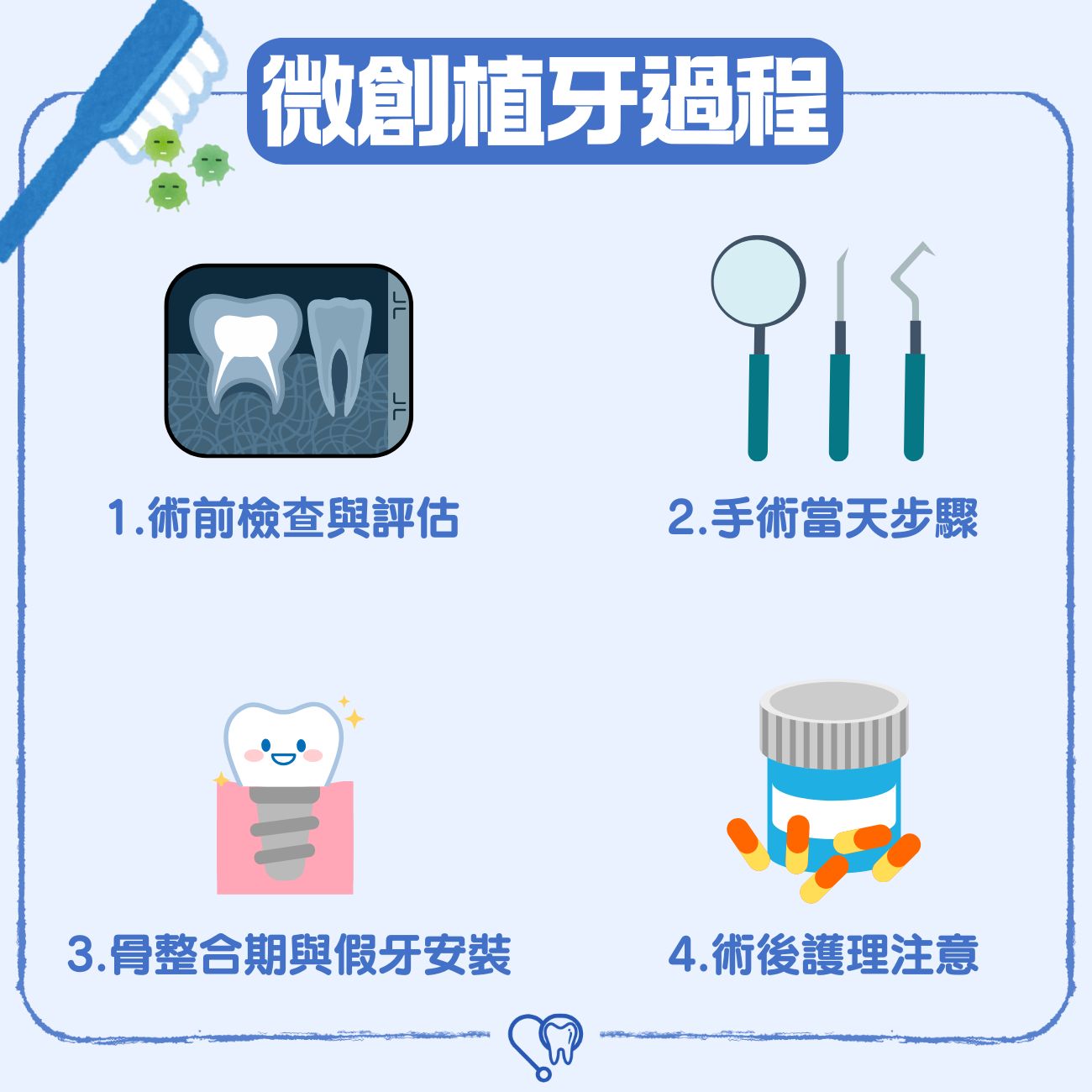
The steps for minimally invasive implants are similar to conventional implants, the difference being the additional digital planning and fabrication of a surgical guide before placement. Because the bone surface cannot be seen on the day of placement, the drilling position and angle are set before surgery, so pre-operative planning is the key to the whole treatment.
Step 1: Oral examination and CBCT assessment
The dentist examines your mouth, bite and gum health, and uses a 3D cone beam CT (CBCT) scan to measure the bone height and width at the missing tooth site and the distance to the nerve and maxillary sinus, to judge whether the 3 conditions for minimally invasive surgery are met. If bone volume or keratinised gum is insufficient, conventional flap surgery is used instead; any tooth decay or gum inflammation must be treated first.
Step 2: Digital planning and surgical guide fabrication
The dentist captures the surface shape of your teeth and gums with an intraoral scan or impressions, combines this with the CBCT images, and plans the position, angle and depth of the implant on a computer, taking into account the future position of the crown and the bite. A surgical guide is then made according to the plan.
Step 3: Implant placement
After local anaesthesia, the dentist places the surgical guide in the mouth and checks that it fits securely, then makes a small opening in the gum through the guide, drills according to the position and angle set by the guide, and places the implant. After placement, a healing cap or cover screw is generally fitted on the implant.
Step 4: Osseointegration period
After placement, it takes about 3 to 6 months for the implant to bond securely with the bone. During this time, attend follow-up visits as arranged by your dentist to check the gum wound and implant stability. If the missing tooth affects your appearance or chewing, you can discuss with your dentist whether to wear a temporary denture. For what to expect and how to care for the site in the first few days after surgery, see above do dental implants hurt.
Step 5: Fitting the abutment and crown
Once the implant is confirmed to be stable, the dentist takes an intraoral scan or impression of the implant site, makes a crown to match your tooth colour and bite, and then fits the abutment and crown. After completion, regular follow-up visits for cleaning are still needed to check the gum and bone around the implant.
What Affects the Cost of Minimally Invasive Implants?
A single dental implant at a private dental clinic in Hong Kong generally costs about HK$18,000 to HK$35,000, including the abutment and an all-ceramic crown (subject to assessment of your individual condition).
Cost differences directly related to minimally invasive surgery lie in whether pre-operative imaging and surgical guide design are charged separately, and whether bone grafting is found to be needed after assessment, requiring a switch to flap surgery. For other factors that affect a quotation and the fees for bone grafting and full-arch implants, see dental implant price.
FAQ
Are minimally invasive dental implants more successful than conventional implants?
The success of minimally invasive dental implants cannot be judged by the surgical technique alone; success mainly depends on whether the implant bonds well with the bone and whether bacterial infection occurs later. After the crown is fitted, the area around the implant still needs daily cleaning and regular check-ups to stay stable.
Can minimally invasive dental implants be placed immediately after an extraction?
Whether an implant can be placed immediately after an extraction first depends on whether the extraction site has an acute infection and whether the remaining jawbone can hold the implant steady. Only once the conditions for immediate placement are met is bone volume and gum condition used to decide whether to use minimally invasive surgery. For situations where you need to wait for the wound to heal or preserve the jawbone first, see extract and implant at the same visit.
Summary
Whether to use minimally invasive or conventional flap implant surgery depends on the bone volume and keratinised gum at the missing tooth site, and whether it is close to a nerve or the maxillary sinus. During the assessment, ask your dentist about your bone volume and gum condition, and why a particular method is recommended.
Article last updated: 2026-11
Disclaimer
This article is for information only and does not contain any invitation or solicitation. Patients should seek a professional dentist for diagnosis and treatment according to their own circumstances. To find out more or book a service, we recommend contacting the relevant clinic directly. Please choose suitable dental services and clinics carefully yourself.