

How do the roles of dental hygienists and dentists differ? This article helps you understand the main duties and scope of services of dental hygienists, and how they help patients maintain good oral hygiene habits.
What is a dental hygienist (Dental Hygienist)?
Have you noticed that when you see a dentist, the person who does the scaling and polishing is sometimes not the dentist but another professional? Many people are a little confused the first time they meet one. That person is in fact a "dental hygienist".
Although they do not specialise in treatment like dentists, they play an important role in maintaining oral health.
Dental hygienists mainly help with preventive care, such as checkingplaque, removing tartar, or checking the teeth for early signs of tooth decay and periodontal disease.
Besides this, they also teach you how to brush more cleanly and may even demonstrate the correct use of dental floss. Many people think brushing is enough, but in fact eight out of ten patients have "cleaning blind spots", and this is where a hygienist can help you improve.
Patients call them: "teeth cleaners"
Because dental hygienists often carry outTeeth Cleaning, descaling and similar work, many patients are used to calling them "teeth cleaners". But besides cleaning teeth, dental hygienists are also responsible for oral health assessment and education, which makes their scope of expertise broader than simply cleaning teeth.
Are they the same as dental therapists and dentists?
Many people confuse the differences between dental hygienists, dental therapists and dentists. A comparison is listed below to help you understand:
- Dental therapist: usually take part in some simple treatment work, but do not handle complex dental restoration.
- Dentist: holds higher professional qualifications and is responsible for "solving the big problems", such as filling cavities, extracting wisdom teeth, orthodontic treatment,tooth extraction, root canal treatment and so on.
- dental hygienist: like a "goalkeeper", deals with minor conditions for you in everyday care so that problems do not worsen to the point where a dentist has to step in, safeguarding the basic health of the mouth.
dental hygienistmain duties
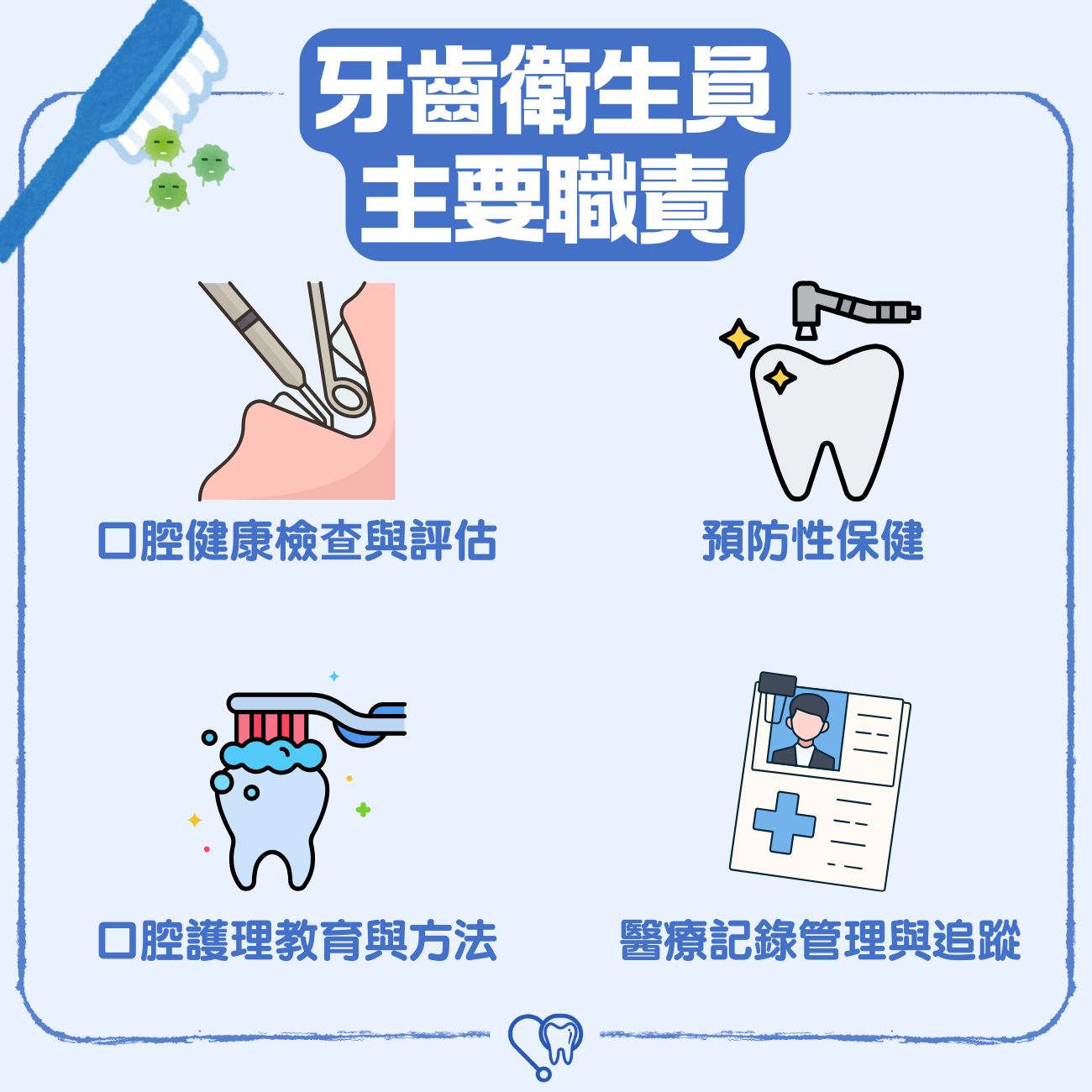
Oral health examination and assessment
Before the formal cleaning, the dental hygienist carries out a detailed oral examination, including plaque testing, assessment of tooth sensitivity and taking oral X-ray images, to see whether there are signs of redness, swelling or periodontal disease.
They use professional tools to measure the depth of the gums. These small details help detect problems early.
Preventive care
Scaling and polishing and descaling are important tasks of dental hygienists. They use professional tools to remove plaque and tartar from the tooth surfaces, effectively preventing periodontal disease and tooth decay.
Oral care education and methods
Besides treatment, dental hygienists also teach you how to look after your teeth well at home.
For example, reminding you aboutcorrect toothbrushing method, flossing and mouthwash use, including brushing at least twice a day, replacing your toothbrush regularly and having professional check-ups, helping you build good long-term oral cleaning habits.
Medical record management and follow-up
They record the results of each cleaning and examination to make it easy to track the condition of your teeth. If your periodontal pockets become deeper or tartar builds up faster than last time, the hygienist will remind you to pay more attention, and may even suggest an earlier follow-up visit.
dental hygienistscope of services
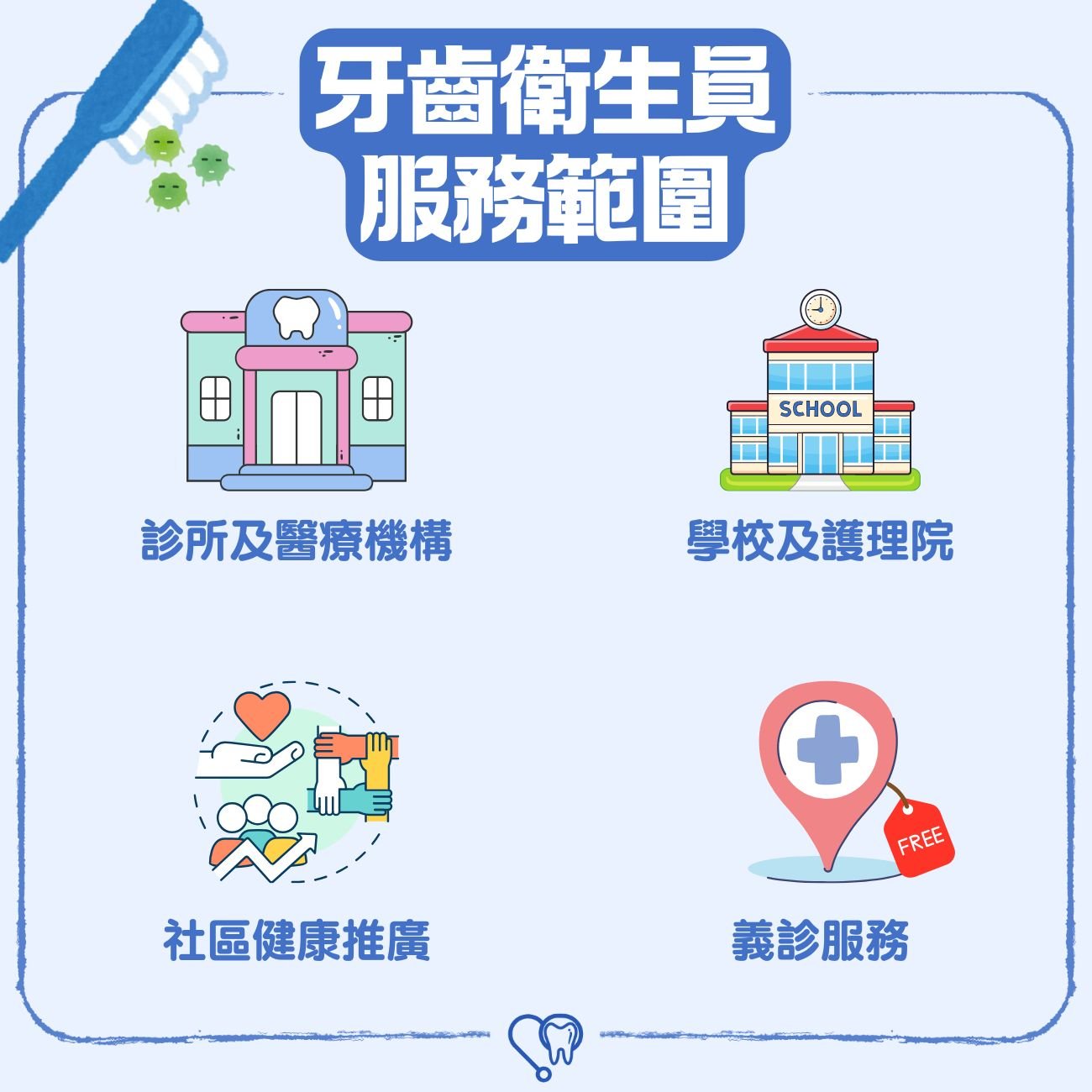
Clinics and medical institutions
Most dental hygienists work in dental clinics or hospitals, responsible for services such as scaling and polishing, fluoride application and oral health education, helping patients maintain oral health.
Schools and nursing homes
Besides traditional clinics and medical institutions, going into schools and nursing homes is also an option. Through regular oral examinations and health talks, they provide professional guidance for students and the elderly and promote health awareness across the whole community.
Community health promotion
Many dental hygienists also take part in community talks or health promotion activities, explaining the importance of oral health care to the public in a simple way, so that more people understand that prevention is better than cure.
Voluntary clinic services
Dental hygienists are also often seen in remote areas or among disadvantaged groups. Through voluntary clinic activities, they provide cleaning and examination for people who cannot see a dentist regularly, giving more people the chance to maintain oral health.
How do you become a dental hygienist?
Becoming a dental hygienist is a profession that calls for patience, care and continuous learning. In Hong Kong, the route to becoming a dental hygienist mainly has the following points:
- Qualifications and training: complete a 2-year full-time higher diploma programme in dental hygiene care or an equivalent qualification, to learn professional knowledge.
- Practical experience: gain hands-on experience at a recognised medical institution to understand the real clinical environment.
- Professional certification and registration: pass the professional examination to obtain a certificate, and apply toDental Council of Hong Kongfor registration as a dental hygienist, in order to practise in Hong Kong.
- Continuing education: keep taking part in professional development courses to improve your skills, and you can also look out for related tuition subsidy schemes to ease the financial burden.
Summary
Dental hygienists are often misunderstood as merely "people who help with scaling and polishing", but in fact they are important guardians of oral health. Next time you sit in the dental chair, you may want to notice whether it is a dental hygienist who is quietly helping you look after your mouth, so that you can smile more healthily.
Disclaimer
This article is for information only and does not contain any invitation or solicitation. Patients should seek a professional dentist for diagnosis and treatment according to their own circumstances. To find out more or book a service, we recommend contacting the relevant clinic directly. Please choose suitable dental services and clinics carefully yourself.



