A deep bite is a bite problem in which the upper teeth overlap the lower teeth too much. It not only affects appearance but also causes wear and periodontal disease, and in most cases needs to be improved with orthodontic treatment.
What is a deep bite?
A deep bite not only affects the appearance of the teeth but may also affect oral function and health. Many patients are not alert to this problem, but if it is not corrected in time, it may cause other oral health problems.
deep bitedefinition
A deep bite (overbite) is a verticalMisaligned Bitecondition, in which the upper front teeth overlap the lower front teeth too far downwards. This abnormal bite relationship means the upper teeth cover the lower teeth, usually by more than 1/3 to 1/2 of the lower front teeth.
How is a deep bite different from a normal bite? Understand the difference with a diagram
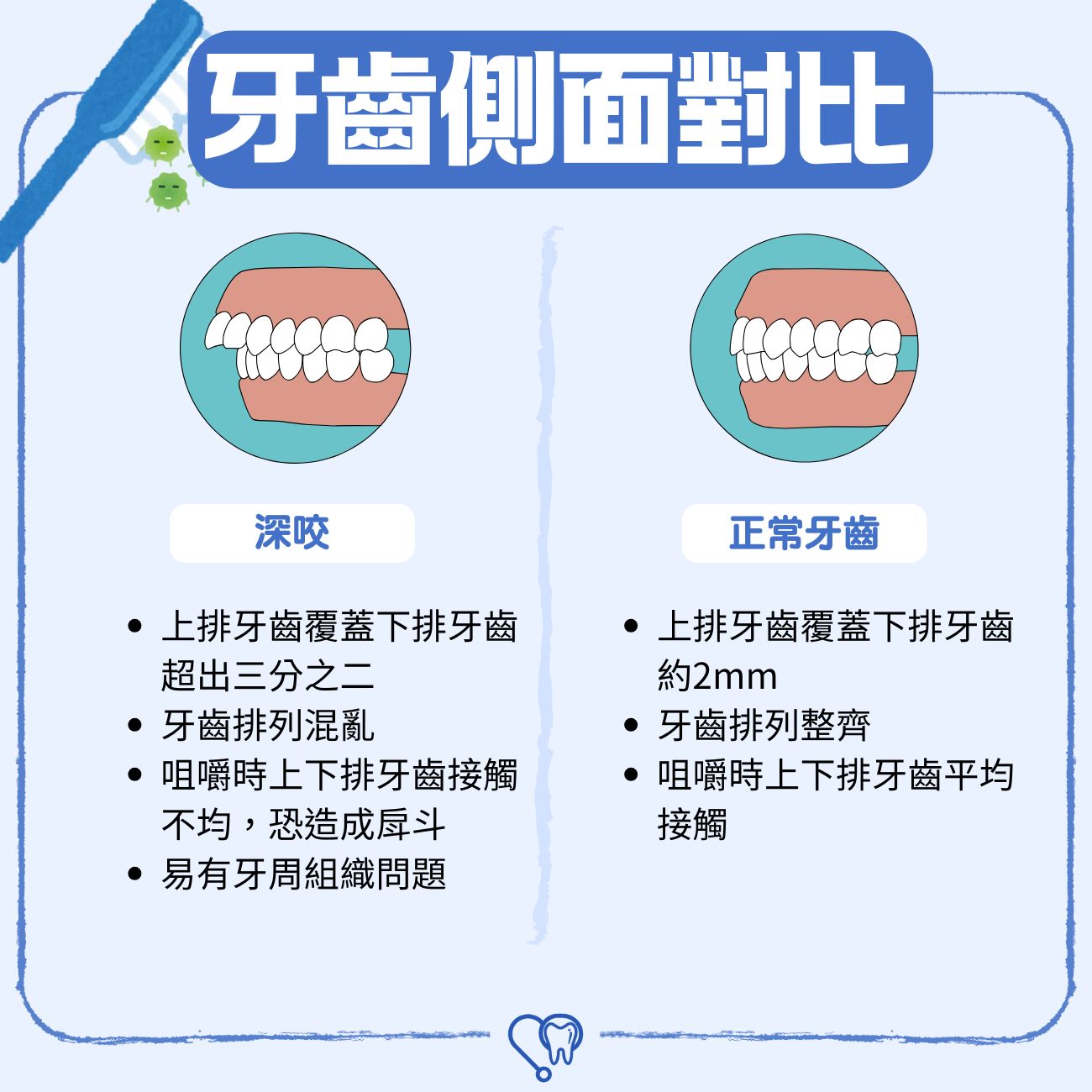
The fundamental difference between a normal bite and a deep bite is the degree of overlap between the upper and lower teeth.
In a normal bite, the teeth overlap slightly, keeping the mouth healthy and functioning; a deep bite causes excessive contact between the upper and lower teeth, leading to uneven biting forces, which may have long-term effects on oral health.
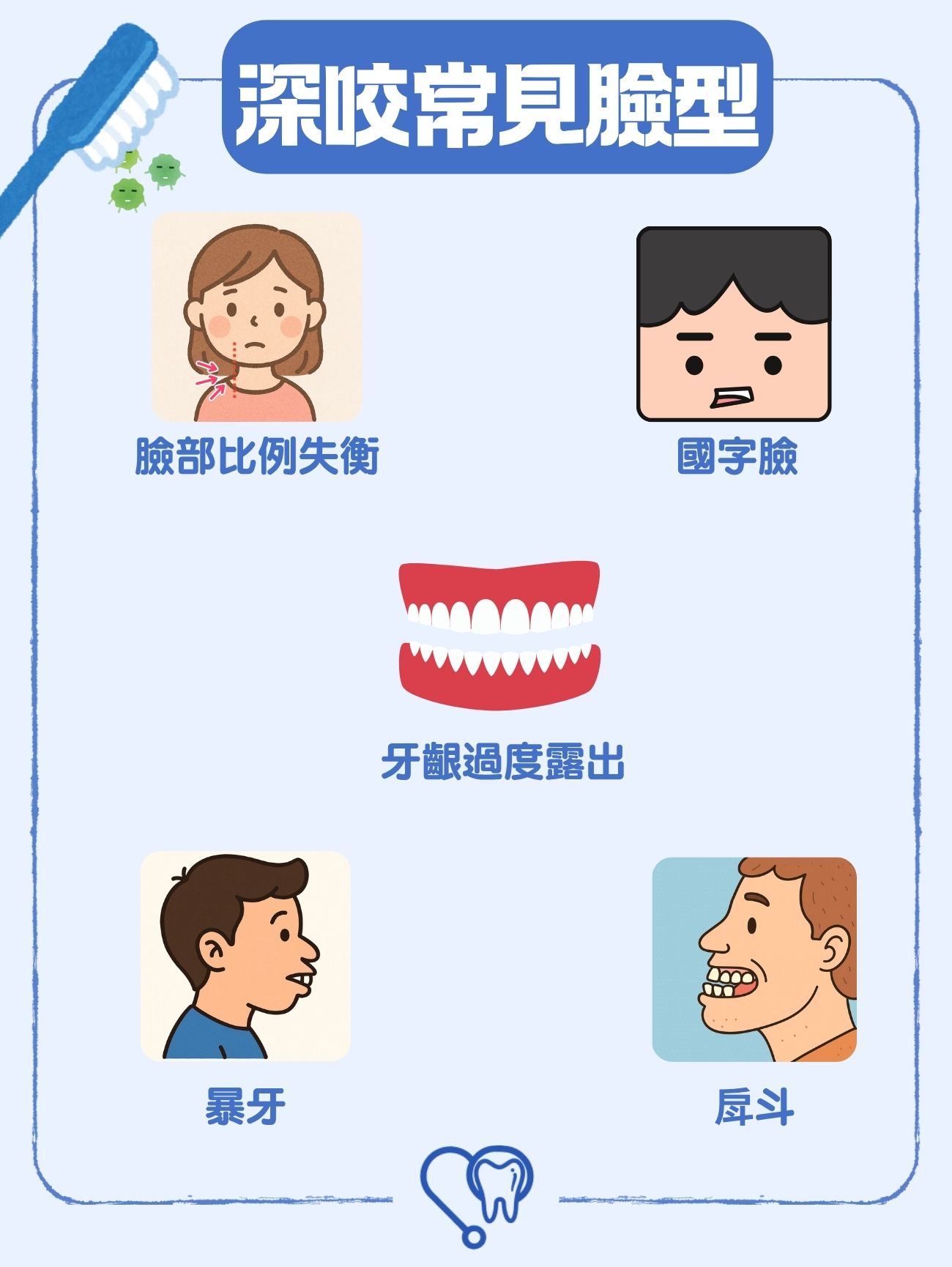
How can I tell if I have a deep bite? 4 common facial features: how many do you have?
Facial proportions
If your facial proportions are unbalanced, especially if the lower third of the face looks shorter, you may well have a "deep bite face shape".
Normal facial proportions should have a harmonious upper and lower jaw area, and the chin should keep a certain symmetry with the upper jaw, but a deep bite may make the chin look too far back or unnatural, throwing the facial proportions out of balance.
Square face
A deep bite can lead to over-developed facial muscles, most obviously the chewing muscles. Because of the misaligned bite, extra force is needed during chewing to compensate for the abnormal bite, keeping the chewing muscles tense for long periods.
Over time these muscles gradually strengthen, making the muscles on both sides of the face more prominent, and eventually a squarer face shape may form, the so-called "square face".
protruding teeth
The upper and lower front teeth meet in an abnormal position, which easily causes undue force on the upper front teeth so that they protrude outwards. When protruding teeth stop the lips from closing normally, the lower front teeth exert extra pressure, making the protruding teeth problem worse.
Underbite
We are more used to calling it a "reverse bite", which is the opposite problem to protruding teeth. The characteristic of an underbite is that the upper front teeth tilt inwards and the lower front teeth tilt outwards, causing abnormal contact between the upper and lower teeth. This misalignment often appears together with a deep bite and further affects bite function.
Excessive gum display
A deep bite may cause too much of the upper gum to show when smiling. When the upper teeth overlap the lower teeth too much, the angle between the upper teeth and the gum becomes too large, which affects the look of the smile.
What causes a deep bite?
Congenital: bone structure
One of the main causes of a deep bite is a congenital abnormality of the bone structure. As the jaw bone develops differently in each person, some people are born with a more prominent upper jaw or a more retruded lower jaw, and such differences in bone structure may stop the upper and lower teeth from lining up correctly.
Congenital: heredity
If there is a deep bite in the family, children are also more likely to have one. Abnormalities of bone structure or tooth shape brought by heredity may make the teeth overlap too much when biting, leading to a deep bite.
Acquired: long-term missing teeth
When teeth are missing from the mouth, the remaining teeth change position and move to make up for the missing space. Such movement may change the normal bite relationship between the upper and lower teeth and lead to a deep bite.
In particular, when the missing teeth are front teeth or important chewing teeth, there is a greater effect on bite function, which eventually results in a deep bite.
Acquired: bad lifestyle habits
Long-term use of incorrect chewing methods (such as chewing on one side), lip biting, thumb sucking and so on can all have a negative effect on the teeth and jaw structure. These habits cause uneven wear or misalignment of the teeth, and long-term incorrect chewing makes the biting force unevenly distributed, which triggers or worsens a deep bite.
Acquired: injury or impact
Teeth may be displaced, broken or the jaw bone damaged by an impact, for example in an accident, a fall or other incident. Such injuries change the alignment of the teeth and may even alter the structure of the jaw joint, causing an abnormal bite relationship.
Does a deep bite always need to be corrected? It affects not just appearance but also oral health
Many people think a deep bite is only a minor cosmetic problem, but if it is ignored for a long time, it may cause negative effects such as periodontal disease!
receding chin
When the upper teeth overlap the lower teeth too much, undue pressure is put on the lower jaw, causing the chin to gradually recede. A long-term misaligned bite can inhibit the development of the lower jaw, changing the facial contour and further affecting functions such as chewing and breathing.
Difficulty with pronunciation
A deep bite may even make speech blurred or unclear! This is especially so for sounds that need the upper and lower teeth to work together, such as "s" or "t".
tooth wear
Because a deep bite makes the contact between the upper and lower teeth too strong, abnormal wear occurs during biting, causing damage to the tooth surface. This not only makes the teeth fragile but may also lead to gum recession or pulp problems, causing more oral health problems.
Increased risk of oral problems
Uneven contact between the upper and lower teeth affects cleaning, and food debris easily builds up between the teeth, increasing plaque formation and leading to oral problems such as gum disease and tooth decay. After the tooth wear mentioned above, gum recession or pulp problems may also result, posing a long-term threat to oral health.
deep biteorthodontic method
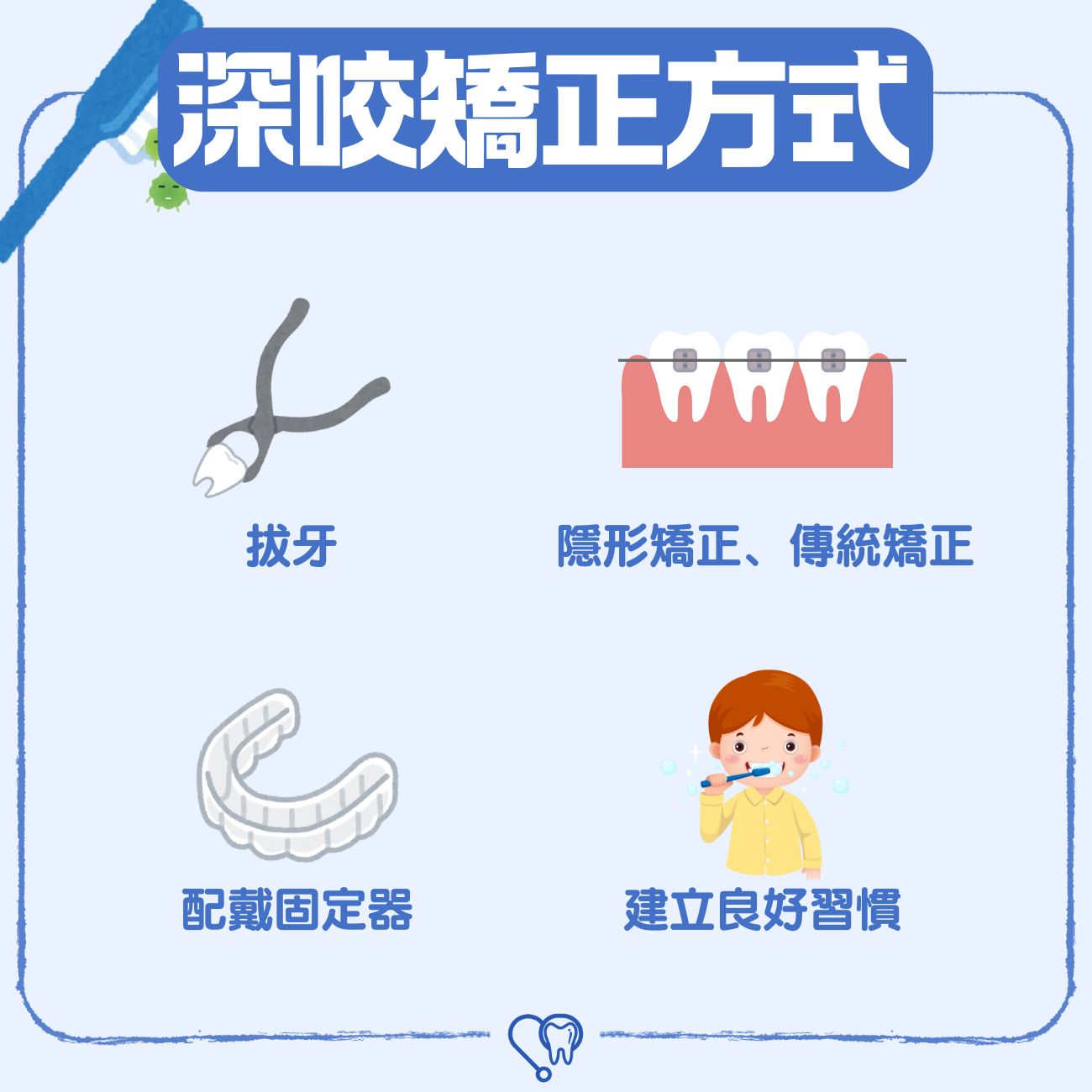
Extraction
In some cases, to allow the teeth to line up properly, some teeth may need to be extracted, especially when the upper teeth protrude too much or the lower teeth cannot bite properly. Extraction can help reduce the pressure of an excessive bite.
Clear aligner treatment and traditional braces
Clear aligner treatment is an orthodontic method that has become more and more popular in recent years. Clear aligners are not only discreet in appearance but can also be taken out by yourself, making them more flexible than traditional braces. Common brands include Invisalign.
Traditional orthodontics uses metal braces to straighten teeth. For some complex bite problems, they allow more precise control of tooth movement and are more effective than clear aligners.
Clear aligner treatment and traditional braces each have their advantages and disadvantages. It is advisable to have a detailed assessment with a professional dentist to understand your needs and treatment goals, and to choose the best orthodontic method according to the condition of your teeth.
Wearing a retainer
Retainers are usually worn for a period after orthodontic treatment, to help prevent the teeth from moving back and to keep the result stable.
Building good habits
Daily oral habits are also very important. Good oral hygiene, avoiding bad chewing habits (chewing on one side, grinding and so on) and having regular dental check-ups all help prevent the deep bite from coming back.
FAQ
deep biteAre mini-screws always necessary?
Mini-screws are usually suitable when strong correction or adjustment of the jaw position is needed, and may help provide more precise tooth movement or jaw adjustment. However, whether to use mini-screws should be assessed by a professional dentist according to the individual situation.
deep biteIs orthognathic surgery needed?
Orthognathic surgery is a relatively complex treatment with a longer recovery period. It is usually only carried out for jaw development abnormalities, especially when the difference between the upper and lower jaw bones is too great to be solved by orthodontic treatment alone.
Summary
A deep bite not only affects appearance but also leads to more oral diseases, and may cause a series of oral health problems. Whichever orthodontic method is used, the most important thing is to diagnose early and choose a suitable method, which can effectively improve the bite, reduce future health risks and maintain long-term oral health.
Disclaimer
This article is for information only and does not contain any invitation or solicitation. Patients should seek a professional dentist for diagnosis and treatment according to their own circumstances. To find out more or book a service, we recommend contacting the relevant clinic directly. Please choose suitable dental services and clinics carefully yourself.