

Have you heard of oil pulling? It is rumoured that rinsing with oil pulling can whiten teeth, get rid of bad breath. Is that true? Does it have side effects on the body? This article compares the benefits and drawbacks of oil pulling, to help you understand the effect of this natural remedy on oral health.
What is oil pulling?
Origin: oral care in Indian medicine
Oil pulling (oil pulling) is an ancient natural remedy that originated in Ayurveda (Ayurveda), the traditional medicine of India. Thousands of years ago, Indian people believed that holding oil in the mouth to rinse could expel toxins from the body and maintain oral and overall health. Although it sounds a bit like a folk remedy, the practice actually follows a fixed routine, and in recent years it has again become a topic in the health community.
Purpose: cleaning the mouth and promoting oral and overall health
Through the adsorbing action of vegetable oil, bacteria and toxic cells in the mouth are carried away, and saliva secretion is increased. It is not as strongly irritating as traditional mouthwash, but uses a gentler way to help clean the teeth, gums and mucous membranes. Some even say it can improve skin quality, reduce allergies and boost immunity.
However, these effects currently lack clear medical evidence, so we should still look at it from a health perspective.
Coconut oil rinsingHow to do it? How often is it effective?
Coconut oil is currently one of the most commonly used choices for oil pulling, because its taste is relatively acceptable and it has natural antibacterial properties. Other cold-pressed virgin edible oils (sesame oil, olive oil) can also be used; organic is better, to make sure the oil contains no other impurities.
How to do it
After getting up and before brushing your teeth, take a tablespoon of coconut oil and hold it in your mouth without swallowing. Slowly hold it and swish it around, letting the oil flow between the teeth and the gaps, like rinsing. You do not need to rinse vigorously; just gently let the oil slide back and forth in the mouth, otherwise it may cause jaw aching. When the oil becomes thick and milky white, you can spit it out, then rinse with water or salt water, and brush your teeth with toothpaste as usual.
Remember to spit the oil into a paper towel and throw it in the bin; never pour it into the sink, as it may cause a blockage.
Recommended time and frequency
Each oil pulling session should be kept to between 10 and 15 minutes. It does not need to be too long, otherwise it may cause oral fatigue or discomfort.
A frequency of 3–4 times a week is enough; there is no need to do it every day. The key is to keep at it consistently, and to combine it withcorrect toothbrushing habits, in order to truly protect dental health.
Benefits of oil pullingwhat are they? Can it really whiten teeth?
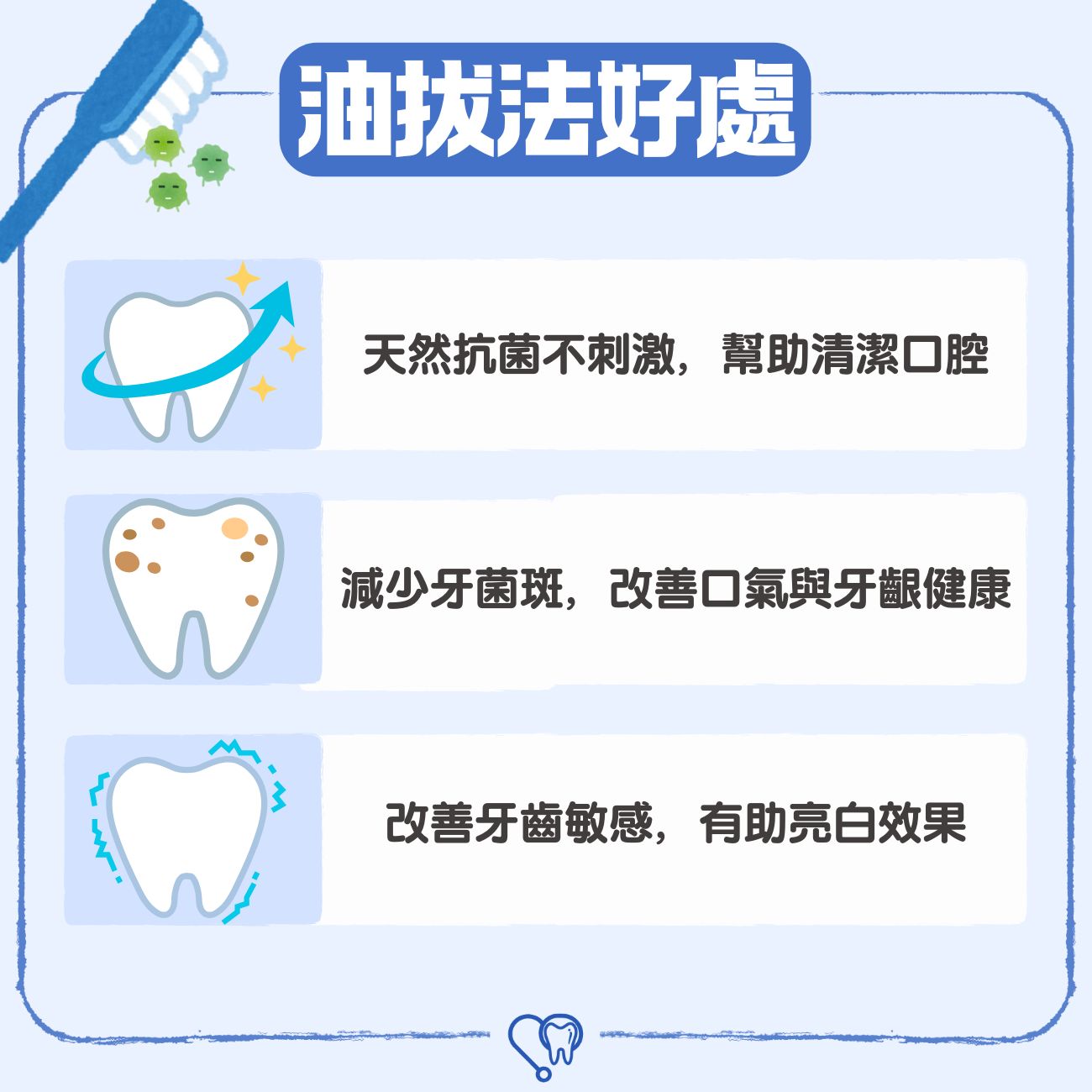
Natural antibacterial and non-irritating, helps clean the mouth
Studies show that lauric acid (Lauric Acid) in coconut oil can help remove harmful bacteria in the mouth, such as the bacteria that causeperiodontal disease(Streptococcus mutans).
For people who do not like alcohol-based mouthwash or have a more sensitive mouth, oil pulling is a relatively gentle alternative. Used in the morning, it can help clean the bacteria that have built up overnight, and quite a few people say their mouth feels noticeably fresher afterwards.
Reduces plaque, improves breath and gum health
By swishing oil in the mouth, plaque that has built up between the teeth can slowly be brought out, which further helps reduce the chance of gingivitis and bleeding. If you are troubled by bad breath or sensitive gums, moderate use of coconut oil rinsing may also bring improvement and freshen the breath.
Improves tooth sensitivity, helps brightening
Some people find that after using oil pulling regularly, their teeth become less sensitive to hot and cold, and the tooth colour is even a little brighter than before. This may be related to coconut oil helping to remove dirt and reducing the build-up of bacteria in the mouth.
But this "whitening effect" is not bleaching; it is the natural brightness that comes from improved oral cleanliness.
*The above benefits are currently supported only by small-scale studies, and more research is needed to confirm them.
Beware of over-reliance! Common drawbacks and side effects of oil pulling

Delays proper treatment, causing problems to worsen
Many people mistakenly believe oil pulling can solve all dental problems, such as tooth decay, periodontal disease and even bleeding gums. But it can only be regarded as a supplementary health measure. If proper treatment is neglected and oil pulling alone is relied on to "nourish the teeth", small problems may instead become big ones.
Improper technique may cause physical discomfort
If you swish too hard or for too long during oil pulling, it easily causes jaw aching and may even cause dizziness and nausea. Some people accidentally let the oil enter the airway through improper technique, which can also cause coughing or discomfort. Do what you are able to; if you feel tired, you should stop.
Accidental swallowing causing stomach discomfort or nausea
The mixed liquid produced during oil pulling contains bacteria, toxins and oral debris. If swallowed by accident, it may cause stomach discomfort and even make you want to vomit. Beginners in particular easily swallow by accident because they are not used to the feel of it, so it is recommended to practise gradually and not force yourself.
Who should not do oil pulling?

Allergy to oils
Although coconut oil is natural, it is still a fatty ingredient. If you are allergic to coconut or other vegetable oils, it is not recommended, to avoid skin redness, swelling or allergic reactions.
Digestive or respiratory conditions
People with a poor stomach and intestines, who feel nauseous easily, or who have respiratory problems (such as asthma or chronic cough) may find that oil pulling adds to the burden on the body. Accidentally inhaling oil may also worsen existing symptoms.
Patients undergoing dental treatment
If you are receiving dental treatment, such asOrthodontics, periodontal treatment or have just had surgery, it is recommended to pause oil pulling, so as not to affect wound healing or interfere with the effect of medication; you should put your doctor's instructions first.
Children, pregnant women and other special groups
Children lack the swallowing control and easily swallow the oil by accident, while pregnant women may be especially sensitive to the smell of oil because of hormonal changes. These two groups should consult a doctor before oil pulling.
Oil pullingcommon myths and points to note
Cannot replace treatment; only an everyday supplementary care
Many people mistake oil pulling for a "universal dental solution", but the fact is:
At most it is a supplement to daily cleaning and care, and it cannot replace professional scaling and polishing, fillings or root canal treatment at all. If symptoms have already appeared in the mouth, they should still be handled by a dentist.
Avoid reusing containers, to prevent bacteria growing
Many people use the same container to hold coconut oil repeatedly, which in fact easily lets bacteria grow. It is recommended to use a separate clean spoon or vessel each time, and to clean and store it properly after use, to keep it hygienic.
Combine with proper dental care for better results
Oil pulling is not the whole of tooth care. Improving oral health still depends on regular brushing, using dental floss, regular scaling and polishing, and seeing a dentist. Treat oil pulling as a supplementary tool, combined with proper cleaning habits, and the effect will be more noticeable.
Important reminder: The effects of oil pulling have not been clinically verified; for oral problems, you should still consult a professional dentist
Oil pulling looks simple, but it is also an oral care method that needs to be properly understood and carried out. Rinsing with coconut oil can help improve the oral environment, but it cannot replace proper medical treatment. People with special health conditions should consult a professional dentist first. With correct use, moderate frequency and good oral hygiene habits, oil pulling can become a small helper in your daily tooth care.
Disclaimer
This article is for information only and does not contain any invitation or solicitation. Patients should seek a professional dentist for diagnosis and treatment according to their own circumstances. To find out more or book a service, we recommend contacting the relevant clinic directly. Please choose suitable dental services and clinics carefully yourself.



