
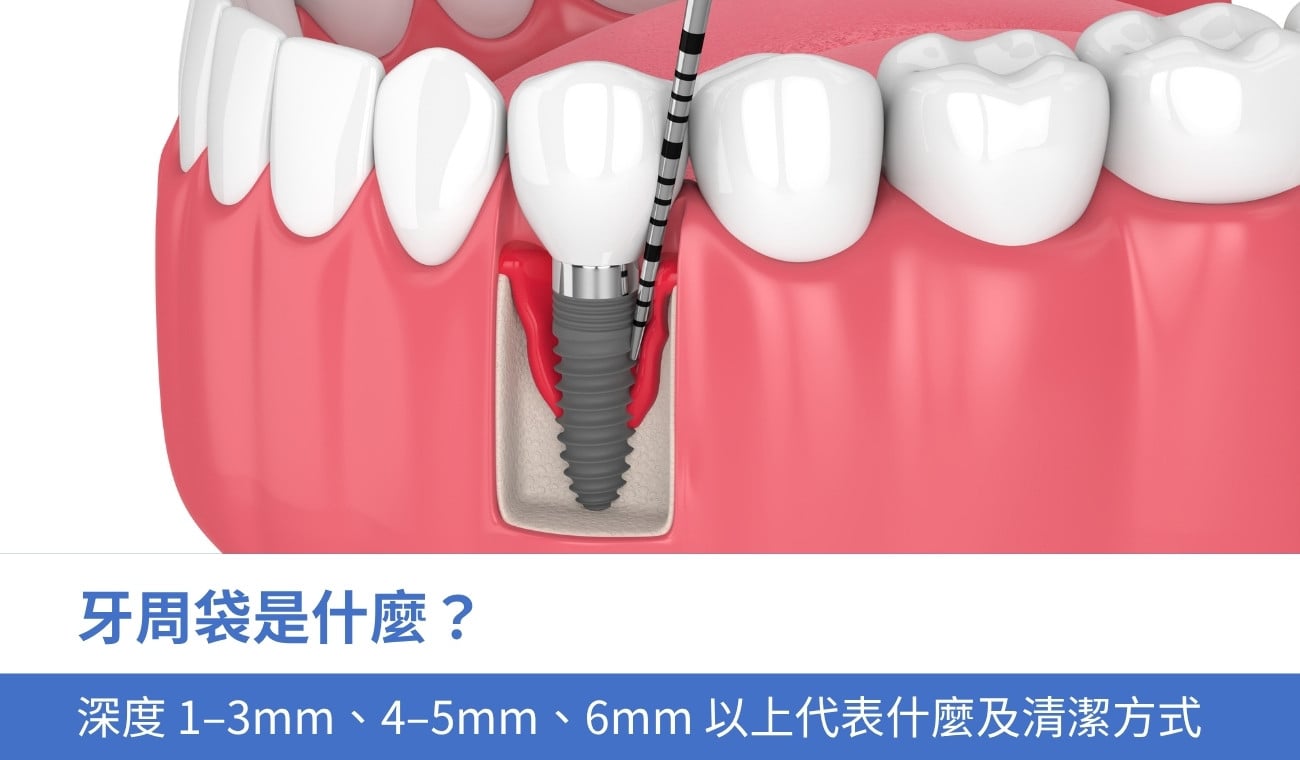

The 3 mm, 4 mm and 5 mm figures reported in a periodontal examination are the depth of the gap between the gum and the tooth root. When healthy it is about 1 to 3 mm; beyond this depth, daily brushing and flossing can hardly reach the bottom, and plaque and tartar keep building up inside the gap.
Key points of this article
- Depth can differ at different sites on the same tooth
- The dentist will pay particular attention to sites of 6 mm or more
- The depth figure alone is not enough to tell whether it is already periodontitis
- Pockets may become shallower after treatment, but bone loss does not recover as a result
- Interdental brushes and floss take care of cleaning near the entrance of the periodontal pocket
What is a periodontal pocket? Which gap a periodontal examination measures
During a periodontal examination, the dentist gently inserts a periodontal probe marked in millimetres along the junction between tooth and gum, and what it measures is the periodontal pocket depth. Several sites are measured for each tooth, and the depth can differ on different sides of the same tooth, which is why a series of numbers often appears on the examination record.
When healthy, the gums fit snugly against the teeth, and this shallow gap is called the gingival sulcus. After plaque builds up at the gum margin and calcifies into tartar, the bacteria keep irritating the gums and cause inflammation. As inflammation spreads deeper, the attachment between the gums and the tooth root gradually separates and the gap deepens, forming a periodontal pocket, and the alveolar bone that supports the teeth is lost as well. The deeper the gap, the more easily plaque builds up and the harder it is to remove, so the inflammation continues.
What does periodontal pocket depth mean? The differences between 1–3 mm, 4–5 mm and 6 mm or more
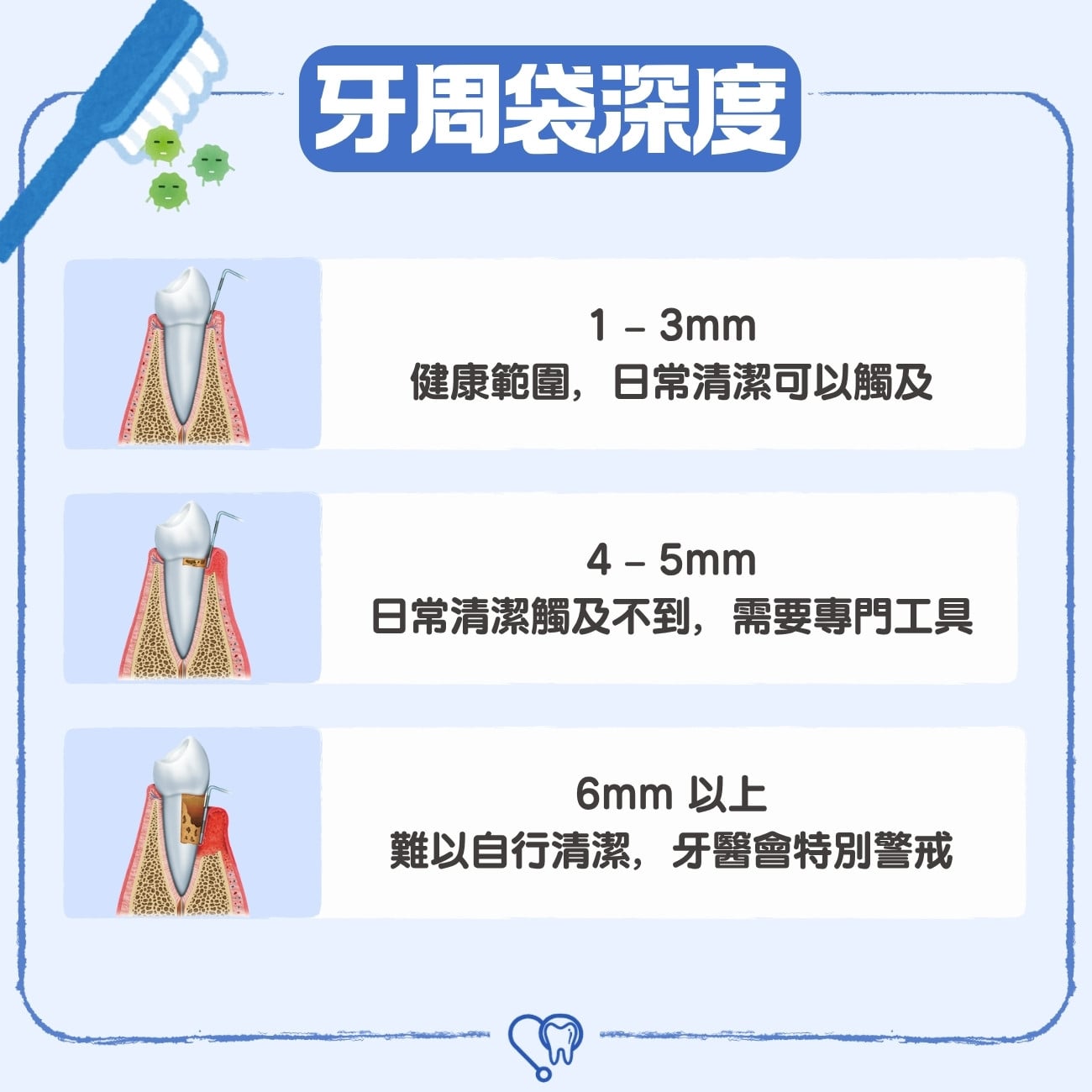
When interpreting periodontal pocket depth, the dentist is concerned with who removes the plaque: at 1 to 3 mm, daily brushing and flossing do it; at 4 to 5 mm, the dentist has to deal with it using specialised tools; at 6 mm or more, cleaning yourself can no longer get it clean, and this is a depth the dentist is especially vigilant about.
A single mouth often has sites of different depths side by side. The treatment area is decided by the depth at each site, and fees vary with the number of teeth that need treatment. For the fee range and billing unit of each level of treatment in Hong Kong, see Periodontal treatment fees in Hong Kong.
1–3 mm: healthy range, reachable by daily cleaning
Gums fit snugly against the teeth and do not bleed on probing, which is a healthy state; daily brushing and flossing are enough to control plaque at this depth.
4–5 mm: beyond the reach of daily cleaning, specialised tools needed
In a pocket of this depth, tartar has mostly attached to the root surface, and the dentist needs to clean it site by site below the gum line, which is deep cleaning (scaling and root planing). Deep cleaning is usually done under local anaesthesia. For other examination signs besides depth, and which reactions after treatment are normal, see Deep Cleaning.
6 mm or more: hard to clean yourself, and the dentist will be especially vigilant
Sites like these mostly already come with more obvious bone loss. After deep cleaning, the dentist will measure again and assess the next step according to the change in depth. If the teeth are also loose, whether a tooth can be kept depends mainly on the amount of remaining bone and the degree of looseness; for how this is assessed, see severe periodontal disease in one article.
Does a periodontal pocket depth of 4 mm or more mean periodontitis?
Periodontal pocket depth needs to be interpreted together with two other pieces of information:
- Attachment loss: When the gums are inflamed and swollen, the gum margin shifts upward, so even if the attachment has not separated, the measured depth may exceed 3 mm. This is called a pseudo-pocket and is still gingivitis; after thorough cleaning and once the swelling subsides, the depth can return to normal. For how to manage it, see gum inflammation.
- X-ray: Shows whether the alveolar bone has already been lost.
When the pocket exceeds 4 mm and both attachment loss and bone loss are present, it is no longer simple gingivitis but periodontitis. Gingivitis can be reversed, whereas for periodontitis the aim is long-term control. For the staging and treatment options for the two, see Complete guide to periodontal disease.
Will periodontal pockets become shallower after treatment?
After deep cleaning, the gums settle and tighten, and the pocket depth may be shallower than before treatment; the amount varies from person to person depending on the original depth, the degree of bone loss and cleaning after treatment. The shallowing comes mainly from the gums settling, and does not mean that the alveolar bone already lost has recovered.
At follow-up, the dentist will measure again and compare with previous records, and any site that has deepened again will need to be cleaned again. The interval between follow-ups is decided by the dentist according to pocket depth and stability.
How do you clean near periodontal pockets day to day? How to use interdental brushes and dental floss
Once a periodontal pocket has deepened, the role of home cleaning is to reduce plaque at the gum margin and between the teeth so that inflammation does not spread further. The main tools are interdental brushes and dental floss.
- interdental brush: Choose a size that passes smoothly through the gap without having to be forced in. Gap sizes vary, so you may need more than one size, and you can ask your dentist to recommend sizes for your gaps.
- dental floss: Wrap the floss around the side of the tooth and gently slide it under the gum margin, moving it up and down, rather than just pulling it back and forth between the teeth.
- toothbrush: Use a soft-bristled toothbrush with the bristles angled towards the gum margin, and make small movements with light pressure.
FAQ
Does measuring periodontal pockets hurt?
When pockets are measured, the probe is only gently inserted into the gap. Healthy sites generally feel only a slight touch; inflamed sites are more sensitive and may feel sore or bleed slightly.
Can I check how deep my periodontal pockets are myself?
Periodontal pocket depth has to be measured with a periodontal probe and cannot be checked yourself. Day to day, you can watch for changes such as bleeding when brushing, red and swollen gums, bad breath or widening gaps between teeth. For how to observe the symptoms at each stage yourself, see Symptoms of periodontal disease.
Summary
Periodontal pocket depth reflects whether daily cleaning can cope and which sites need professional treatment. If a periodontal examination shows sites of 4 mm or more, you can ask your dentist whether these sites are gingivitis or periodontitis, and about the cleaning and treatment arrangements afterwards.
Article last updated: 2026-10
Disclaimer
This article is for information only and does not contain any invitation or solicitation. Patients should seek a professional dentist for diagnosis and treatment according to their own circumstances. To find out more or book a service, we recommend contacting the relevant clinic directly. Please choose suitable dental services and clinics carefully yourself.


