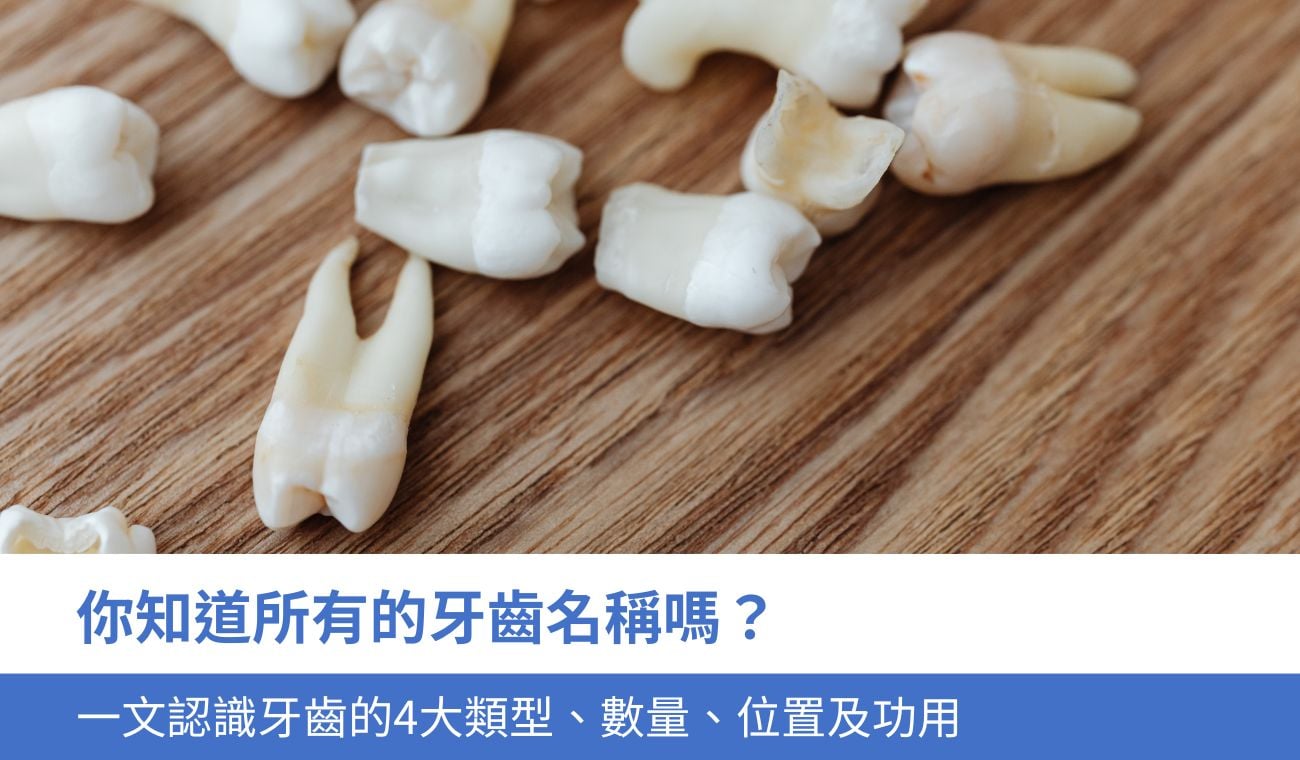
Teeth are of great significance in both biology and anatomy, but do you know the name of each tooth? This article takes you through the names of human teeth and explores the position and function of each tooth in the mouth, to help you maintain good oral health.
Teeth are divided into baby teeth and permanent teeth
Teeth are an important part of the digestive system and play an indispensable role in life. From infancy to adulthood, tooth development can be divided into two sets of teeth, baby teeth and permanent teeth, reflecting the process of our body's growth and development respectively.
Baby teeth: a young child's first set of teeth
A healthy child usually has 20 baby teeth. These start to come through when the baby is about 6 months old and are gradually replaced by permanent teeth at around 6 years old. Baby teeth not only help the child learn to chew and speak but also leave room for the growth of the future permanent teeth.
Permanent teeth: an adult's lifelong companions
As people get older, baby teeth gradually fall out and are replaced by permanent teeth. A full set of permanent teeth has 32 teeth, and their number and arrangement have a great effect on chewing function, clarity of speech and even facial contour.
The enamel of permanent teeth is more translucent than that of baby teeth, and the dentine thickens with age, so teeth become yellower. This is normal.
Names of teethwhat are they? The 4 types at a glance
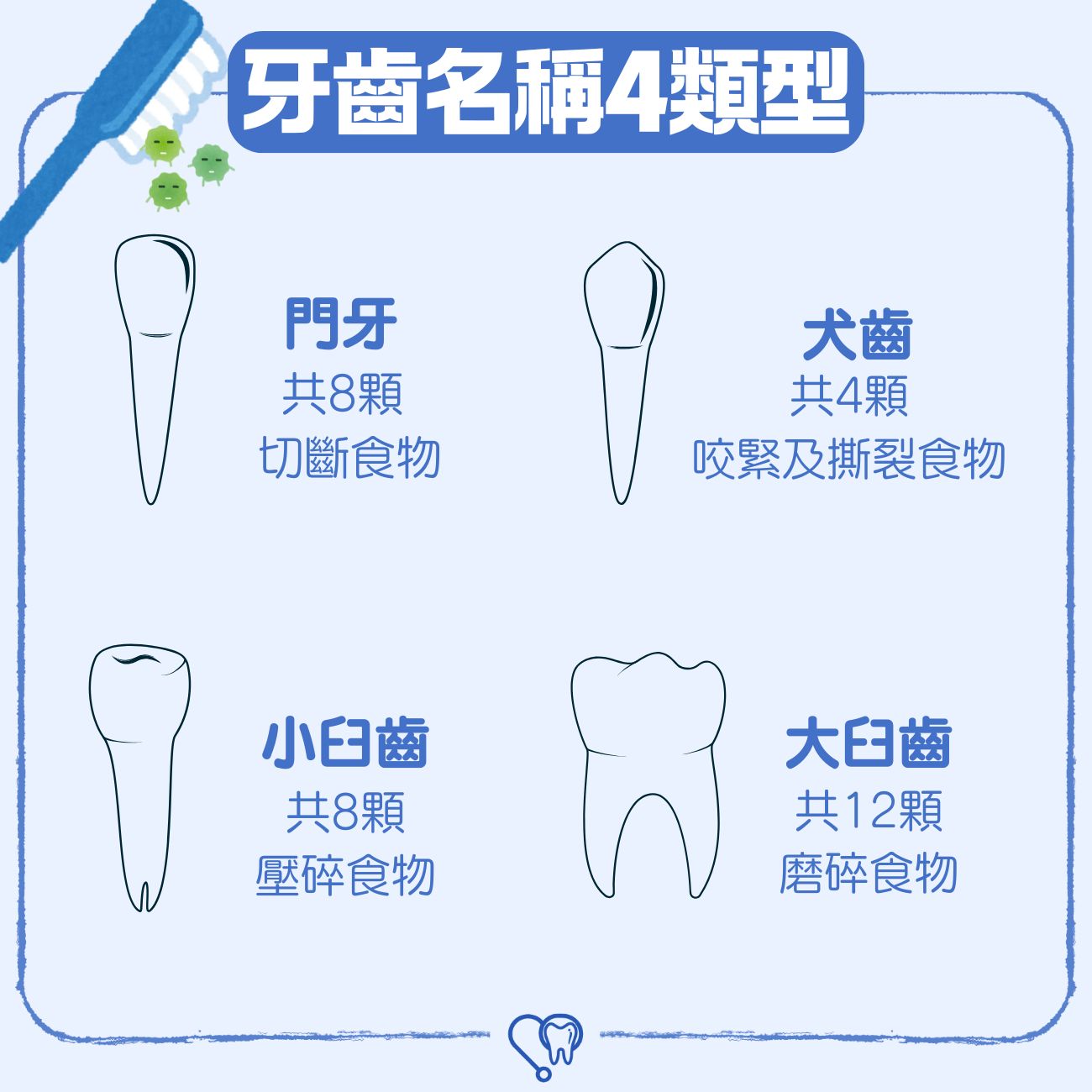
Human teeth can be divided into four main types, each with a specific shape and function. Here are the names and roles of these four types of teeth:
front teeth: cutting food
There are two types of incisors, the central incisors and the lateral incisors, and they are the most noticeable teeth when we smile:
- Upper central incisors
- Upper lateral incisors
- Lower lateral incisors
- Lower central incisors
These 4 teeth are at the very front of the mouth and in the centre of the gum. They are flat in shape with sharp edges, and the main function of incisors is to cut food into small pieces.
The central incisors are usually the first teeth a baby grows, and also the first baby teeth to fall out, making room for the permanent teeth. Reports point out that children very often injure or wear down their upper central incisors during play or sport, so special protective gear such as a mouthguard is recommended to protect the teeth.
canine teeth: gripping and tearing food
Right next to the incisors are the canines, which are cone-shaped and very well suited to tearing food, making it easier to chew.
Canines (pointed teeth) are especially useful for handling tougher foods such as meat. Canines not only play an important role in chewing but also help shape the facial contour.
Premolars (bicuspids): crushing food
Premolars, also known as bicuspids, sit behind the canines but are not present in the baby teeth stage.
- First premolars
- Second premolars
The chewing surfaces of these eight teeth usually have several cusps. This design makes premolars very good at crushing food and then passing it from the front to the molars at the back.
Molars: grinding food
Molars are at the very back of the mouth and have wide, flat surfaces that are very well suited to grinding food.
- First molars
- Second molars
- Third molars (wisdom teeth)
The strong chewing power of the molars lets us handle food of all textures and helps the digestive system absorb nutrients better.
However, parents should note that because the chewing surfaces of molars have grooves of varying depth, they easily hide bacteria and food debris, increasing the risk ofchildren's tooth decayrisks.
Number of teeth
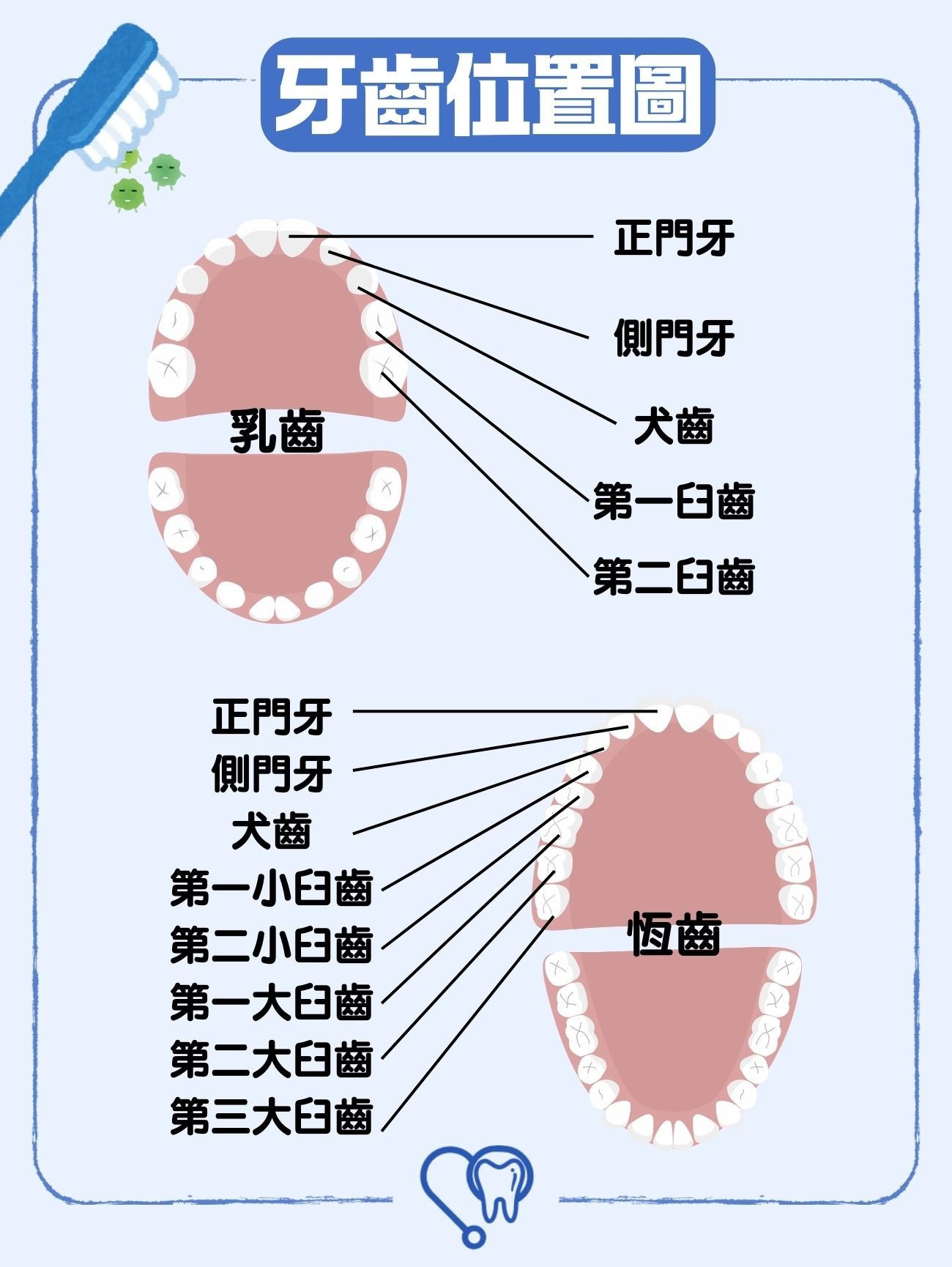
As people get older, the number of teeth in the mouth also changes. In the baby teeth stage a child has 20 teeth in total, 10 in each of the upper and lower jaws, in this order: central incisors, lateral incisors, canines, first molars and second molars.
An adult's mouth usually has 32 permanent teeth, distributed as follows:
- Incisors: four each in the upper and lower rows, 8 in total
- Canines: two each in the upper and lower rows, 4 in total
- Premolars: including first premolars and second premolars, four each in the upper and lower rows, 8 in total
- Molars: including first molars, second molars and third molars, six each in the upper and lower rows, 12 in total
Wisdom teeth:(third molars) are at the ends of the upper and lower jaws and usually appear in the teenage years or early adulthood. Because of modern eating habits and for evolutionary reasons, many people may be missing one or more wisdom teeth, or need them extracted because they may cause oral problems.
Tooth position chart
Functions of teeth
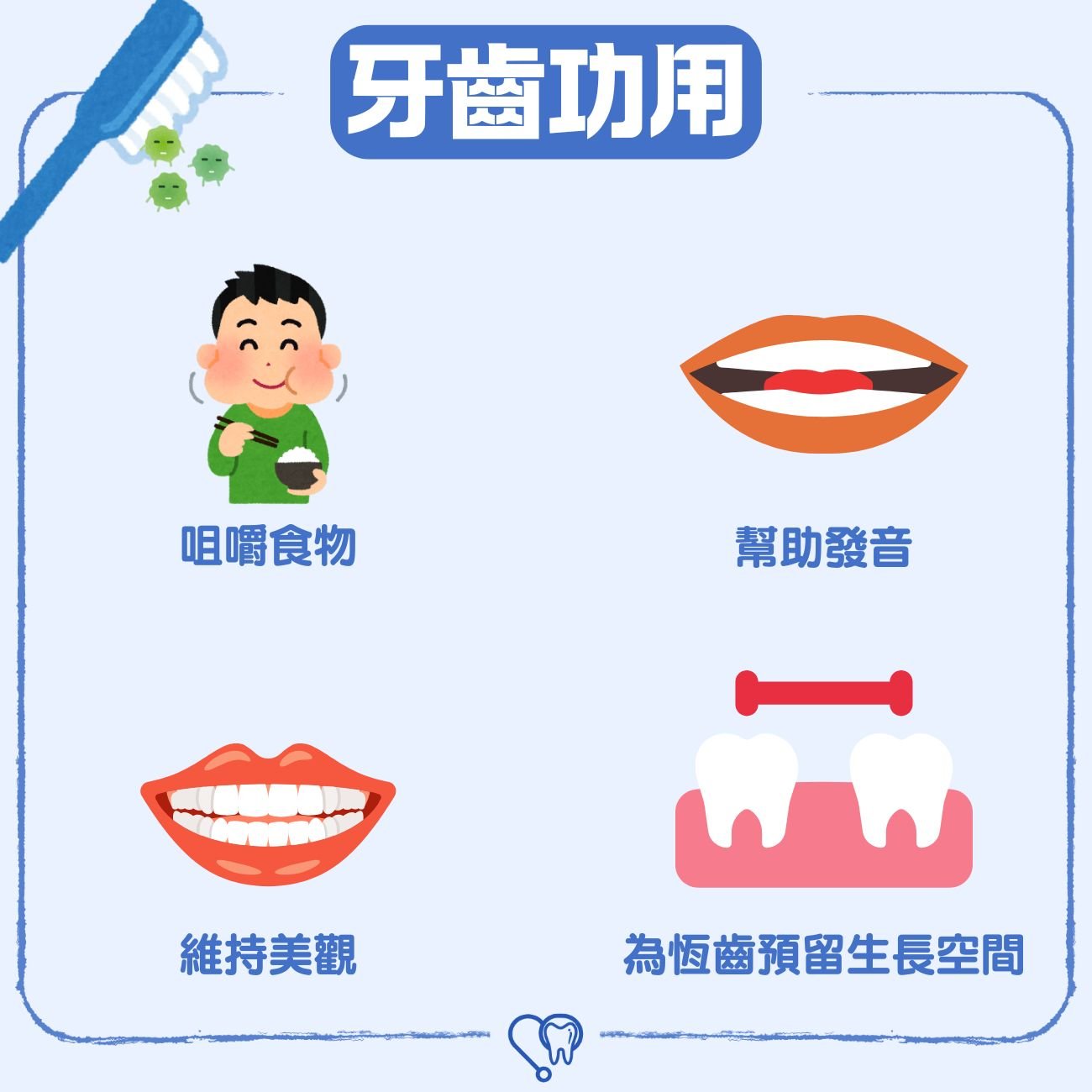
The importance of teeth in daily life goes far beyond what we imagine. From basic chewing to affecting our speech and appearance, the roles of teeth are many-sided and multi-layered. Below are the various functions of teeth, to help you better understand and appreciate these small but important parts of the body.
Chewing food
The most basic and most important function of teeth is chewing food. Through chewing, we cut and grind food so that it is easier to digest and absorb.
Different types of teeth each play their own part in this process, handling food of all textures, from soft fruit to hard nuts. Good chewing not only promotes digestion but also adds to the enjoyment of the texture of food and the satisfaction of a meal.
Helping with speech
Together with the tongue and lips, the teeth form an important structure for speech. Especially when making certain consonant sounds, such as ”f”, ”v” and ”th”, the position and shape of the teeth directly affect how clearly you speak.
A complete, healthy set of teeth is not only related to eating but also directly affects the ability to talk with others. Imagine what our speech would become if the front teeth were missing?
Maintaining appearance
Healthy teeth support the facial muscles, maintain the facial contour and prevent the face from looking sunken because of missing teeth.
A neat set of teeth makes a smile more confident and can leave a good first impression in social situations.Somestudies point out that the relative position and shape of the lateral incisors and central incisors form the so-called "golden ratio", which people find visually pleasing.
Leaving room for permanent teeth to grow
For children, baby teeth have another special function: leaving room for the future permanent teeth to grow. Baby teeth not only help children learn to chew and speak but also hold the right position in the mouth, guiding the correct growth of the permanent teeth.
If baby teeth fall out too early or are damaged, this may affect the alignment of the permanent teeth, leading to the need forbracesin future. So parents should note that even temporary baby teeth need careful care.
How do you maintain oral health?
Building good oral hygiene habits from an early age protects dental health more effectively and makes sure the teeth can carry out their important functions over the long term.
daily usefluoride toothpasteBrush twice a day, for at least 2 minutes each time. To strengthen daily oral care, parents can also use fluoride or antibacterialmouthwash, dental floss andinterdental brush, to further protect the teeth and prevent gum disease and tooth decay.
Too much sugar is one of the main causes of tooth decay. Reduce your child's intake of sweets and sugary drinks, and give more foods rich in calcium and vitamin D, such as dairy products and leafy green vegetables, which helps protect and strengthen the teeth.
Take your child for a professional oral check-up andScaling and Polishingevery six months, and you can also ask the dentist to applyfissure sealantsto prevent tooth decay. If there are symptoms such astoothacheor bleeding gums, seek medical attention promptly to prevent the problem from getting worse.
Summary
Understanding this information about teeth not only helps us take better care of our children's dental health but also raises our awareness of oral care. Whether baby teeth or permanent teeth, every tooth plays an important role in our lives.
Only by keeping good oral hygiene habits and having regular check-ups can we fully enjoy the many benefits of healthy teeth and smile with confidence.
Disclaimer
This article is for information only and does not contain any invitation or solicitation. Patients should seek a professional dentist for diagnosis and treatment according to their own circumstances. To find out more or book a service, we recommend contacting the relevant clinic directly. Please choose suitable dental services and clinics carefully yourself.