

Recovery from wisdom tooth surgery takes about 3–7 days. Swelling is most noticeable on days 2–3 and speech may be less agile, so if your schedule allows, you can plan a lighter load.
Key points of this article
- Wisdom tooth extractions differ in difficulty, so recovery days differ too
- Protecting the blood clot and visible swelling are two different points to watch
- When your schedule allows, you can consider avoiding important meetings on the two peak swelling days
- Diet should move from liquid and soft food gradually back to normal
Some people's wisdom teeth grow in more complicated ways, for example horizontally, impacted or pressing on neighbouring teeth, and in these cases the dentist will usually recommend removal.Wisdom Tooth ExtractionAlthough it is a minor procedure, how long you need to rest after surgery and when you can return to normal life are the questions many people care about most when arranging time off.
How long does recovery from wisdom tooth surgery take?
If you cannot be sure roughly how long your recovery will take, it is better to allow a looser amount of time: not resting enough and returning to normal activity early usually slows overall recovery more than resting one extra day does.
Depends on how serious the wound is
The time needed to recover from wisdom tooth surgery varies from person to person. If only an easier upper wisdom tooth is removed, some people may be able to go to work or school the next day.
If it is a horizontally growing lower tooth that needs the gum lifted or even stitches, it is advisable to rest at least 3 to 5 days, or even a week, before fully returning to normal life.
How many days of rest are enough after wisdom tooth extraction? Recovery period of about 3–7 days
Most people take 3 to 7 days to recover from wisdom tooth extraction, but this period does not mean full healing; it means the body has gradually settled and there is no longer obvious discomfort. If your work involves a lot of talking, lifting heavy things or outdoor activity, it is safer to rest a few more days.
Tooth extraction recovery timeline: from bed rest to returning to daily life
What to watch in the week after extraction is actually two different kinds of risk: in the first 3 days, avoid actions that dislodge the blood clot, while on days 2–3, watch whether swelling affects your appearance and speech. The key points of prevention for the two are not the same.
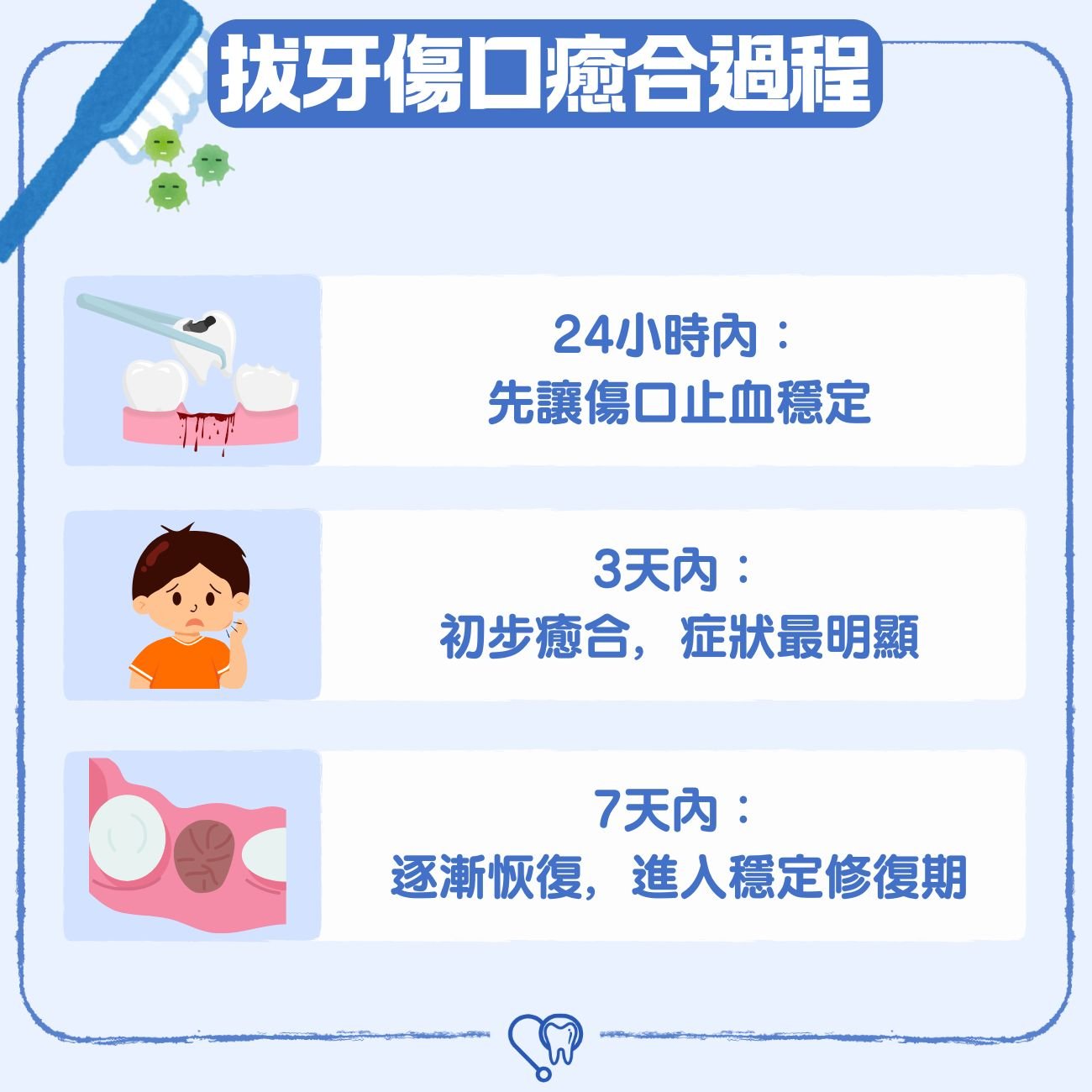
For the detailed physiological changes in wound healing and how to judge abnormal warning signs, seeA full analysis of the after-effects of wisdom tooth extraction; below is a day-by-day guide to roughly what you can and cannot do.
Day 1 (within 24 hours): mainly rest and stop the bleeding
For about an hour after extraction, bite firmly on the gauze and try not to talk, letting saliva and blood be swallowed naturally, to help stop bleeding from the wound and form a protective blood clot.
During this time, mainly rest in bed, avoid talking, eating and going out, and do not rinse vigorously, spit or use a straw, so as not to affect the stability of the blood clot.
Days 2–3: peak swelling, and also when you most need time off
Many people think swelling is most obvious on the day of extraction, but the real peak usually falls on days 2 to 3, when the cheeks may swell rather unevenly and speech may feel less agile.
Days 4–7: clearly better, and most people can resume daily activities
After about 4 to 7 days, most people feel swelling and pain are clearly better and can gradually resume daily activities and normal speech. As long as there is no infection or ongoing bleeding or other abnormality, recovery is on track.
When can you go back to work or school? Suggestions for days off
If your work happens to be flexible, you can schedule rest or a lighter workload to match days 2–3, when swelling is most obvious, rather than the day of surgery itself.
The pace of work in Hong Kong is generally tight, and in practice not many people take special leave for wisdom tooth extraction. Below are some flexible arrangements to consider by type of work; the actual arrangement still depends on your company's flexibility, your personal recovery and the difficulty of the wound, and these are not hard rules.
General clerical / administrative work
If your work is mainly paperwork and computer tasks with little face-to-face talking, many people go straight back to work the day after surgery, though speech or chewing may feel slightly less agile. If it can be arranged flexibly, giving your body another day or two to adjust will be more comfortable.
Work that involves a lot of talking or meeting people
For sales, customer service, teaching or work with frequent meetings and client visits, if your schedule allows, it is more relaxed to keep important meetings away from days 2 to 3 after surgery, as cheek swelling and less agile speech are most obvious then.
If you really cannot change your schedule, you can also consider telling the other party in advance, or using a video meeting instead of meeting face to face.
Students / manual labour
Students who have courses involving a lot of discussion or presentations can consider keeping the first two or three days after surgery clear; for manual work or work that involves lifting heavy things, it is advisable to wait until swelling and pain have clearly eased before resuming heavy work, to avoid the wound bleeding from exertion.
Diet during recovery: from liquids to a normal diet
The key to resuming eating is not the day number itself but whether the blood clot has stabilised: the closer the texture is to solid, the lower the mechanical risk to the blood clot, which is why even by days 5–7 it is still advisable to start with mild foods and watch how you react.
Resuming diet should be gradual: the softer the texture, the less it irritates the blood clot. Below is a rough diet plan for each stage, which still needs adjusting according to how the wound is healing.
Days 1–2: all-liquid diet
In the first day or two after surgery, it is recommended to have mainly warm or cool liquid foods, such as soup, fruit purée, yoghurt, milk or jelly, avoid using a straw, and avoid food that is too hot or irritating, so as not to affect the stability of the blood clot.
Days 3–5: soft diet
During this time, avoid irritating foods such as hot soup, curry and mala hot pot, and do not eat hard, crispy or granular foods such as peanuts, biscuits and rice crackers, which may get stuck in the wound and cause infection or damage. From day 3 you can gradually try soft foods such as congee, steamed egg and tofu.
From day 6: gradually return to a normal diet
Usually by days 5 to 7, if the wound no longer hurts and you can open your mouth freely, you can slowly return to your original diet, but it is still advisable to start with mild foods, avoid chewing directly on the side of the wound, and gradually restore normal chewing force after seeing how your body responds.
What are the after-effects of wisdom tooth extraction?
After wisdom tooth extraction, besides swelling and pain, a small number of people may have after-effects such as difficulty opening the mouth, nerve numbness or wound infection. Most are temporary reactions, but a few situations need an active follow-up visit.
For the complete way to judge after-effects and a comparison with normal reactions, see:A full analysis of the after-effects of wisdom tooth extraction
FAQ
Can I drive myself home right after wisdom tooth extraction?
If only local anaesthesia was used for the surgery, in theory awareness and reaction ability are not affected, but it is still safer to be picked up by a relative or friend, as some people may feel dizzy or unwell after surgery. If sedation or general anaesthesia was used, you must be accompanied and must not drive yourself that day.
If several wisdom teeth are removed at once, do I need more days off?
When several wisdom teeth are removed at once, especially when the upper and lower, left and right are all done at the same time, swelling and discomfort are usually more marked than with a single tooth. It is advisable to add 1 to 2 days of leave accordingly, using the side that recovers more slowly as the reference for how many days to take.
Will my speech be unclear after wisdom tooth extraction? Will it affect work and meeting clients?
For 2 to 3 days after surgery, because of swelling around the cheeks and lips, speech may indeed feel less agile or unclear. This is normal and usually improves as the swelling goes down. If your work involves frequent talking or dealing with clients, it is advisable to keep these days free of important meetings or appointments.
Summary
Although wisdom tooth extraction is a common minor procedure, everyone recovers at a different pace. If during recovery you have abnormal pain, persistent swelling or other situations that need attention, you can check against the after-effects section above to confirm whether it is normal; if in doubt, it is also advisable to return for a follow-up so the dentist can assess it.
Article last updated: 2026-09
Disclaimer
This article is for information only and does not contain any invitation or solicitation. Patients should seek a professional dentist for diagnosis and treatment according to their own circumstances. To find out more or book a service, we recommend contacting the relevant clinic directly. Please choose suitable dental services and clinics carefully yourself.



