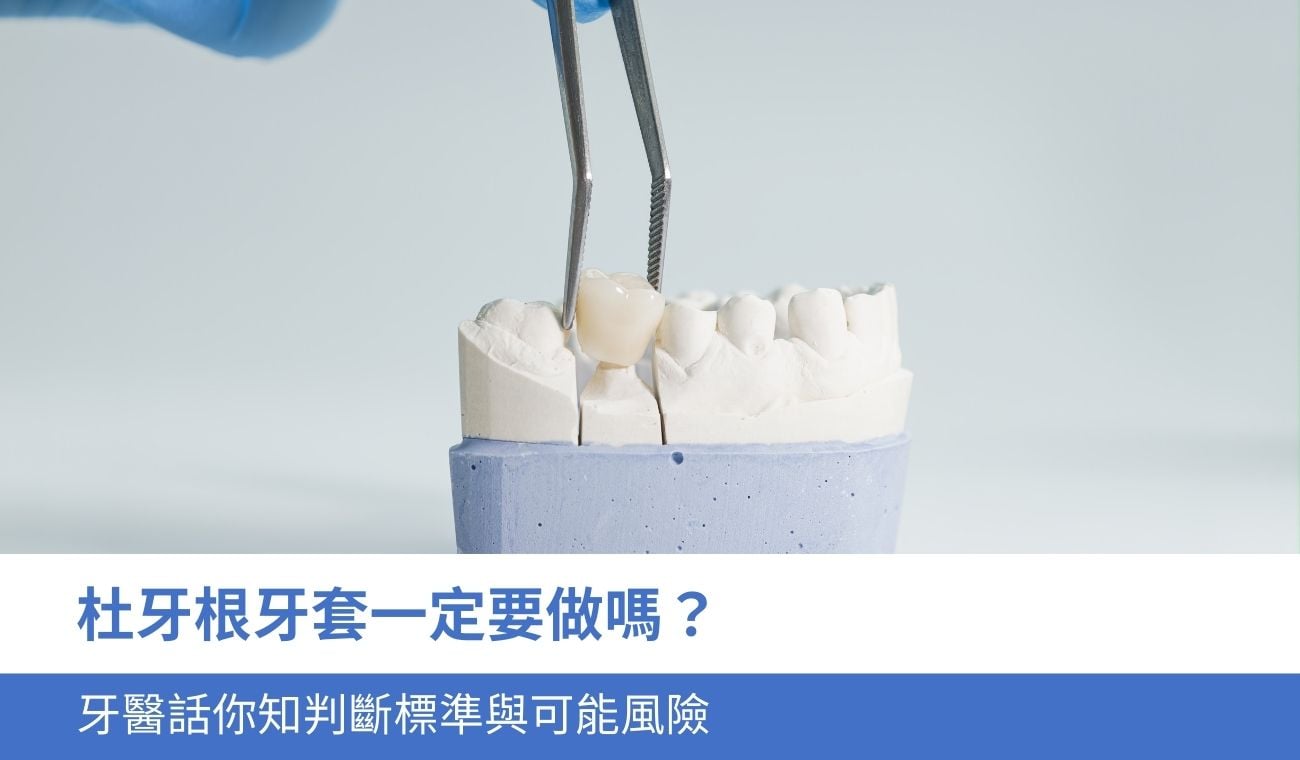
Article last updated: 2026-07
Not every tooth needs a crown after root canal treatment, but for a back tooth or one with little tooth structure remaining, adding a crown for protection is recommended, to avoid the tooth fracturing later and needing extraction.
What is a crown after root canal treatment? Is it always necessary?
Many people who have completedRoot Canal Treatmentoften ask: "The dentist says I need a crown. Is it really necessary?" This is in fact not a sales pitch, but is related to the change in the structure of the tooth.
Whether a crown is needed depends not on whether root canal treatment has been done, but on whether the tooth can bear everyday chewing.
Crown after root canal treatment (dental crown)
A crown after root canal treatment means that once root canal treatment is completed, the original tooth is reshaped and a custom-made protective shell is placed over it, so that the tooth can bite normally and is less likely to crack.
Because root canal treatment removes the nerve and blood vessels inside the tooth, the tooth loses its source of nourishment and becomes drier and more brittle. It looks as if it is still there, but its structure is in fact no longer as strong as before, and the role of the crown is to make up for this structural weakness.
What dentists generally recommend
Whether a crown is needed depends not on whether root canal treatment has been done, but on whether the remaining tooth structure can bear everyday biting, and has to be assessed by the dentist according to the position of the tooth, the condition of the tooth structure and biting habits.
Clinically, most dentists assess whether to recommend a crown after root canal treatment is completed according to the following conditions:
- Whether the tooth is a back tooth and bears greater biting force
- How much natural tooth structure is left, and whether it has already been filled many times
- Whether there has been a crack or chipped corner, or whether the old filling is very large
- Whether there are habits such as teeth grinding or clenching, which put extra load on the tooth
For a back tooth or where there is not much tooth structure left, the dentist will usually recommend adding a crown, to avoid the whole tooth fracturing later.
Why is a crown recommended after root canal treatment? Function and necessity
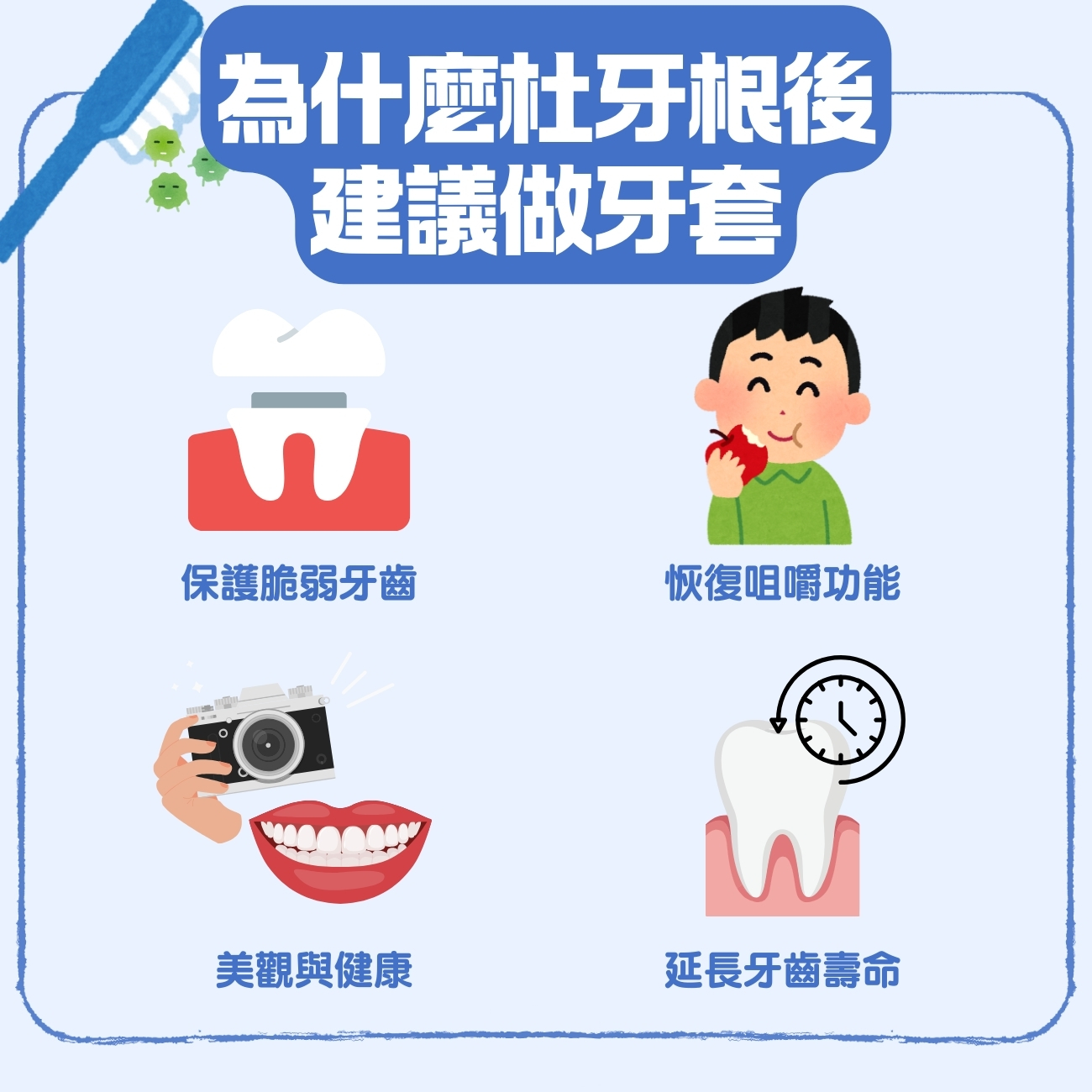
Protecting a fragile tooth
After root canal treatment, because the inside of the tooth has been emptied, its resistance to pressure drops clearly.
Without the protection of a crown, everyday eating, teeth grinding and biting hard objects can slowly build up tiny cracks, and the tooth finally breaks outright at one particular bite. Once the crack reaches the root, it can mostly no longer be repaired.
Restoring chewing function
Many people think that as long as there is no pain, everything is fine. In fact, if no crown is made after root canal treatment, patients often unconsciously avoid that tooth when biting, which over time instead affects the overall balance of the bite.
A crown lets the tooth bear normal chewing force again, so that you do not have to be so "careful" when eating, and also reduces overuse of the other teeth.
Appearance and health
Especially for front teeth or positions that show when you smile, a tooth after root canal treatment sometimes gradually changes colour.
Besides protecting the structure, a crown also restores appearance, making the colour and shape of the tooth more natural, and at the same time prevents the edge of a filling from trapping dirt, lowering the risk of tooth decay and gum inflammation.
Extending the life of the tooth
The structure of a tooth after root canal treatment becomes more fragile, and patients are advised to discuss with the dentist whether a crown is needed to provide extra protection. In the long term, the value of a crown lies in "extending the years of use".
What are the consequences if no crown is made after root canal treatment?
Clinically, patients are occasionally seen who, after root canal treatment, chose to deal with the tooth with a filling first and postponed having a crown. For a back tooth that bears greater chewing force, the tooth structure has already become brittle because it has lost its nerve and blood supply, and when you keep biting harder foods (such as bones and nuts), the risk of fracture rises markedly. Once the crack extends deep into the root, in most cases it can no longer be repaired and the tooth finally has to be extracted.
This is not a special reaction in a single case, but a common course that may occur once the structure of a back tooth has become brittle, and is also why dentists take the position of the tooth and biting force into account together when assessing whether to recommend a crown.
What materials are there for a crown after root canal treatment? Metal, ceramic and all-ceramic
There is no single standard answer to choosing a crown material: metal crowns have higher structural strength, while ceramic and all-ceramic crowns look better. The actual choice has to be decided after the dentist assesses the position of the tooth, biting force and appearance needs.
| material | Appearance | Structural characteristics | Commonly suitable positions | Fee range |
| Metal crown (e.g. cobalt-chromium alloy) | Metallic in colour, clearly different from natural tooth colour | Higher structural strength and stable resistance to biting force | Mostly used in positions that are not exposed, such as back teeth | Quoted individually |
| Porcelain-fused-to-metal crown (metal inner crown + ceramic outer layer) | The ceramic outer layer can be colour-matched and is close to tooth colour | Combines metal support with ceramic appearance, balancing strength and appearance | Can be used for front or back teeth depending on the situation | Quoted individually |
| full ceramic crown | Higher translucency, with a colour closer to natural teeth | Strength depends on the type of all-ceramic material; when used on back teeth that bear greater biting force, the dentist will assess individually whether it is suitable | Mostly used for front teeth or positions with higher demands on appearance | Quoted individually |
The actual choice of material is best decided after discussing the position of the tooth, the bite and appearance needs with the dentist. The table above is only a general comparison of the characteristics of the materials, and fees depend on the clinic's actual quotation and an assessment of the individual's teeth.
Process of fitting a crown after root canal treatment
Fitting a crown after root canal treatment involves steps such as reshaping the tooth, taking an impression, wearing a temporary crown, a trial fitting and final fixing, and the actual number of follow-up visits depends on the condition of the tooth and how the crown is made.
The general process is not complicated and can roughly be divided into the following stages:
- Complete root canal treatment and confirm that the infection is under stable control
- Reshape the tooth to leave space for the crown
- Take an impression or digital scan and make a custom crown
- Wear a temporary crown in the meantime to protect the tooth
- Try in and adjust the final crown and confirm the bite
- Fix it permanently and complete treatment
The whole process usually takes several follow-up visits, and the actual time varies with the condition of the tooth and how the crown is made.
FAQ
What happens if I do not have a crown after root canal treatment?
There may be no obvious discomfort in the short term, but as time passes and the tooth is used more, the risk of the tooth fracturing rises markedly. Once a fracture is below the gum line, in many cases the only option is extraction.
How long can a crown after root canal treatment generally be used once it is done?
With normal use and good cleaning, a crown can usually be used for 10 years or more. The actual lifespan is affected by biting force, teeth grinding habits, oral cleaning and regular check-ups, and varies from case to case.
How much does a crown after root canal treatment cost?
The fee for a crown after root canal treatment ranges from HK$4,000 to HK$8,000, and varies with the position of the tooth, the choice of material and the condition of the tooth itself. The total fee for the whole root canal treatment together with the crown is usually between HK$8,000 and HK$20,000+.
How do you choose the material for a crown?
The choice of material has to consider the position of the tooth, biting force and appearance needs. No single material suits every situation, and it is advisable to decide after assessment by the dentist. For a detailed comparison, see the material comparison table above.
Summary
There is no right answer as to whether a crown is needed after root canal treatment, but from clinical experience, in most cases it is to protect a tooth that has become brittle and avoid losing this natural tooth through later fracture. What really matters is not "whether or not to do it", but that the dentist judges, according to the tooth structure, position and how it is used, what approach is best for long-term oral health.
Disclaimer
This article is for information only and does not contain any invitation or solicitation. Patients should seek a professional dentist for diagnosis and treatment according to their own circumstances. To find out more or book a service, we recommend contacting the relevant clinic directly. Please choose suitable dental services and clinics carefully yourself.