
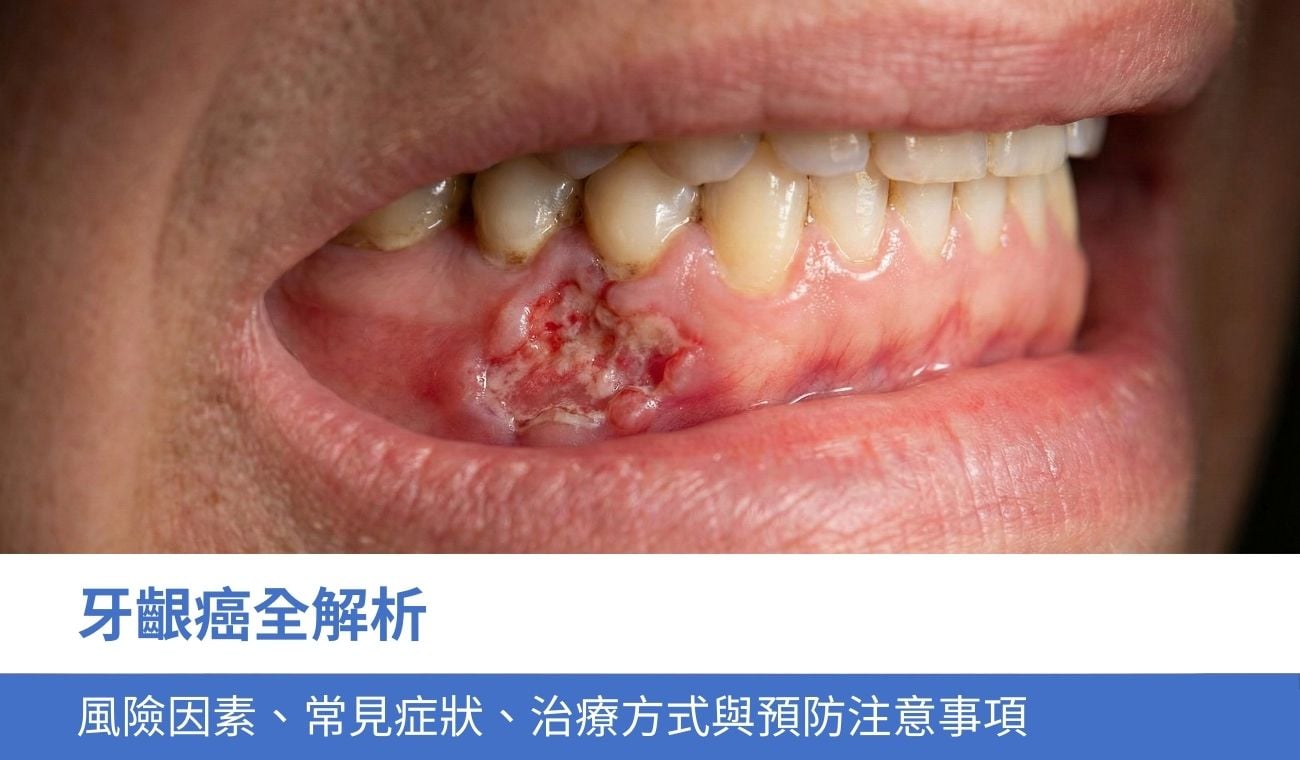
Gum cancer is a type of oral cancer, and its early symptoms are similar to periodontal disease, showing as ulcers, lumps or discolouration of the gums. Smoking, drinking and chronic irritation are the main risk factors, and seeking medical attention early can raise the success rate of surgical treatment.
Key Points
- Early symptoms of gum cancer are similar to periodontal disease or mouth ulcers and are easily overlooked
- Four main causes: poor habits, chronic irritation, heredity and viral infection
- Early stage: ulcers, white / red patches; middle and late stages: loose teeth, facial swelling
- Prevention: self-checks, giving up poor habits, keeping up oral hygiene, regular check-ups
- Treatment: surgical removal of the tumour is the main approach, with radiotherapy and chemotherapy as support
Gum cancerWhat is it? How does it differ from ordinary gum problems?
Gum cancer(oral cancer)
Gum cancer is a malignant tumour that grows on our gums, and is a type oforal canceroral cancer.
It usually arises from mutation of the cells of the gum lining. Although gum cancer occurs slightly less often than tongue cancer, because its early symptoms are very similar to "periodontal disease" or "mouth ulcers", it is often overlooked.
Gum cancer vs gingivitis vs periodontal disease
| Features | Gingivitis | periodontal disease | Gum cancer |
| Pain | Mild, occasional pain | Intermittent discomfort, pain when brushing | Mostly painless or mild discomfort in the early stage
Clear pain or numbness in the late stage |
| Appearance and firmness | Soft and swollen | Rather soft and bleeds easily | Hard lump that cannot easily be pressed down |
| Healing time | Can improve within a few days to a week | Chronic and recurrent | Ulcer that does not heal for a long time
Still present after several weeks or even months |
4 major causes of gum cancer
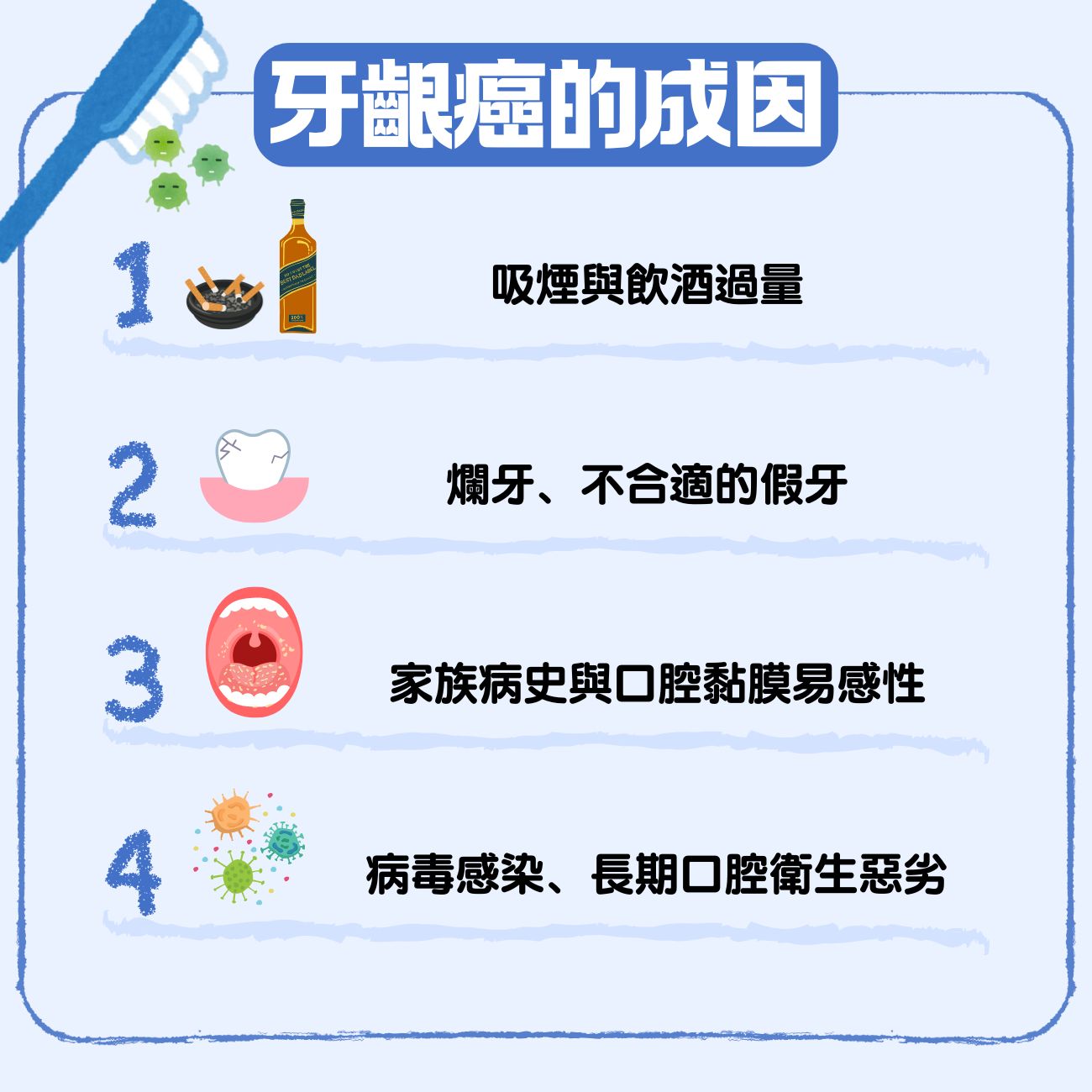
Poor habits: smoking and excessive drinking
This is the most common cause. Nicotine and tar in cigarettes, together with long-term soaking in alcohol, make the lining of the mouth repeatedly damaged and raise the chance of the gum cells developing abnormal changes.
Chronic irritation: decayed teeth and ill-fitting dentures
If a decayed retained root in the mouth has an edge as sharp as a blade, or a removable denture has come loose or does not fit, continuously rubbing the same spot on the gum, this constant physical irritation may increase the risk of lesions in the gums.
Genetic and immune factors: family history and susceptibility of the oral lining
Although the proportion is lower, if a close relative has had oral cancer, or your own oral lining is more fragile, the chance of lesions developing is also slightly higher.
Viral infection (HPV) and long-term poor oral hygiene
Modern research shows that the human papillomavirus (HPV) has a certain association with the occurrence of oral cancer.
In addition, if oral cleaning is neglected for a long time, large amounts of tartar and bacteria build up on the gums, and the continuous chronic inflammation this causes also raises the risk of cancerous change in gum cells.
Gum cancercommon symptoms
Not obvious in the early stage: ulcers, wounds that do not heal, white / red patches
If you find an ulcer or mouth ulcer on the gums that has still not improved after two weeks of applying medication or removing sources of irritation, or white or red patches even appear on the surface, this may well be a warning sign that cannot be ignored.
Warning signs in the middle and late stages: teeth loosening / falling out for no reason, facial swelling
If you do not have serious periodontal disease but suddenly find a tooth loosening or even falling out by itself, or the wound after an extraction has not healed for a long time and comes with facial swelling, you should seek medical examination at once.
Special signs: abnormal pain or numbness, repeated bleeding
When a tumour invades nerve fibres, the gums may have an abnormal feeling of numbness, or bleed very easily. These are not ordinary signs of inflammation, and if they appear, please seek a doctor's help as soon as possible.
Suspected gum cancer? Early detection and points on prevention
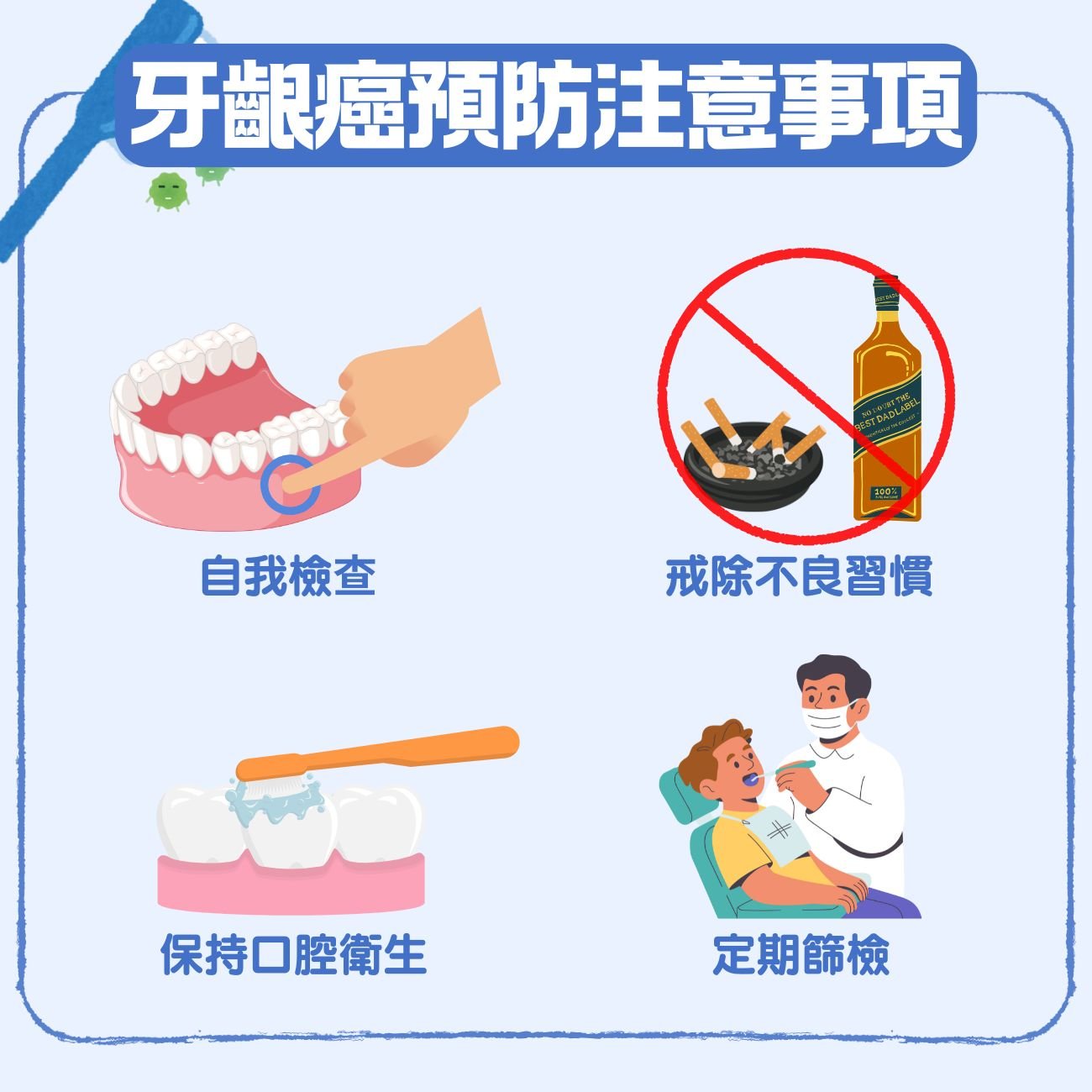
Self-check
It is recommended that when brushing each week, you lift your lips and check whether the colour of the gums is even (whether there are white or red patches). Gently feel the gums with your finger, and note whether there are hard lumps, nodules or ulcers that do not heal.
Give up poor habits
Avoiding smoking and excessive drinking can effectively reduce the risk of the gums being irritated by carcinogens over the long term, and can also improve overall oral health, keeping the gum tissue's resistance in good condition.
maintain oral hygiene
Brushing in the morning and evening, and using dental floss and mouthwash after meals, can effectively remove plaque and food debris and lower the possibility of chronic inflammation.
Regular screening
It is recommended to go to a dental clinic every six months for scaling and polishing and an oral check-up. Many early lesions are found at routine check-ups or during scaling and polishing, and early diagnosis can greatly raise the success rate of treatment.
How is gum cancer treated? 2 main treatment options
Surgical treatment: removing the tumour and surrounding tissue
Surgery is the most direct method of treating gum cancer. The doctor removes the diseased gum tissue and the surrounding bone that may be affected, with the aim of clearing the cancer cells.
In early cases the area of surgery is small, and the effect on appearance and function is in fact very limited.
Radiotherapy and chemotherapy: used as support or when surgery is not possible
If the tumour is larger, or remaining cancer cells need to be cleared more thoroughly after surgery, the doctor will add radiotherapy (radiotherapy) or chemotherapy. The oral and maxillofacial surgeon and the oncologist will usually assess this together.
FAQ
Is gums that keep getting inflamed gum cancer?
In most cases, gums that keep getting inflamed are gingivitis or periodontal disease, but if the inflammation is always in exactly the same spot and there is no improvement at all after treatment (such as scaling and polishing or draining pus), you need to be more alert and have further examination.
How do you know whether you have gum cancer?
The most accurate method is a "biopsy". Under local anaesthesia, the doctor takes a small piece of gum tissue and sends it for testing, and the exact result is known a few days later.
Is the survival rate of gum cancer high? Are there after-effects after treatment?
For early gum cancer at stages 1–2, the five-year survival rate can be as high as over 80%, and the after-effects of treatment are also relatively few.
What lifestyle habits should you pay attention to during recovery after gum cancer surgery?
In the early period after surgery, mainly have liquid or soft meals and avoid hot food that irritates the wound. You also need to keep the mouth clean, avoid smoking and alcohol, follow the doctor's rehabilitation advice and attend regular follow-up visits.
Can gum cancer spread?
If it is not dealt with, cancer cells may spread to the lymph nodes in the neck or to distant organs. For this reason, during the examination the doctor will also feel your neck for lumps.
Will treatment for gum cancer affect speaking, chewing or appearance?
Because the area of surgery and the way of reconstruction differ, some patients may temporarily have difficulty chewing or speaking, but this can be improved through rehabilitation and correction.
Summary
Early symptoms of gum cancer are not obvious, and having scaling and polishing and a check-up every six months, keeping up oral hygiene and giving up poor habits are the most effective ways of prevention. If an abnormal ulcer, lump or loose tooth has already appeared, be sure to seek medical attention early. With surgery and supporting treatment, most patients can achieve good recovery and quality of life.
Further reading:[Preventing oral cancer] What are the early symptoms of oral cancer? Prevention methods and oral cancer treatment explained in one article
Disclaimer
This article is for information only and does not contain any invitation or solicitation. Patients should seek a professional dentist for diagnosis and treatment according to their own circumstances. To find out more or book a service, we recommend contacting the relevant clinic directly. Please choose suitable dental services and clinics carefully yourself.



