
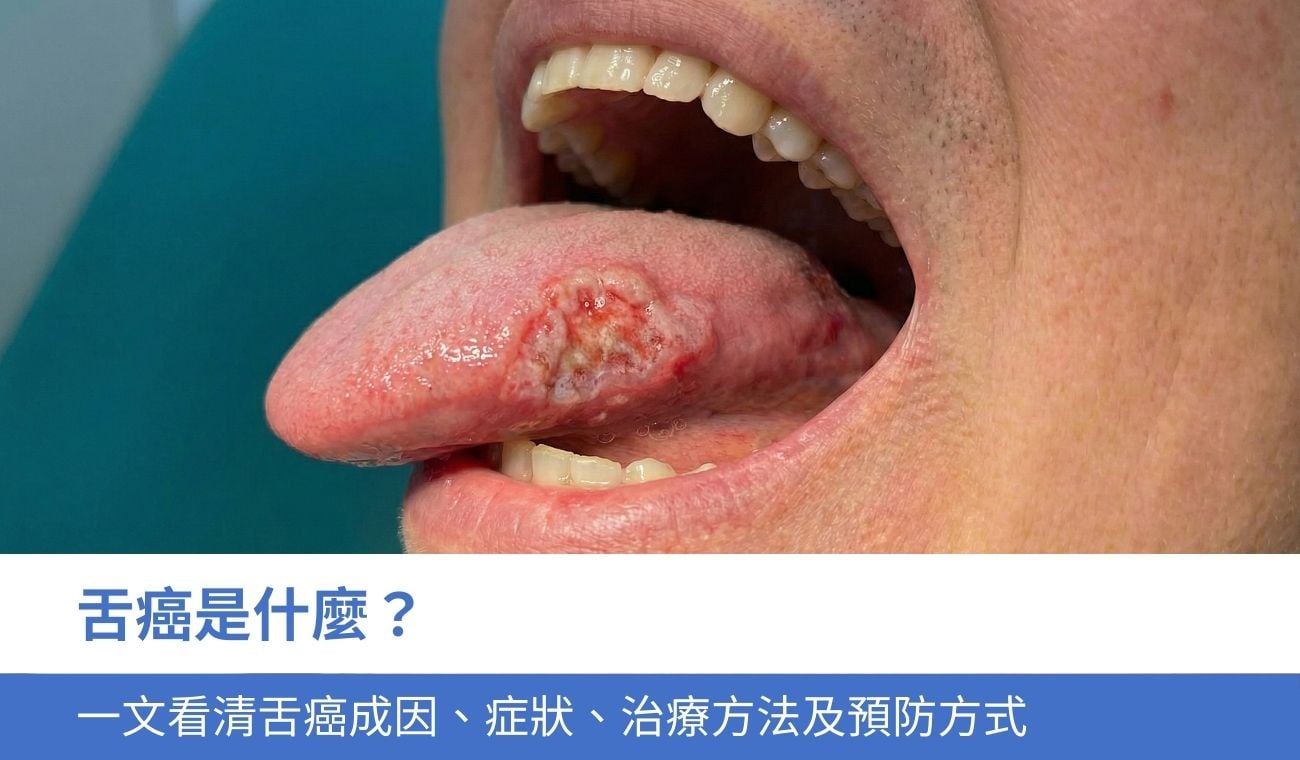
Tongue cancer is a type of oral cancer, often related to smoking, heavy drinking, chronic irritation in the mouth and HPV infection. Early symptoms are not very obvious. Regular check-ups, good oral hygiene, and quitting smoking and cutting down on alcohol can effectively lower the risk and improve the chance of successful treatment.
Key Points
- Oral cancer is commonly found on the front 2/3 of the tongue, mostly squamous cell carcinoma
- Risk factors: smoking and drinking, chronic irritation in the mouth, HPV infection
- Diagnostic process: oral examination → dealing with sources of irritation → biopsy
- Treatment options: surgical removal in the early stage; in the middle and late stages, surgery combined with radiotherapy and chemotherapy may be needed
- Prevention: quit smoking and cut down on alcohol, maintain oral hygiene, have regular dental check-ups
tongue cancerwhat are they?
Tongue cancer is a type of oral cancer, mostly occurring in the front 2/3 of the tongue, which is the part we can see when brushing our teeth every day. The most common pathological type is "squamous cell carcinoma", a kind of malignant tumour. If it is not dealt with, it gradually destroys the surrounding muscle tissue, and the affected area usually shows an ulcer that does not heal for a long time, a hard lump or abnormal colour.
Tongue cancer is seldom sudden. It usually goes through a period of "precancerous lesions" (such as white or red patches), and with regular oral check-ups there is a good chance of intervening early, before it develops into cancer.
What causes tongue cancer? 3 major risks to know about
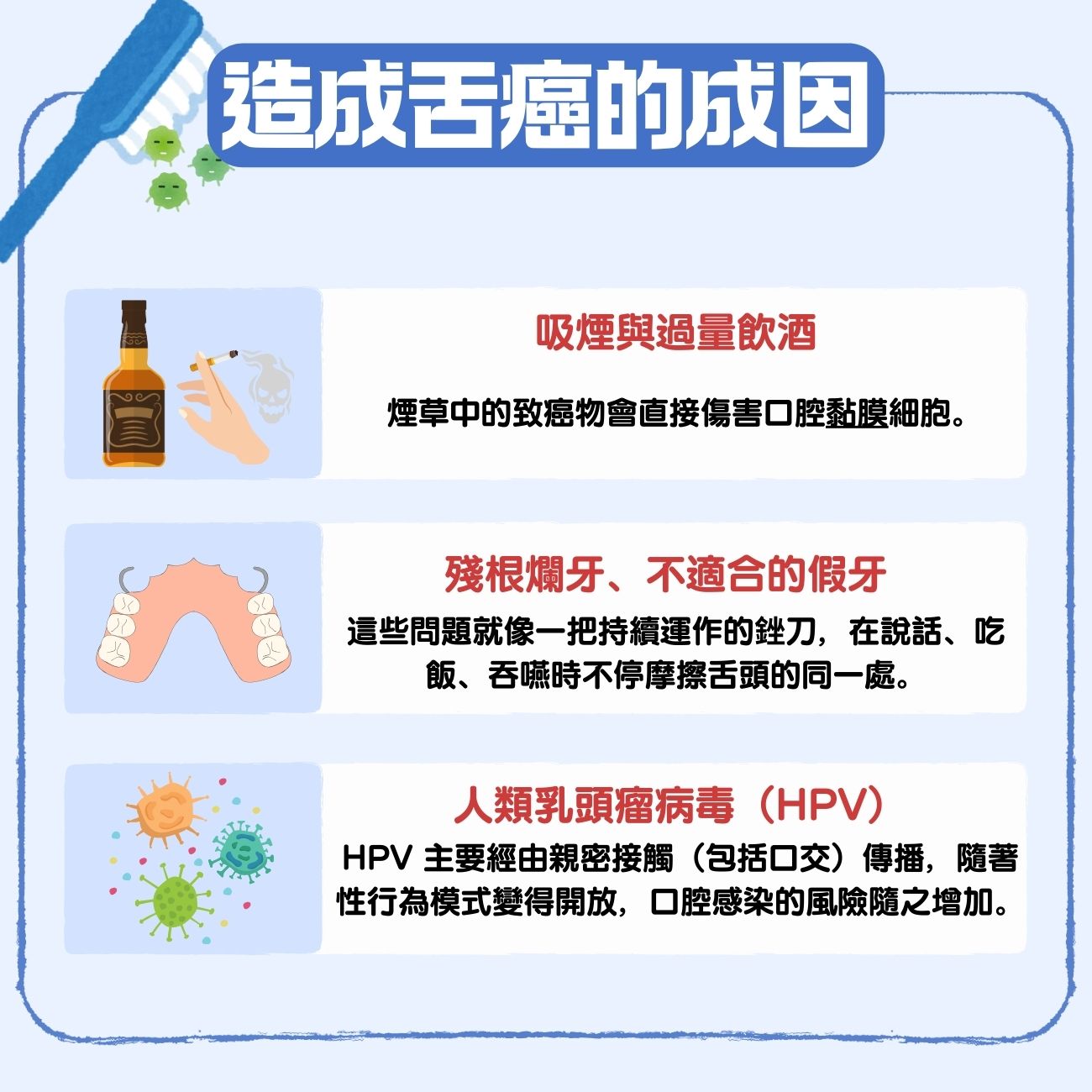
Smoking and excessive drinking
Smoking is one of the clearest high-risk factors for tongue cancer, as the carcinogens in tobacco directly damage the cells of the lining of the mouth. If you also drink, alcohol acts like a solvent, helping carcinogens penetrate the lining of the tongue more easily, creating a synergistic effect that greatly raises the risk of tongue cancer.
"Chronic irritation" in the mouth: decayed teeth and dentures
This is the most commonly overlooked cause. When the mouth is irritated over a long period, the risk of mutation in tongue cells rises too. Common examples include:
- Sharp points left after a tooth breaks (retained roots)
- Wearing ill-fitting dentures
- Sharp tooth edges that repeatedly rub against the tongue
These problems are like a file that keeps working, rubbing the same spot on the tongue non-stop when speaking, eating and swallowing. Long-term "mechanical chronic trauma" makes the lining keep being damaged and repaired, which may finally lead to cell mutation and raise the risk of cancer.
Human papillomavirus (HPV infection)
In recent years the medical community has found that some tongue cancers (especially at the base of the tongue) are related to the human papillomavirus (especially type HPV-16). This explains why some young people with good lifestyle habits, who neither smoke nor drink, also develop the disease.
Because HPV is mainly spread through intimate contact (including oral sex), as sexual behaviour has become more open and varied in recent years, the risk of HPV infection in the mouth has risen accordingly, becoming a concern that young people cannot ignore.
What are the common symptoms of tongue cancer?
Early tongue cancer does not necessarily hurt, so daily observation is important. If the following symptoms continue formore than two weeks without healing, it is advisable to have a dentist assess them:
- An ulcer that does not heal: A break in the surface of the tongue that never gets better
- Red and white patches or ulcers:Abnormal white or red patches appear on the tongue
- Lumps or thickened tissue: Lumps on the tongue or neck
- Pain or numbness: Persistent pain, a burning feeling or numbness in the tongue
- Difficulty swallowing or chewing: Restricted movement of the tongue, causing difficulty chewing, speaking or swallowing
- Unexplained bleeding: Bleeding at the slightest touch
- Persistent sore throat: Persistent discomfort in the throat or a feeling of something stuck
How can you seek help if you suspect you have tongue cancer?
Step 1: Dentist's oral examination and diagnosis
The dentist will look at the appearance of the tongue, changes on the surface and the two side edges, and will also check whether the teeth or dentures are causing irritation, to make a preliminary judgement on whether further examination is needed.
Step 2: Deal with sources of irritation and observe
If sharp tooth edges or dentures that rub against the tongue are found, the dentist will first remove or improve these physical sources of irritation and observe the changes over 1–2 weeks. If the symptoms improve clearly, the possibility of cancer can usually be ruled out.
Step 3: Referral to a specialist for a "biopsy"
If the wound still has not healed after two weeks of observation, or the dentist suspects a malignant lesion, the dentist will help refer you to oral and maxillofacial surgery for a biopsy.
The specialist will take a small piece of tissue from the lesion and examine the cell changes under a microscope to confirm whether it is cancer.
Three stages of treatment for tongue cancer
Early stage (stages 1–2):
At this stage the tumour is small (usually less than 4 cm) and limited to the surface or shallow layers of the tongue, with no sign of spread.
- Mostly treated by surgical removal
- Where the wound heals well, most of the function of the tongue can usually be kept
- The overall outlook is better
Middle stage (stage 3):
At this point the tumour has grown larger in diameter (more than 4 cm), or cancer cells have spread to the lymph nodes on the same side of the neck.
- Surgery combined with radiotherapy or chemotherapy may be needed
- If there is lymph node spread, the lymph nodes in the neck also need to be dealt with
Late stage (stage 4):
In the late stage the tumour has usually invaded deep into the surrounding tissue (such as the jawbone and deep muscles), or spread to lymph nodes on the opposite side and to other distant organs of the body.
- A multimodal treatment plan is drawn up according to the size of the tumour and the extent of spread
- Including surgery, radiotherapy, chemotherapy, and even targeted therapy
4 ways to prevent tongue cancer
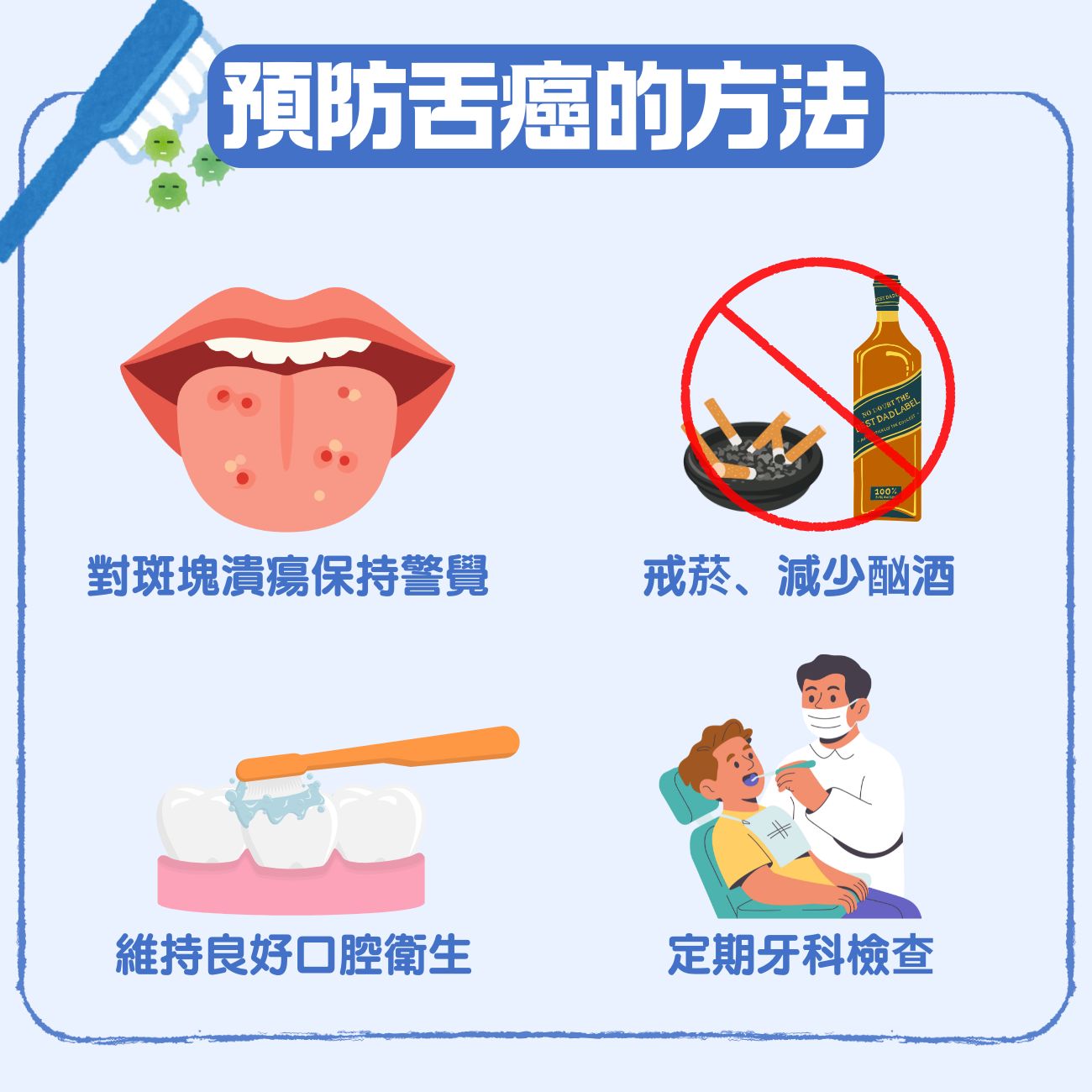
Method 1: Quit smoking and cut down on heavy drinking
This is the most effective way to lower the risk. Quitting smoking gives the cells of the lining of the mouth a chance to repair themselves and keeps them away from the damage of carcinogens.
Method 2: Maintain good oral hygiene
Brushing every morning and evening, flossing and cleaning the tongue coating reduces the growth of bacteria in the mouth and lowers the chance of chronic inflammation.
Method 3: Have regular dental check-ups and avoid chronic irritation in the mouth
It is recommended to have scaling and polishing and an oral check-up every six months. The dentist can find and deal early with retained roots of decayed teeth, chipped teeth or ill-fitting dentures, so that the tongue does not suffer over the long term. If you find you often bite your tongue, you should also tell the dentist so that adjustments can be made.
Method 4: Stay alert to persistent mouth ulcers / patches
Develop the habit of checking yourself, looking at the sides and underside of the tongue when you look in the mirror. If you find a wound on the tongue that has not healed in two weeks, be sure to seek medical attention early.
FAQ
Can the HPV vaccine prevent tongue cancer?
It can prevent cancers caused by the HPV virus. Because some tongue cancers and oropharyngeal cancers are related to HPV infection, vaccination can indeed provide a degree of protection, especially for young people.
How many years can you live with tongue cancer?
The survival rate of tongue cancer depends mainly on how early it is found. According to clinical medical statistics, if it is found and treated in the early stage, patients' five-year survival rate can reach over 80%.
Is the survival rate of tongue cancer high? If removal is needed, are the after-effects serious?
The survival rate of early tongue cancer is high (about 80%) and the area removed by surgery is small, and speech therapy after surgery can restore the ability to speak and eat; in the middle and late stages the area removed is larger, but reconstruction with a microvascular flap can still effectively rebuild the shape and function of the tongue.
Will frequent mouth ulcers turn into tongue cancer?
Ordinary recurrent mouth ulcers are related to immunity, stress or vitamin deficiency, and do not turn into cancer by themselves. But if the ulcers keep appearing in the same place and are caused by sharp teeth rubbing against it over a long time, you need to watch for the risk of cancerous change.
Does early tongue cancer hurt?
Early tongue cancer or precancerous lesions (such as white patches) are often "painless". By comparison, ordinary mouth ulcers actually hurt more intensely. So never let your guard down just because it "doesn't hurt"!
Can young people also get tongue cancer?
Yes. Although tongue cancer occurs more often in middle-aged and older people, clinically there has been a rising trend of younger patients in recent years, mostly related to HPV infection or genes. Whatever your age, you should have any abnormality in the mouth checked as soon as possible.
Summary
Although tongue cancer sounds frightening, it is a cancer that can be prevented. If you find that an ulcer on your tongue has not healed for a long time, or suspect that a tooth or denture is scraping your tongue, you should consult a dentist early and have it examined. Giving yourself a little more care and alertness is the best way to protect your health and maintain quality of life.
Disclaimer
This article is for information only and does not contain any invitation or solicitation. Patients should seek a professional dentist for diagnosis and treatment according to their own circumstances. To find out more or book a service, we recommend contacting the relevant clinic directly. Please choose suitable dental services and clinics carefully yourself.



