

What should I do about tooth decay in front teeth? Never put up with these symptoms! This article explains the causes, symptoms and filling treatment options for tooth decay in front teeth, including resin, porcelain veneers and all-ceramic crowns.
What should I do about tooth decay in front teeth? Decay behind the front teethis the most often overlooked!
Have you ever felt that something was a bit off with your teeth but could not quite say what? Especially behind the front teeth, which you cannot see in the mirror, so it is hard to notice whether there is decay. In fact, many people only realise when they get toothache: "So my front tooth has been decayed for quite some time!"
Compared with molars, front teeth look clean and are easy to brush, but this is exactly the place people overlook most. Many people think the front teeth do not decay, and by the time they find out, there is often already pain,black spots, and evendecay reaching the dental nerve.
Front tooth decayversus molar decay: what is the difference? Why are the front teeth more easily overlooked
The biggest difference between decay in front teeth and in molars is "when it is noticed".
Molars sit deep in the mouth, and although they are harder to clean, abnormalities are easier to feel when chewing, so decay is more easily noticed.
Front teeth, on the other hand, look clean, especially on the outer side, and people habitually brush them diligently, but the inner side of the front teeth and the gaps between them are easily missed. Also, once a front tooth decays it directly affects appearance, which makes people more anxious and more afraid that the treatment will be noticeable.
Front tooth decayWhat are the causes?
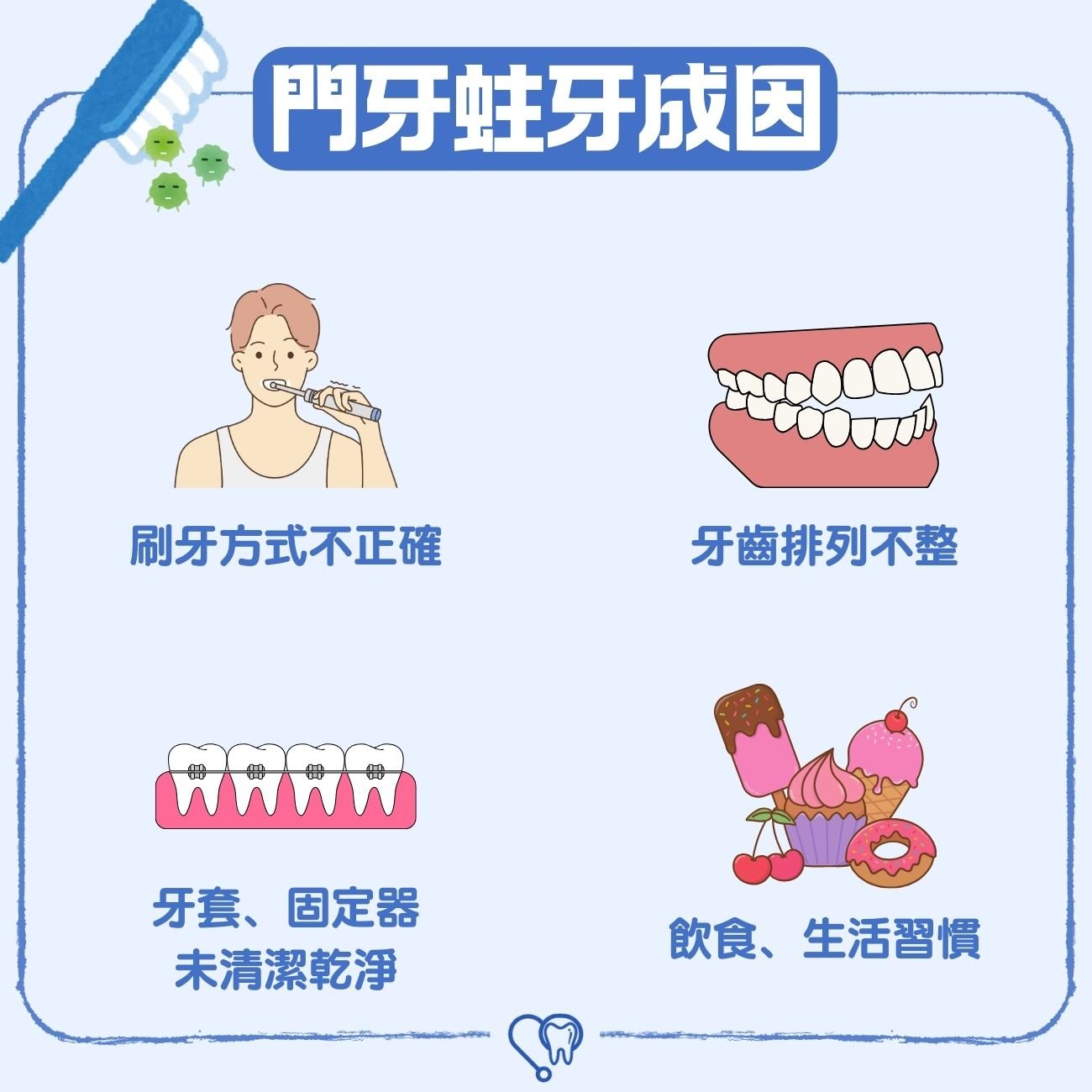
Incorrect brushing technique
Brushing every day is the basic requirement, but "brushing correctly" is the key. Many people overlook cleaning the inner side of the front teeth and the junction between teeth and gums. Especially with an electric toothbrush used at the wrong angle, plaque can build up over a long time and become a breeding ground for bacteria.
uneven teeth
If the front teeth are not neatly aligned, or differ in shape and size, dead spots easily form in the gaps between the teeth, where food gets stuck and is hard to clean. If these areas are not cleaned with dental floss, decay can easily develop in a place you are completely unaware of, especially behind the front teeth.
Braces and retainers not cleaned properly
For people with braces or clear retainers, cleaning the front teeth is even harder. Appliances easily trap food debris, and if not cleaned thoroughly, can easily lead toplaqueto build up around the front teeth, leading to localised decay.
Diet and lifestyle habits
People who love desserts, drink sugary drinks or often keep sweets in the mouth have a much higher risk of tooth decay. Drinking acidic or heavily pigmented drinks such as coffee and tea for long periods also erodes the enamel and speeds uptooth decayformation.
Some people, because of a blocked nose or allergies, or even a habit of sleeping with the mouth open, gradually become mouth breathers. When the mouth stays open for long periods, saliva production decreases and the mouth easily becomes dry. When there is not enough saliva, the risk of tooth decay goes up too.
In addition, the effect ofsmokingon the teeth cannot be ignored either. Nicotine and tar in smoke stain the teeth and make plaque build up more easily, and over time, the teeth decay more easily and the gums become inflamed more easily.
A toothache in the front teethis actually a warning sign! Do not put up with these decay symptoms
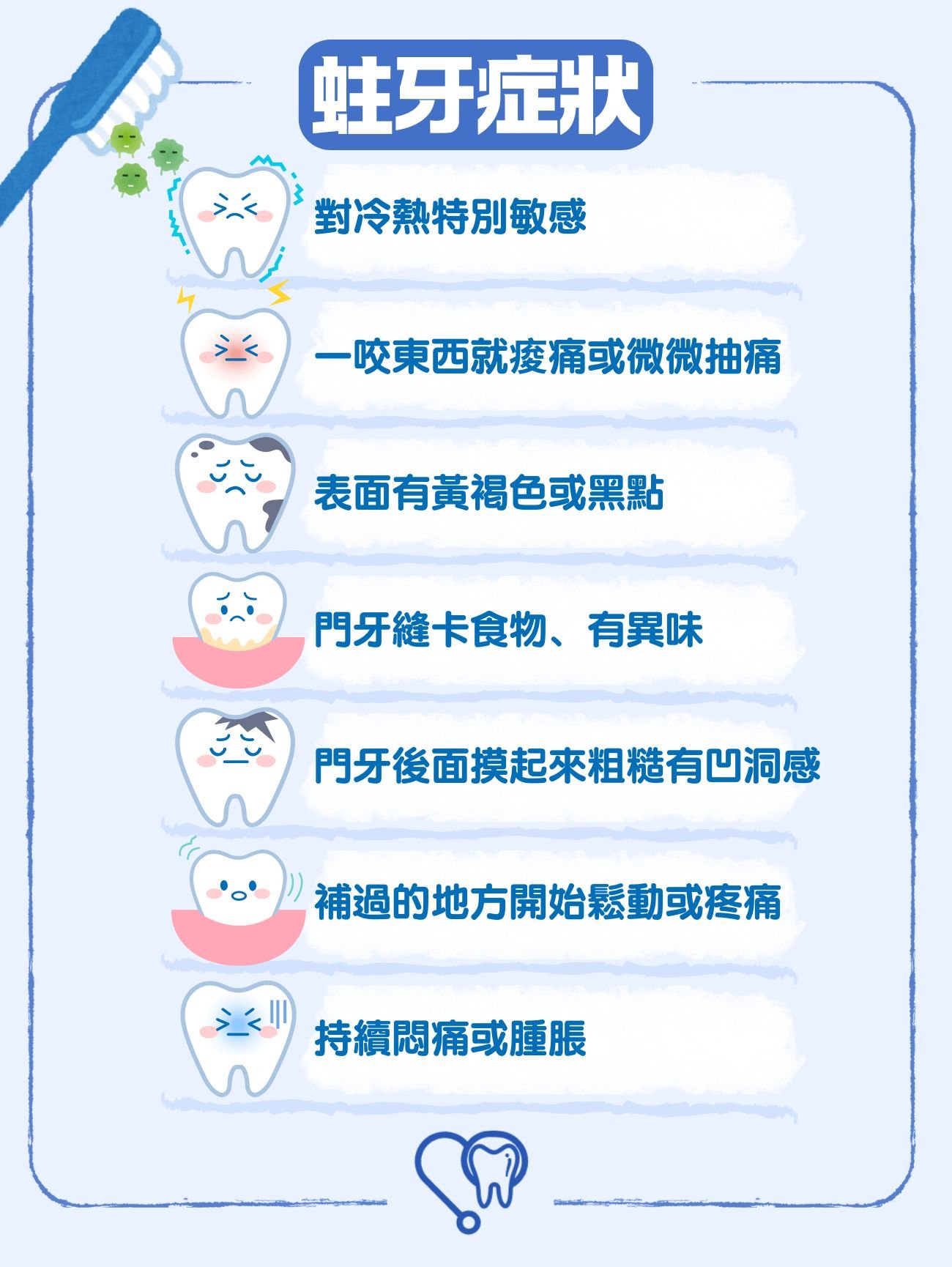
Especially sensitive to hot and cold
When you drink cold drinks or eat hot food, if the front teeth feel a sour, tingling sensation, the enamel may already be damaged, a sign that decay has started to go deeper into the dentine.
Soreness or slight throbbing as soon as you bite
The front teeth are not the main chewing tools. If they hurt even when you bite lightly, the decay may have grown larger, and may even affect the dental nerve.
Yellow-brown or black spots on the surface
If you notice a colour change on a front tooth in the mirror, especially yellow or black spots, it is very likely early-stage decay or that a cavity has already formed.
Food trapped between the front teeth, with a bad smell
Food easily gets stuck between the front teeth. If brushing cannot clear it every time and there is also a strange taste in the mouth, it means the decayed area has already started to produce a bacterial reaction.
The back of the front teeth feels rough or has a hollow
When you run your tongue over the back of the front teeth, if there is an unusual roughness, or even a small hollow, decay may already be developing in a place you cannot see.
Filled areas becoming loose or painful
If you have had a filling but recently have pain or an uneven feel, the filling material may have aged or come off, causing the decay problem to come back.
Persistent dull ache or swelling
A long-term dull ache, or one accompanied by red and swollen gums, may mean the decay has gone deep into the pulp. Delaying further at this point may mean a root canal treatment is needed.
What are the treatment options for decay in front teeth? Pros and cons of the materials at a glance
Can decay in front teeth be filled? For front teethDental Fillingstreatment, besides removing the decayed area, the more important thing is choosing a suitable restorative material. The following are three common treatment methods:
Resin fillings
One of the most common ways of filling teeth, it is affordable and is the first choice of manyearly tooth decaypatients. Resin material can be colour-matched to be close to the colour of the real tooth, so from the front it looks natural and not out of place, especially suitable for mild decay that has not reached the dental nerve.
But resin is relatively low in hardness and durability, and people who bite hard objects orteeth grindingtend to cause the filled area to crack or come off. Its lifespan is about 3–7 years, and it may discolour with eating habits and over time.
Although filling is quick and can be completed on the same day, if the front tooth itself is already structurally unstable, resin filling alone is not recommended for restoration.
ceramic veneers
When the area of decay is not small and you want both good appearance and durability,ceramic veneersis a good option. It acts like a protective shell made to measure for the tooth, bonding a thin layer of porcelain to the surface of the front tooth. It looks natural and translucent, close to the texture of a real tooth, and after restoration it is almost impossible to tell it has been treated.
Ceramic veneers are especially suitable for people with decay on the surface of the front teeth or with high aesthetic needs, and are also often used to restore chipped, discoloured or uneven front teeth. But the price is higher, and two or more clinic visits are needed for taking impressions and fitting. Veneers also need enough remaining tooth structure for support. If the decay is too deep, all-ceramic crowns are recommended.
Full Ceramic Crown
When decay goes further into the nerve, making the tooth structure unstable, or a root canal treatment has already been done, the dentist will mostly recommend fitting an all-ceramic crown to rebuild the whole crown of the tooth. It is thicker than a veneer and covers the tooth completely, preventing the tooth from fracturing or decaying again.
All-ceramic crowns are strong and stable, and look very natural, and can be colour-matched to the neighbouring teeth so that the whole row of teeth looks harmonious. However, fabrication takes longer, generally around two weeks, and the cost is also higher. If bite pressure is too high, they may also wear or chip, and need regular follow-up and maintenance.
Filling front teethwill it be noticeable?
Because the front teeth are in the most visible position, people usually worry especially about "will the filling be noticeable?" In fact, whether a filling is noticeable, and how it looks, depends on various factors, including the position and size of the cavity and the material chosen.
Will teeth decay again after being restored? 6 tips to help prevent decay in front teeth
Many people think a filled tooth is completely safe, but in fact if your cleaning habits do not change, the filled area can decay too, and even more deeply.

Correct brushing technique with fluoride toothpaste
Brush morning and night for at least two minutes, paying attention to the angle on the inner side of the front teeth, and use fluoride toothpaste, which helps strengthen the enamel's resistance and prevent tooth decay.
Use dental floss or interdental brushes every day
Cleaning between the teeth cannot rely on the toothbrush alone. Use dental floss or interdental brushes at least once a day, paying special attention to the spots between the front teeth where things easily get stuck.
Control sugary foods
Avoid eating sweets or drinking sugary drinks while working, reduce sugar and acidic food intake and keep a balanced diet, so that the mouth is not in an acidic environment for long periods.
Regular check-ups and scaling and polishing every six months
Even if there is no discomfort, regular check-ups with the dentist help detect decay early and avoid delaying until root canal treatment is needed.
avoid bad habits
Habits such as nail biting, chewing pens and opening bottle caps with the teeth all damage the teeth. Front teeth that have been filled in particular need protecting.
Keep the mouth moist and avoid dry mouth
Saliva is a natural weapon against tooth decay. Drinking water often and chewingsugar-free chewing gumhelps stimulate saliva secretion and lowers the chance of tooth decay.
Summary
Decay in the front teeth may seem like a small problem, but if it is left untreated, the consequences may be more troublesome than you think. It can not only hurt and look bad, but in serious cases may even need root canal treatment or implant restoration, which is time-consuming and costly. If you have already noticed black spots, sensitivity or food getting trapped in your front teeth, do not put up with it any longer; arrange a dental check-up as soon as possible to protect your dental health.
Disclaimer
This article is for information only and does not contain any invitation or solicitation. Patients should seek a professional dentist for diagnosis and treatment according to their own circumstances. To find out more or book a service, we recommend contacting the relevant clinic directly. Please choose suitable dental services and clinics carefully yourself.



