

Why should you haveregular scaling and polishing? How long after scaling and polishing can you eat? Can you drink tea or coffee? This article summarises dietary points to note after scaling and polishing and answers common questions about scaling and polishing, to help you understand the correct way to look after your mouth.
What is scaling and polishing? Why should you have it?
Most people know they should have regular scaling and polishing, but do not know how it works or what its benefits are, and some even develop myths because they lack understanding of it.
Scaling and polishing, technically known as "calculus removal", is a dental cleaning procedure that mainly uses ultrasonic vibration to remove tartar, plaque biofilm and stains from the tooth surfaces, restoring the teeth's original colour, but it does not make teeth whiter.
I brush regularly. Do I still need scaling and polishing?
In fact, in dead-angle areas where food debris and bacteria easily build up, such as between the teeth and along the gum margin, tartar still inevitably forms. If this tartar is left alone for a long time, the gums will gradually become red, swollen, bleeding or inflamed, and may even recede, and the teeth may become loose.
So we can use scaling and polishing to prevent oral problems such as periodontal disease and tooth decay, and it can also help improvebad breath, reduce tea stains and smoking stains, and is an indispensable part of oral health.
How long after scaling and polishing can you eat?
For ordinary scaling and polishing, waiting about half an hour is recommended
Under normal circumstances, wait at least 30 minutes after scaling and polishing before eating, to give the mouth time to adjust. During ultrasonic scaling, the gums may bleed slightly, and eating right away may irritate the wound and even affect healing.
Does deep cleaning take longer?
If what you are having isDeep Cleaning(scaling and root planing), meaning the dentist needs to clean the deeper tartar at the tooth roots, the gums may be locally anaesthetised, making them more sensitive for a short time.
In this case, it is recommended to wait at least 1 hour, and to choose milder foods when eating, to avoid affecting oral recovery.
In short, after ordinary scaling and polishing you can eat after about half an hour, but after deep cleaning it is best to wait a bit longer, and eat only when you are sure there is no discomfort in the mouth.
What to eat after scaling and polishingPoints to note
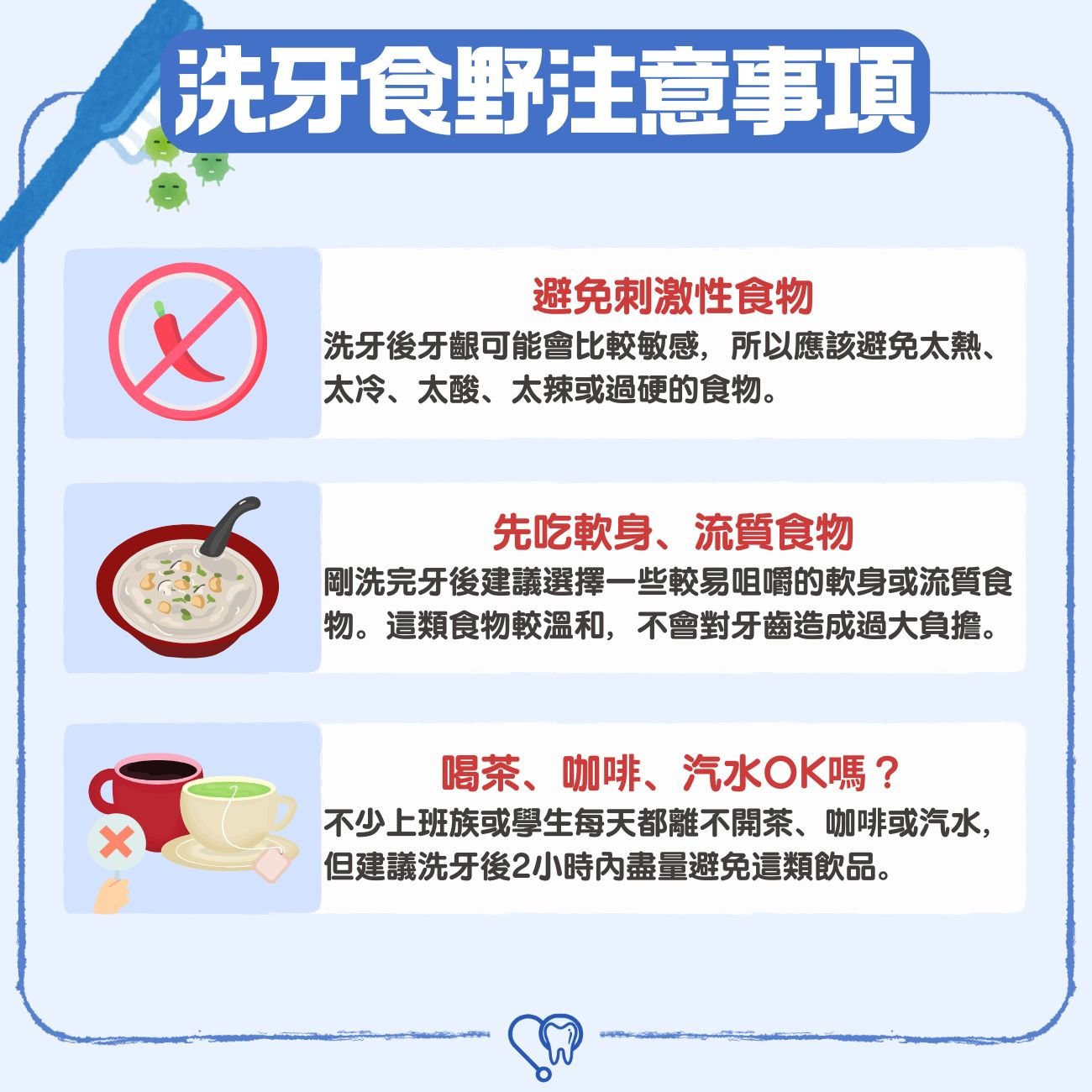
avoid irritating foods
The gums may be more sensitive after scaling and polishing, so you should avoid foods that are too hot, too cold, too acidic, too spicy or too hard:
- Hot soup, iced drinks, acidic fruit (lemon, kiwi fruit)
- Chilli, curry, barbecued and fried foods
- Nuts, biscuits, dried shredded squid
Overly stimulating foods may cause discomfort in the gums and teeth, and may even affect wound healing.
Eat soft and liquid foods first
To give the teeth time to adjust, right after scaling and polishing it is recommended to choose soft or liquid foods that are easy to chew:
- Congee, noodle soup, steamed egg, tofu
- Bananas, ripe avocado, mashed potato
- Milkshakes, oats, yoghurt
These foods are gentler and do not put too much burden on the teeth and gums, so you can get through the sensitive period after scaling and polishing easily.
Are tea, coffee and soft drinks OK?
Many office workers and students cannot do without tea, coffee or soft drinks every day, but it is recommended to avoid these drinks as far as possible within 2 hours after scaling and polishing!
- Tea and coffee: easily re-stain the teeth, affecting the results of scaling and polishing.
- Soft drinks: high in sugar and may also contain acidic ingredients that irritate the gums.
- Alcoholic drinks: may affect gum healing and even worsen gum sensitivity.
If you really cannot resist, remember to use a straw to reduce the chance of the drink coming into direct contact with your teeth.
What to note after scaling and polishing? Oral care tips
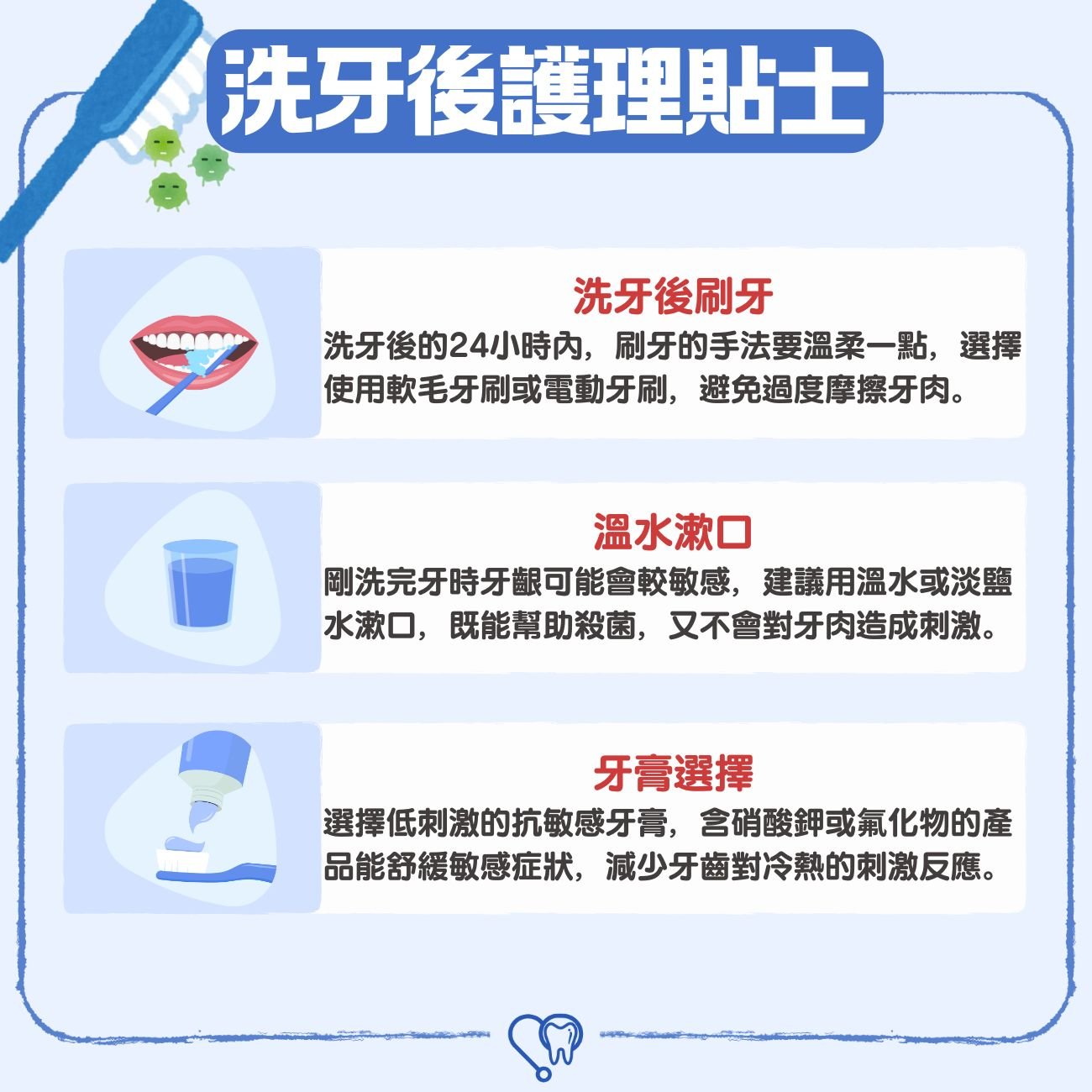
Brushing after scaling and polishing
Within 24 hours after scaling and polishing, brush gently. You can choose a soft-bristled or electric toothbrush, and avoid over-rubbing the gums.
Rinse with warm water
Right after scaling and polishing, the gums may be more sensitive. It is recommended to rinse with warm water or mild salt water, which helps kill bacteria without irritating the gums. Avoid mouthwash, because some mouthwashes containing alcohol may irritate the oral tissues and increase sensitivity.
Choosing toothpaste
If your teeth feel sensitive after scaling and polishing, you can choose a low-irritation toothpaste such as anti-sensitivity toothpaste. Products containing potassium nitrate or fluoride can relieve sensitivity symptoms and reduce the teeth's reaction to hot and cold. Avoid whitening toothpastes with too many abrasive particles.
FAQ
Does scaling and polishing make the gaps between teeth bigger?
Many people feel that the gaps between their teeth seem bigger after scaling and polishing. This is actually just an illusion and not a problem caused by scaling and polishing!
widening gaps between teethfeeling is usually because, after tartar is removed by scaling and polishing, gaps that were originally filled with tartar become noticeable. Tartar is a hard mass formed by calcification of plaque that has built up over a long time. It may get stuck between the teeth and even press on the gums. If left untreated for a long time, tartar builds up thicker and thicker, which not only makes the gaps between the teeth smaller, but may also lead to inflamed, red, swollen and even receding gums, making the gaps even more obvious.
So scaling and polishing itself does not make the gaps between teeth bigger; once the tartar is removed, the teeth return to their original state!
Does scaling and polishing damage the teeth?
Some online messages are misleading, claiming that scaling and polishing "scrapes the teeth thin" or "damages the enamel". In fact, proper scaling and polishing does not damage the teeth, and in fact helps keep them healthy!
Scaling and polishing uses ultrasonic vibration to remove tartar. This vibration only affects the tartar and does not damage the enamel of the tooth itself. Tartar attaches to the tooth surface but is not truly part of the tooth, so removing it does not affect tooth structure.
Some people feel their teeth become sensitive and sore after scaling and polishing and think scaling and polishing caused it. In fact, this is usually because the tooth surface is briefly exposed after tartar is removed. If tartar previously covered the tooth root or gum margin, those areas become temporarily more sensitive once it is removed. But this sensitivity is usually temporary and eases within a few days.
How often should I have my teeth scaled and polished?
It is generally recommended once every six months, to make sure the teeth and gums stay healthy. But if your teeth are in a special condition, for example you build up tartar easily, your gums swell and bleed easily, or you have periodontal disease, you may need scaling and polishing every 3 months to make sure plaque does not build up excessively.
Besides regular scaling and polishing, daily oral cleaning is also important! Remember to brush 2 times a day and use dental floss or interdental brushes to truly prevent tartar build-up and maintain oral health.
Summary
After scaling and polishing, pay attention to diet and oral cleaning to reduce short-term discomfort and maintain oral hygiene. It is recommended to have regular follow-up check-ups and scaling and polishing according to your individual oral condition, so that the dentist can assess the health of your teeth and periodontal tissues.
Disclaimer
This article is for information only and does not contain any invitation or solicitation. Patients should seek a professional dentist for diagnosis and treatment according to their own circumstances. To find out more or book a service, we recommend contacting the relevant clinic directly. Please choose suitable dental services and clinics carefully yourself.



