
Toothache when drinking cold water is usually related to temperature stimulation, mostly because of problems such as dentine hypersensitivity, gum recession, tooth decay or tiny cracks. If the symptoms persist, hot drinks may also hurt or the pain may turn into a dull ache, and you should see a dentist for examination as early as possible.
Key Points
- Toothache when drinking water is mostly due to temperature stimulation
- Dentine hypersensitivity is the most common factor
- Root exposure caused by gum recession can also cause sensitivity
- Early tooth decay can also cause pain when drinking water
- Ways to ease it include drinking room-temperature water, using a straw and brushing gently
Why does "drinking water make my teeth hurt but eating does not"?
Toothache when drinking water is mostly related to "temperature stimulation". Cold or hot water comes into direct contact with the tooth surface, and as soon as certain areas become sensitive, it causes a brief but sharp reaction. When eating, the food is mostly at room temperature, and the way food touches the teeth is also different, so it does not necessarily hurt.
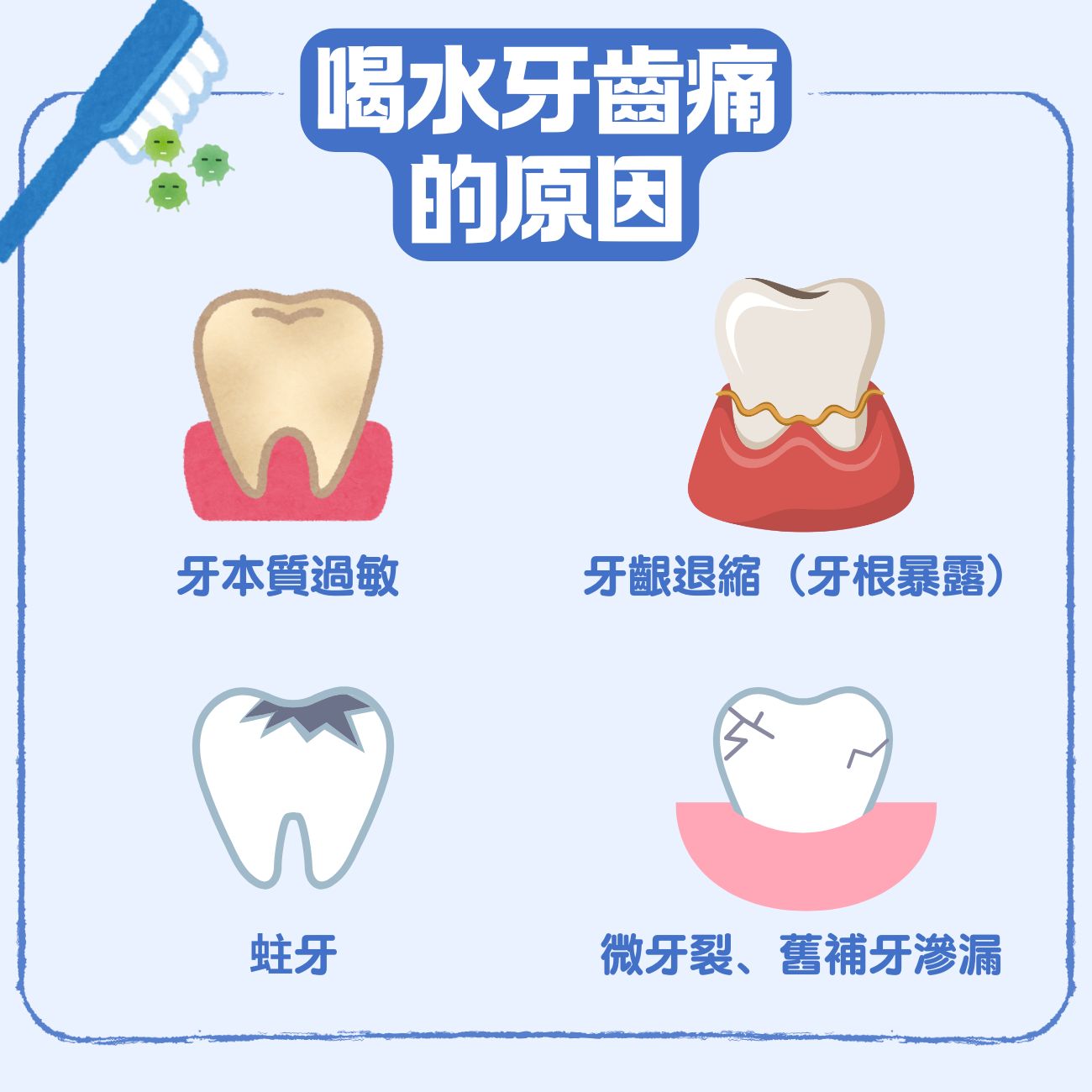
Dentine hypersensitivity
This is the most common cause of tooth sensitivity! Inside our teeth there is a layer calleddentinedentine. It is filled with tens of thousands of tiny channels that lead directly to the pulp nerve at the centre of the tooth. When the outermost layer of the tooth, the enamel, becomes thin because of wear or acid erosion, these tiny channels are directly exposed.
When you drink cold water or breathe in cold air, the outside stimulus is conducted through these small channels to the nerve, causing a brief, sharp stinging pain.
Gum recession (root exposure)
When the gums gradually recede downward, the root is directly exposed to the environment of the mouth. The root surface has only a thin layer of cementum and lacks the protection of enamel, so it is especially sensitive to hot and cold stimuli.
Many people who suddenly feel a stinging pain when drinking cold water think the tooth has gone bad, but in fact it is mostly a sensitivity reaction caused bygum recessionIt is commonly seen in older people, people with poor periodontal health or people who brush too hard.
tooth decay
In the early stage of tooth decay, the cavity may not yet be deep enough to affect the pulp nerve, but has already broken through the enamel. This small cavity acts like an "entrance", letting cold water reach the dentine quickly and in a concentrated way and cause brief sensitivity.
Because the cavity is small, it may not cause pressure pain when biting or chewing, so it only hurts when drinking water or cold drinks.
Tiny cracks in the teeth, leaking old fillings
Fine cracks on the tooth surface, or an old filling material that no longer fits as closely, may let water seep into deeper layers and irritate the tooth nerve.
These tiny cracks may not be felt at ordinary times, but when cold water seeps into a crack and directly stimulates the dentine or pulp deep inside, it causes pain. This is common in people who grind their teeth heavily, like to bite hard objects, or have not had old fillings checked for many years.
What should you do if drinking cold or hot water makes your teeth hurt?
Temporary relief
Drinking room-temperature water can usually reduce discomfort. If you must have a cold drink, let the water warm up in your mouth for a second first, then drink slowly, which can also avoid irritating the sensitive areas.
Some people use a straw to reduce direct stimulation of sensitive teeth, which is also a temporary way of easing it.
Gentle cleaning
Brushing too hard, or using a toothbrush with bristles that are too hard, further wears away the enamel and speeds up gum recession. It is advisable to use a soft-bristled toothbrush and the Bass technique, cleaning gently along the junction of the teeth and gums in small circles.
Avoid excessive chewing
If you suspect the pain is related to a tiny crack in a tooth, before seeing the dentistavoid biting hard foods with the sensitive sidesuch as nuts, bones or ice, to prevent the crack from getting bigger.
When should you see a dentist early?
Although brief sensitivity is not necessarily a big problem, some warning signs mean your tooth may already have gone from simple "sensitivity" to "pulp inflammation" or another condition that needs urgent attention.
If you notice any of the following, contact a dentist at once to book an examination:
- Pain when drinking cold water for more than 1–2 weeks
- The pain changes from stinging → to a persistent dull ache
- Pain with hot drinks too (possibly a warning sign of pulpitis)
- A particular tooth starts to feel strange or painful when biting
- Swelling of the gums, pus, or swelling and pain in the cheek
FAQ
How can you help teeth to remineralise?
Theremineralisationof teeth is the process in which the tooth surface absorbs minerals such as calcium and phosphorus from saliva to repair damaged enamel. You can use fluoride toothpaste every day, so that a stronger protective layer forms again on the tooth surface. Avoiding a highly acidic diet and cutting down on how often you snack also help teeth repair themselves.
How do you tell whether it is toothache or a gum problem?
Toothache is mostly a short, sharp stinging pain or dull ache; inflamed gums feel swollen, sore or puffy, or are uncomfortable to touch, and also bleed easily when flossing or brushing.
How long does it take for anti-sensitivity toothpaste to work?
Most people find the sensitive areas gradually settle after using it continuously for two to four weeks. Some people need longer, especially where gum recession or enamel wear is more obvious. If drinking water still causes stinging after four weeks, it is advisable to have a dentist check whether there is another problem.
Will toothache go away by itself? Will it get worse if I ignore it?
Mild sensitivity may gradually get better once your brushing method improves; but tooth decay, cracked teeth or leaking fillings will not repair themselves. If they are put off for too long, they may change from simple sensitivity to pain on biting and then to needing root canal treatment, so dealing with them early is usually safer.
How can you tell whether it is tooth decay?
Early tooth decay does not necessarily show a hole and does not necessarily hurt. If you suddenly feel sensitivity when drinking cold water, food gets stuck between the teeth, or the area around a filling changes colour, these may all be hints. The most accurate method is still to have it assessed through a dentist's examination.
Summary
Teeth that hurt when drinking water but not when eating are a common dental warning sign, mostly related to sensitive teeth, gum recession, early tooth decay or cracks. If the pain gradually gets worse or changes, or the symptoms are still present after more than two weeks, it is a more reassuring choice to proactively seek a dentist's examination.
Disclaimer
This article is for information only and does not contain any invitation or solicitation. Patients should seek a professional dentist for diagnosis and treatment according to their own circumstances. To find out more or book a service, we recommend contacting the relevant clinic directly. Please choose suitable dental services and clinics carefully yourself.



