
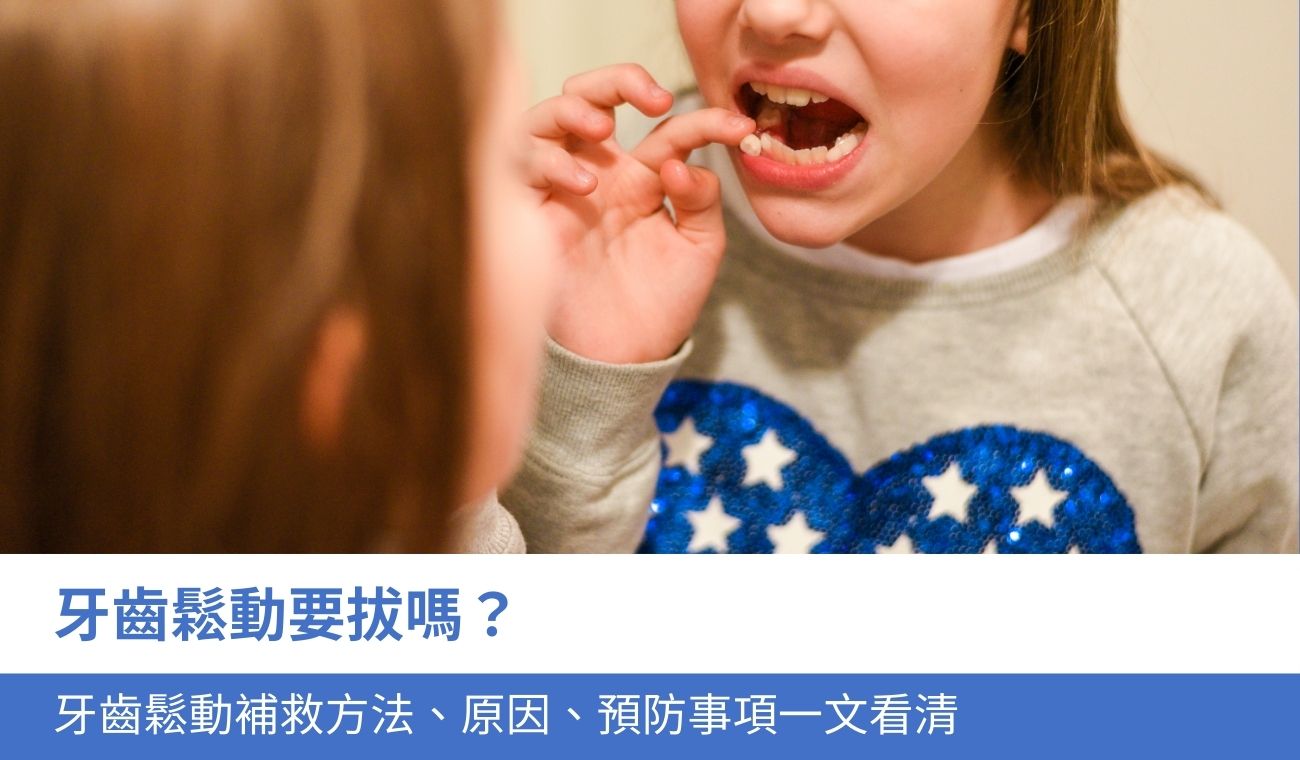
A loose tooth does not necessarily have to be extracted, and the cause and severity need to be confirmed first. Mild cases can improve with treatment or splinting, and only severe cases may require extraction followed by an implant or dentures to restore function.
Should a loose tooth be extracted? First understand the causes of loose teeth
Many people's first reaction on finding a loose tooth is "does it need to be extracted?" In fact, not every situation needsExtraction, and the key is to first work out the cause of the loose tooth.
Loose baby teeth are natural
For children, a loose tooth is usually normal. When it is time for baby teeth to be replaced, they gradually loosen as the permanent teeth come through, and finally fall out naturally. There is no need to be anxious about this at all. Just keep the mouth clean and wait for the permanent teeth to come through.
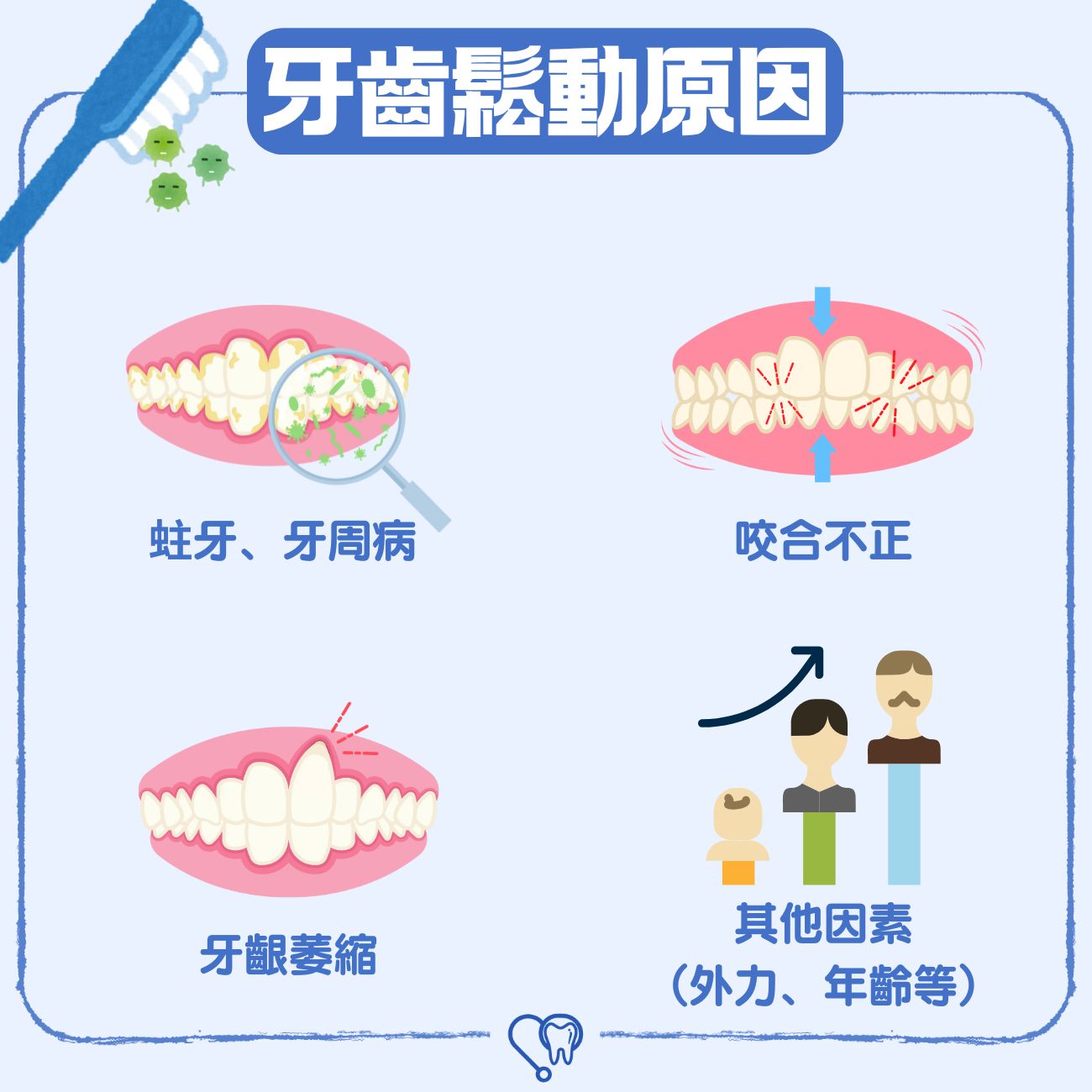
Tooth decay and periodontal disease
The most common causes of loose teeth in adults are tooth decay and periodontal disease. If these two are not treated early, the teeth may become looser and looser and even fall out.
If tooth decay is left too long, it seriously damages the tooth structure and leaves the root with insufficient support, while periodontal disease causes the gums to become inflamed and thealveolar boneto be resorbed, so the teeth lose a firm foundation and gradually become wobbly, which is especially common in people with moderate to severe periodontal disease.
Misaligned Bite
Some people are born with teeth that are not neatly aligned, or have long-term uneven biting, which makes certain teeth bear too much force. Over time these teeth easily become loose. If you also grind your teeth at night, it adds even more to the load on the teeth.
gum recession
With age, the gums may slowly recede, exposing the tooth roots and reducing the support. The tooth is still there, but its firmness weakens and it becomes loose. Gum recession is also common with improper cleaning methods, such as long-term vigorous brushing.
Other factors (external force, age and so on)
Car accidents, falls, and even biting on something too hard can all damage the tissue that supports the teeth. Ageing also increases the risk of degeneration of the periodontal supporting tissue, so the older you are, the more likely the teeth are to wobble.
Will a loose tooth get better? It mainly depends on the grade of looseness
Whether a loose tooth can recover depends on how severe the looseness is and the cause behind it.
Mildly loose teeth
If the looseness is only slight, for example after an external impact, or because of brief gum inflammation that makes the tooth red, swollen or sore, then with rest and good oral cleaning together with appropriate treatment, a mildly loose tooth has a chance of returning to normal.
Moderately loose teeth
A tooth that wobbles more noticeably usually means that the periodontal tissue or bone has already been damaged to some extent. Professional treatment is then needed to stabilise the tooth, otherwise it is hard to improve on your own.
Severely loose teeth
When a tooth is already obviously crooked, or even wobbles when biting, it counts as severely loose. This usually means the support around the tooth is already insufficient, and in most cases extraction needs to be considered, followed by treatment to restore chewing function.
loose teethWhat should you do? 6 ways to deal with loose teeth
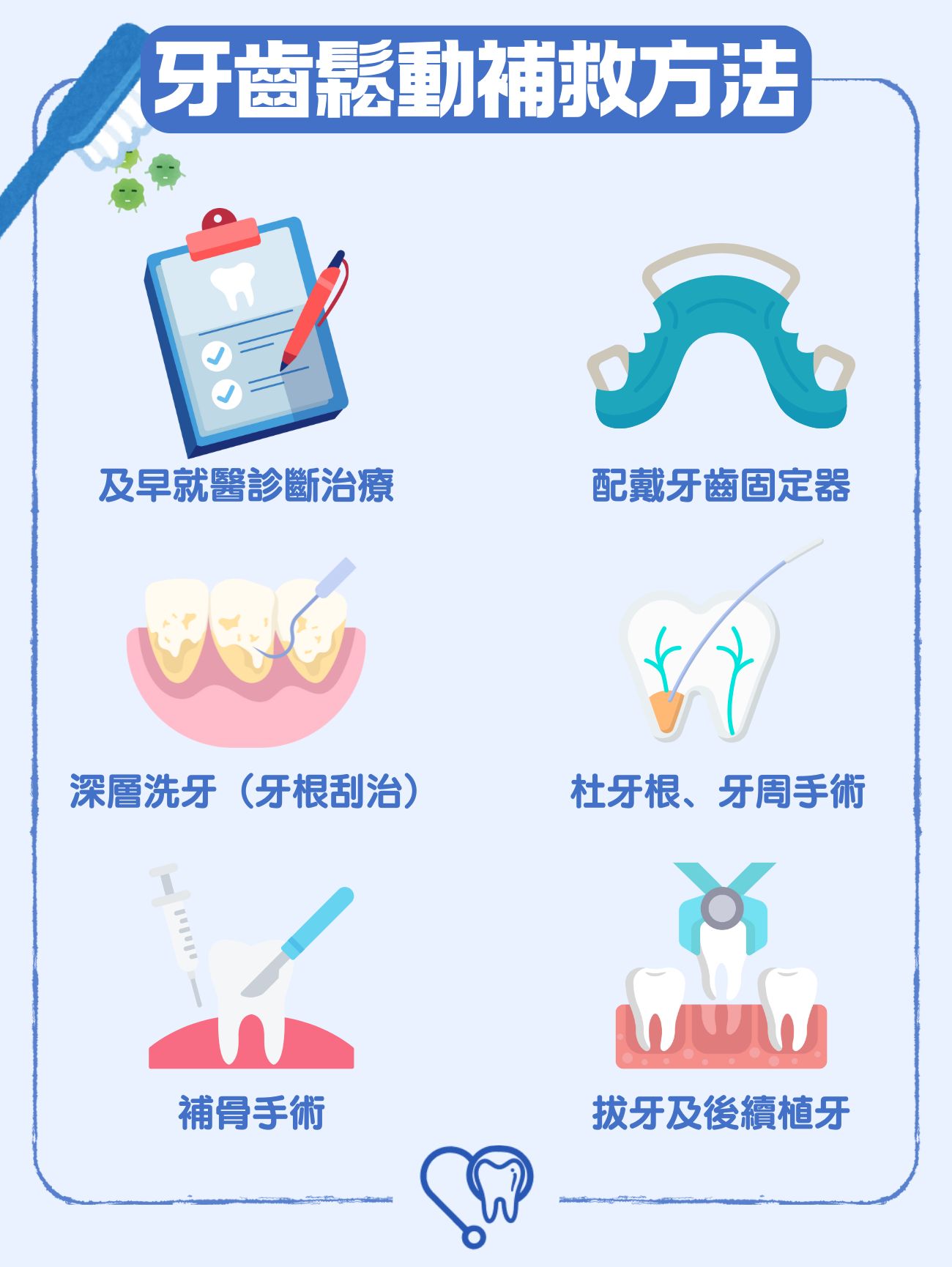
See a dentist early for diagnosis and treatment
When you find a tooth loosening, the most important thing is to have a dentist examine it as soon as possible, so that a suitable treatment can be found. Whether the cause is periodontal disease, tooth decay or external force, the earlier it is treated, the higher the chance of saving the tooth.
Wear a tooth splint
If the tooth is only temporarily loose, the dentist may use a splint to connect the loose tooth to the neighbouring teeth, giving it time to heal.
Deep Cleaning (Scaling and Root Planing)
If the looseness is caused by periodontal disease, you need professionalDeep Cleaningto clear away the plaque and tartar below the gum line, reduce inflammation and help the tooth regain its support.
Root canal treatment and periodontal surgery
If tooth decay is so severe that it causes pulpitis, root canal treatment may be needed, with the infection cleared out before restoration. Severe periodontal disease may require flap surgery or periodontal regeneration surgery to improve inflammation and bone loss.
Bone grafting
When there is serious loss of alveolar bone, the dentist may use bone graft material to add bone, or guided bone regeneration surgery, to increase the support for the teeth.
Extraction followed by a dental implant
If the tooth can no longer be saved, extraction is the last resort. After extraction, chewing and appearance can be restored with a dental implant, dental bridge or removable denture.
How can I prevent loose teeth? These methods help you lower the risk effectively
Once a tooth becomes loose, treatment often takes more time and money, so daily care is especially important at that point.

maintain good oral hygiene
Brush every morning and night, and use dental floss or interdental brushes,mouthwashwhich reduces bacterial build-up and lowers the risk of periodontal disease.
regular dental check-ups
Having a check-up at least every six months can detect tooth or periodontal problems early, so you do not leave it until they have worsened before dealing with them.
balanced diet
Getting enough calcium, Vitamin C and protein helps maintain the health of the gums and bones. Also avoid too many sugary drinks or foods, to reduce the risk of tooth decay.
avoid bad habits
Biting hard objects less, avoiding grinding your teeth at night and not opening bottle caps with your teeth, these small habits can all make the teeth damaged earlier.
FAQ
How can a loose tooth be stabilised?
A tooth splint is a common method, connecting the loose tooth to the neighbouring teeth to give support. But this is only a temporary measure, and treating the underlying cause is still what works.
What to eat with loose teeth?
Before the tooth is firm again, you can eat more soft, mild food, such as congee and steamed egg. Getting enough calcium, vitamins D and C, and Omega-3 in your daily diet helps the health of the teeth and periodontal tissue.
What does a loose tooth mean?
For children it may be the natural process of losing baby teeth, but for adults it often means that periodontal disease or another problem is developing, and you need to see a doctor for an examination as soon as possible.
Summary
A loose tooth does not necessarily have to be extracted straight away. The key is to find the cause first and choose a suitable treatment plan according to how loose it is. From mild to severe, the approach differs, and the earlier it is found, the more chance there is of saving the tooth. Keeping your teeth clean day to day and having regular check-ups is the most fundamental way to protect oral health.
Disclaimer
This article is for information only and does not contain any invitation or solicitation. Patients should seek a professional dentist for diagnosis and treatment according to their own circumstances. To find out more or book a service, we recommend contacting the relevant clinic directly. Please choose suitable dental services and clinics carefully yourself.



