Whether clear aligners are suitable depends mainly on the complexity of the tooth movement and how well you can cooperate with wearing them, not simply on comparing appearance. The price is about HK$30,000–HK$60,000 and needs to be assessed by a dentist.
Key Points
- Clear aligners and traditional braces each suit different situations; neither is simply better
- When teeth are significantly rotated, traditional braces are usually more precise
- Clear aligners cost about HK$30,000–HK$60,000, and complexity affects the actual quotation
- Wearing them 20–22 hours a day is the key variable for orthodontic results
Want to straighten uneven teeth but worried that traditional metal braces are too noticeable? In recent years, clear aligners have become many people'sbracesan option to consider.
Below we explain what clear aligners are, how they actually differ from traditional braces, what dentists base their clinical judgement on, and prices and points to note when wearing them, to give you a clearer basis for assessing your orthodontic options.
What are clear aligners?
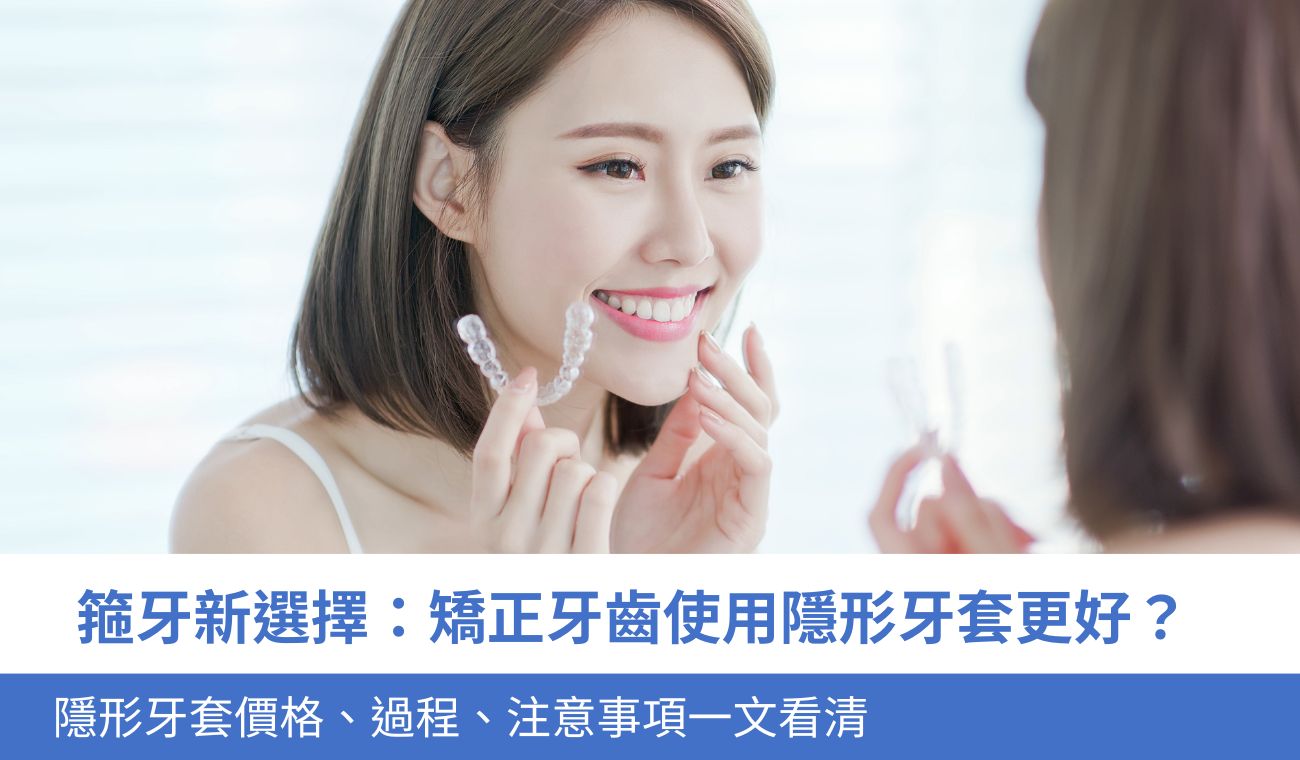
Clear aligners are a series of transparent aligners custom-made to the shape of your own teeth using 3D scanning technology, which only need to be taken out when eating, brushing or on special occasions.
Clear aligners (Invisalign), also known as transparent aligners, differ from traditional metal braces in that no metal brackets are bonded to the teeth. Instead, a series of numbered aligners is used, each replaced as the teeth gradually move.
There are currently several brands of clear aligners on the market, and Invisalign is one of the more common ones. The brands differ in materials, technology and positioning, and patients can choose a suitable brand according to personal needs and the dentist's assessment; no single brand suits every situation.
Clear Aligners vs Traditional Braces: A Comparison of 6 Aspects
The differences between clear aligners and traditional braces are mainly in six aspects: appearance, cleaning, comfort, treatment time, follow-up visit frequency and cost. Neither is absolutely better; what matters is whether it suits your teeth and lifestyle.

| Aspect compared | Traditional metal braces | Clear Aligners |
| appearance | More noticeable | Almost unnoticeable |
| Cleaning method | Fixed to the teeth, so cleaning needs special tools | Removable, making it easier to clean your teeth and aligners |
| Comfort | May feel like a foreign object in the early stage or after adjustments | Smoother surface, with less of a foreign-object feeling |
| Treatment time | Depends on the complexity of the teeth; complex cases usually take longer | Treatment time for mild to moderate cases may be shorter, while complex cases may take longer because of adjustments partway through |
| Follow-up frequency | Usually once every 3–6 weeks | Usually once every 6–8 weeks |
| Fees | About HK$25,000–HK$50,000 | About HK$30,000–HK$60,000 |
Further reading:Are traditional braces good?
How much do clear aligners cost?
The price of clear aligners depends mainly on the complexity of the teeth, the brand chosen and whether other treatment is combined, and is about HK$30,000–HK$60,000. For a full breakdown of cost factors, hidden charges and a comparison between public and private options, seePrice of bracesin one article.
How to Choose Between Traditional Braces and Clear Aligners? What Dentists Base Their Decision On
In practice, the key to choosing between traditional braces and clear aligners is whether the teeth need large vertical movements or major root rotation. In such cases, traditional metal braces usually apply force more precisely.
Clinically, the choice between traditional braces and clear aligners mainly weighs three conditions: the complexity of the tooth movement, how well the patient can cooperate with wearing them, and the complexity of the bite.
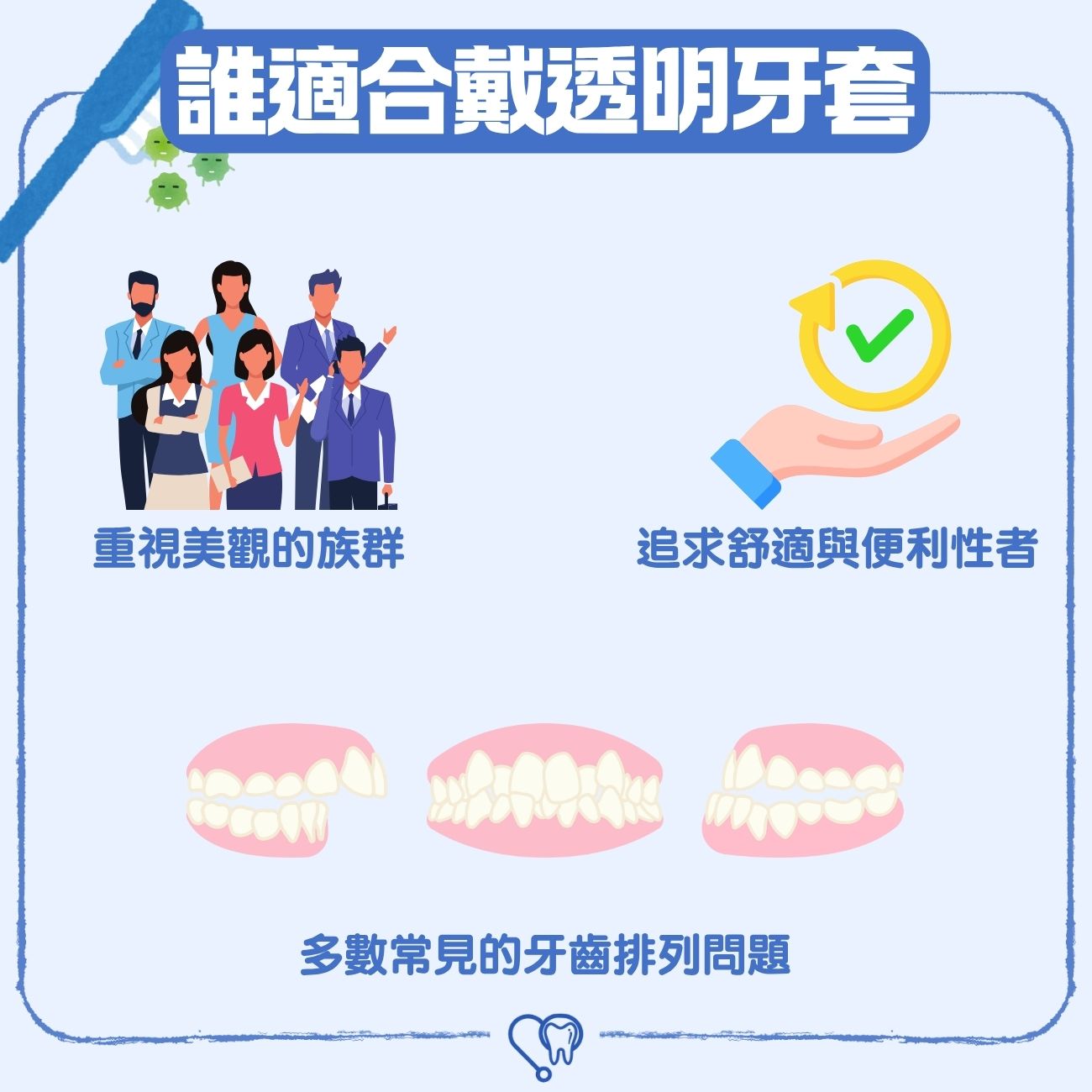
In which situations are clear aligners suitable?
- People who care about appearance and often have to meet others in social or work settings
- People who want convenient cleaning and prefer to be able to take them out themselves
- Mild to moderate tooth problems, such as crowded teeth, overly large gaps, or a mild deep bite or open bite
Who is not suited to clear aligners / Invisalign?
The following situations usually require further assessment by a dentist, who may even recommend traditional braces or another treatment instead:
- Severe skeletal bite problems, such as obviously protruding upper teeth or an underbite
- Complex misalignment that needs large movement or rotation of the teeth
- People who cooperate less well and cannot keep up enough hours of wear each day
- Adolescents whose permanent teeth have not fully erupted, for whom the results may be limited
- Untreated periodontal disease; it is generally recommended to deal with the periodontal condition first before considering orthodontic treatment
5 steps of clear aligner treatment
Clear aligner treatment is broadly divided into five stages: initial assessment, records collection, aligner fabrication, wear and follow-up visits, and wearing a retainer. The length of treatment is adjusted according to the condition of the teeth.
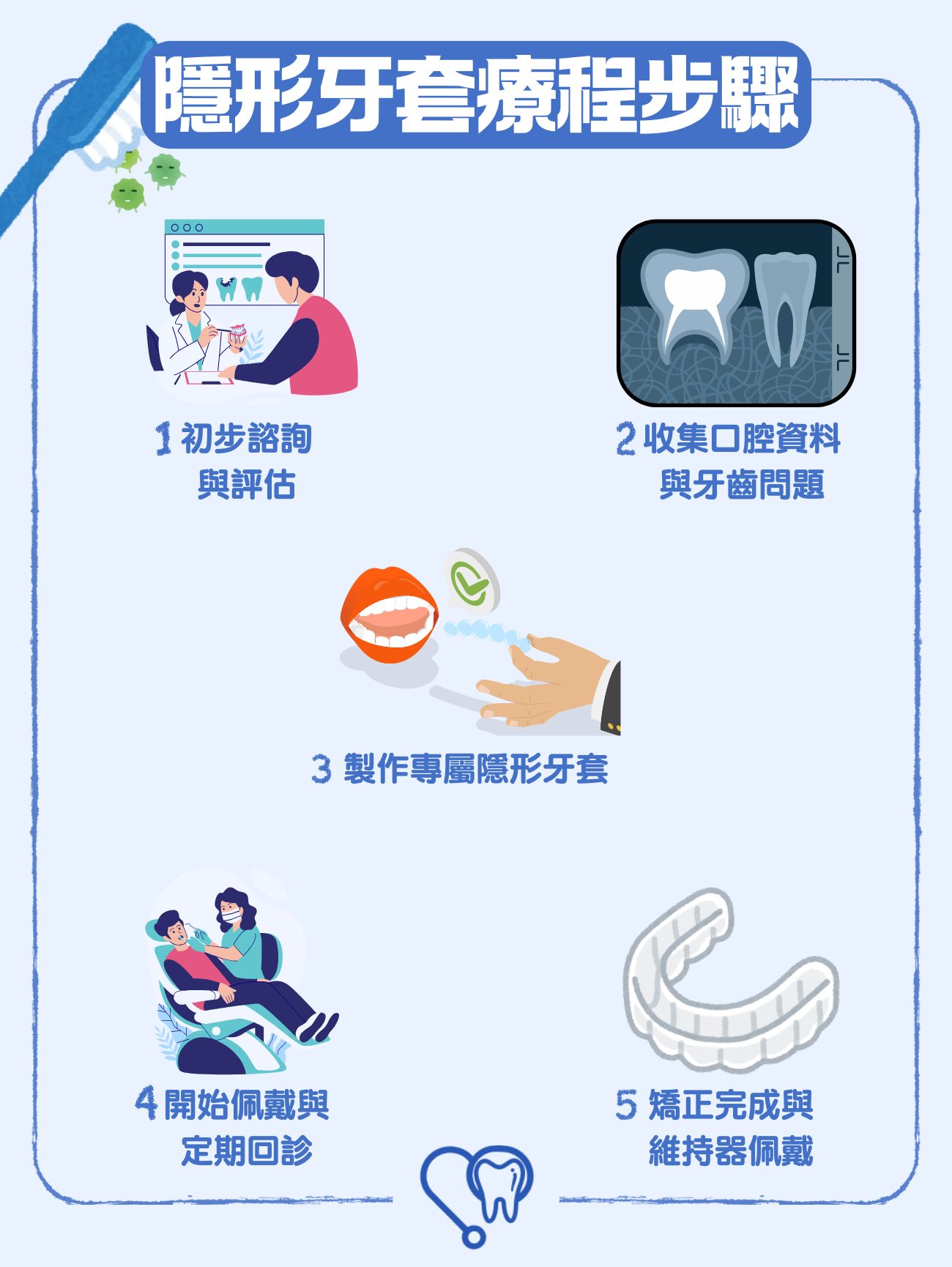
- Initial consultation and assessment: The dentist will check the condition of the mouth, tooth alignment and bite problems and make a preliminary judgement on whether clear aligners are suitable. The patient can also raise questions about price, treatment time and so on at this stage.
- Collecting oral data: Detailed data on the teeth and oral structures is obtained through 3D scanning and X-ray examination, and the expected effect of tooth movement during treatment is simulated.
- Making your own set of clear aligners: once the treatment plan is confirmed, a series of numbered aligners is made for the patient, and each set gradually adjusts the position of the teeth as treatment progresses.
- Wearing and regular follow-up visits: patients need to wear the aligners for enough hours every day as instructed by the dentist, and attend regular follow-up visits to check progress and collect the next set of aligners.
- Treatment completed: Once the teeth have moved to the ideal positions, the orthodontic treatment is complete.
Do clear aligners work well? Observations from mild to complex cases
Clear aligners give consistent results in cases of mild to moderate misalignment. For significantly rotated teeth, or teeth that need major intrusion or extrusion, attachments often need to be added midway through treatment, or the aligners may even need to be remade.
The gap in actual results between clear aligners and traditional braces usually shows in how predictable complex tooth movements are.
Traditional braces combine the curve of the archwire with elastics to apply continuous force to individual teeth and can be adjusted at any time. Clear aligners rely on a series of pre-designed aligners to push the teeth step by step; when teeth are significantly rotated or need large vertical movements, the original plan may need to be adjusted midway.
Clinically, it has also been observed that in cases where an individual tooth (such as a canine) is severely rotated, treatment with clear aligners alone usually takes noticeably longer. Some of these cases are switched to traditional metal braces after assessment, extending the overall treatment time by about a year compared with the original estimate.
How complex the tooth movement is has a major effect on treatment time; whether the brace itself is transparent has much less effect.
What to Watch Out for While Wearing Braces: Cleaning, Diet and Retainers
For clear aligners to achieve the expected orthodontic result, the number of hours worn each day is the most critical variable. It is generally recommended to keep to 20 to 22 hours, taking them out only to eat, brush or for special occasions.
- Cleaning: Food debris easily hides where the aligners meet the gums, so it is recommended to add interdental brushes or a water flosser to strengthen cleaning and avoid tooth decay or gum inflammation
- diet: remove the aligners when drinking beverages that stain easily (such as coffee and red wine), and avoid leaving them out for long periods
- Adjustment period: a new set of aligners may feel slightly sore or tight at first, which is a normal reaction; if the pain persists or becomes noticeably worse, contact your dentist as soon as possible
- retainer: After orthodontic treatment is completed you still need to keep wearingretainer, otherwise the teeth may gradually shift
FAQ
Will clear aligners affect speech and pronunciation?
In the early stage of wearing them, some people may feel their speech is slightly unclear, because there is a foreign object in the mouth and the tongue needs time to adapt. Most people return to normal pronunciation within a few days to a week.
Can I wear clear aligners while eating?
It is generally recommended to remove clear aligners when eating, so they do not become deformed or damaged. Once removed, you can eat freely; after a meal, clean your teeth and aligners before putting them back in.
What should I do if my clear aligners are lost or damaged?
Contact your dentist as soon as possible to assess the situation. If you only recently changed to a new set, a replacement will usually be recommended; if you have been wearing it for a while, you may be advised to go back to the previous set or move on to the next set early, to prevent the teeth from shifting.
How long do clear aligners usually need to be worn to complete treatment?
The treatment period usually ranges from 6 months to 2 years, depending on how far the teeth are out of position and the complexity of treatment. Cases with milder problems need less time, while those involving a severe bite or alignment problem may take longer.
Summary
Clear aligners and traditional braces each suit different situations, and no single option suits everyone. The complexity of tooth movement, how consistently you wear them and your lifestyle are all factors to consider in the assessment. Whether clear aligners are right for you, and which orthodontic method to choose, is best decided after an examination and assessment by a professional dentist.
Article last updated: 2026-08
Disclaimer
This article is for information only and does not contain any invitation or solicitation. Patients should seek a professional dentist for diagnosis and treatment according to their own circumstances. To find out more or book a service, we recommend contacting the relevant clinic directly. Please choose suitable dental services and clinics carefully yourself.